

IP65, Plug & Charge,
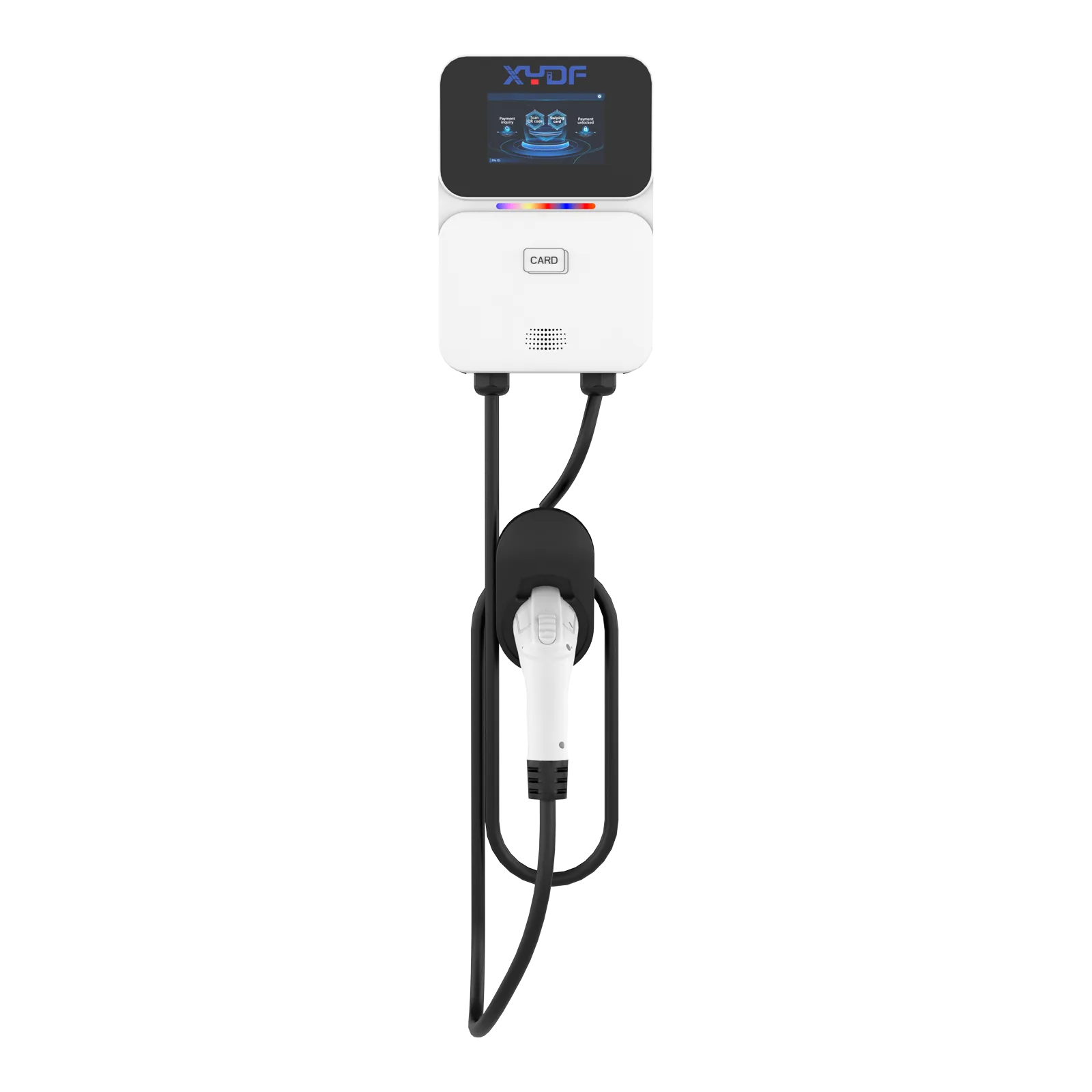
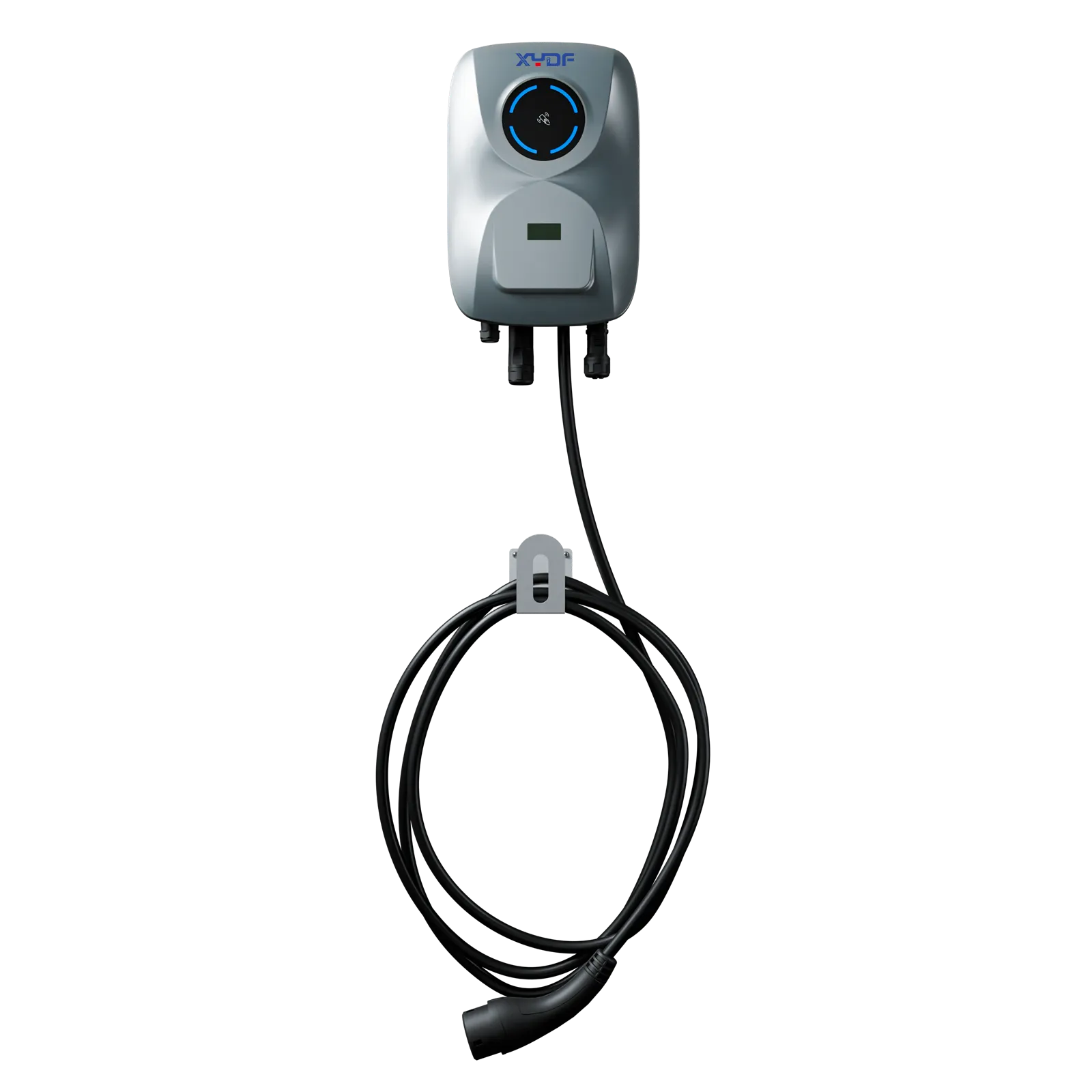
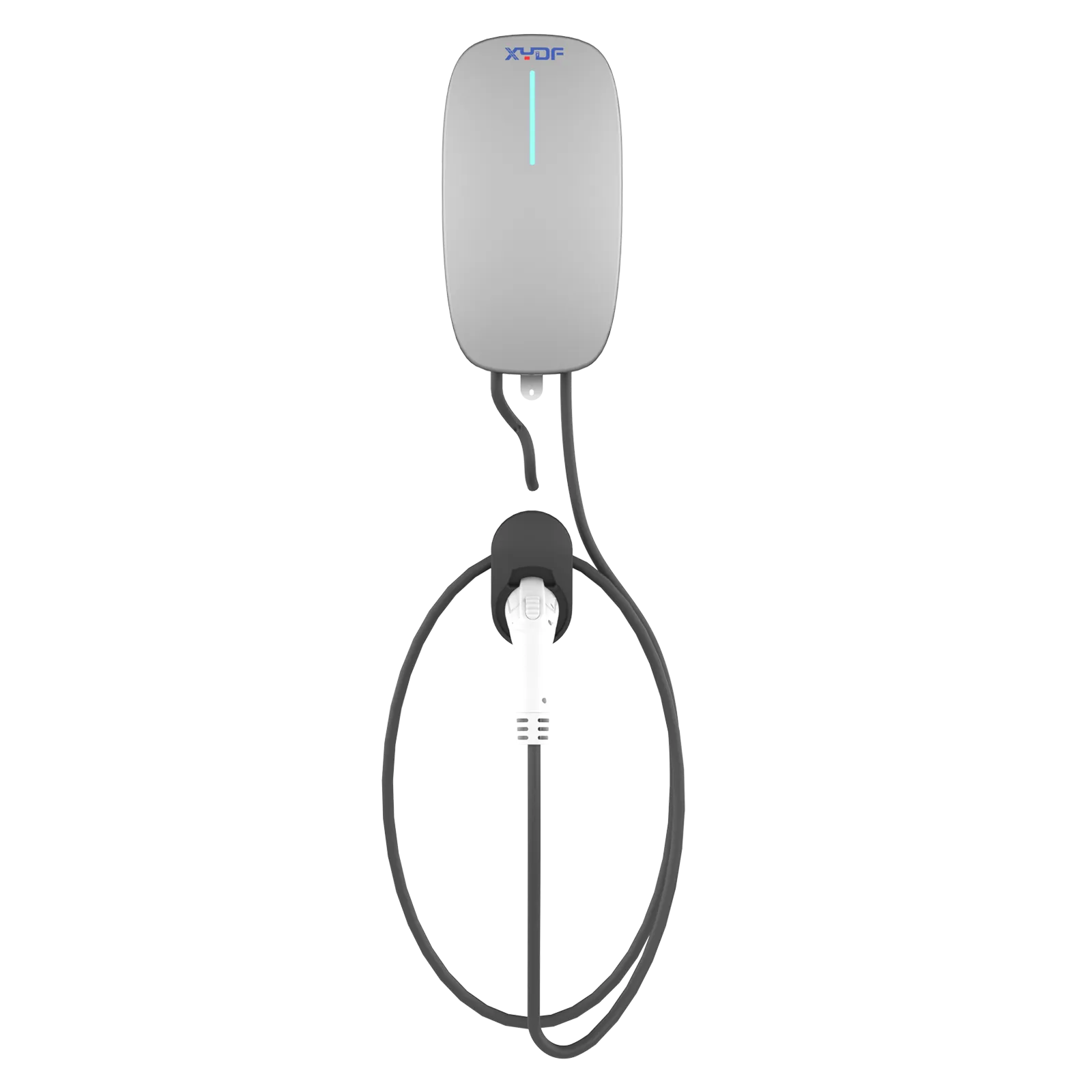
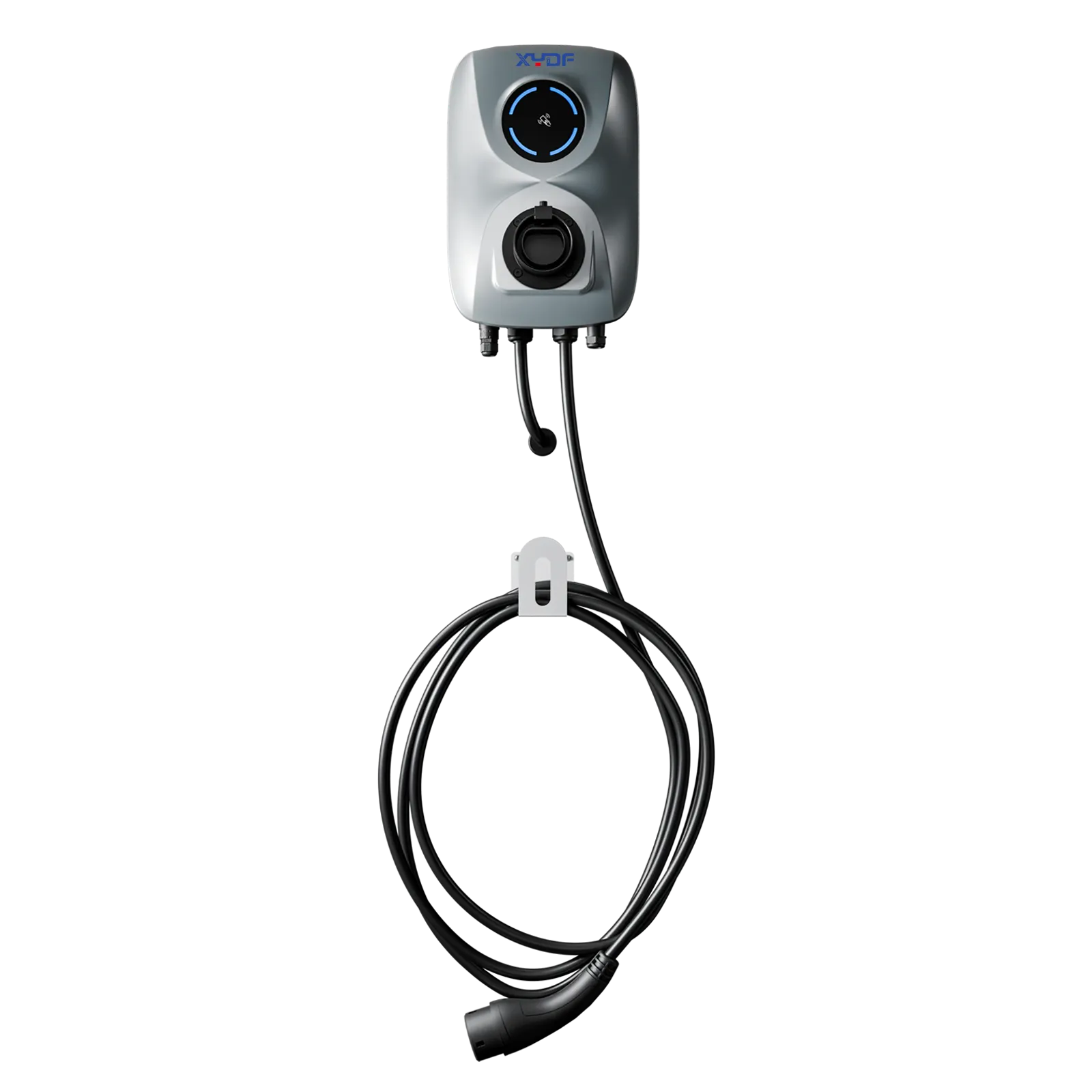
This 22kw EV charger delivers significantly faster charging speeds, crafted for today’s connected environments, including smart homes, apartment complexes, office parks, and retail destinations. Its modular design and robust construction ensure easy deployment and long-term reliability in both indoor and outdoor settings. The charger not only provides energy but also serves as a data node, facilitating efficient energy management and user interaction.
| Model | XY AC-EC1-11-C-EU | XY AC-EC1-11-C-UK | XY AC-EC1-22-C-EU | XY AC-EC1-22-C-UK |
| Input | ||||
| Grid Connection | 3W+N+PE | |||
| Voltage Range | 400Vac ± 15% | 400Vac ± 10% | 400Vac ± 15% | 400Vac ± 10% |
| Maximum Current | 16A | 32A | ||
| Rated Frequency | 50Hz | 50Hz | ||
| Output | ||||
| Voltage Range | 400Vac ± 15% | 400Vac ± 10% | 400Vac ± 15% | 400Vac ± 10% |
| Maximum Current | 16A | 32A | ||
| Maximum Power | 11kW | 22kW | ||
| System | ||||
| Charging Connector | IEC 62196 Type 2 Cable | |||
| Cable Length | 5m (7.5m optional) | |||
| Housing Material | PC + ASA | |||
| Indicator | LED | |||
| RFID Reader | ISO 14443A / ISO 14443B | |||
| Authorization Mode | Plug & Charge / RFID card / App | |||
| Communication | Wi-Fi 2.4GHz, Bluetooth 4.2, FE 100Mbps, RS485, 4G(Optional) | |||
| Protocol | OCPP 1.6J, OCPP2.0.X (optional) | |||
| Safety | ||||
| RCD | Type A + 6mA DC | |||
| Ingress Protection Rating | IP65 | |||
| Impact Protection | IK10 | |||
| Protection | Over Current Protection, Residual Current Protection, PME protection, Ground Protection, Surge Protection, Over/Under Voltage Protection, Over/Under Frequency Protection, Over Temperature Protection,Relay Welding Detection | |||
| Certification | CE | UKCA | CE | UKCA |
| Certification Standard | EN IEC 61851-1 | EN IEC 61851-1, BS 7671 | EN IEC 61851-1 | EN IEC 61851-1, BS 7671 |
| EN 61000-6-1/3, EN IEC 61851-21-2 EN300 328, EN 301 489, EN 300 330, EN 62311 | EN 61000-6-1/3, EN IEC 61851-21-2 EN300 328, EN 301 489, EN 300 330, EN 62311 | EN 61000-6-1/3, EN IEC 61851-21-2 EN300 328, EN 301 489, EN 300 330, EN 62311 | EN 61000-6-1/3, EN IEC 61851-21-2 EN300 328, EN 301 489, EN 300 330, EN 62311 | |
| Dynamic Load Balance | Yes (Smart meter) | |||
| Environment | ||||
| Installation | Wall-mounted / Pedestal-mounting | |||
| Operating Temperature Range | -30oC – 50oC (>50oC derating) | |||
| Relative Humidity | 5% – 95% RH | |||
| Cooling | Natural convection | |||
| Operating Altitude | <3000m | |||
| Product Dimension (W×H×D)[2] | 232×340×172mm | |||
| Package Dimension(W×H×D) | 430×320×310mm | |||
| Net Weight | ≈6.1kg | |||
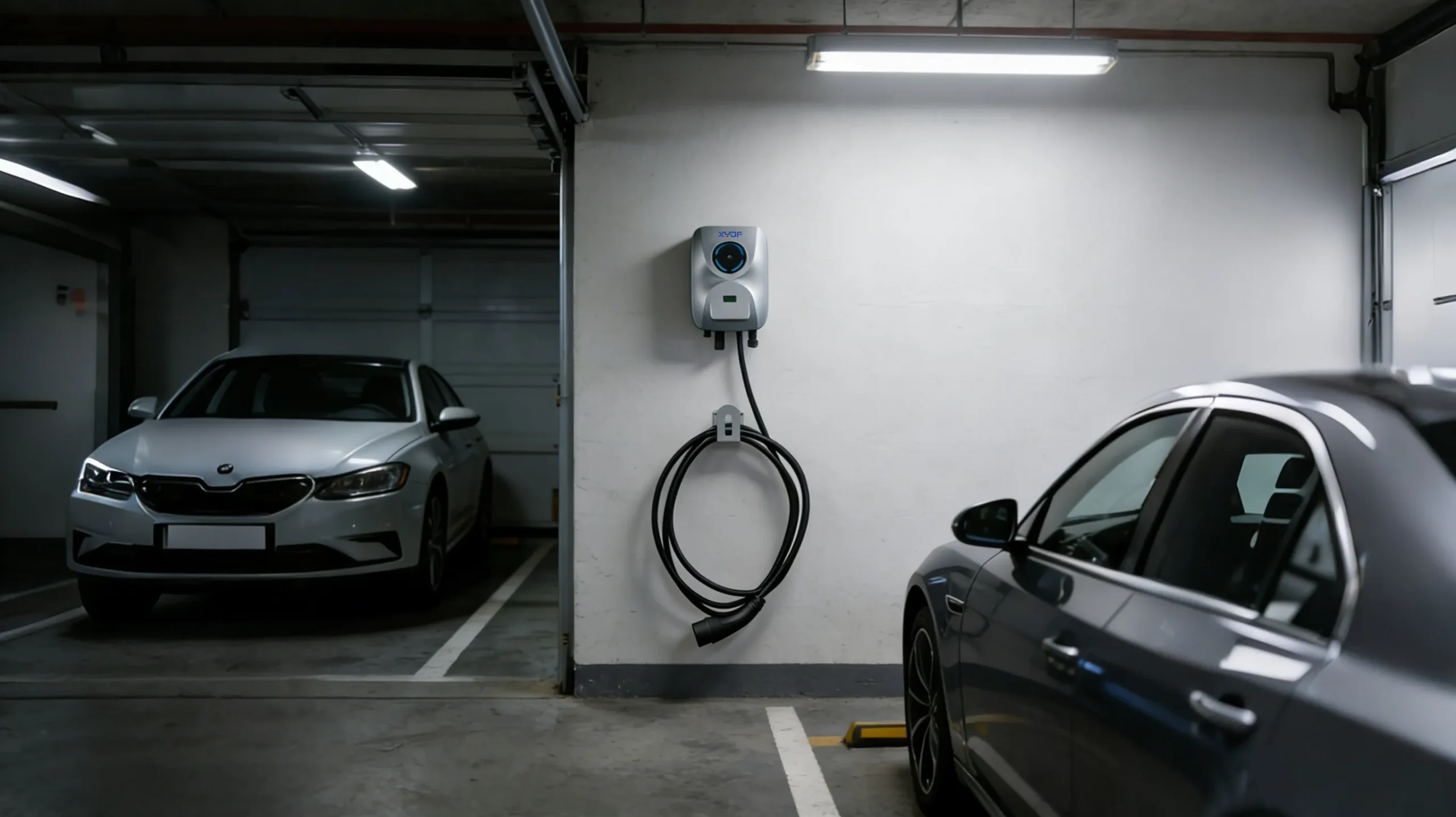
This 22kW EV charger is a commercial EV charge station with the upside of multi-unit dwellings, contemporary office building, shopping malls and public park deck. As 11kW and 22kW electric car charger double space, it delivers scalable, ultra-efficient and connected AC charging for smart energy ecosystem.
A 22kW EV charger is a high-end AC Level 2 station that uses the three-phase power supply so it can provide energy at a rate of 22 kilowatts per hour. In contrast to the traditional 7kW single-phase chargers you find in most homes, a 22kW charger uses three alternating currents at the same time. It significantly reduces time down and is the go to for commercial properties and high vehicle turnover locations.
Based on the OBC (Onboard Charger) size of the vehicle, a 22kW EV charger will provide around 90-120 km (55-75 miles) per hour of range. By way of comparison, a 60kWh EV can be charged from 10% to 100% in less than 3 hours at full 22kW output, compared to 8-9 hours with a 7kW charger. The super premium vehicles from Tesla, Porsche and Audi utilise all of this rapid AC charging speed to the max.
Enabled by a 400V 3 phase power supply, this 22kW 3 phase EV charger ensures the best AC output stability. Designed for round-the-clock, high-intensity charging, it is built with commercial-grade components. The integrated dynamic load balancing allows the installation of multiple units, running simultaneously without exceeding the power limits of the facility.
Scalable, shared EV charging infrastructure for residents with RFID access control.
Reliable employee and visitor EV charging to boost corporate sustainability (ESG).
Public charging stations that attract EV drivers and generate additional revenue.
Efficient, high-speed overnight charging for commercial delivery fleets.
Connectivity is the backbone for modern charging networks. This smart commercial EV charger supports OCPP 1.6J~2.0.1. With this open standard EVI is able to integrate the charger into any third party management software for the charge point operators (CPOs). Key benefits are remote monitoring, automated user billing, dynamic load management, over-the-air (OTA) firmware updates, and fault diagnostics in real time.
| Feature | 11kW Commercial Charger | 22kW Commercial Charger |
|---|---|---|
| Power Supply | 3 Phase (16A per phase) | 3 Phase (32A per phase) |
| Charging Speed | ~50-60 km/h added range | ~90-120 km/h added range |
| Best Use Case | Workplaces, long-stay parking | Retail, fleets, short-stay public parking |
Although it is possible in theory, setting up a 22kW EV charger at home requires the property to be equipped with a three-phase power supply, a feature that regular houses lack. Homeowner units are typically 7kW. The 11kW/22kW charger modules are designed and certified mainly for commercial, industrial and public use.
| Power Output | 11kW / 22kW Adjustable |
| Input Voltage | 400V AC ±10% (3-Phase) |
| Max Current | 16A / 32A |
| Connector Type | Type 2 (IEC 62196-2) |
| Communication Protocol | OCPP 1.6J / OCPP 2.0.1 |
| Enclosure Protection | IP65 (Waterproof) / IK10 (Impact Resistant) |
| Network Connectivity | WiFi / Bluetooth / Ethernet (LAN) / 4G LTE |
Our commercial chargers are compatible with all Type 2 plug-in vehicles, which include Tesla, BMW, Audi, Mercedes-Benz, Porsche, Volkswagen, Toyota, BYD, Honda, Chevrolet, and even standard commercial electric vans.
Yes, 22kW is the fastest available Level 2 AC charging speed before DC fast charging comes into play.
Depending on the efficiency of the vehicle and the battery management system, you can add between 90 and 120 km (55-75 miles) of driving distance per hour.
This is to say the charger can deliver a maximum of 22 kiloWatt of AC power per hour, with 3 phase as the form of electrical connection.
Yes, but only if your house has, or you are willing to pay to install three-phase power in it, which is expensive to bring to many homes.
Although the Tesla model and its charger on board (say Model S/X, Model 3) vary, it can take about 4 to 6 hours to completely charge a drained battery.
A 3-phase EV charger utilises 3-phase power for supplying higher current rates to charge EVs faster as compared to a single-phase charger.
So for the average modern EV, which has a battery size of 60-80kWh, a 22kW charger will take about 3-4 hours to get a full charge.





 Xinya Dongfang Electricity Technology Co., Ltd.