 شركة شينيا دونغفانغ لتكنولوجيا الكهرباء المحدودة.



Adding commercial charging is straightforward until vehicles plug in while cooling equipment, ventilation and other building loads are already using the available electrical capacity. A charging dashboard may show every station online, yet the facility still has no reliable way to coordinate their demand. The missing piece is often a defined control architecture, not a higher-rated charger.
ملخص: EV chargers integrate with a building through meters, a charging controller and an agreed interface to the building management system or energy management system. OCPP 1.6 and OCPP 2.0.1 are separate protocol versions, not interchangeable compatibility labels. Specify the data exchange, control ownership and offline behavior before choosing equipment; connectivity alone does not establish load management.
Here, BMS means building management system, not battery management system. A BMS typically supervises building equipment; an EMS focuses on energy decisions. Their responsibilities can overlap. An EV charger energy management system must turn the building’s available capacity into enforceable charging limits while preserving operational priorities.
Define the integration architecture before the interface
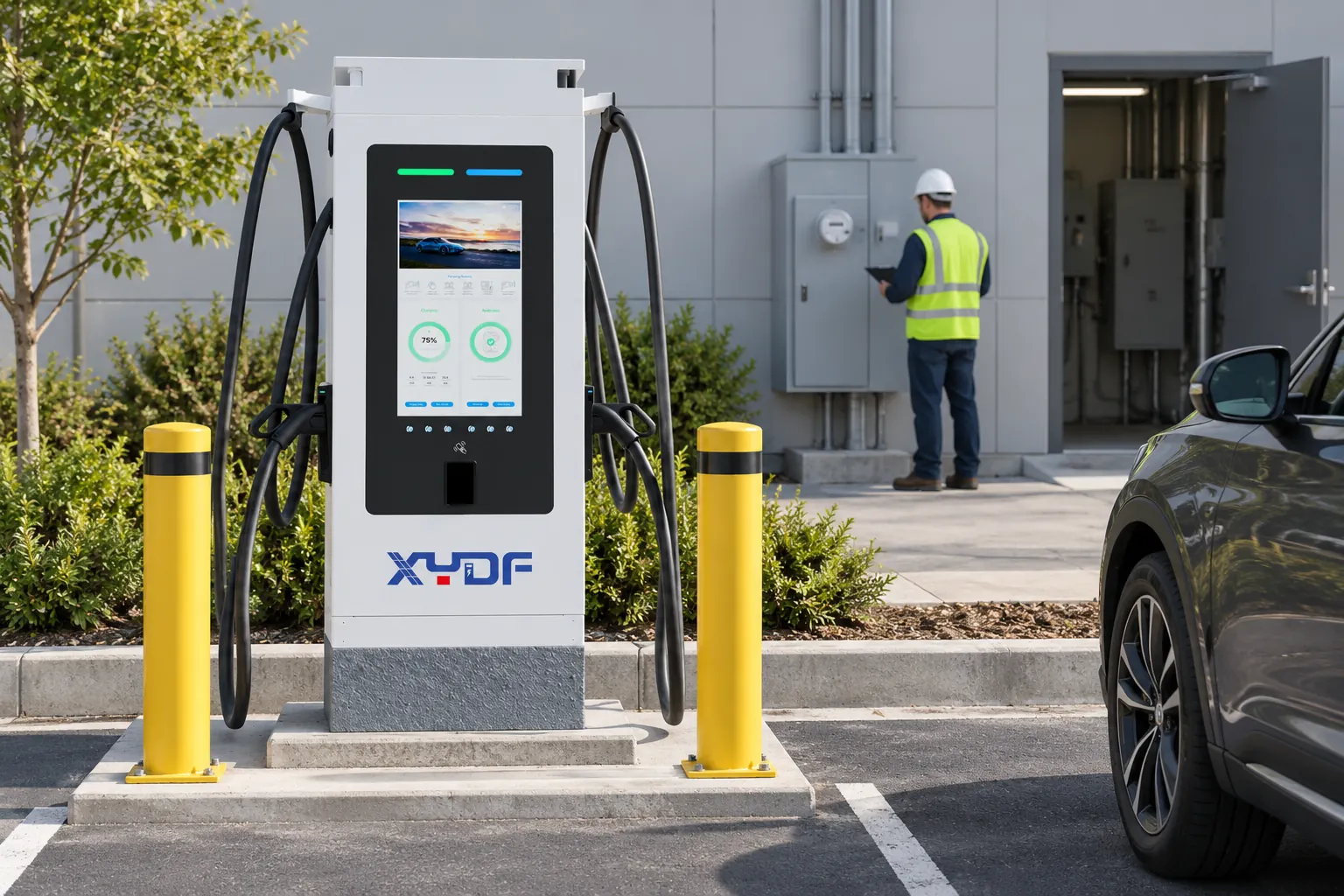
A useful architecture has three layers: electrical measurement and protection, site-level energy control, and charging operations. The building meter measures total import, submeters identify relevant feeders, and the EMS determines the charging budget. A charging station management system (CSMS) or local controller distributes that budget among connected vehicles.
In a common arrangement, chargers communicate with a CSMS using OCPP. The EMS exchanges measurements and limits with that platform through a documented API or gateway. An alternative uses a local controller that reads meters and controls chargers onsite, while the cloud platform handles users, billing and reporting. Neither arrangement requires every charger to speak the building’s native protocol directly.
ال Open Charge Alliance’s OCPP overview defines the charging-station-to-management-system interface. BACnet, maintained by the BACnet Committee, addresses building automation communication. These are different boundaries: an OCPP connection does not automatically create a BACnet interface.
لأجل EV charging BMS integration, appoint one authority for the final charging budget. If the BMS, EMS and CSMS can independently overwrite limits, apparently valid commands can conflict. Document which system calculates the site limit, which applies individual setpoints, and which reports actual consumption.
Compare the main integration approaches
| الاقتراب | Useful when | Operational advantage | Integration cost or limitation |
|---|---|---|---|
| Cloud CSMS linked to the EMS | Centralized oversight covers multiple charging locations | Combines charging operations with energy reporting | Requires API agreements, connectivity and an explicit local fallback |
| Local charging controller linked to meters and EMS | Available electrical capacity must be managed onsite | Can retain a defined control function without a cloud connection | Adds controller hardware, commissioning and lifecycle maintenance |
| BMS gateway exposing charging points | Facilities teams need charging visibility in an existing workstation | Fits established building supervision workflows | Point mapping alone may not provide vehicle-aware scheduling |
| Fixed charging cap without live building feedback | A conservative, reserved capacity is sufficient | Simple operating policy with fewer integrations | Cannot automatically reclaim unused building capacity |
Specify data points, units and command feedback
An integration should distinguish two kinds of information: what the charger is doing and what it is being asked to do. The EMS needs measured power, delivered energy, operating status and the currently applicable limit. It also needs timestamps and data-quality indicators, because an old measurement is not evidence of present headroom.
OCPP 1.6 uses messages such as MeterValues and StatusNotification; its smart-charging functions include SetChargingProfile and GetCompositeSchedule. OCPP 2.0.1 has a different transaction and device-management model, including TransactionEvent. Specify the selected version and supported functions instead of combining message names into a version-neutral requirement.
ال OCA protocol overview confirms that OCPP 1.6 and 2.0.1 are incompatible and that OCPP 2.1, released in 2025, adds enhanced smart charging and distributed-energy-resource support. The official specification download directory, checked on October 7, 2026, lists OCPP 2.0.1 Edition 4 and OCPP 2.1 Edition 2, alongside June 2026 errata. These listings identify specification documents, not implementation by any XYDF model. Record the exact edition and applicable errata in the integration specification rather than assuming the newest published version is supported.
The meter-value configuration must establish the measurand, unit, phase, sampling interval and measurement location where applicable. Energy in kWh is not instantaneous demand in kW. For three-phase AC circuits, aggregate power alone may hide a heavily loaded phase. The controller needs phase-aware measurements wherever phase constraints influence allocation.
State of charge is useful for scheduling but must not be assumed available. It depends on vehicle communication, charging mode and implementation. Where it is unavailable, use declared departure times, requested energy or fleet dispatch requirements. User identification and transaction records belong in the integration only when the energy workflow actually needs them.
Build a point list around decisions, not dashboard features
| Information dimension | Required agreement | Decision it supports |
|---|---|---|
| Building import and feeder loading | Meter location, phase coverage, units, timestamp and freshness | Determine available charging capacity |
| Charger or connector power and energy | Measurement scope, units and reporting interval | Compare actual demand with the allocation |
| Availability, transaction state and faults | State mapping and fault escalation responsibility | Avoid assigning capacity to unusable equipment |
| Charging limit and command result | Limit scope, validity period, acceptance and measured response | Confirm that a requested limit is being enforced |
| Departure and energy requirement | Source, update method and missing-data policy | Prioritize vehicles without assuming battery telemetry |
Command acceptance is not proof that delivered power has changed. Commissioning should trace a command from EMS calculation to charger acknowledgement and then to measured output. Include rejected commands, expired profiles and restarted equipment in the acceptance test.
Balance charging with HVAC and other building loads
Smart EV charging load management allocates the capacity remaining after building demand and the required operating margin are accounted for. The charging budget must also respect feeder, transformer and per-phase limits. The electrical design determines those constraints; the optimization software cannot replace protective devices or create additional supply capacity.
HVAC deserves explicit coordination because equipment starts and control changes can alter demand while vehicles are charging. The BMS can provide relevant measured loads or operating information through BACnet or another agreed interface. However, HVAC forecasts should supplement electrical measurements, not replace them when enforcing an electrical limit.
Separate the hard capacity ceiling from the economic target. The first protects the designed operating envelope; the second seeks a lower demand level or a preferred tariff window. A facility can choose to exceed an economic target to meet a critical departure while still remaining below its hard ceiling.
Dynamic allocation then considers vehicle urgency, requested energy, available dwell time, charger constraints and vehicle acceptance. Equal sharing is easy to understand but may leave an early-departing vehicle short. Priority scheduling can address that problem, provided the policy also prevents lower-priority sessions from being indefinitely deferred.
Do not assume every station can continuously follow any requested power value. AC charging has permitted current ranges and vehicle-dependent behavior; DC equipment may have power-sharing or operating constraints. Request the applicable IEC 61851 operating documentation and test the actual vehicle-and-charger combination. For a pause-and-resume strategy, verify that sessions recover as intended.
When building demand reaches the defined ceiling, the controller should reduce or pause charging according to its approved policy. Specify response time, meter-loss behavior and a conservative fallback allocation. During a network outage, the chosen local arrangement must still behave within its commissioned constraints.
Evaluate demand-charge savings without confusing power and energy
أن EV charging EMS can reduce charging’s contribution to peak demand by moving flexible energy delivery away from heavily loaded periods. That does not necessarily reduce the total kWh vehicles need. The economic opportunity depends on the electricity tariff, billing-demand calculation and whether vehicles have enough dwell time to accept rescheduling.
A demand target must use the tariff’s actual measurement interval and rules. Instantaneous peaks and billed demand are not always equivalent. Forecasting can help the EMS avoid exhausting the available charging window, but savings should be calculated from the site’s interval data and verified tariff rather than a generic percentage.
Compare at least two schedules: uncontrolled charging and the proposed controlled policy, using the same vehicle energy requirements. Evaluate delivered energy, departure readiness, maximum demand and operating costs together. A cheaper energy bill is not an operational improvement if essential vehicles routinely leave undercharged.
Total ownership cost also includes meters, communications, gateways, platform subscriptions, commissioning, cybersecurity maintenance and integration support. Confirm API access terms and whether changing the CSMS affects the EMS connection. A small hardware saving can disappear when a proprietary interface requires repeated engineering work.
Protect the control path and verify failure behavior
Energy control is an operational authority, not merely a reporting feed. Separate charger networks from general business access, restrict permitted communication paths, and give each integration only the privileges it needs. Facilities users who can view demand should not automatically be able to change limits or charging priorities.
OCPP 2.0.1 includes security functions, while the Open Charge Alliance also publishes security guidance for OCPP 1.6 implementations. The implemented security profile and configuration still matter. Specify encrypted transport, endpoint authentication, certificate management, credential rotation and logged administrative changes rather than accepting a broad claim of secure connectivity.
Use separate identities for service integrations and named administrators. Agree who can update firmware, modify the site ceiling, issue charging profiles or restart equipment. Access removal, certificate expiry and remote-support permissions need owners throughout the equipment’s operating life.
Acceptance testing should cover meter loss, EMS or CSMS disconnection, a controller reboot, conflicting limits and an unauthorized command attempt. Record actual charging behavior and recovery, not just software alarms. A fallback setting must be evaluated against the site’s electrical constraints before it becomes the default.
Retaining the last known charging limit is not automatically safe: other building demand can rise after meter feedback is lost. As an engineering recommendation, define site-specific meter freshness criteria and an approved fallback for stale data, then remeasure building demand before restoring normal allocation. Neither a universal timeout nor a fixed fallback kW value follows from the protocol name.
Understand what each protocol actually covers
- OCPP governs charger-to-CSMS communication. OCPP energy management depends on the selected version, implemented smart-charging functions and controller behavior; protocol support alone is not proof of end-to-end interoperability.
- BACnet, standardized through ASHRAE 135 and ISO 16484-5, addresses building automation communication. Agree object types, writable points and engineering units for the charging integration.
- Modbus can expose meter or controller registers. A register map must define scaling, units, data types and write permissions; a shared transport does not provide shared meaning.
- OpenADR supports automated demand-response communication. It can convey external energy-management signals, but the site’s controller still translates them into feasible charging decisions.
- IEC 61851 addresses conductive EV charging equipment and related requirements. It does not certify that a particular BMS gateway, EMS and charger work together.
Keep electrical compliance, protocol conformance and project integration acceptance separate. Require evidence for each applicable scope; avoid treating a certification for one interface as coverage of the whole control chain.
What to request before selecting commercial chargers
For commercial procurement, issue an integration schedule alongside the equipment schedule. It should identify the chosen OCPP version, controller location, point list, maximum operating constraints, offline policy and responsible parties.
For each version-specific function, separate supported implementation from optional capabilities not enabled in the offered configuration and vendor-specific extensions. Treat certified scope as a separate evidence field, not a synonym for advertised support. Tie documentation, demonstration results and any certification evidence to the exact charger model and firmware tested; record the associated CSMS or gateway version so later substitutions trigger review.
- Request a documented interface and supported smart-charging functions, including restrictions.
- Verify how building-level and individual charging limits interact.
- Agree vehicle priorities and measurable acceptance criteria before commissioning.
- Review cybersecurity ownership, software support and platform migration terms.
- Require an integration demonstration with the intended EMS or gateway.
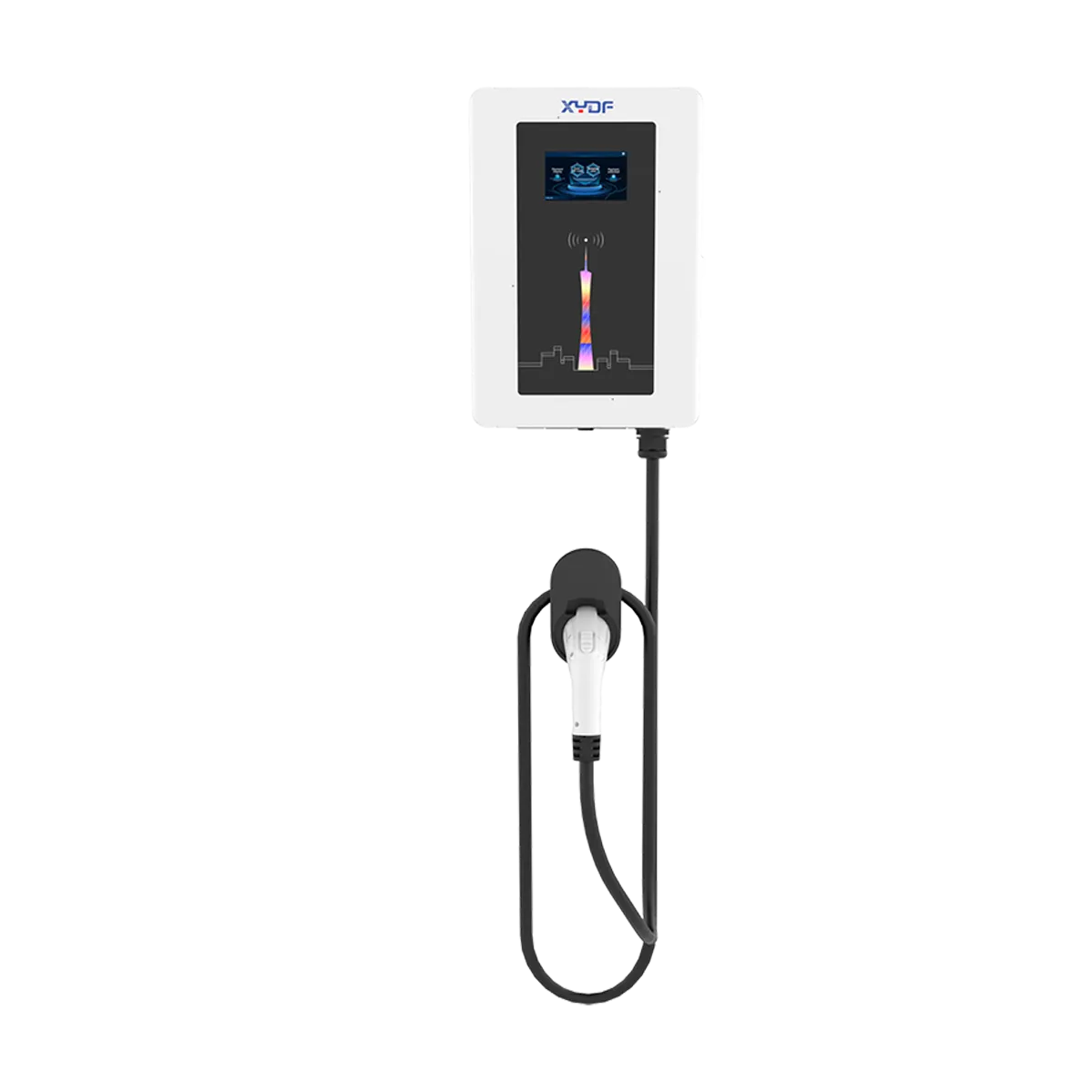
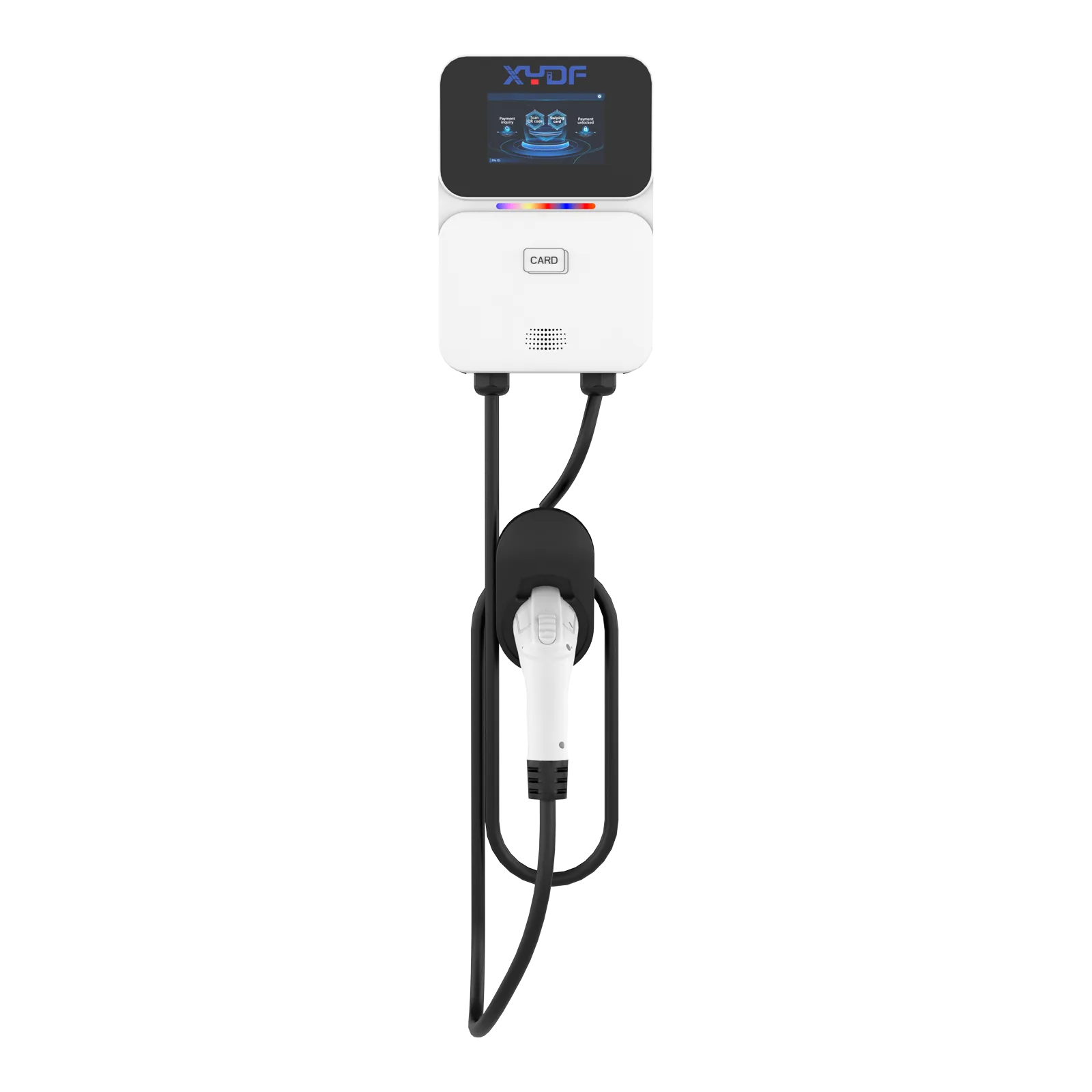
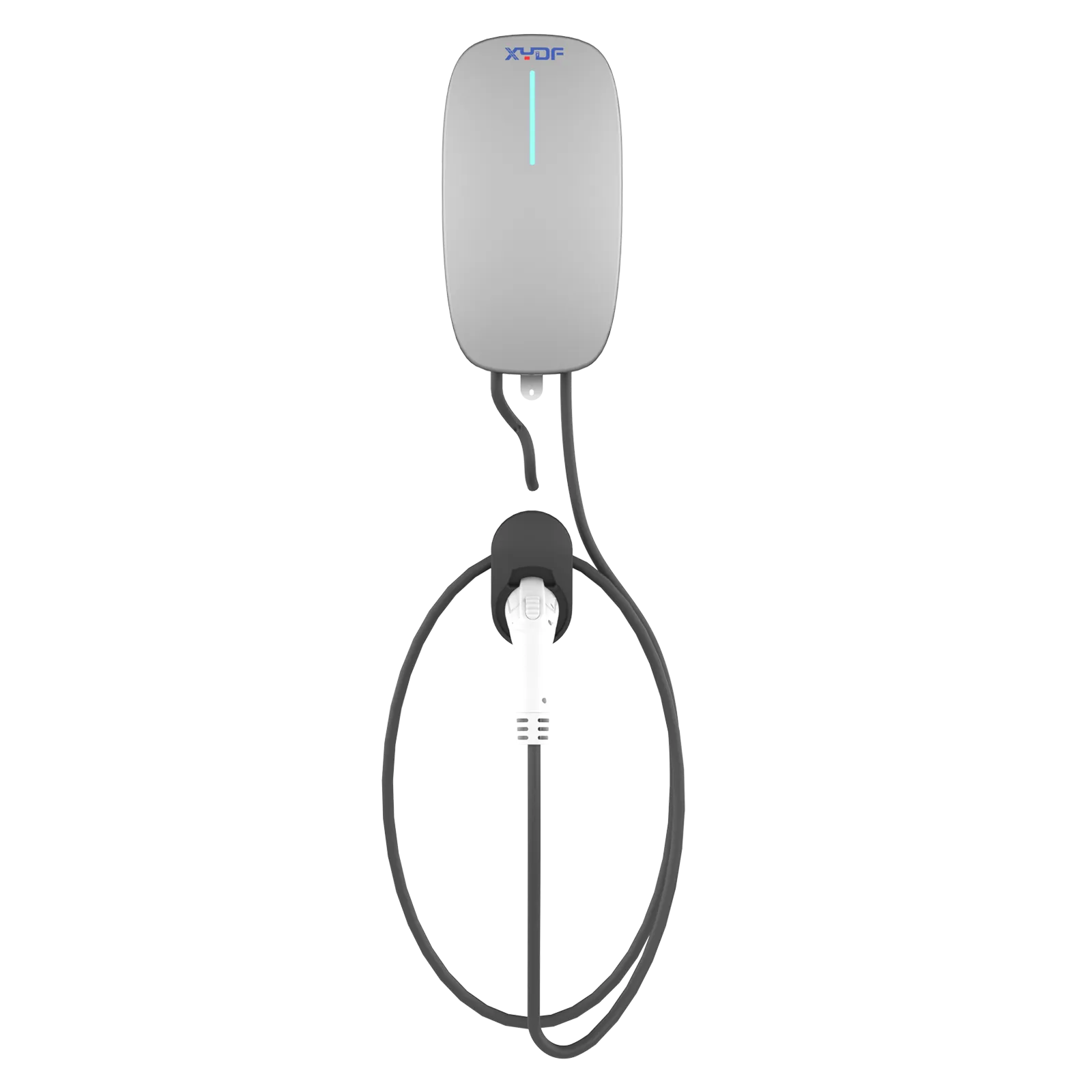
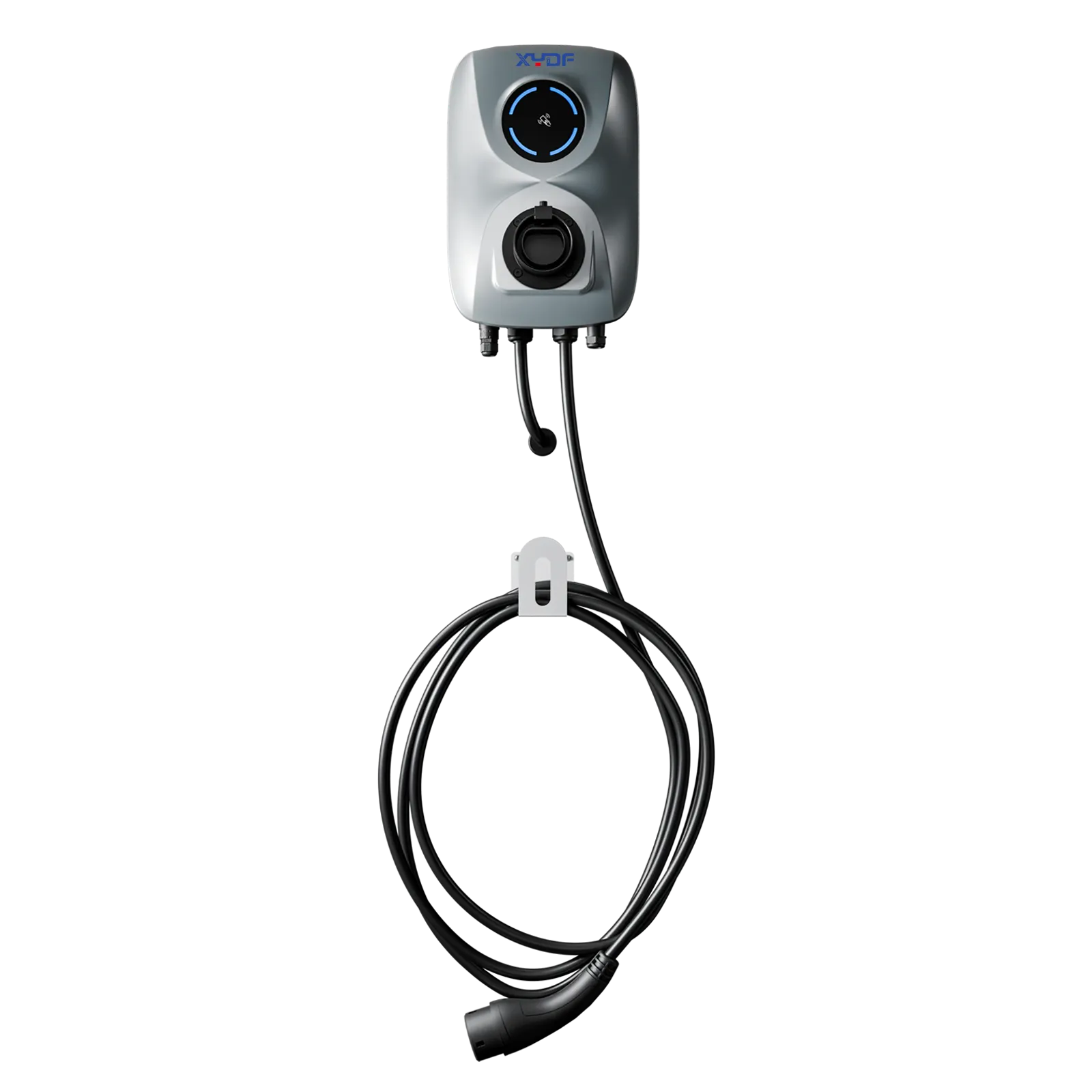
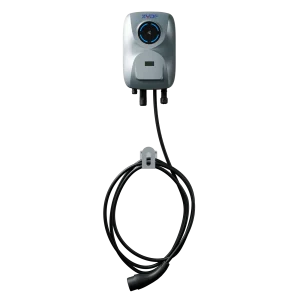
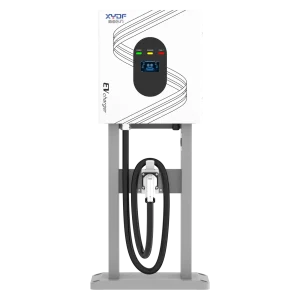
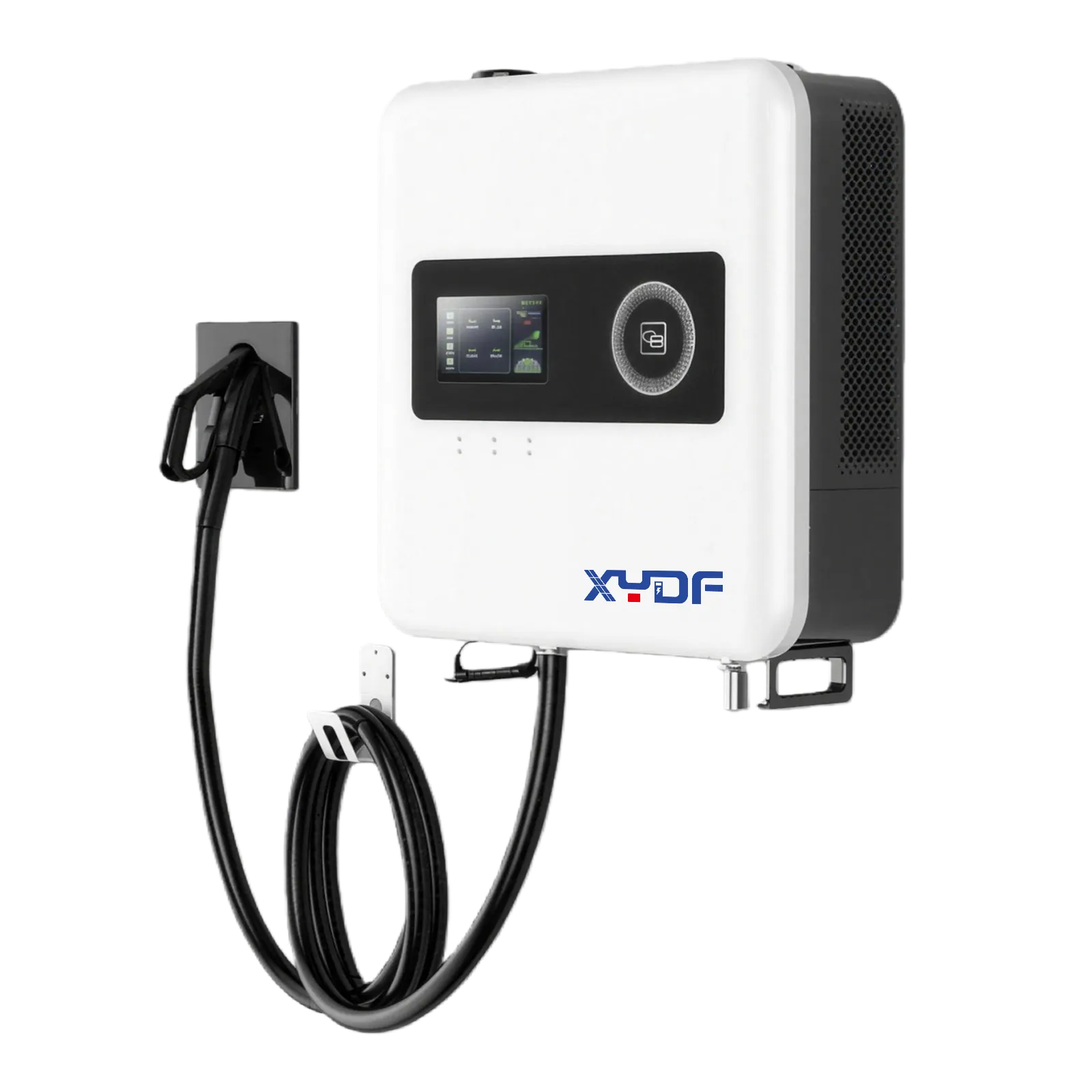
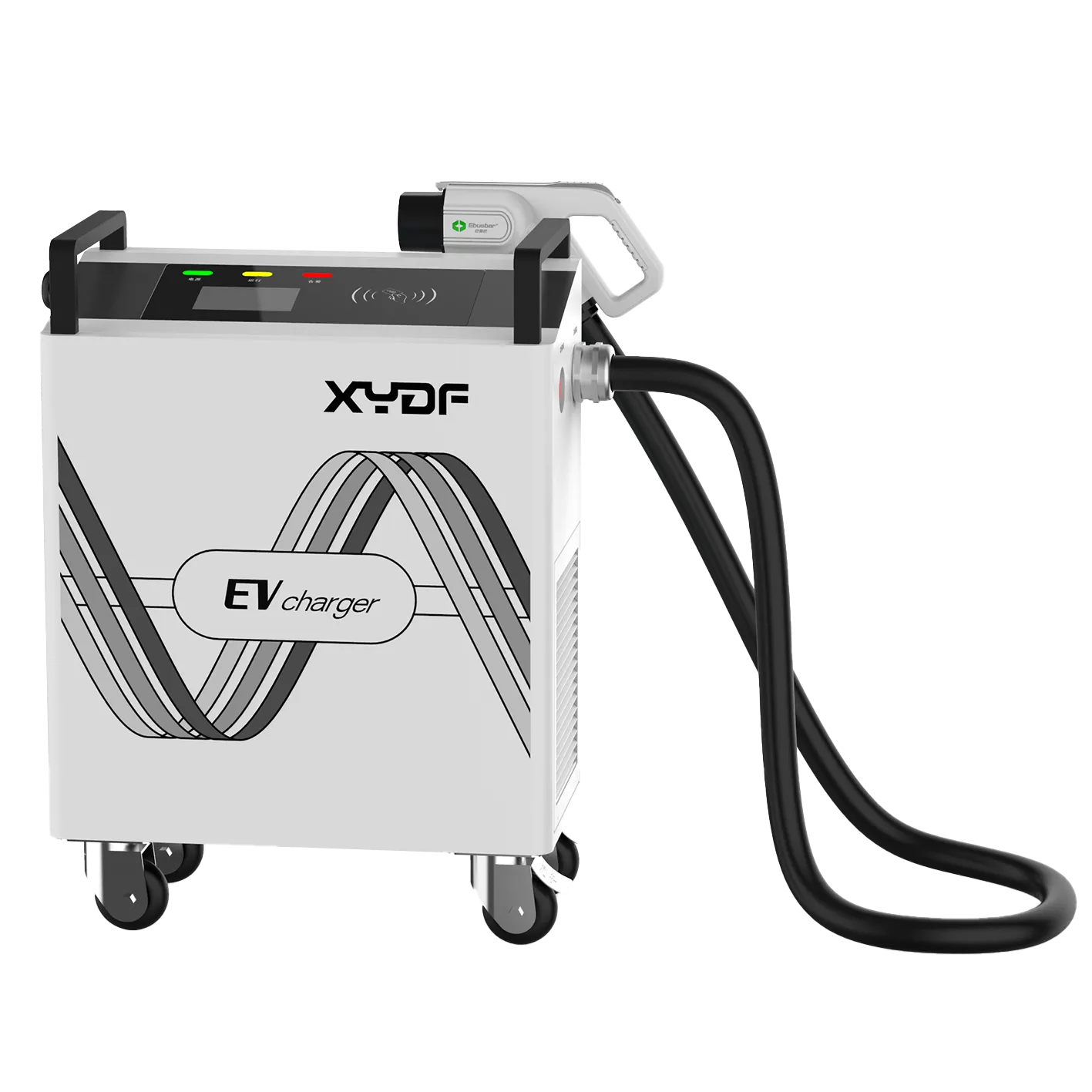
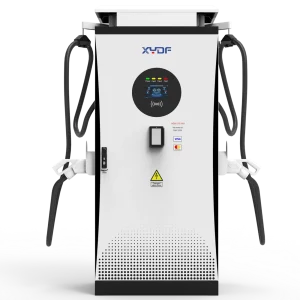
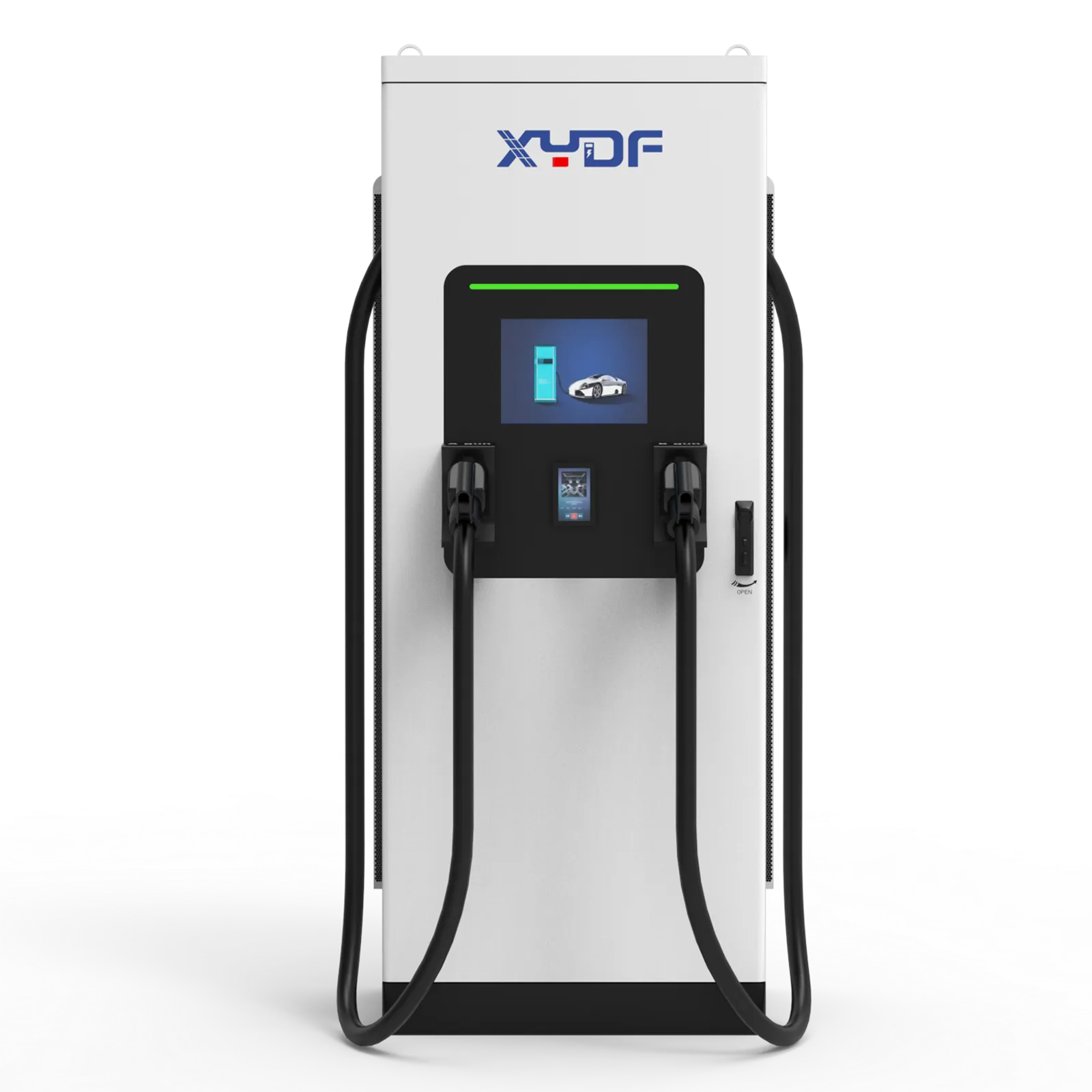
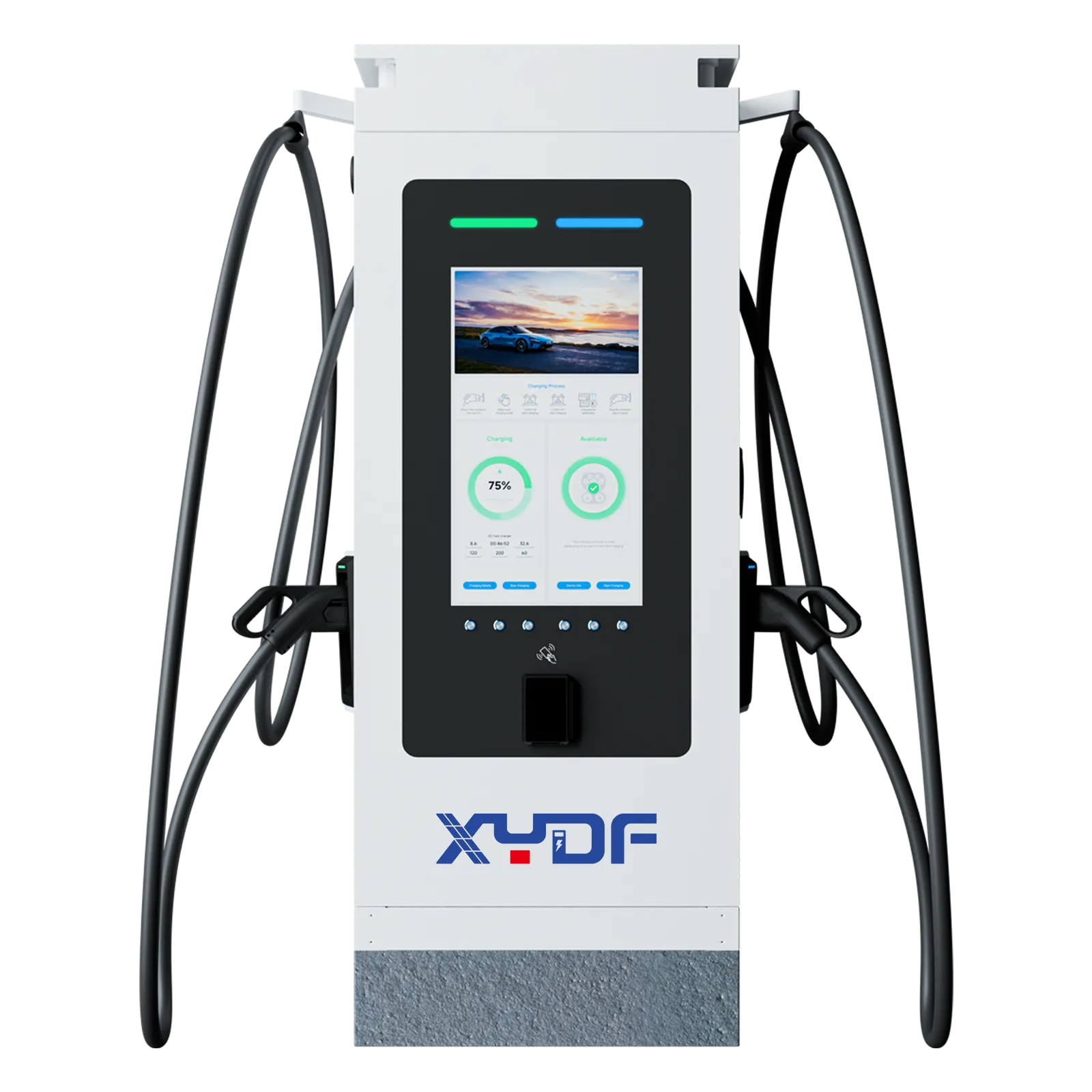
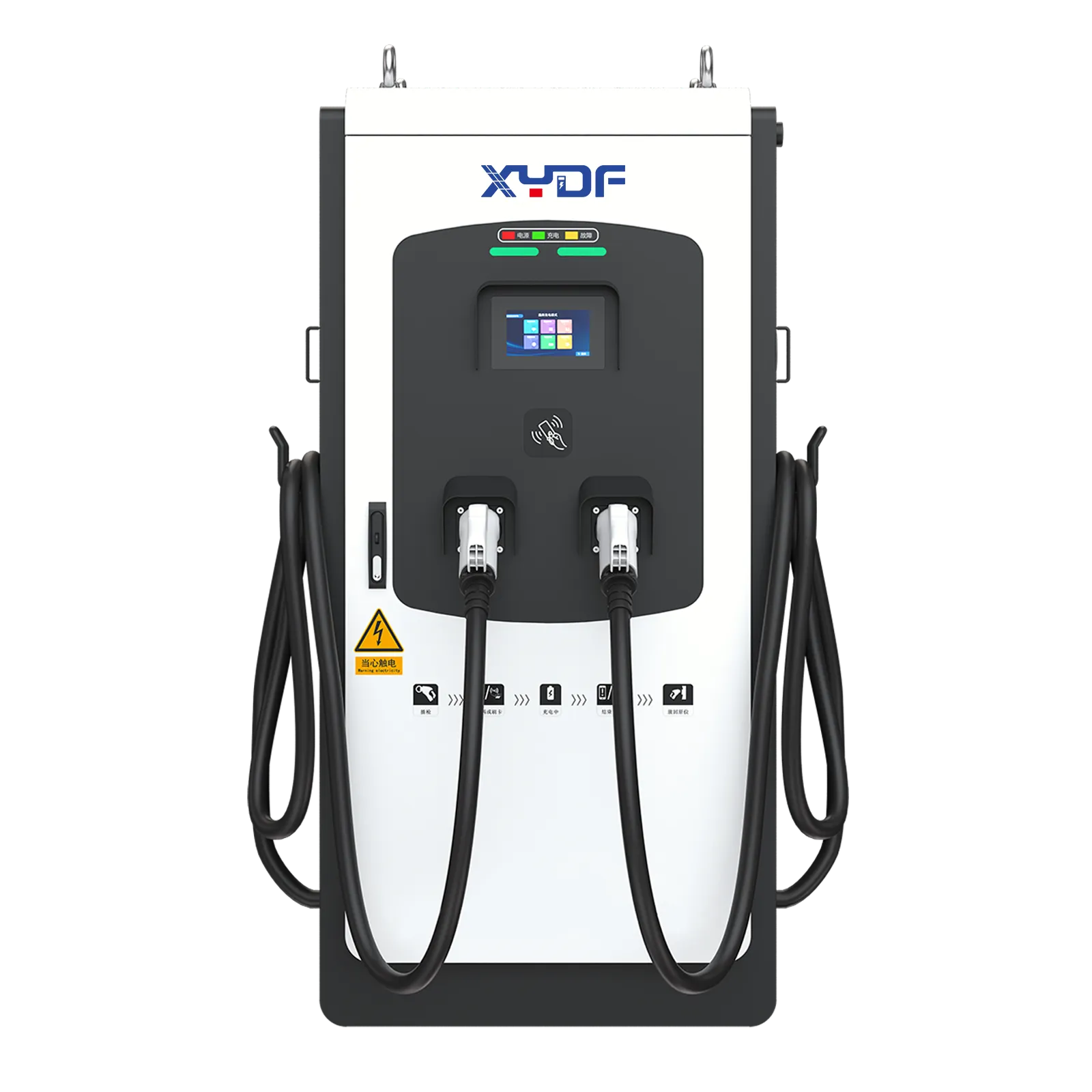
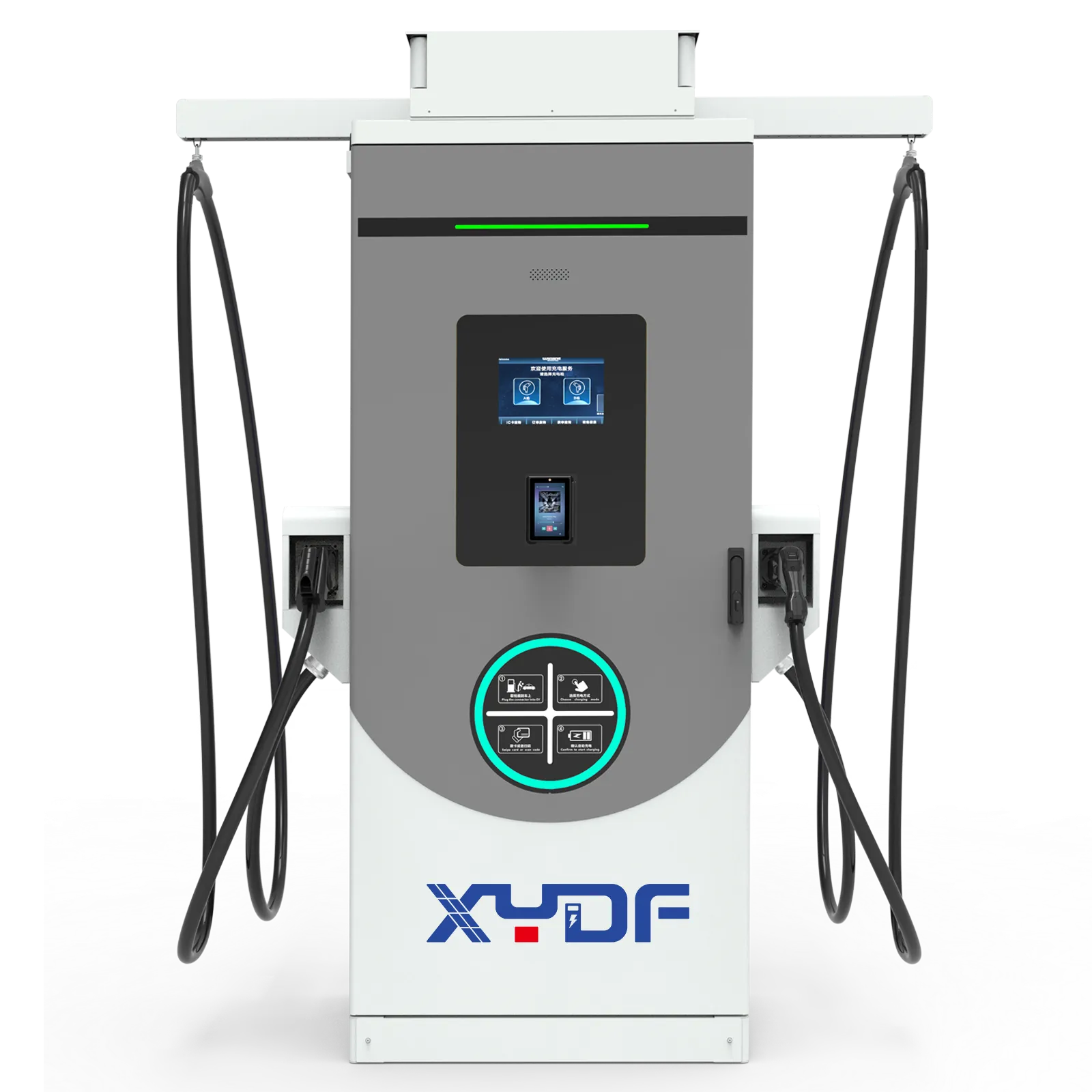
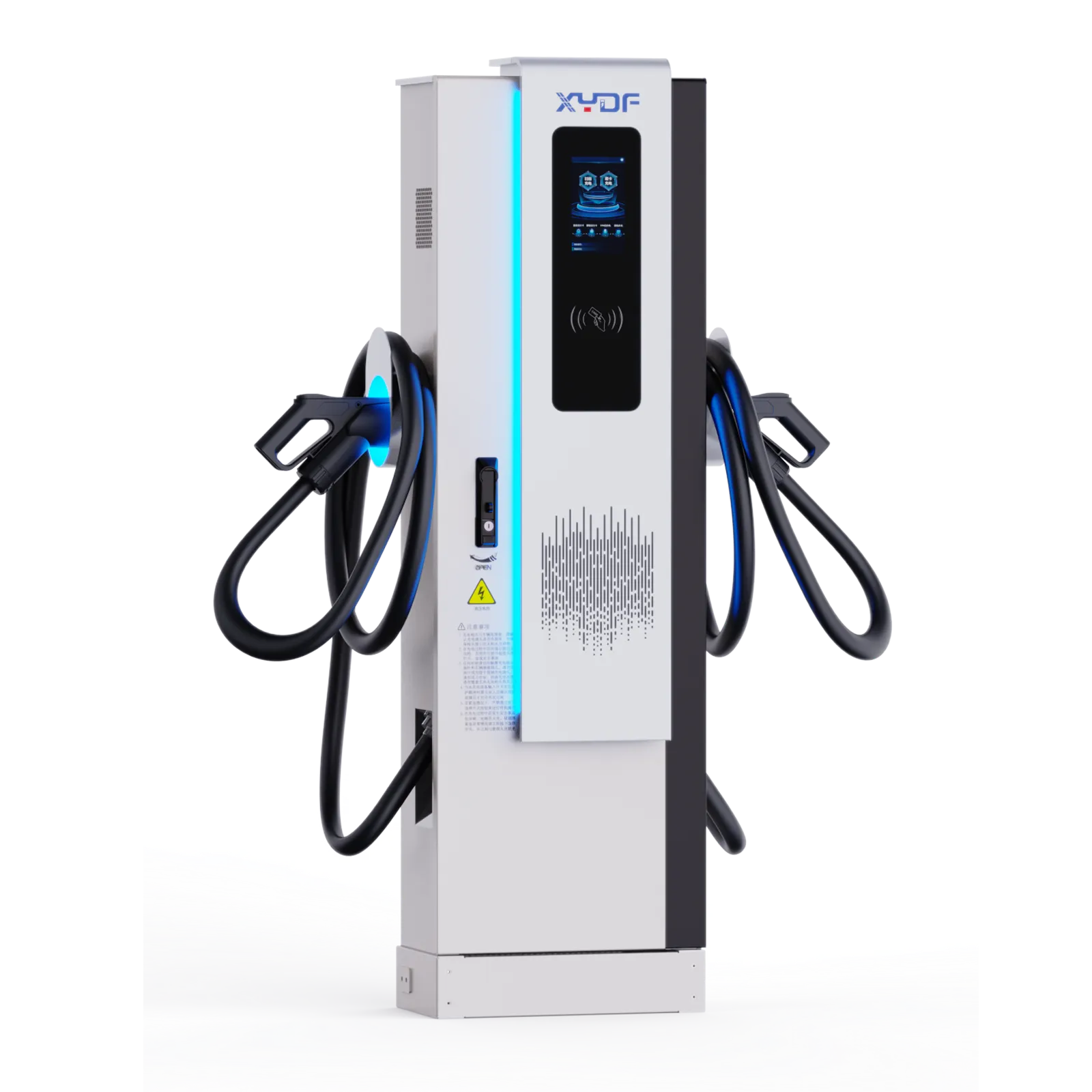
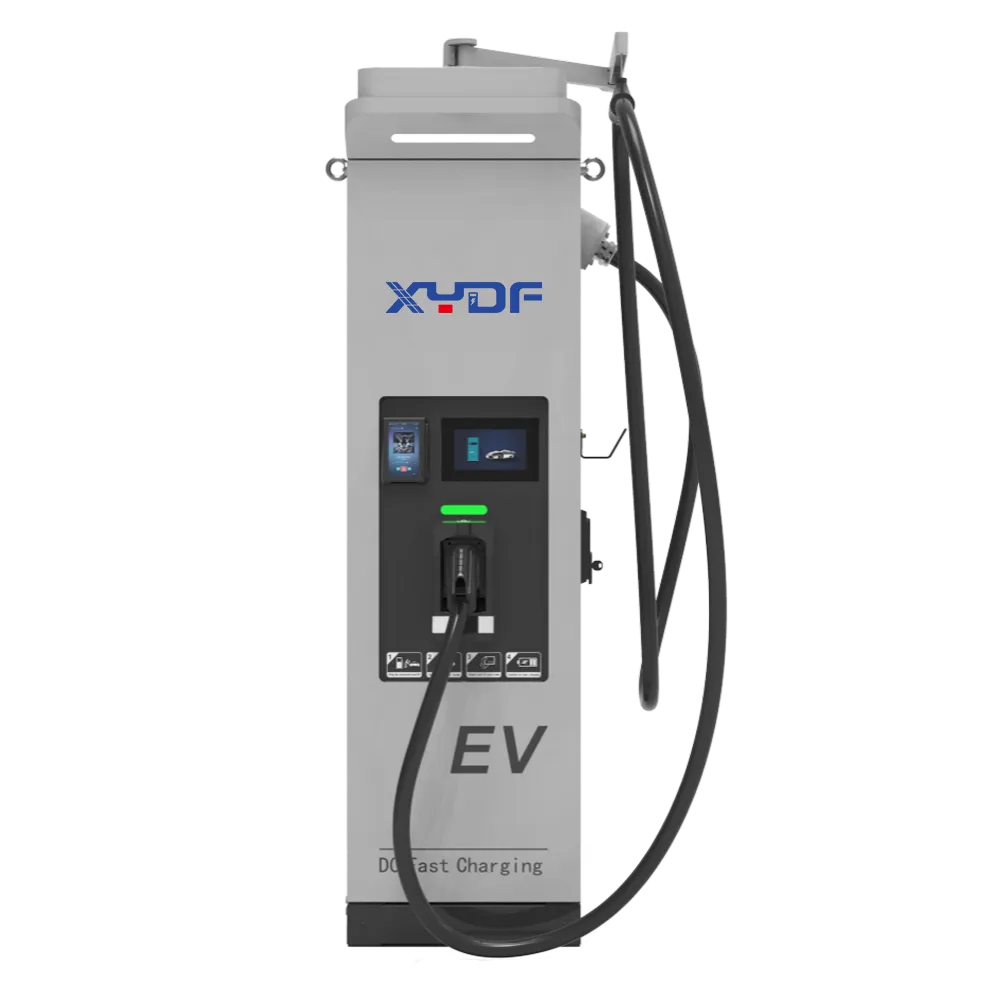
When evaluating XYDF equipment, use the مجموعة شواحن AC to establish the application fit, then request model-specific integration documentation. For a shortlisted unit such as the شاحن سيارات كهربائية تجاري, verify its supported interface and control behavior rather than assuming all products share the same functions.
أسئلة متكررة
How do EV chargers connect to a building energy management system?
Usually through a charging controller or CSMS connected to the EMS by an API or gateway. Chargers may use OCPP while the building uses BACnet or another interface. Specify who converts the building’s available capacity into charger limits.
What data should an EV charger send to a BMS or EMS?
Send measured power, delivered energy, availability, transaction state, faults and applicable charging limits, with units and timestamps. Phase information may also be necessary for AC circuit constraints. Battery state of charge should be requested only where supported.
Can an EMS reduce peak demand from commercial EV charging?
Yes, when charging is flexible enough to shift or reduce demand during the relevant billing interval. The result depends on the tariff, building load and required vehicle departure readiness. Verify savings against interval data rather than assuming a fixed reduction.
How does smart charging prioritize vehicles and building loads?
It reserves capacity for designated building loads, then allocates the remaining budget using departure times, energy needs and operating priorities. The policy should define minimum service and how deferred vehicles regain access. Actual delivery remains subject to charger and vehicle limits.
Which protocols support EV charger and BMS integration?
OCPP supports communication between chargers and a CSMS; BACnet and Modbus commonly serve building or metering interfaces. APIs or gateways connect these boundaries. OpenADR may add demand-response signals, but none of these names alone guarantees compatibility.
What happens to charging when the building reaches its power limit?
The controller reduces charging allocations or pauses sessions under the commissioned policy. Essential building loads retain their designated priority. Test both the limit response and recovery, including what happens if measurements or communications become unavailable.
Authoritative References
- Open Charge Alliance: OCPP protocols and specifications
- BACnet Committee: scope of the BACnet standard
- OpenADR Alliance: automated demand response
Make the power budget an operating agreement
Successful EV charging BMS integration depends on a clear chain from trustworthy measurements to enforceable limits and verified recovery. Define that chain first; hardware selection and energy optimization then have a stable basis.
Review the XYDF charging product range و contact the team with your electrical limits, vehicle schedule and EMS interface requirements. Request model-specific documentation and an agreed integration test before finalizing the equipment specification.