In a recent quarter, a Texas retail mall saw foot traffic rise 12 % after adding 8 commercial EV chargers and 60 % of EV drivers lingered for an additional 45 minutes shopping while their cars topped off. The takeaway from this story: EV charging solutions are no longer simply conveniences—they’re strategic investments to bring in customers, keep tenants happy and future-proof commercial real estate.
From selecting the best equipment to understanding fees and going green, this comprehensive guide covers everything you need to know to provide EV charging options for your commercial property. This information will be useful whether you are looking after a hotel, an office block or a shopping mall, as you start to address the need for electric vehicle charging infrastructure.
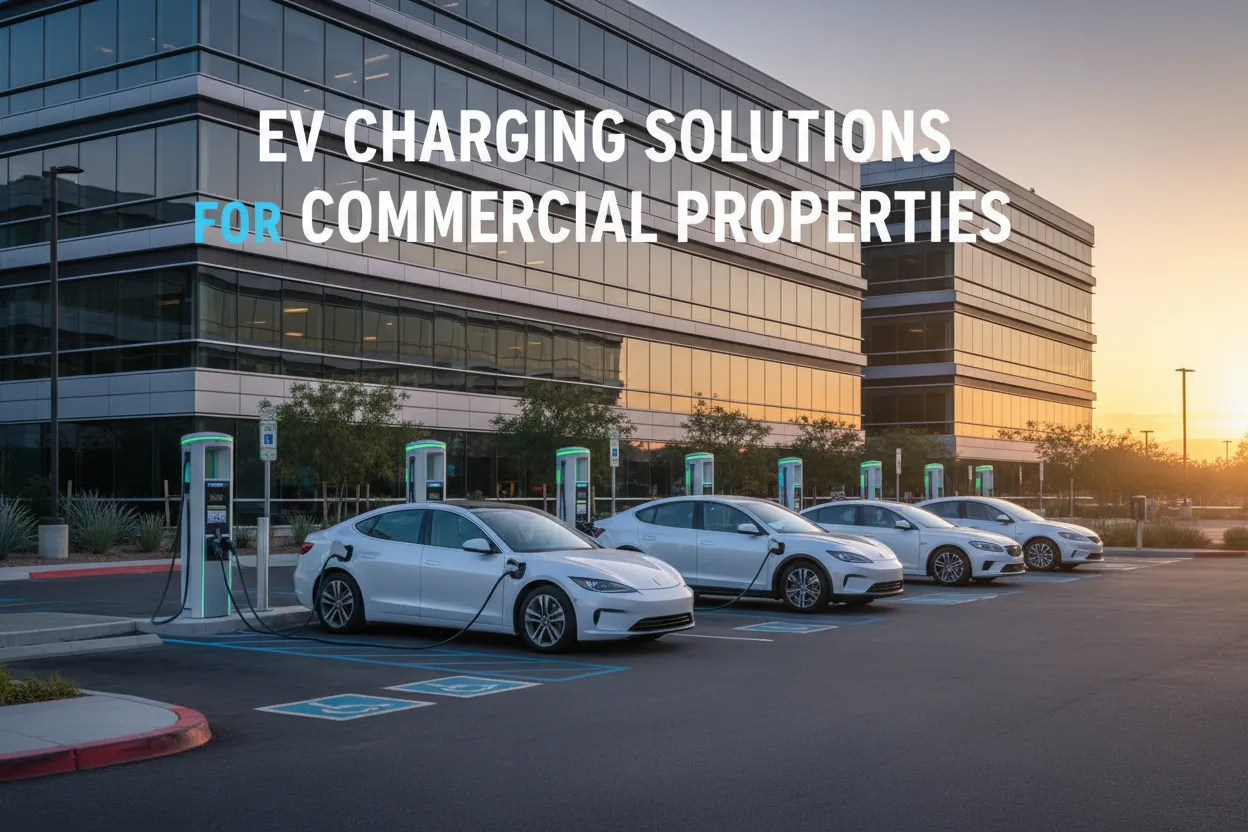
What Are Commercial EV Charging Solutions?
Commercial EV charging products are hardware, software and services that enable organizations to provide their customers, employees or tenants with the ability to charge electric vehicles in a commercial environment.Vendors tend to offer a combination of the following:
Core Components of a Commercial EV Charging Setup
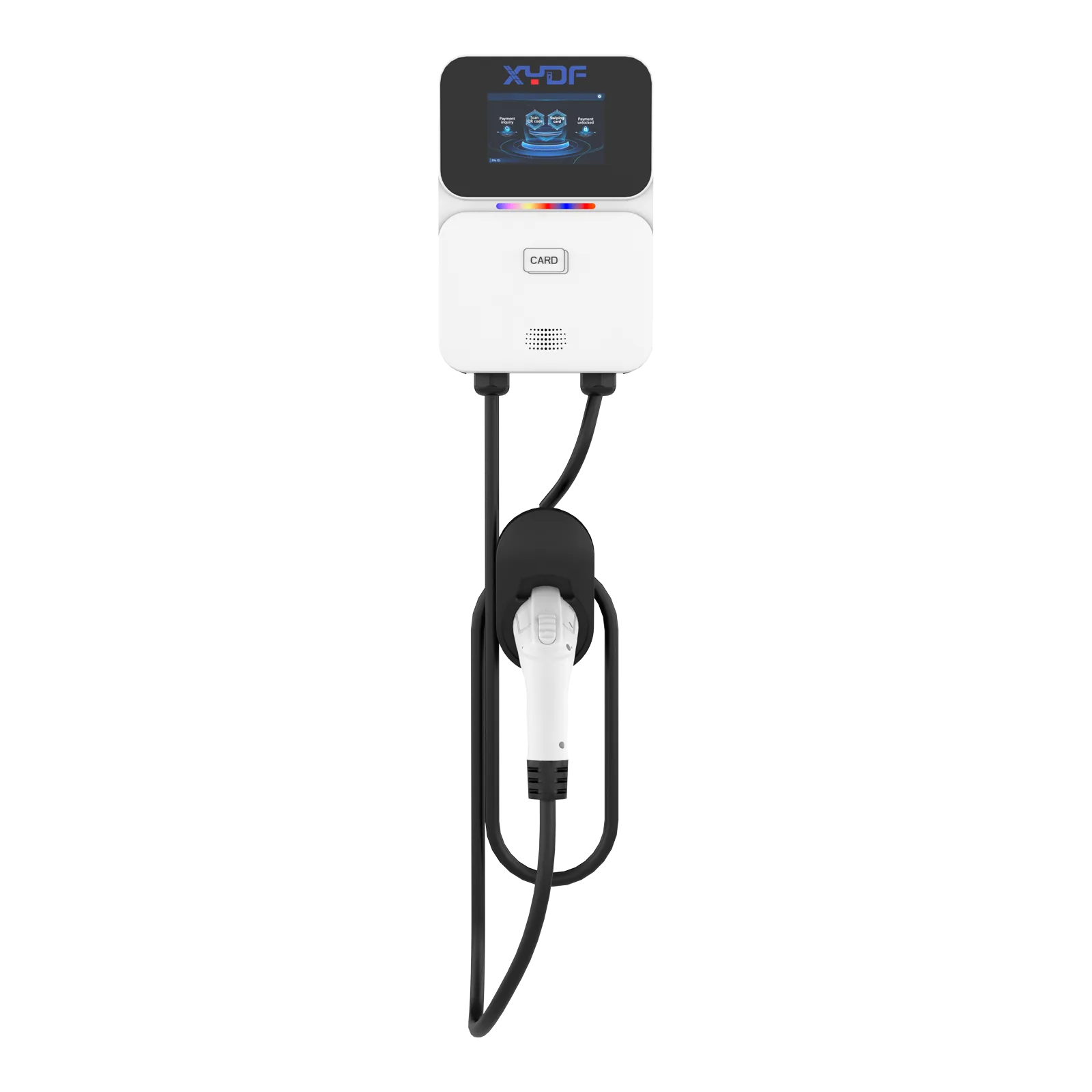
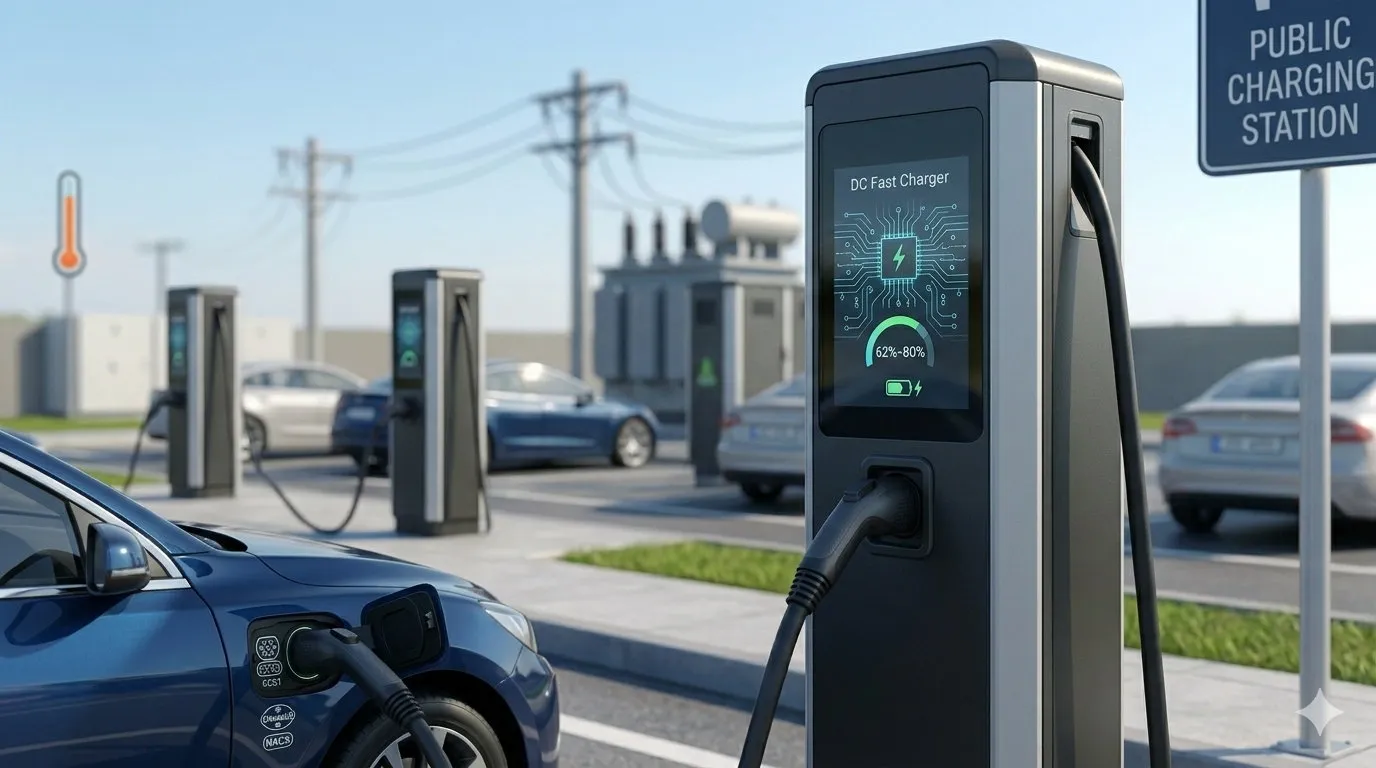
EV Charging Stations: Level 2 AC chargers (240V, 10-80A) for daily use, or DC fast chargers (480V+, 50-350kW) for quick top-ups.
Networking Software: Cloud-based network software to orchestrate charging sessions, monitor usage, and configure pricing options such as pay-per-use and subscription models.
Hardware Accessories: Cable management, weatherproof enclosures and power load balancing.
Installation & Maintenance Services: Expert site evaluation, electrical enhancements and continuous support for maximum uptime.
Choosing the Right EV Charging Equipment for Your Property
Key Equipment Types & Specifications
Level 2 AC Chargers: – Power rate: 7kW-19kW (adds charge at a rate of 20-60 miles of range per hour of charging) – Suitable for: Office buildings, hotels, and shopping centers where guests are there for 1 hour or more.
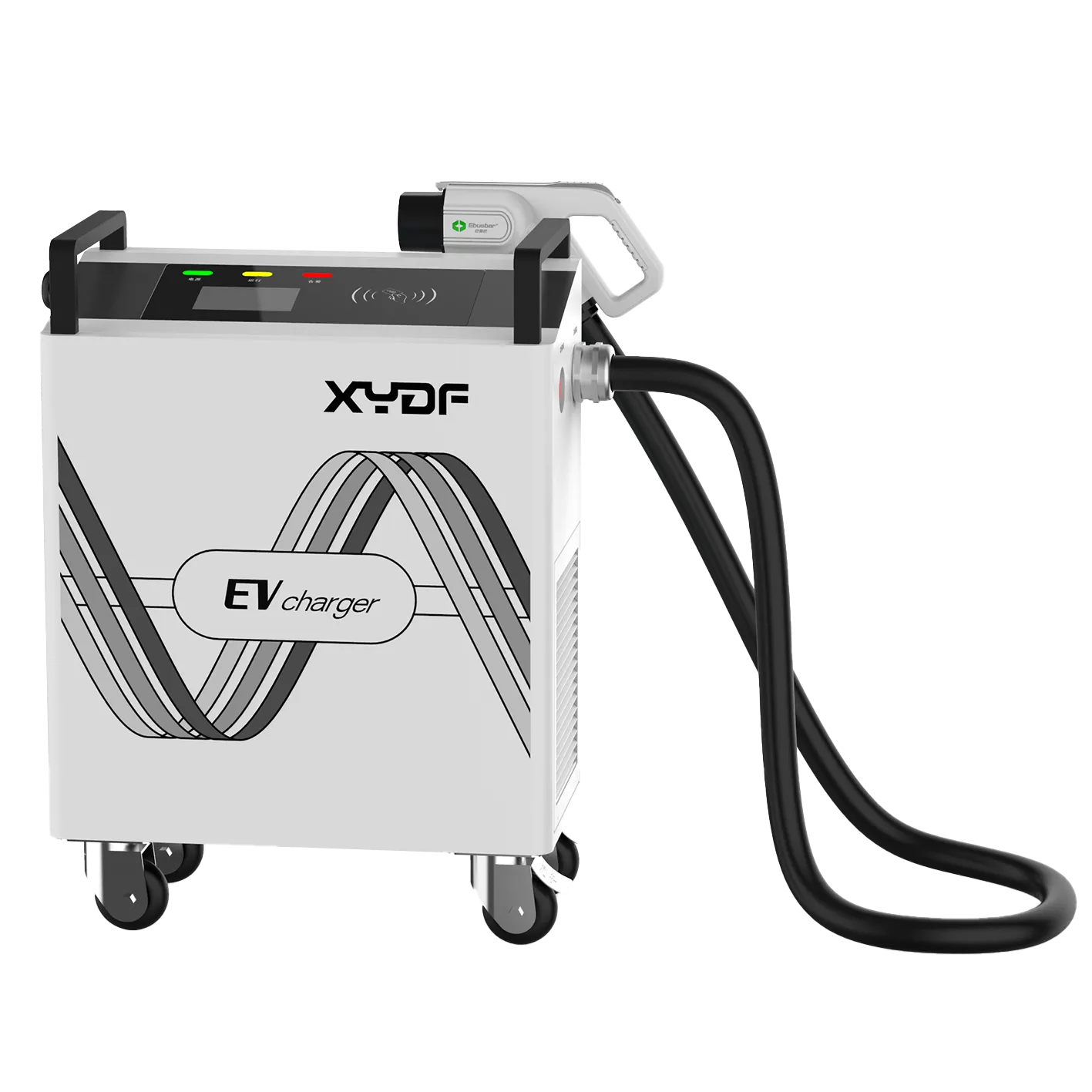
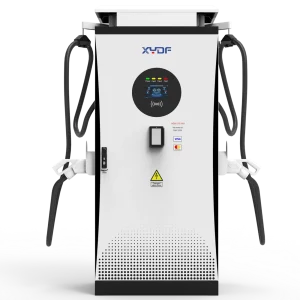
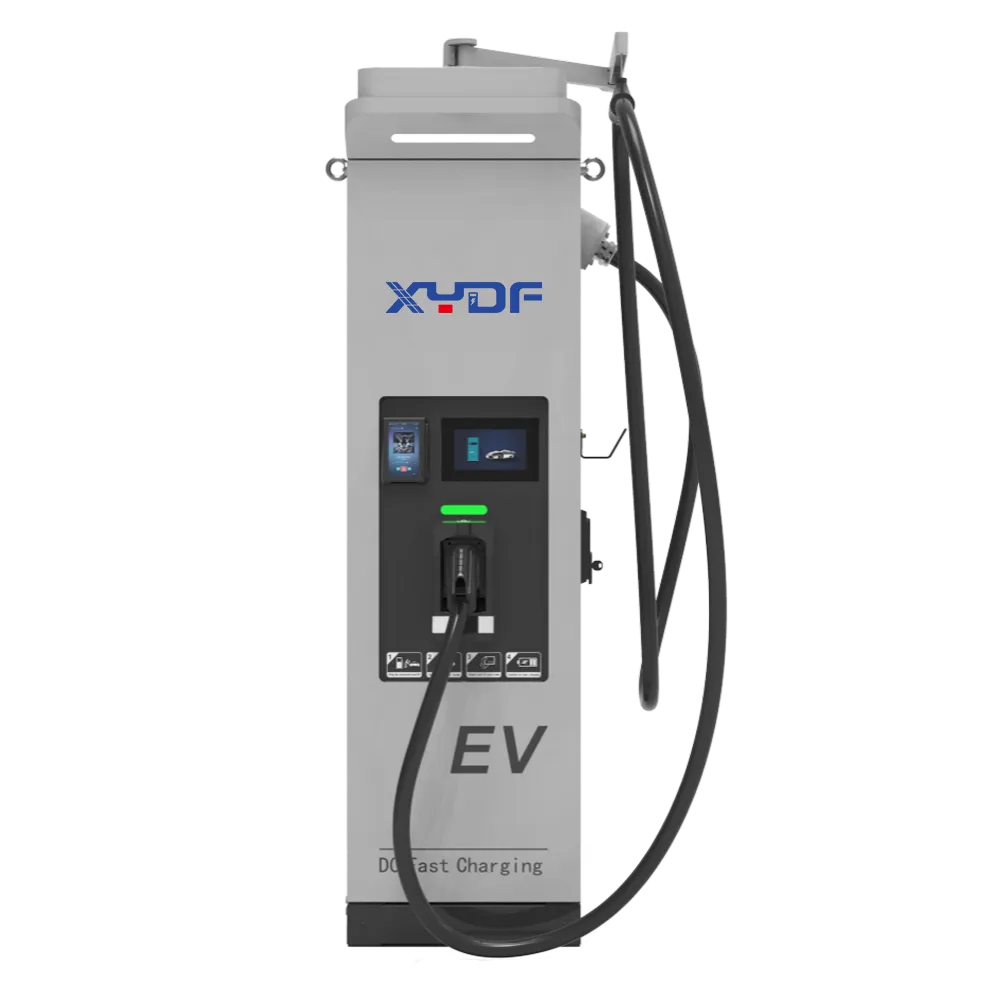
DC Fast Chargers: – Power: 50kW-350kW (charges at a rate of 100-350 miles of range per 15-45 minutes) – Best for: Highway rest areas, gas stations, and crowded retail locations.
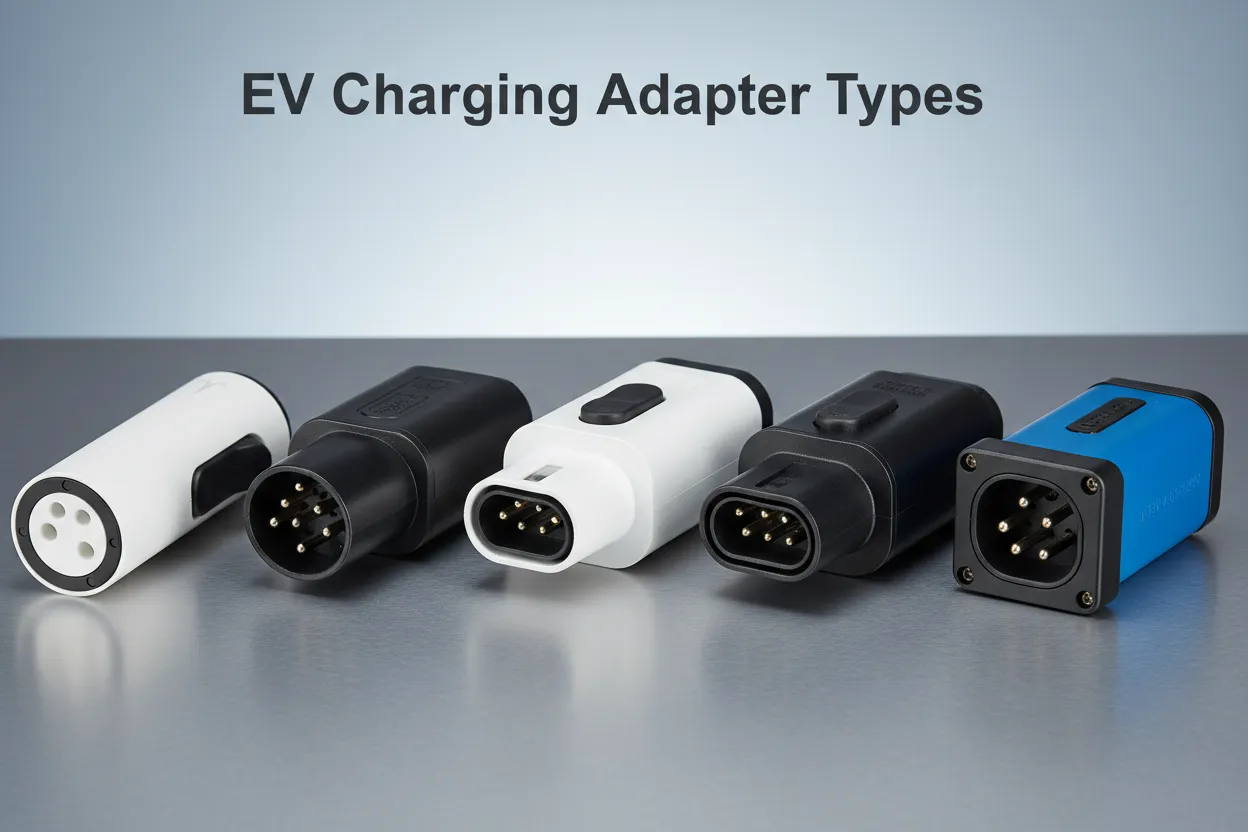
Wireless EV Chargers: – Output power: 7kW-11kW (charges without using physical cables) – Suitable for: High-end hotels, parking garages, and premium office buildings.
Top Commercial EV Charging Station Manufacturers
Global Leaders in Reliable Charging Infrastructure
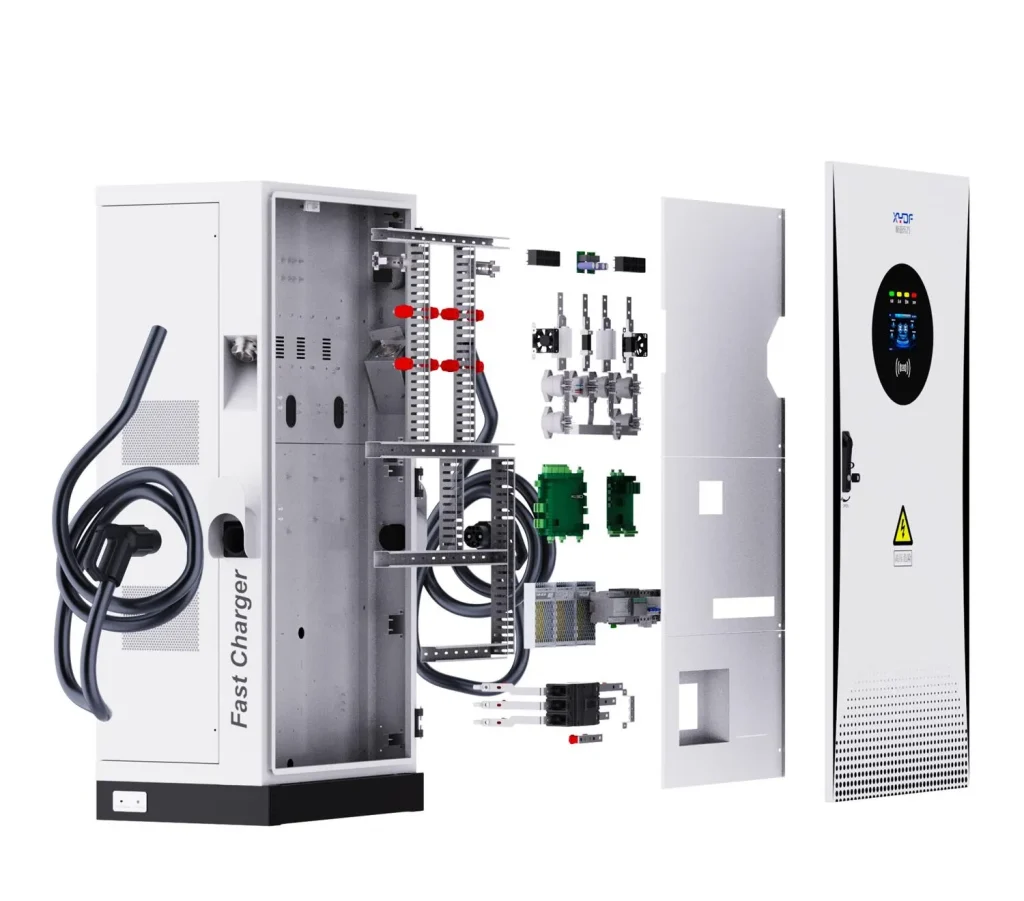
XYDF: Supported by a Shenzhen R&D Center and a 40,000 square meters manufacturing base, XYDF has developed with China’s charging infrastructure in the past decades. With deep industry knowledge and supply chain access, the company provides local, customized EV solutions to partners globally — from Level 2 chargers and beyond high-power DC fast charging stations.
ChargePoint: All-in-one scalable solution charge hardware network management software suited to big commercial customers.
EVBox: The European frontrunner in smart charging stations, recognized for its clean, modern design and intuitive user interface designed for retail hospitality outlets.
ABB E-mobility: Global leader in high-power DC fast chargers, relied on by highway operators and transit hubs for heavy-duty use.
Commercial EV Charging Station Cost: A Detailed Breakdown
Total Investment to Buy Commercial EV Charging Stations
Equipment Cost: – Level 2 chargers: $1,500-$5,000 per unit – DC fast chargers: $10,000-$50,000 per unit (120kW models average $25,000) – Wireless chargers: $3,000-$10,000 per unit
Installation Cost: – $500-$3,000 per Level 2 charger (includes electrical upgrades, permits, and labor) – $5,000-$20,000 per DC fast charger (requires high-voltage electrical infrastructure)
Ongoing Costs: – Electricity: $0.10-$0.30 per kWh (varies by location) – Maintenance: $100-$500 per unit annually (software updates, cable inspections, and repairs)
Total for a 4-station Level 2 setup: ~$12,000-$32,000; Total for 2 DC fast chargers: ~$60,000-$140,000
Installation & Maintenance Best Practices for Commercial EV Charging Stations
Ensure Longevity & Reliability
Installation: – Conduct a site visit to assess electrical service, parking configuration, and flow of users – Select convenient locations (close to entrances, within the distance acceptable for exposure in covered parking) to maximize usage – Utilize licensed electricians with EV charging infrastructure experience
Maintenance: – Inspect cables, connectors and displays for damage on a monthly basis – Release quarterly software updates for the charging to fix bugs and add new features – Have your charger professionally serviced every year for a power and safety check
FAQ: Your Commercial EV Charging Questions Answered
Are commercial EV charging stations profitable?
Yes, when strategically implemented. Revenue streams include pay-per-use charging fees ($0.25-$0.75 per kWh), subscription plans ($20-$50/month for unlimited access), advertising on charging station screens, and increased customer spending (as seen in the Texas mall example). Many properties recoup their investment in 2-5 years.
What is the average cost of a commercial EV charging station?
The average cost ranges from $2,000-$25,000 per unit, depending on type. Level 2 chargers average $3,000 including installation, while DC fast chargers average $30,000 including installation. Total project costs scale with the number of stations and electrical upgrades needed.
How do commercial EV charging stations work?
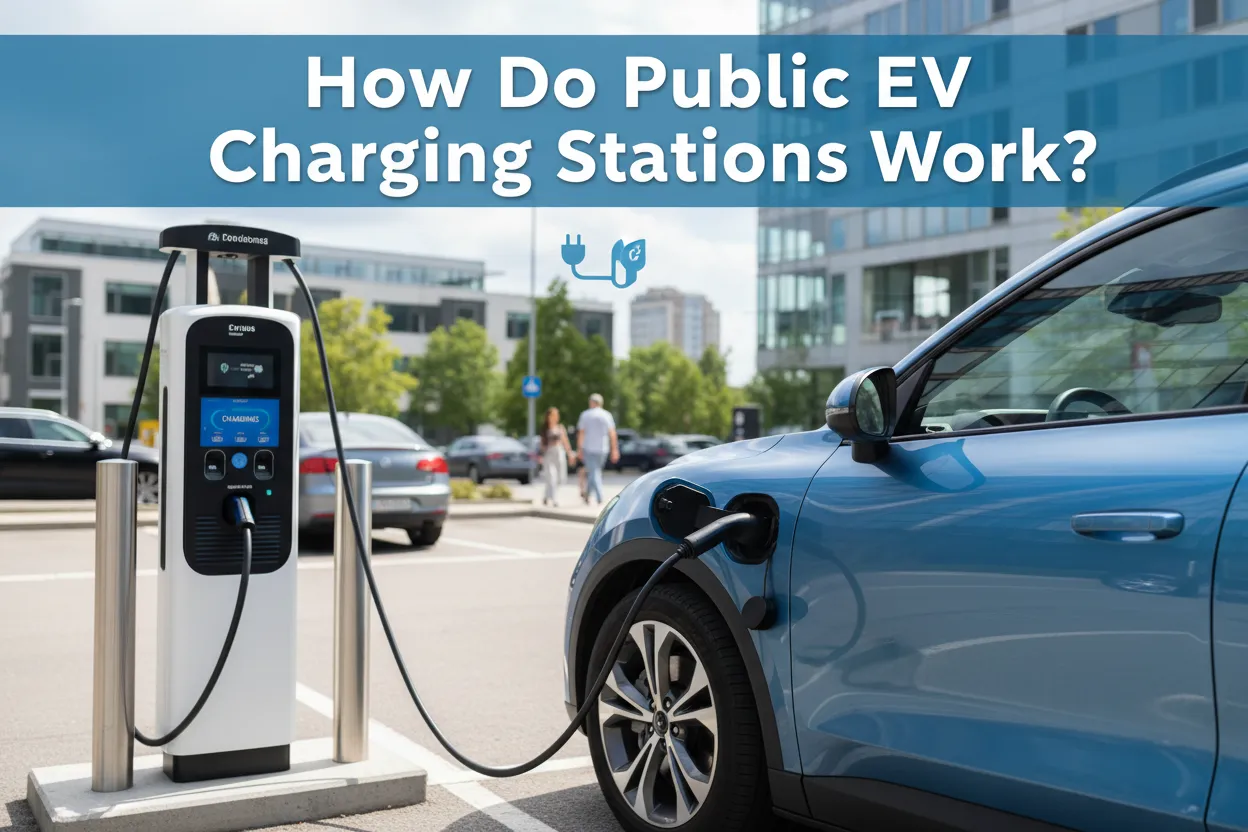
Commercial stations connect to the property’s electrical grid and use network software to manage charging sessions. Users start charging via a mobile app, RFID card, or credit card payment. The station converts AC grid power to DC power (for fast chargers) or delivers AC power directly to the vehicle’s onboard charger (for Level 2 units). Usage data and payments are tracked automatically via cloud-based platforms.
What incentives are available for commercial EV charging installations?
Many governments offer tax credits, grants, or rebates to offset costs. For example, the US Federal Government provides a 30% tax credit (up to $30,000) for commercial charging installations. Local utilities may also offer demand response programs or reduced electricity rates for charging stations.
When planning EV charging solutions for your commercial space, start by assessing the needs of your users: your office tenants may need Level 2 chargers to charge all day, while your retail shoppers can utilize the fastest charging technology available.
Calculate your total upfront investment, including installation and maintenance, then look for revenue streams like pay-per-use fees and advertising to bring in money. And you can also attract away other EV drivers and get positioned as a forward-looking, customer-centric stop in the growing electric vehicle ecosystem by focusing on experience and longevity dependability.
 Xinya Dongfang Electricity Technology Co., Ltd.