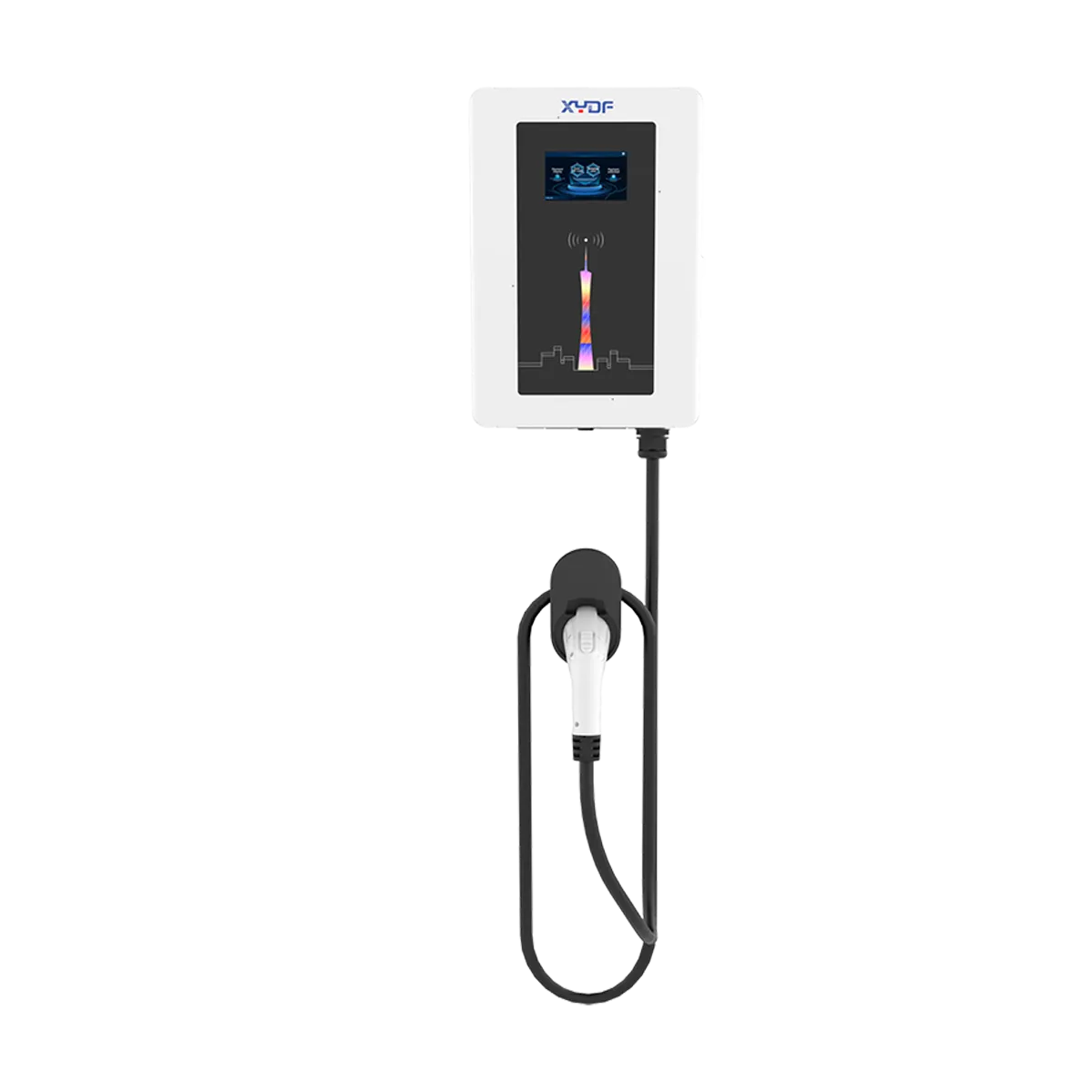
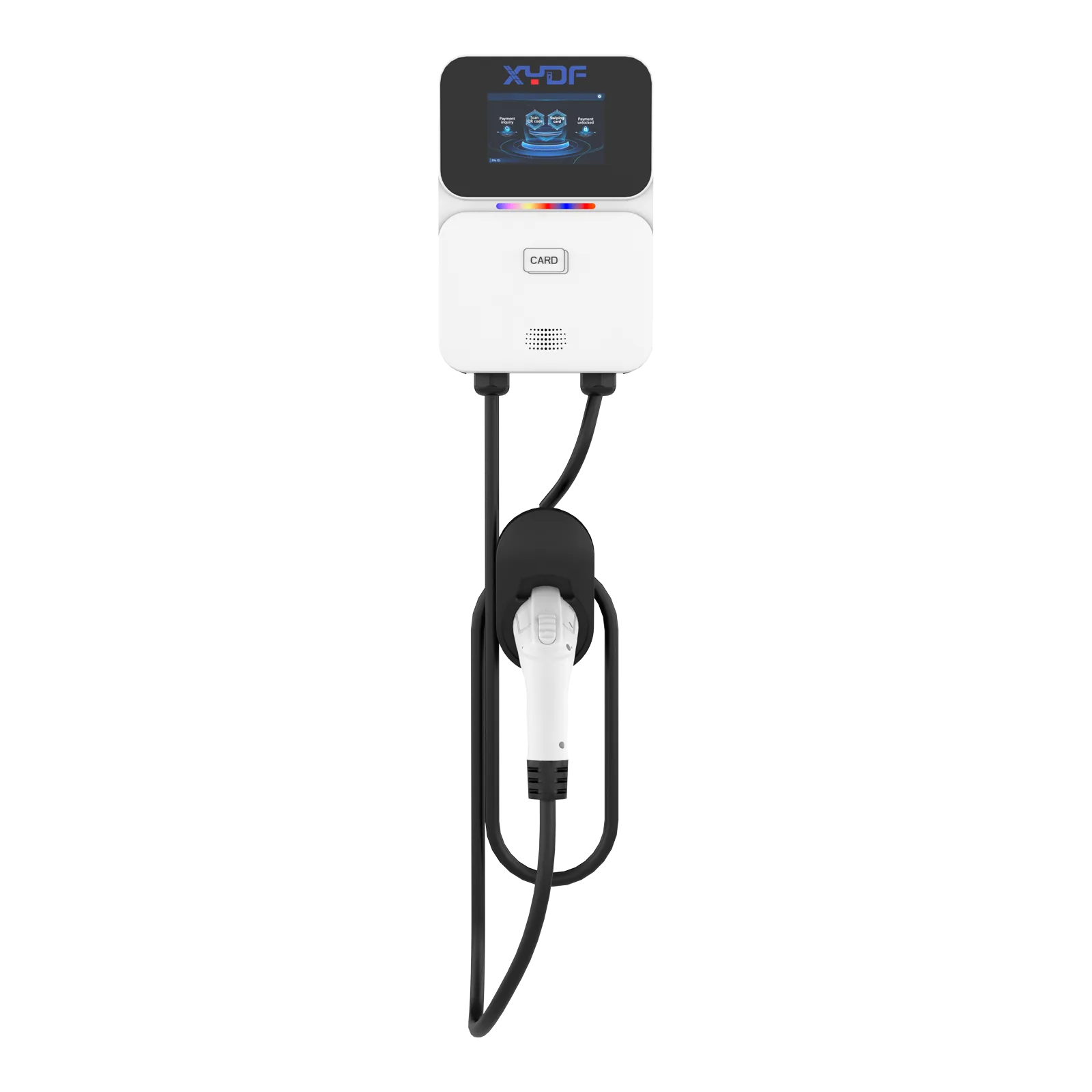
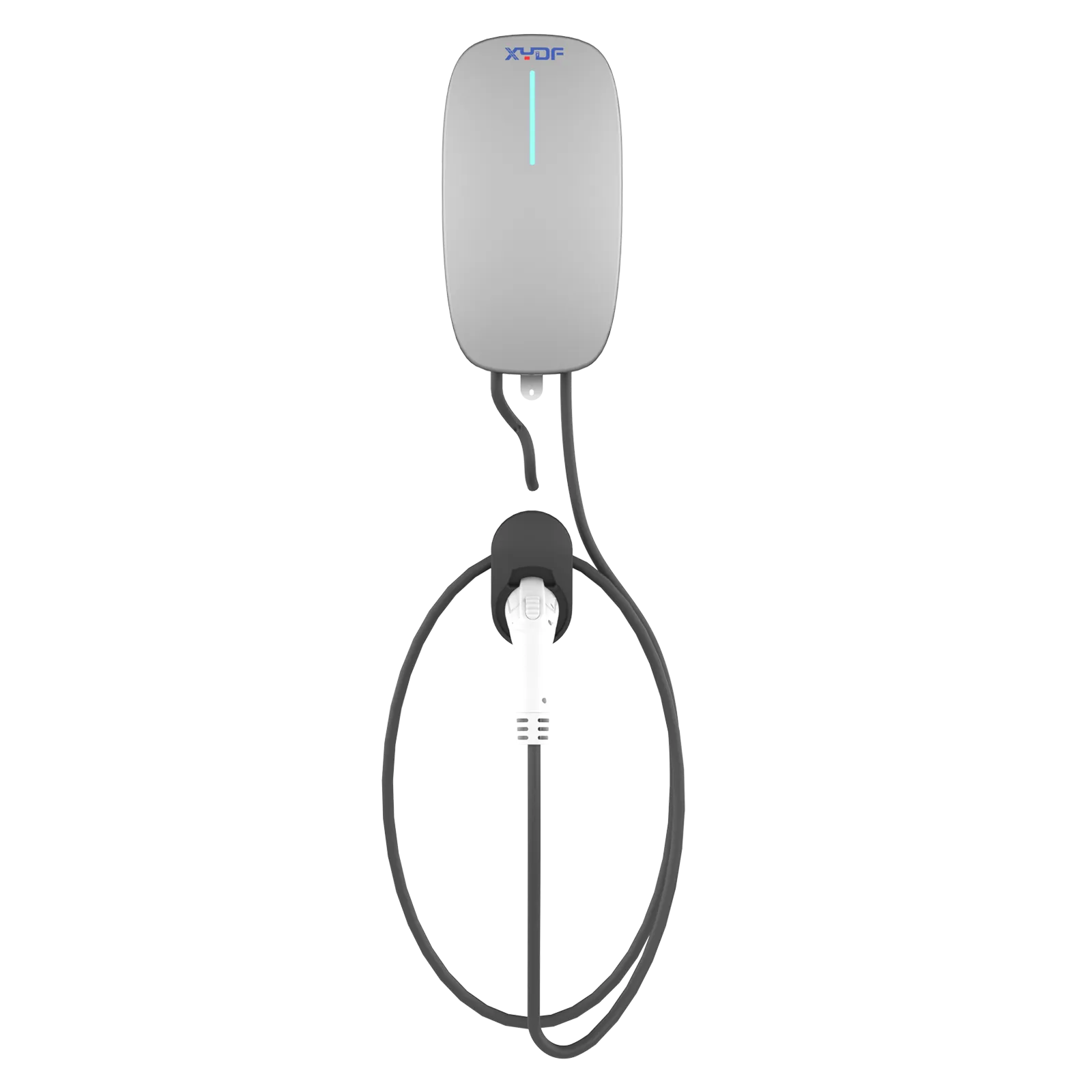
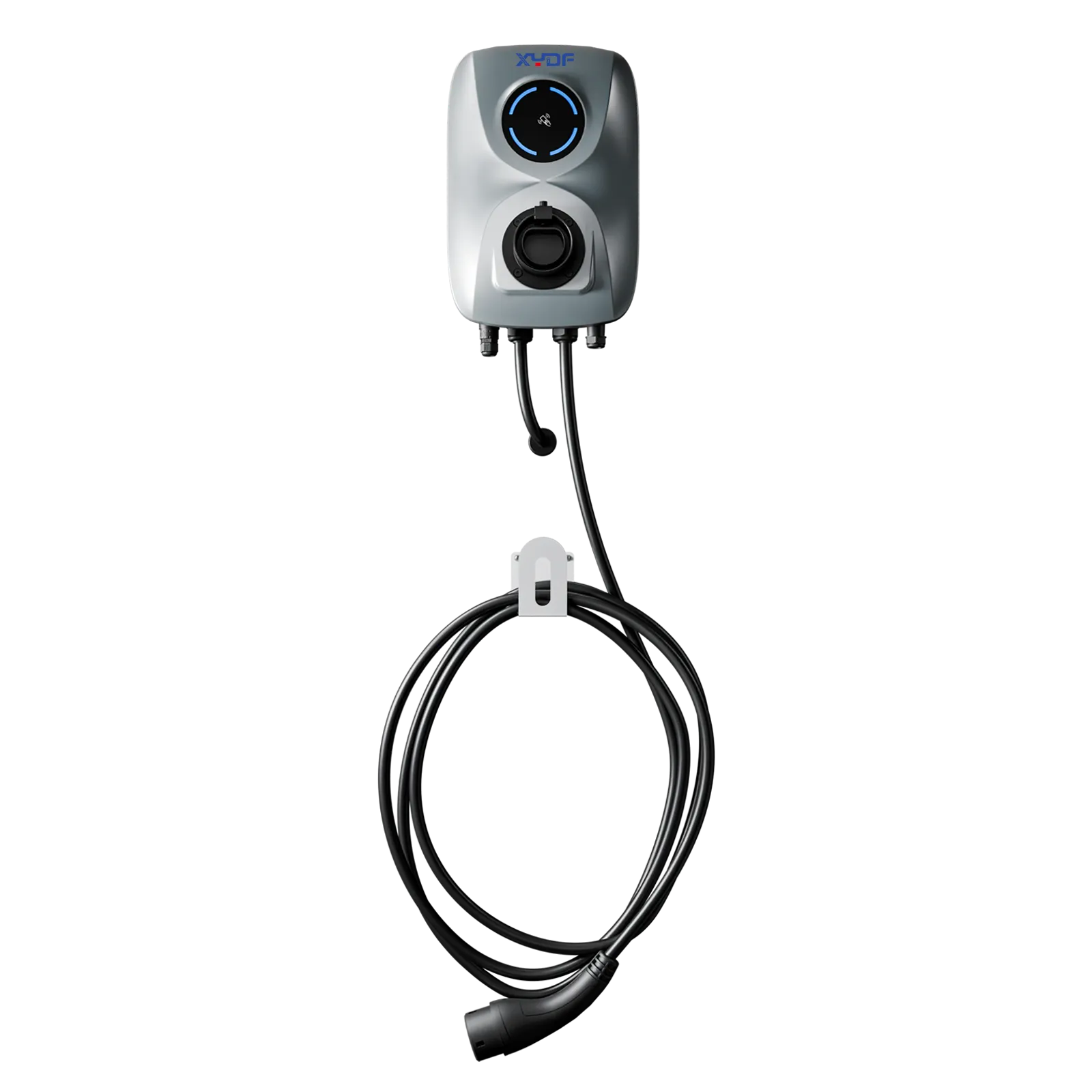
Different from public EV chargers, charging EV at home can save you the trouble of competing for parking spaces and waiting for charging. Residential charging ensures your electric vehicle is fully charged at night and is ready for your daily trips. Apart from this, charging EV at home is also cheaper to help you save money. In this guide, we’ll provide you with a detailed explanation of everything you need to know about charging EV at home.
Types of EV Charging Stations: Which One Is Right for You?
Not all EV charging stations are the same, and how to choose the right one depends on your EV model, your home’s electrical capacity, and your daily driving habits. Here are the common types to of EV charger:
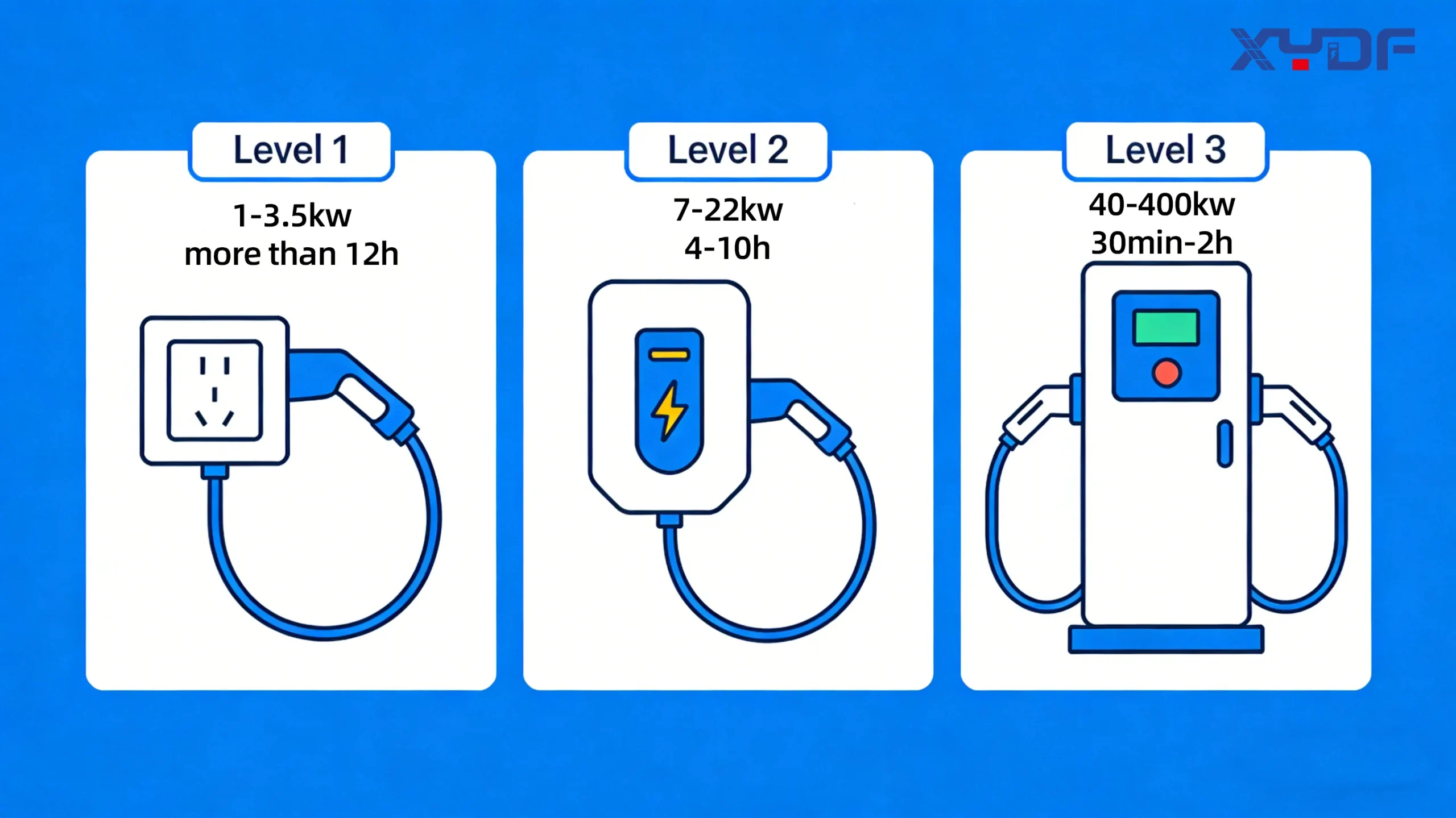
Level 1 Charging (120V): This is the most basic type of home charging. Using 120V circuit, it can be used by be plugged into a socket. However, Level 1 charger provides roughly 10-15 km of range per hour, which makes it takes over 20 hours to fully charge most EVs. It’s ideal for people who drive short distances or who don’t mind over 20 hours charging time, but it’s not practical for those with longer commutes or large EV batteries.
Level 2 Charging (240V): This is the most popular choice for home charging, as it’s faster than Level 1 and affordable. Level 2 EV charging station requires 240V circuit and can add 30-50km of range for EV per hour, which is enough to fully charge most EVs overnight (8-10 hours). Level 2 stations come with smart features like Wi-Fi connectivity, app control, and scheduling (so you can charge during off-peak hours to save money on electricity).
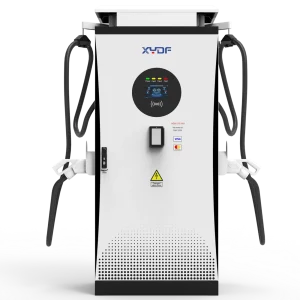
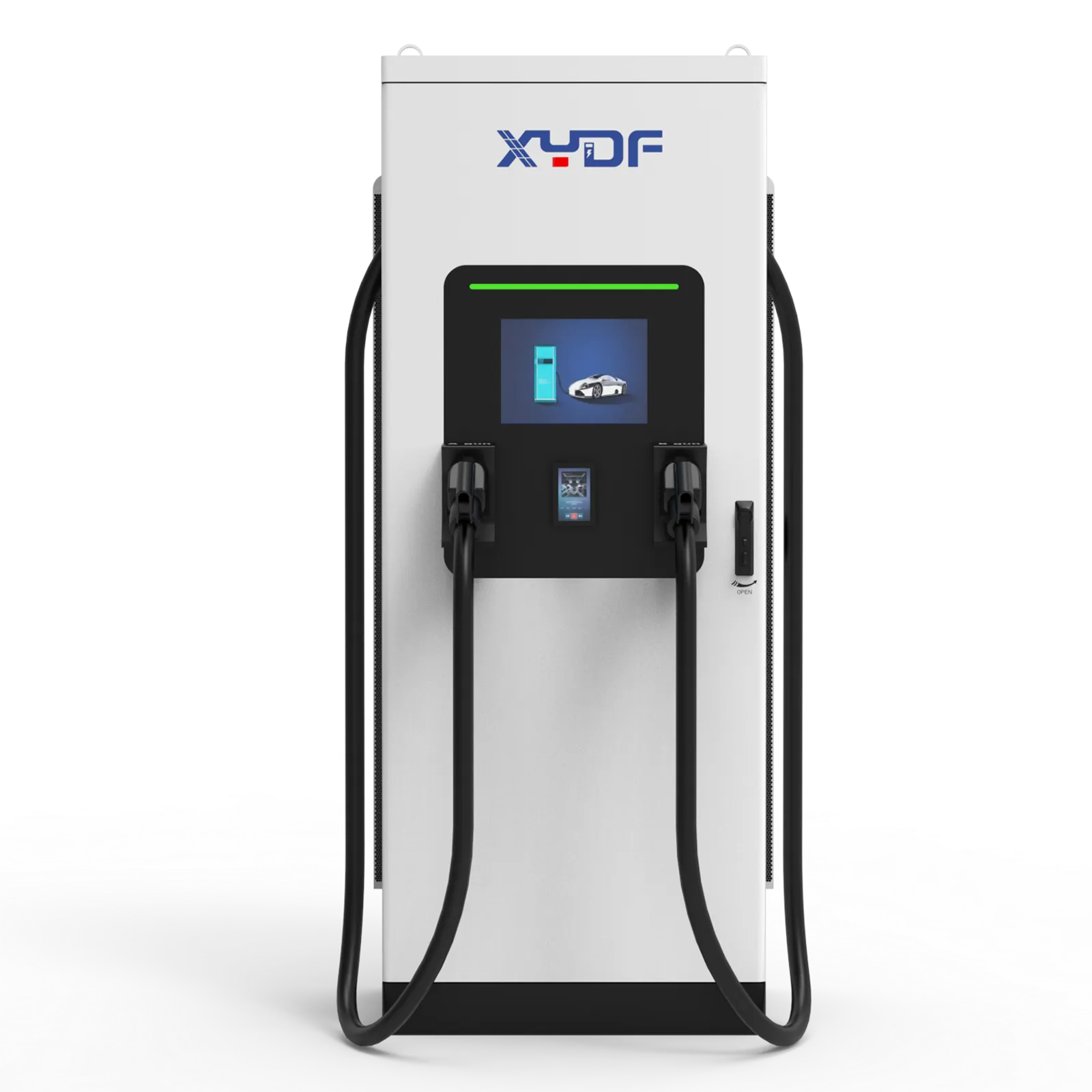
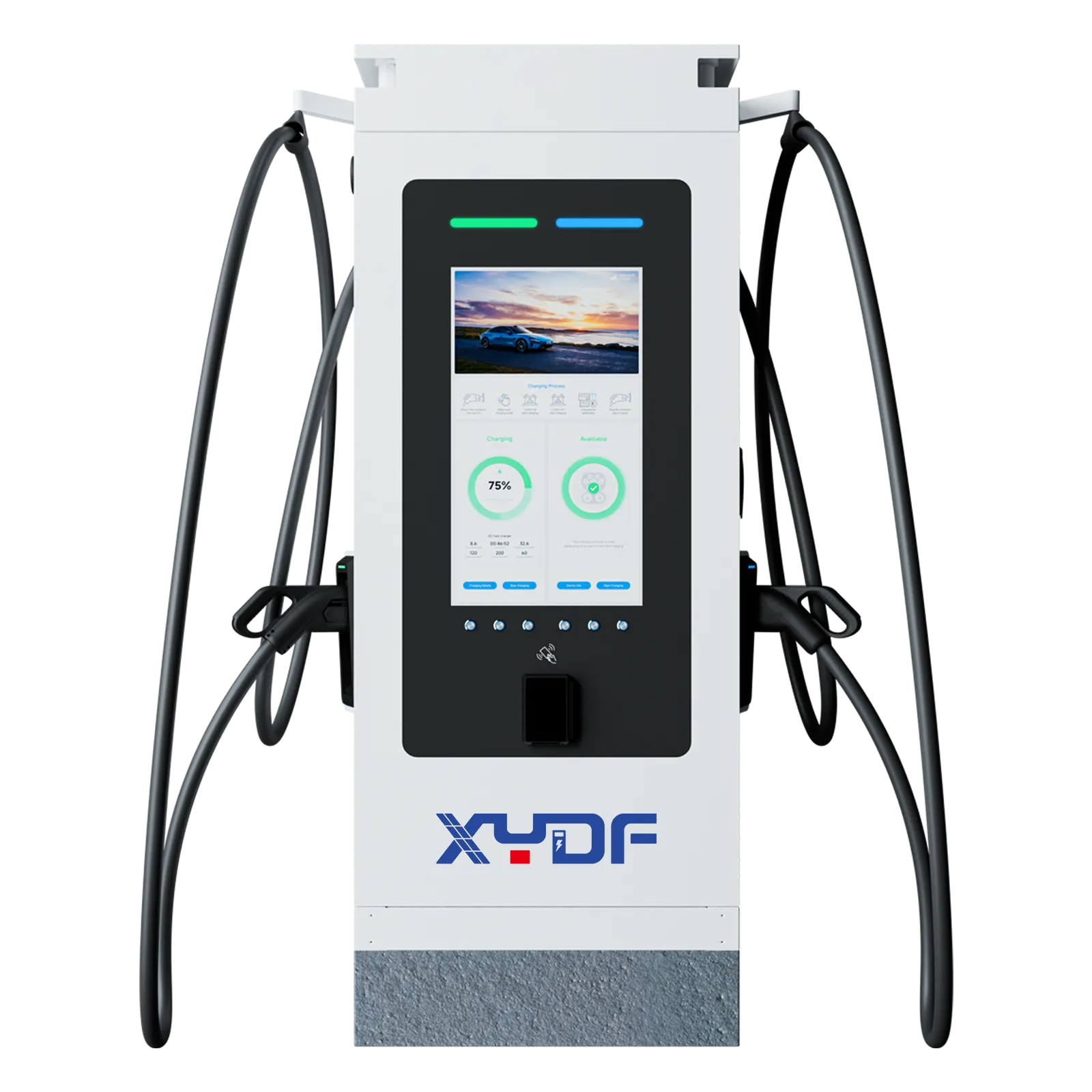
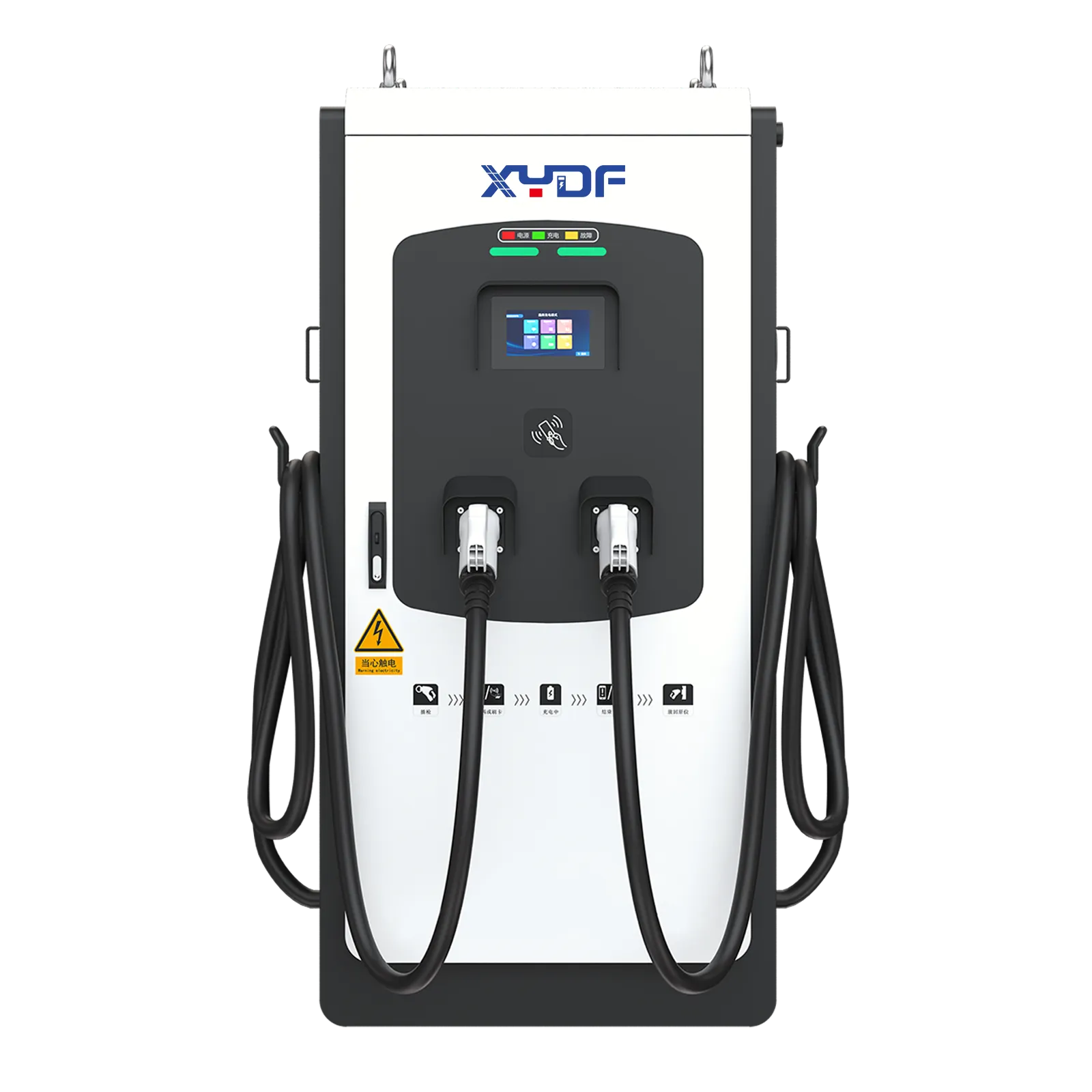
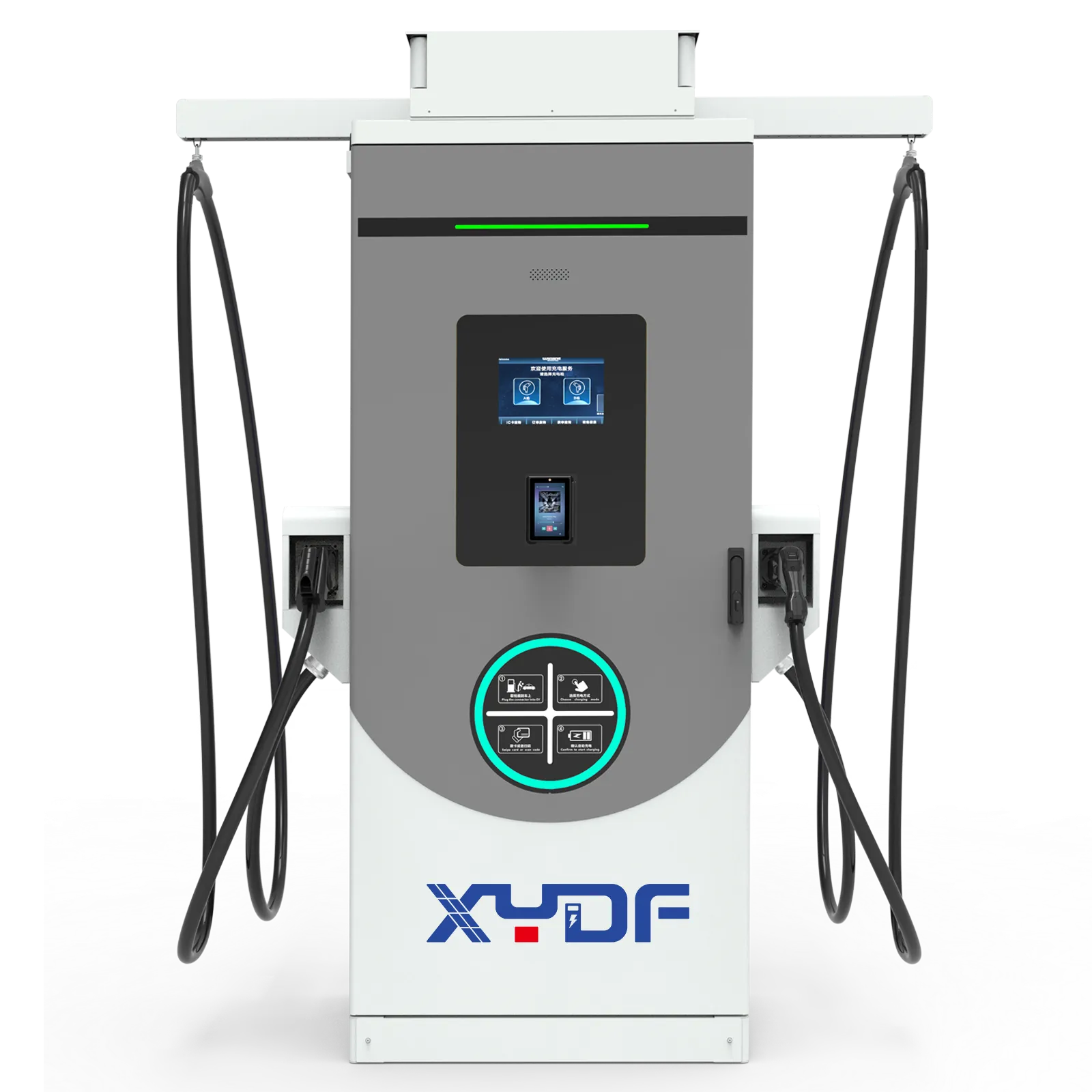
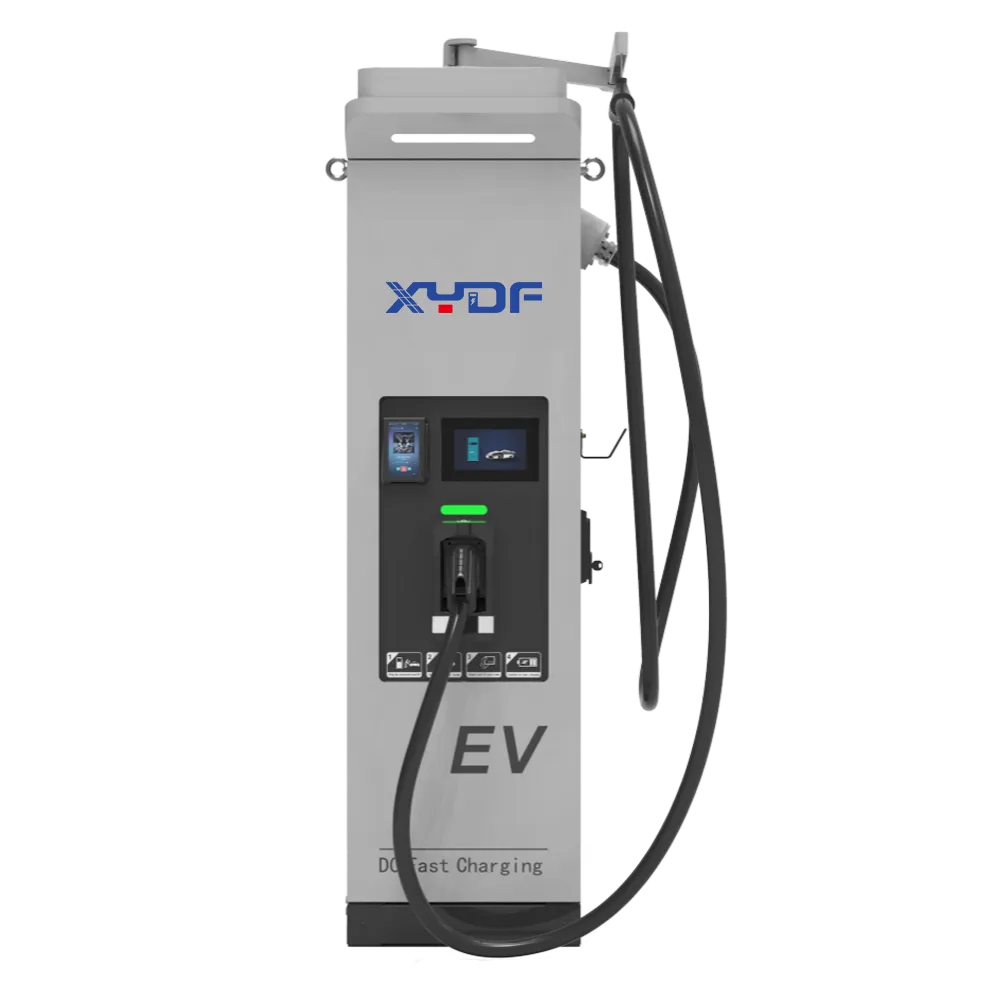
Level 3 DC Fast Charging: Level 3 chargers are common in public parkings, but rarely used for home charging. They require a high-voltage electrical connection (400V) that most residential buildings don’t have, and they’re much more expensive to be installed. Unless you have 400V electrical system or need rapid charging, a Level 2 EV charging station is the best choice for residential use.
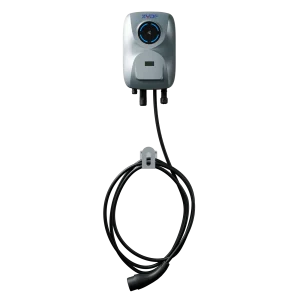
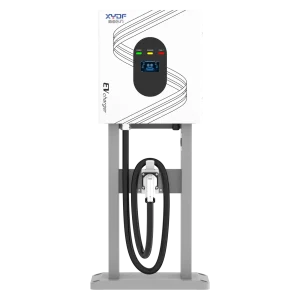
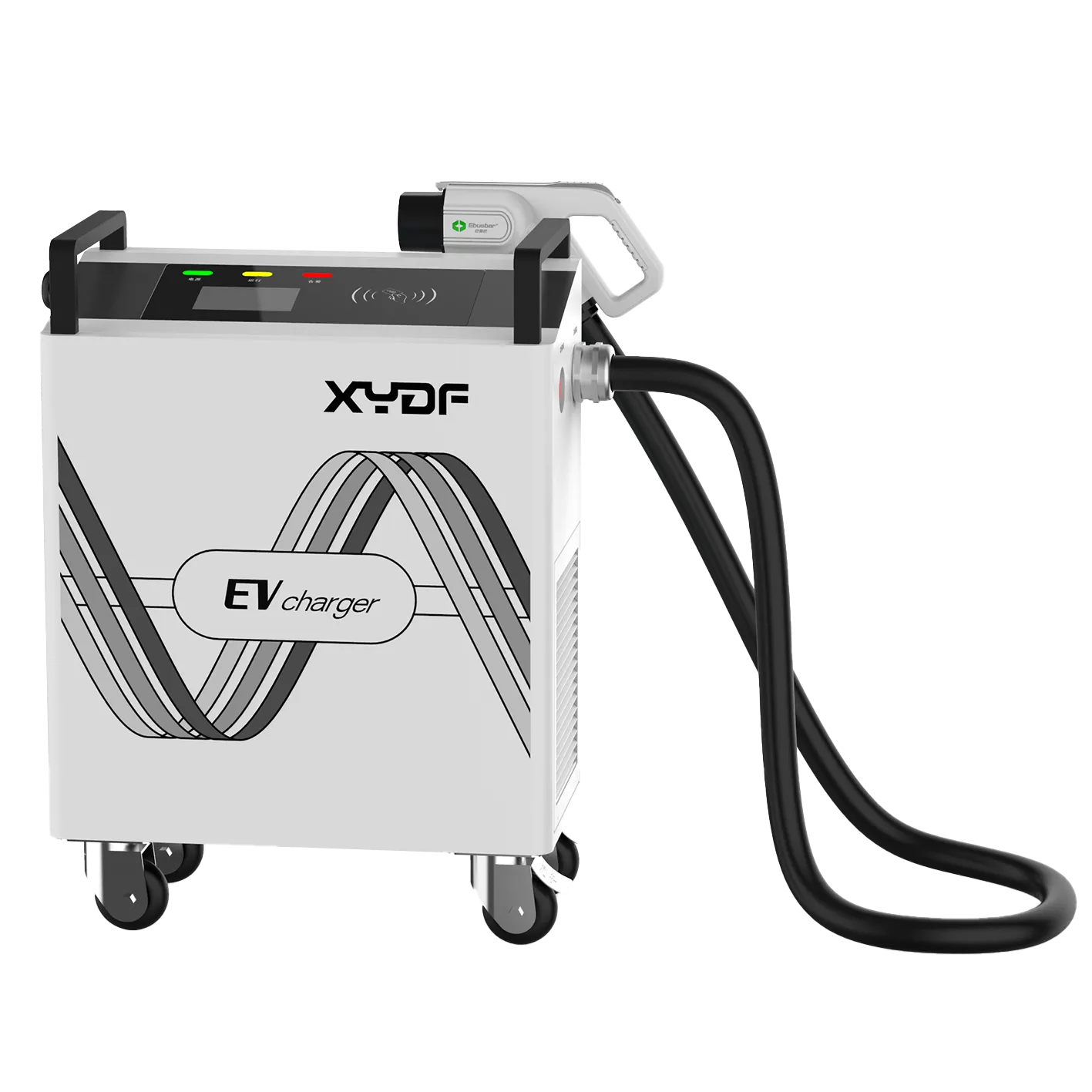
3 Types of EV Charging Stations
How to Install Home EV Charger
Installing EV charger at home is easier than you think, but it does require something to plan. Here’s a process to help you get it started:
Check your house electrical capacity: Before buying an EV charging station, you need to confirm that your home’s electrical panel can handle the additional load. A Level 2 charger requires 240V, 32 amp circuit. If your power lines cannot bear sufficient load, you may need to upgrade it.
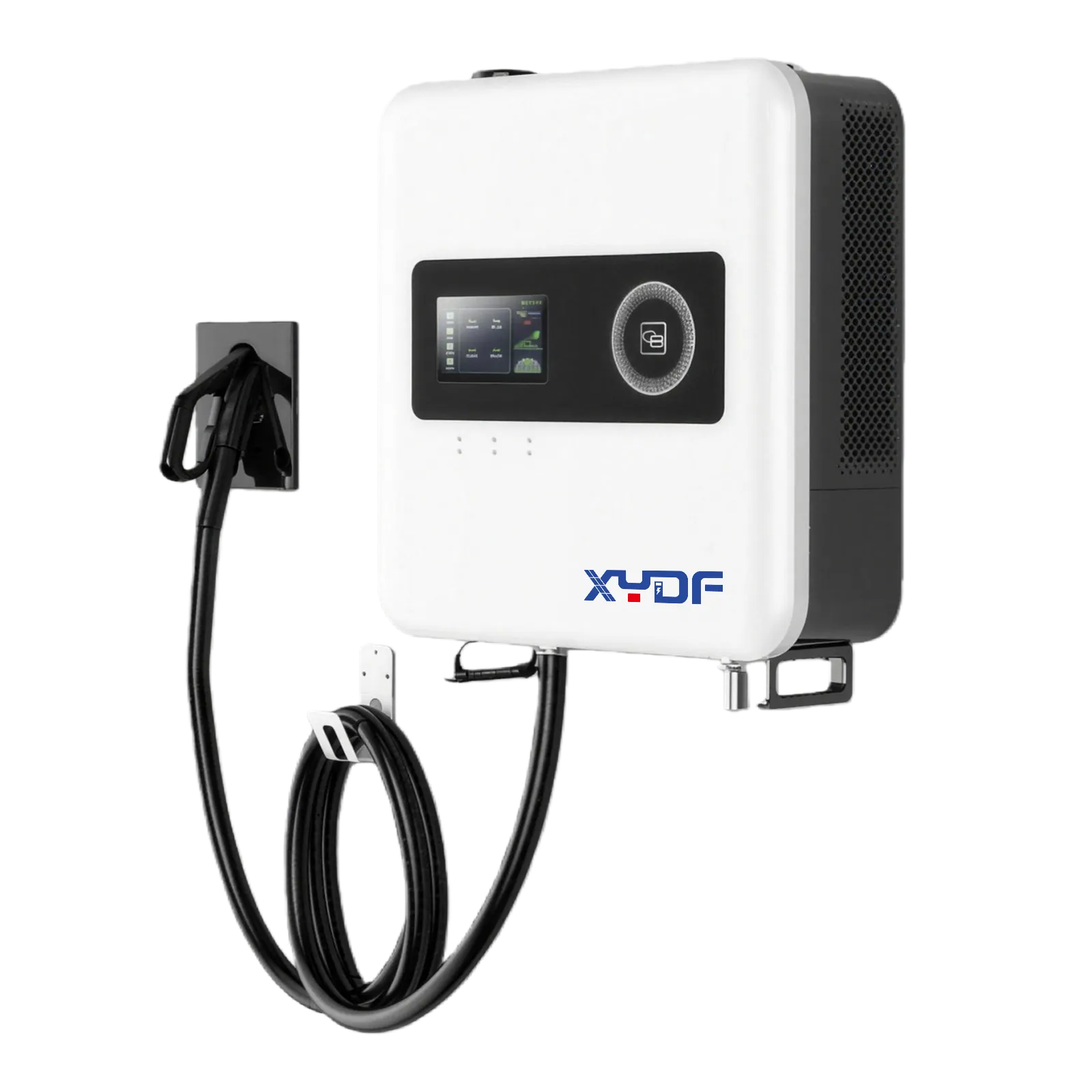
Choose the right EV charging station: As we mentioned earlier, Level 2 chargers are the best option for most homes. Look for a station that is compatible with your EV model (Most are universal, but it’s always good to check). And choose qualified manufacturers with stable and reliable production quality. XYDF specializes in producing high-quality, user-friendly home EV charging stations that meet international standards like IEC 61851. One of XYDF’s most popular models is XY AC-E7KW Level 2 EV charging station—ideal for most residential users.
Hire a licensed electrician for installation: While some portable Level 1 chargers can be plugged into 120V outlet, most Level 2 EV charging stations require being wired to your house electrical system. And this is not a DIY task—hire a licensed electrician to ensure the installation is safe, compliant with local codes, and properly grounded.
Test your charging station: After the installation is completed, test your EV charging station by plugging in your EV and starting a charge. Most stations have indicator lights to show if the charge is successful. If any issues, contact your electrician or the charger manufacturer for support.
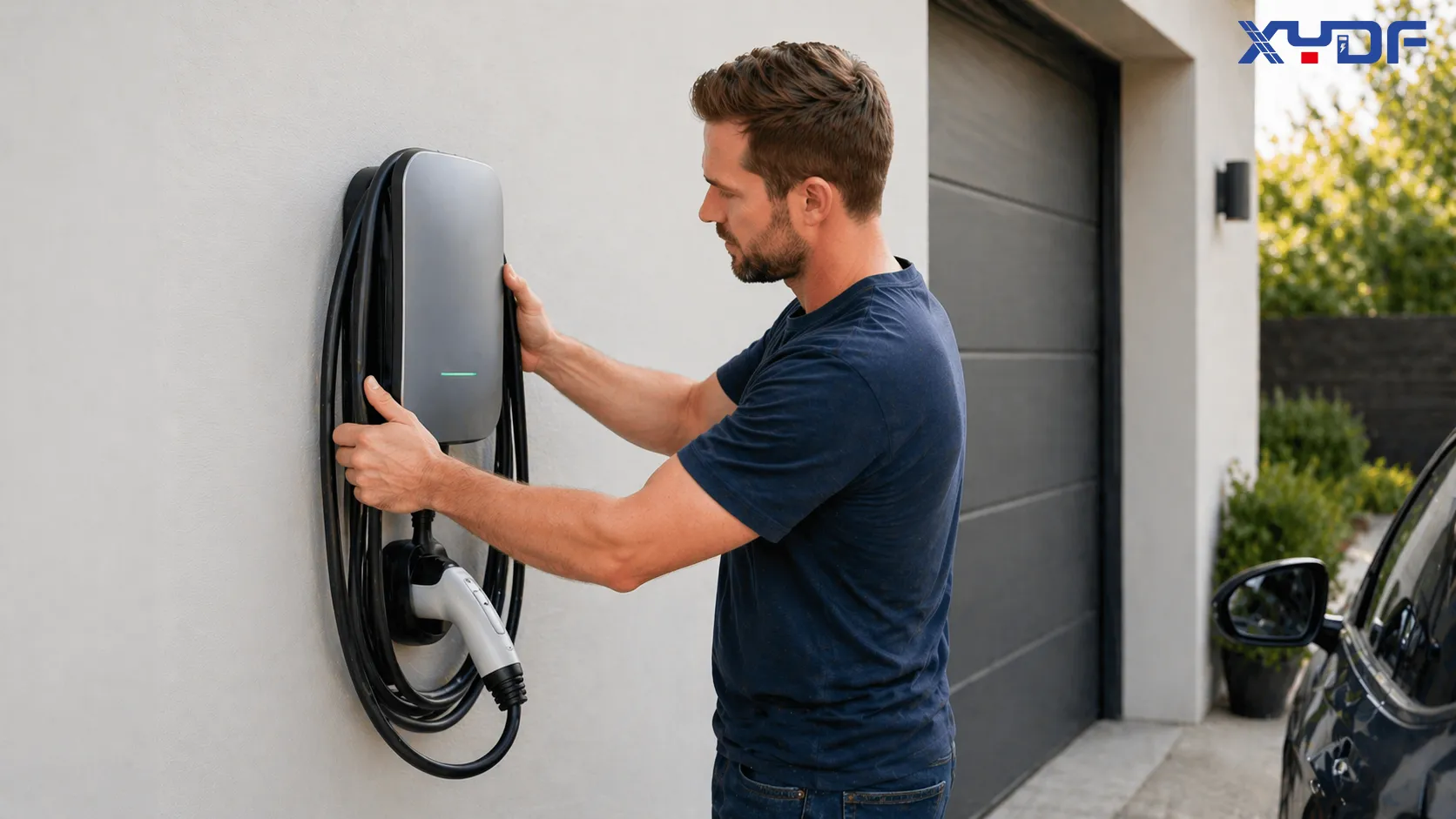
A man is installing a home EV charger.
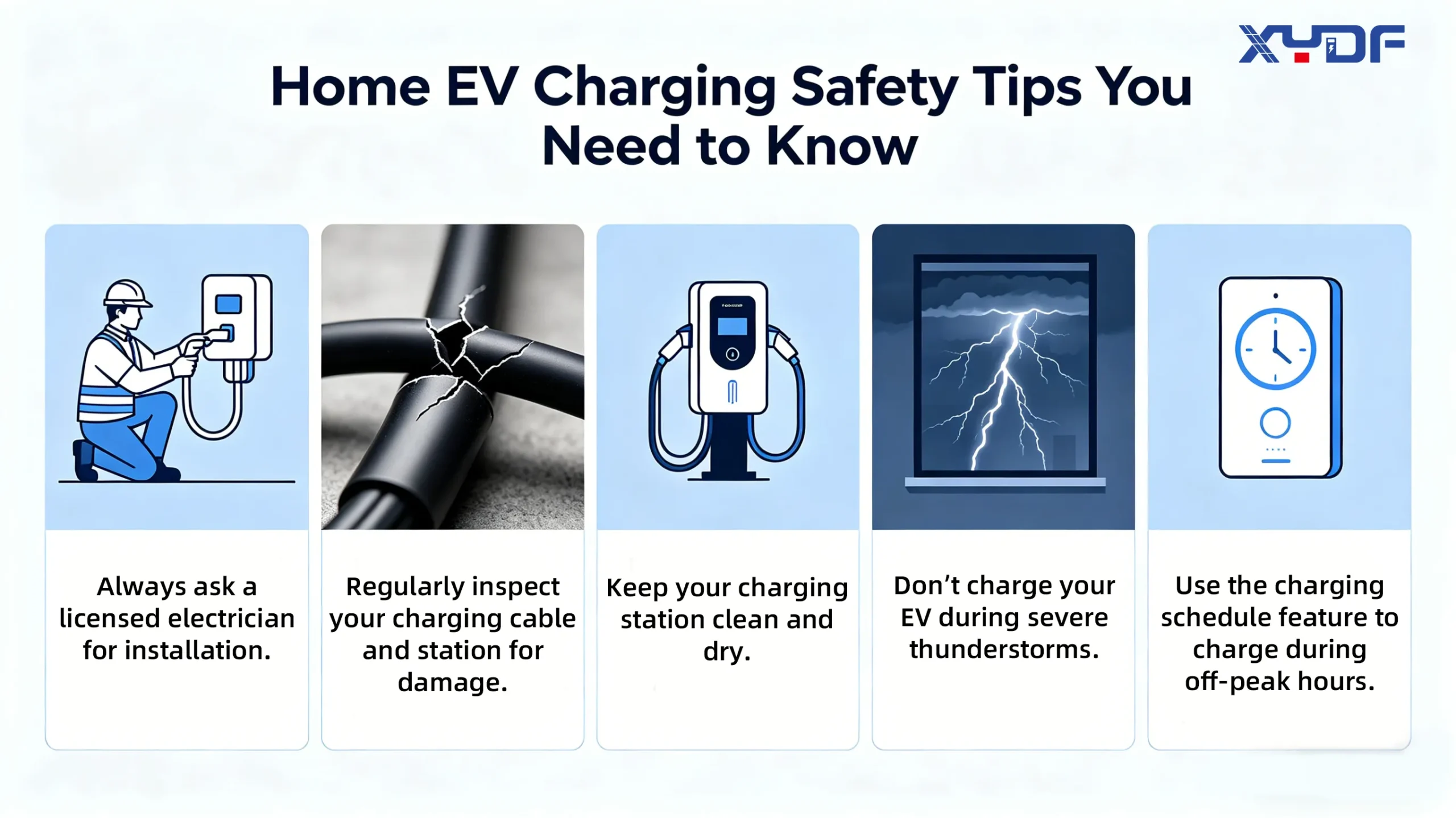
Home EV Charging Safety Tips You Need to Know
Safety is a top priority when charging your EV, and these following tips will help you avoid accidents and keep your vehicle and house safe:
Always ask a licensed electrician for installation. Improper wiring can lead to fires, electric shocks, or damage to your EV.
Regularly inspect your charging cable and station for damage (like cracks, frays, or loose connections) and replace any damaged parts immediately.
Keep your charging station clean and dry. Avoid installing it in areas with standing water or excessive moisture (even EV charger with a waterproof rating).
Don’t charge your EV during severe thunderstorms. Lightning can cause power surges that damage your charger or EV.
Use the charging schedule feature (if available) to charge during off-peak hours—this will not only save your money on electricity but also reduce strain on the power grid.
Home EV Charging Safety Tips You Need to Know
FAQ: Common Questions About How To Charge EV at Home
Here’s an FAQ section for most common concerns from EV charger buyers:
Q: How much does it cost to install a home EV charging station?
A: The cost varies depending on the charger model and installation requirements, but most Level 2 EV charging stations price between $300 and $800, with installation adding $500 to $1,500 (if you need to upgrade your electrical panel, costs may be higher). Over time, home charging is much cheaper than public charging—you’ll typically pay $0.10 to $0.20 per kWh, compared to $0.30 to $0.50 per kWh at public stations.
Q: Can I install a home EV charging station if I live in an apartment?
A: Yes. More and more apartments and condos are adding EV charging stations in their parking areas. If not, you need permission from your landlord or property manager, and install an EV charger by yourself. Portable Level 1 chargers are also an option if you have a 240V outlet in your carbarn.
Q: How long does it take to charge an EV at home?
A: It depends on your charger type and EV battery size. A Level 1 charger takes over 20 hours to fully charge a typical EV (50-70 kWh battery), while a Level 2 7kW charger takes 8-10 hours.
Q: Do I need to maintain my home EV charging station?
A: Minimal maintenance is required, but you should regularly clean the charger and cable, inspect for damage, and update the firmware. Most manufacturers recommend a professional inspection yearly to ensure everything is working properly.
Q: Are home EV charging stations compatible with all EV models?
A: Most Level 2 EV charging stations are universal and compatible with all major EV models (Tesla, Ford, Chevrolet, Nissan, etc.).
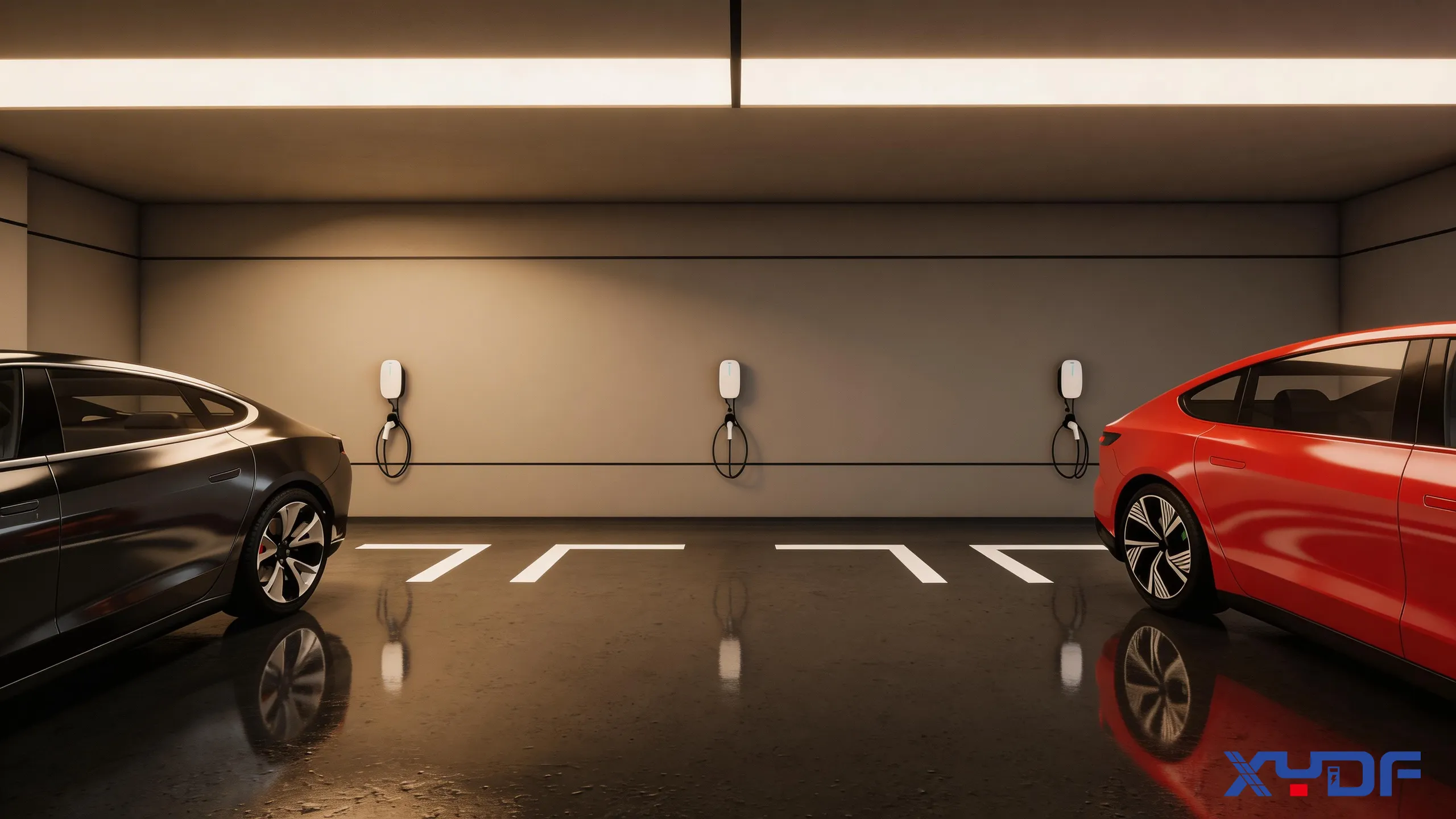
XYDF 7kW EV charger
Final Thoughts
Charging your EV at home is one of the biggest perks of EV ownership, offering convenience, cost savings, and peace of mind. By choosing the right EV charging stations—like those from XYDF, and following the proper installation and safety steps, you can enjoy seamless, reliable charging every day. Whether you’re a potential buyer still weighing your options or a new EV owner looking to install home charging, this guide covers everything you need to know. With the right equipment and knowledge, charging EV at home becomes a simple, hassle-free part of your daily routine.


 Xinya Dongfang Electricity Technology Co., Ltd.