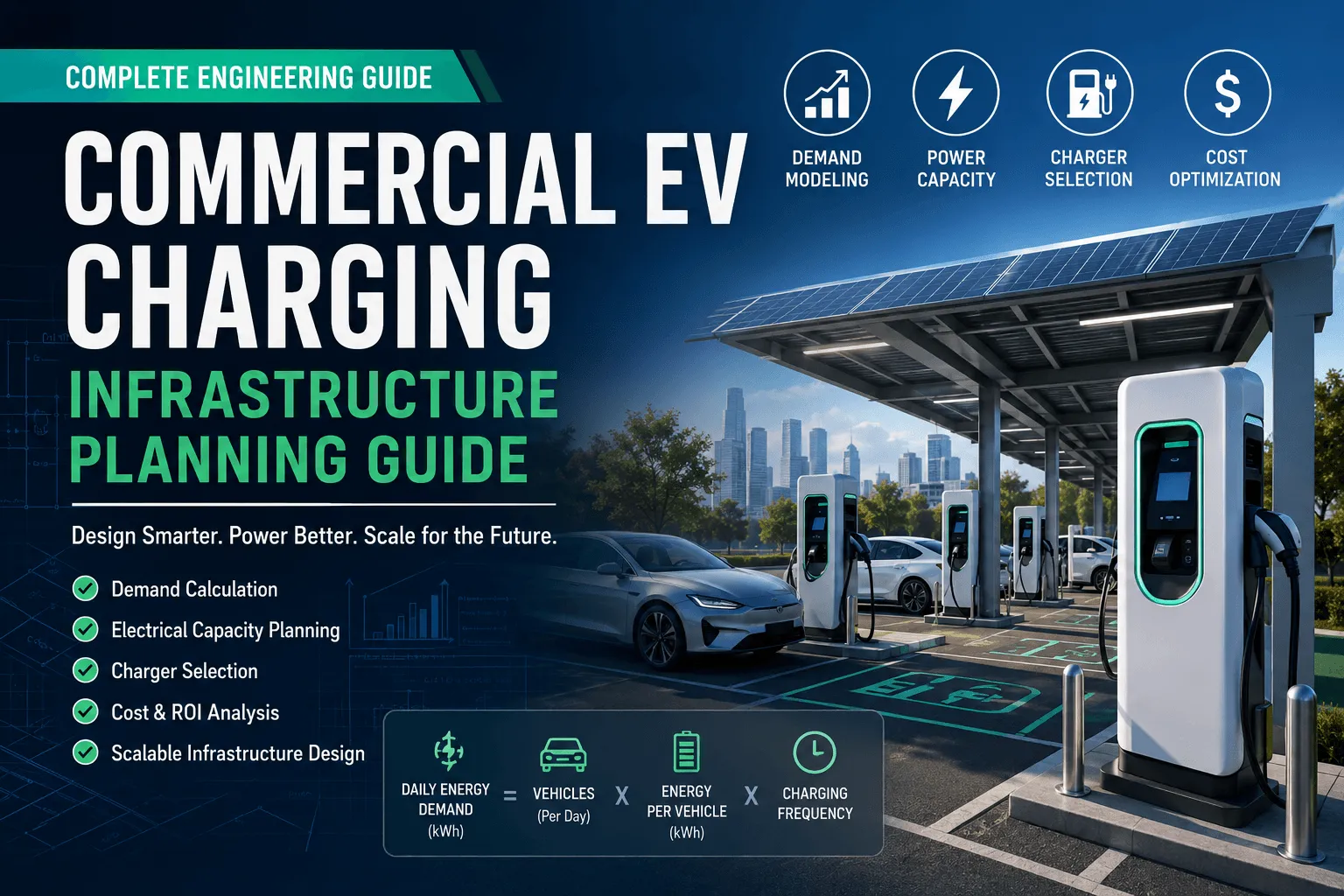
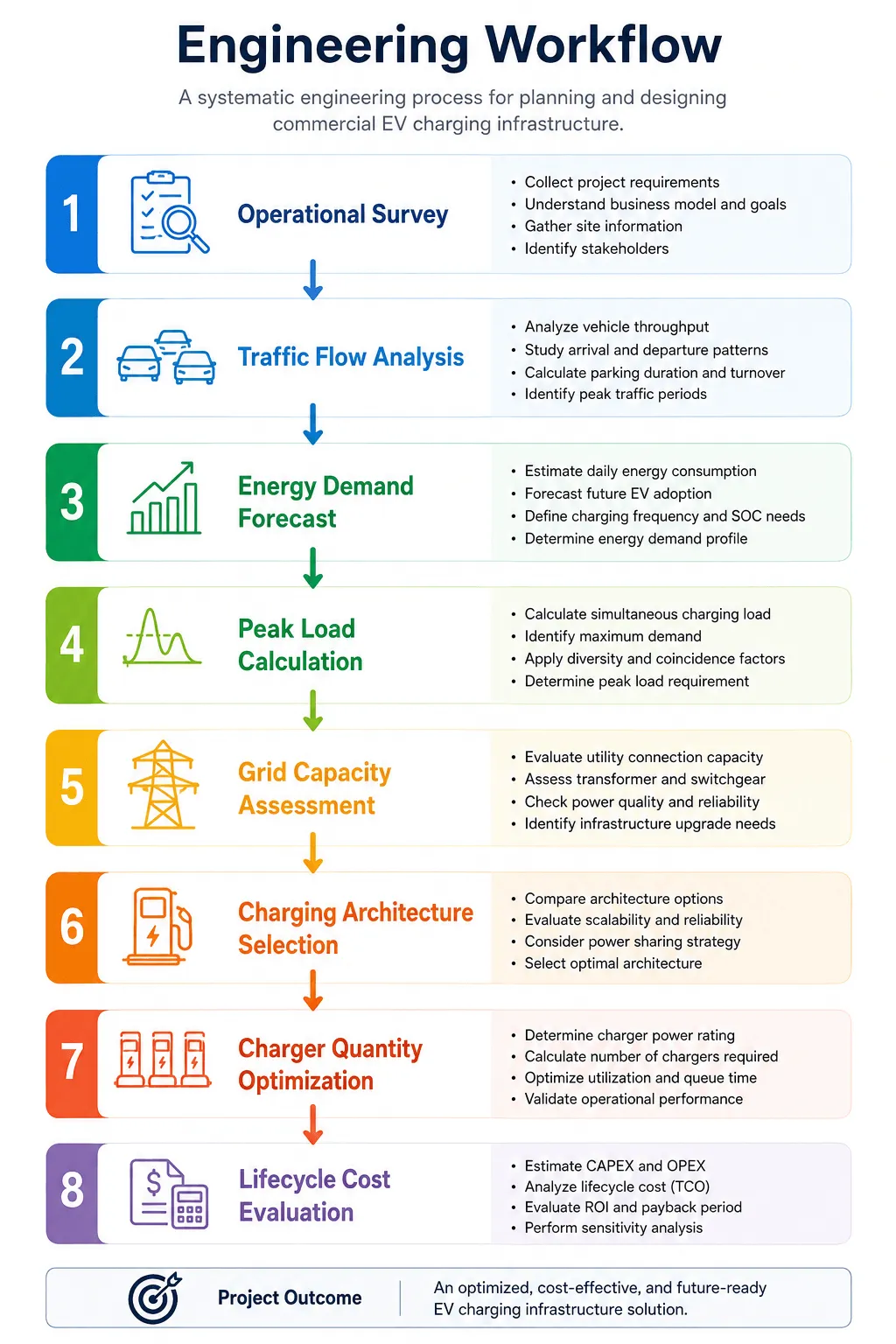
Commercial EV charging projects require more than selecting chargers. Charging demand, site capacity, electrical infrastructure, operating patterns, and future expansion all affect the final design.
A practical planning process connects these factors from the beginning. This guide explains how CPOs, fleet operators, EPC contractors, and commercial property developers can plan a commercial EV charging project more efficiently.
1. Define Charging Demand
Start with the vehicles and their operating schedules, not the charger. The key factors are vehicle type, daily energy demand, charging windows, arrival and departure patterns, vehicle charging capability, and expected growth. These inputs help answer three basic questions: How much energy is needed? When is it needed? How much charging power is required?
For example, if 20 delivery vans each require 60 kWh per day: 20 × 60 kWh = 1,200 kWh/day. If the main charging window is eight hours: 1,200 kWh ÷ 8 h = 150 kW average power
However, 150 kW is only a starting point. Actual requirements also depend on simultaneous charging, charging losses, vehicle charging curves, and peak demand. The number of vehicles also does not directly determine the number of chargers. If vehicles arrive at different times and remain parked for several hours, fewer chargers may be sufficient.
2. Assess Site and Electrical Capacity
Once charging demand is estimated, check whether the site can support it. Review the available utility capacity, existing building load, transformer and switchgear capacity, distribution equipment, cable capacity, and room for future expansion. For example, ten 60 kW DC chargers have a theoretical connected capacity of: 10 × 60 kW = 600 kW.
But the site may not need to draw 600 kW continuously. Charging schedules and load management can reduce simultaneous demand. The physical layout should also be considered. Charger locations, parking, cable routes, equipment space, vehicle circulation, drainage, safety clearances, and network connectivity can all affect the final design.
3. Select the Right Charging Architecture
Charging architecture should match the operating scenario.
تطبيق
Typical Approach
Key Consideration
مواقف المكتب
مكيف
Long parking time
الفنادق
AC / DC
Extended dwell time
Retail
AC / DC
Customer turnover
الشحن العام
دي سي
Short dwell time
Delivery fleets
AC / DC
Shift schedules
Bus depots
دي سي
High daily energy demand
Heavy-duty trucks
High-power DC
Fast turnaround
AC charging is generally suitable when vehicles remain parked for several hours, such as at offices, hotels, and overnight fleet depots. DC charging is more suitable when vehicles need significant energy within a limited time, such as public fast-charging sites, delivery fleets, buses, and heavy-duty vehicles.
Higher charger power does not always mean faster real-world charging. Vehicle SOC, battery temperature, charging curves, and maximum vehicle input power all affect actual charging performance.
4. Model Power Demand and Load Management
A شحن السيارات الكهربائية التجارية project should distinguish between daily energy demand, average power, and peak power. For example, if a fleet requires 1,200 kWh during an eight-hour charging window: 1,200 kWh ÷ 8 h = 150 kW average power.
If system efficiency is approximately 90%: 150 kW ÷ 0.90 ≈ 167 kW. With a preliminary 25% planning margin: 167 kW × 1.25 ≈ 209 kW. This is only a preliminary planning value. Final transformer and utility requirements must also consider existing site load, local electrical standards, equipment characteristics, and utility requirements.
Load management becomes important when multiple chargers share limited site capacity. A dynamic system can distribute available power according to vehicle demand and site limits instead of allowing every charger to operate at full power simultaneously. This can help reduce peak demand, improve charger utilization, and avoid unnecessary grid upgrades.
5. Plan Infrastructure and Software
The charging system includes both physical infrastructure and digital management. Electrical and civil planning may involve transformers, switchgear, distribution equipment, cables, foundations, cable routes, metering, and safety measures.
For networked sites, the software layer may provide remote monitoring, charging management, energy data, fault management, load management, and backend communication. Protocols such as OCPP can support communication between chargers and backend platforms. However, protocol compatibility alone does not guarantee complete interoperability, so software requirements should be defined during project planning.
6. Build the Procurement and TCO Framework
Procurement should evaluate the complete project rather than charger price alone. An RFQ or tender should clearly define the required equipment, system functions, compliance requirements, delivery scope, and after-sales support. The exact requirements will vary by project and market.
Total cost of ownership should also be considered. Beyond the initial equipment price, the project may involve electrical and civil works, installation, energy costs, maintenance, and future expansion. A lower charger purchase price does not necessarily mean a lower lifetime cost if the equipment requires more maintenance or creates longer downtime.
7. Plan for Future Expansion
Commercial charging demand can increase as vehicle numbers and utilization grow. A practical approach is to divide the project into phases:
Phase 1 — Current Demand: Install equipment required for current operations.
Phase 2 — Expected Growth: Prepare for increased vehicle numbers or utilization.
Phase 3 — Expansion: Add chargers or increase available power when demand justifies the investment.
Even if all future chargers are not installed initially, the site can reserve transformer capacity, switchgear space, cable routes, equipment space, parking, and network capacity. Install for today’s demand, but prepare the infrastructure for tomorrow’s capacity. This avoids unnecessary upfront investment while reducing the cost and disruption of future expansion.
Commercial EV Charging Infrastructure Planning Checklist
Before finalizing a project, confirm:
Charging demand and operating schedules are defined
Vehicle charging capability is confirmed
Existing electrical capacity is assessed
AC/DC charging architecture is selected
Peak demand and load management are considered
Electrical, civil, and software requirements are defined
Certification and market requirements are confirmed
Procurement and TCO are evaluated
Future expansion is considered
أسئلة متكررة
Q: How much electrical capacity does a commercial EV charging site need?
A: It depends on charger power, simultaneous charging, vehicle energy demand, existing building load, charging schedules, and future growth. Load management can help reduce peak charging demand.
Q: How many EV chargers does a commercial site need?
A: Charger quantity should be based on charging demand, parking duration, vehicle turnover, and charging schedules rather than simply the number of vehicles or parking spaces.
Q: Should a commercial site use AC or DC chargers?
A: AC is generally suitable for longer parking periods, while DC is better suited to faster energy replenishment. Some sites may benefit from a combination of both.
Q: What should be included in a commercial EV charging tender?
A: A tender should clearly define the required equipment, system functions, compliance, delivery scope, warranty, and technical support based on the project’s specific requirements.
خواطر أخيرة
Effective commercial EV charging planning starts with operational demand rather than the charger itself. The basic planning sequence is: Charging Demand → Site Capacity → Charging Architecture → Load Management → Infrastructure → Procurement → Expansion This approach helps CPOs, fleet operators, EPC contractors, and commercial property developers balance charging performance, electrical capacity, project cost, and future scalability.
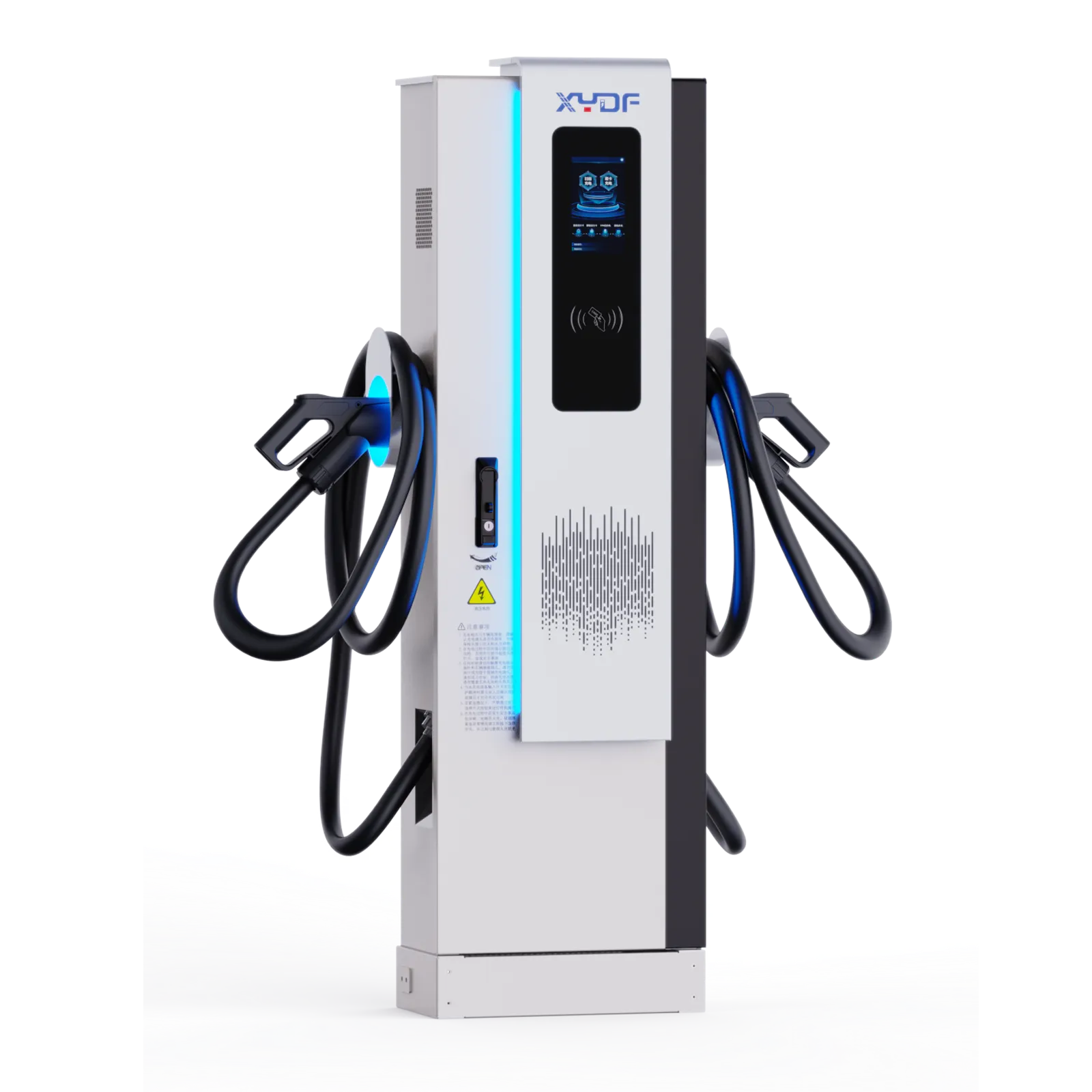
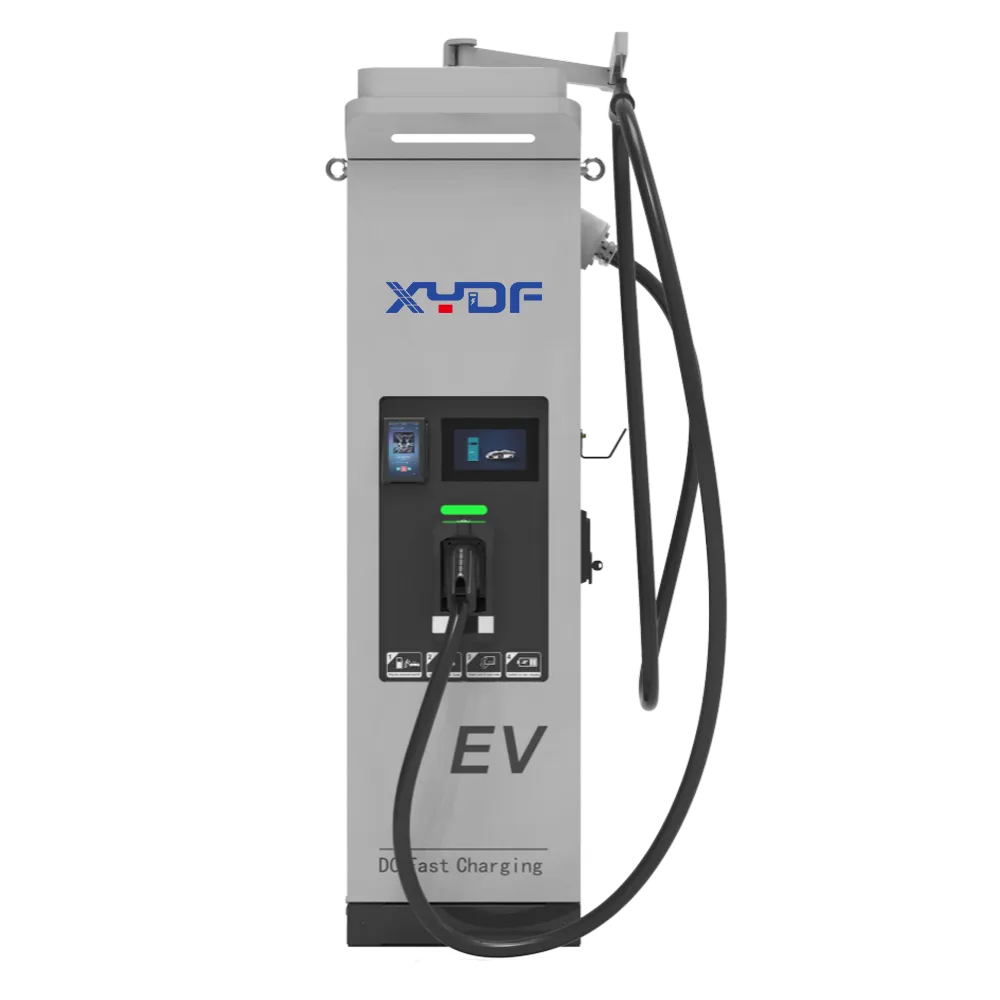
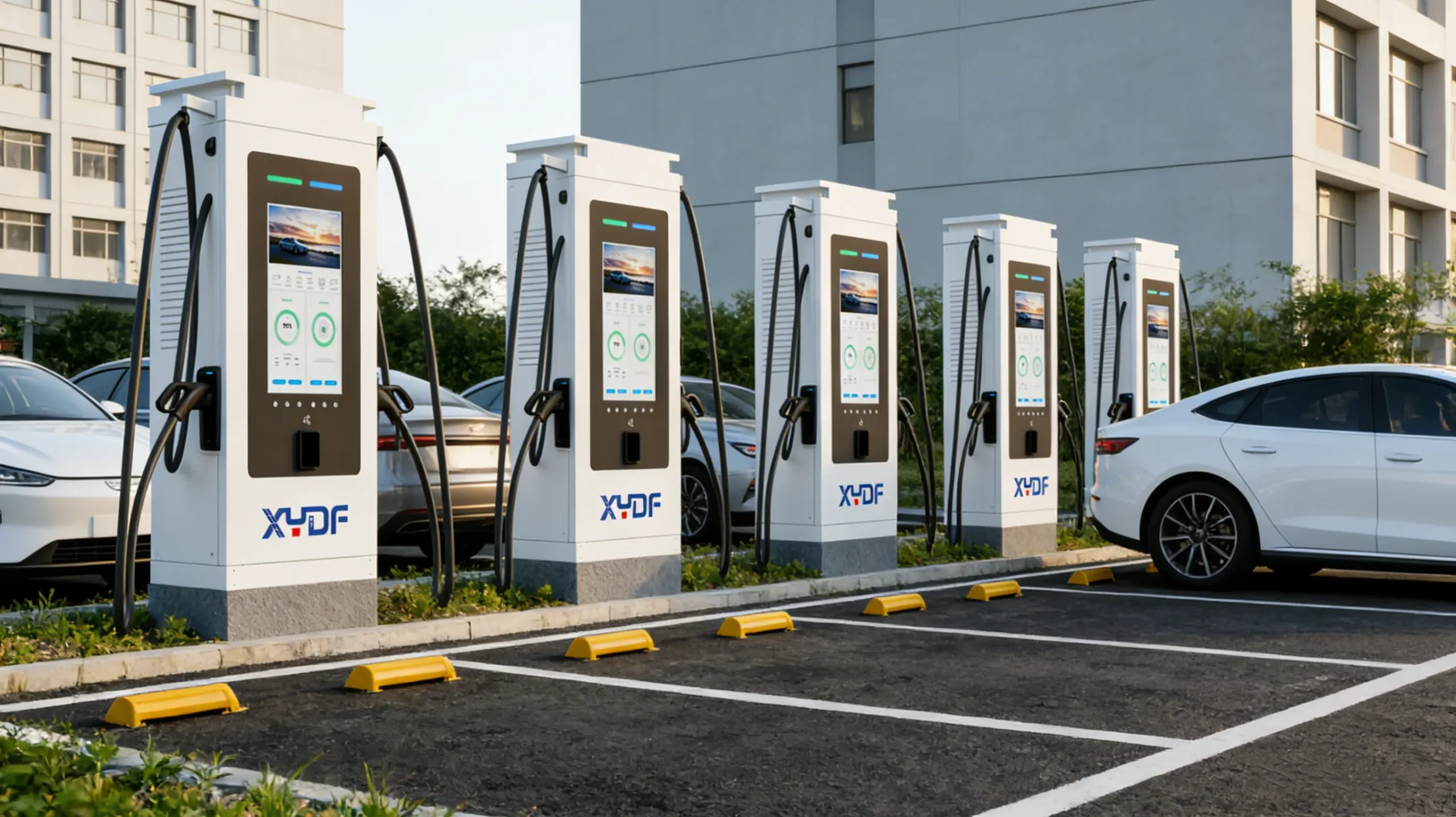
XYDF provides AC chargers, DC fast chargers, ultra-fast charging systems, and customized حلول شحن السيارات الكهربائية التجارية, with OEM/ODM capabilities for project-specific charging requirements.
نستخدم ملفات تعريف الارتباط (الكوكيز) لضمان عمل هذا الموقع، وبإذنك، لقياس كيفية استخدام الزوار لموقع شحن المركبات الكهربائية الخاص بنا. انظر إلى سياسة الخصوصية للتفاصيل.
 شركة شينيا دونغفانغ لتكنولوجيا الكهرباء المحدودة.