Charging time is an importantl factor influencing customers’ purchasing decisions for electric vehicles. We will explain this from the following aspects. (For a quick reference, you can head straight to the Charging Time Comparison Table.)
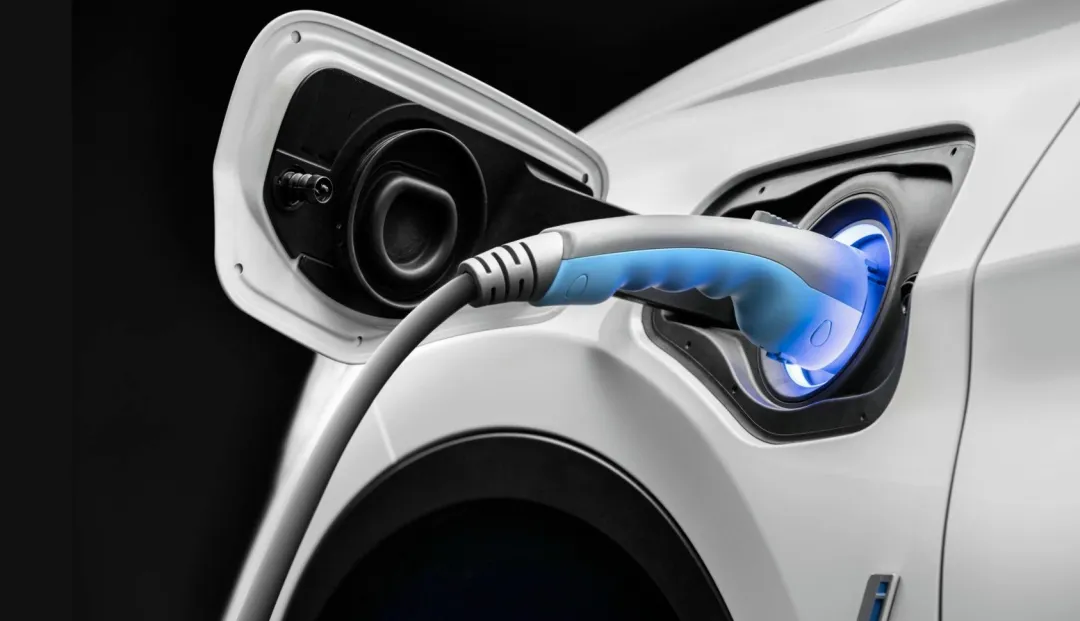
An EV is charging.
Let’s look at the basic formula for calculating charging time:

As shown in the formula above, charging time is mainly determined by two factors:
Different electric vehicles have significantly different battery capacities and maximum acceptable charging speeds.
Batteries are typically between 50 kWh and 100 kWh for passenger EVs.
For example, the Tesla Model Y has a battery whose capacity ranging from 75–78 kWh and supports DC fast charging up to 250 kW.
Heavy-duty trucks have much larger batteries, up to 300 kWh or even 600 kWh, with correspondingly higher maximum charging speeds to meet their energy replenishment needs.
EV chargers are mainly divided into AC chargers and DC fast chargers, with power ranging from 3.5 kW to 600 kW. The higher the power, the faster the charging speed. For the same electric vehicle, charging time can differ by dozens of times between a 3.5 kW charger and a 240 kW charger.
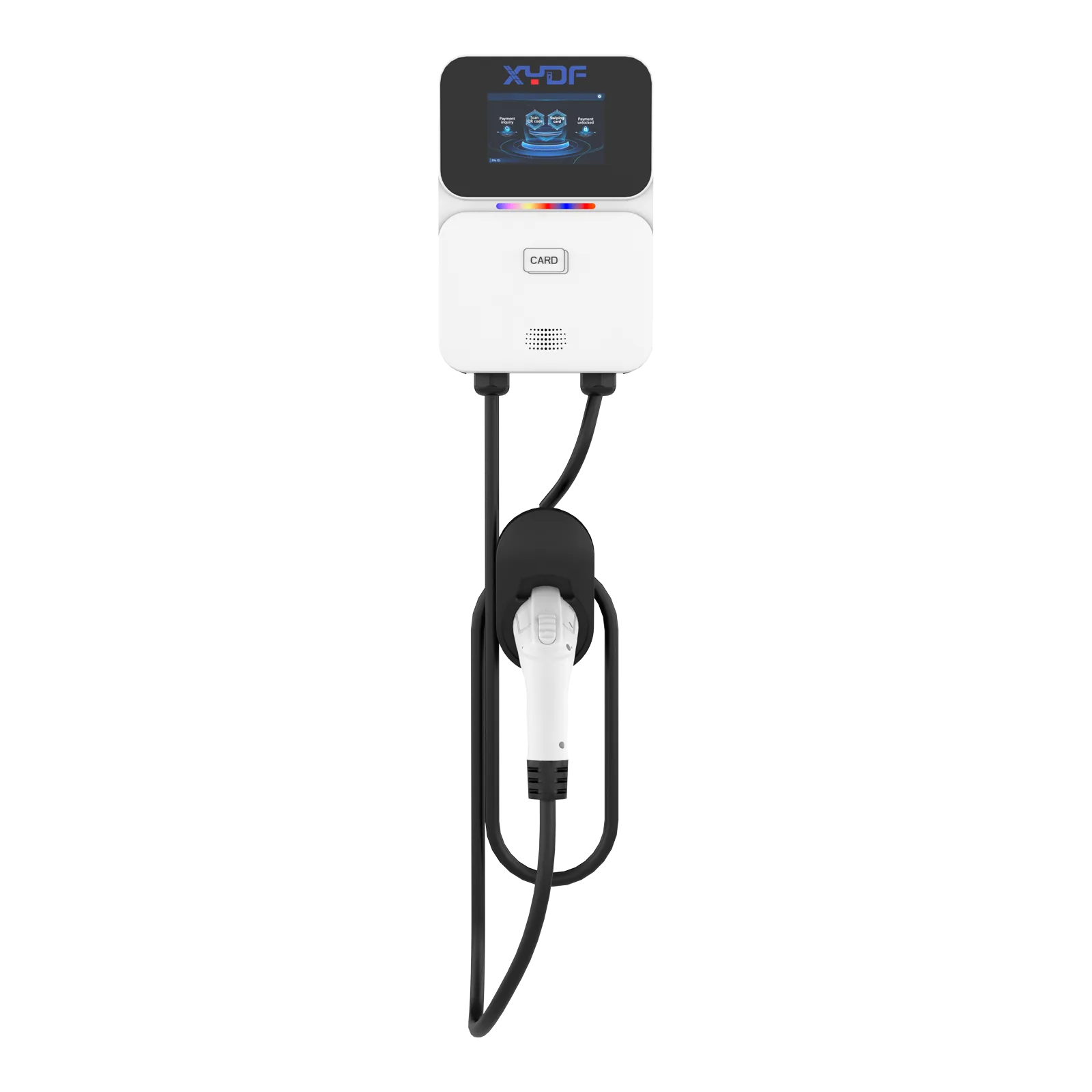
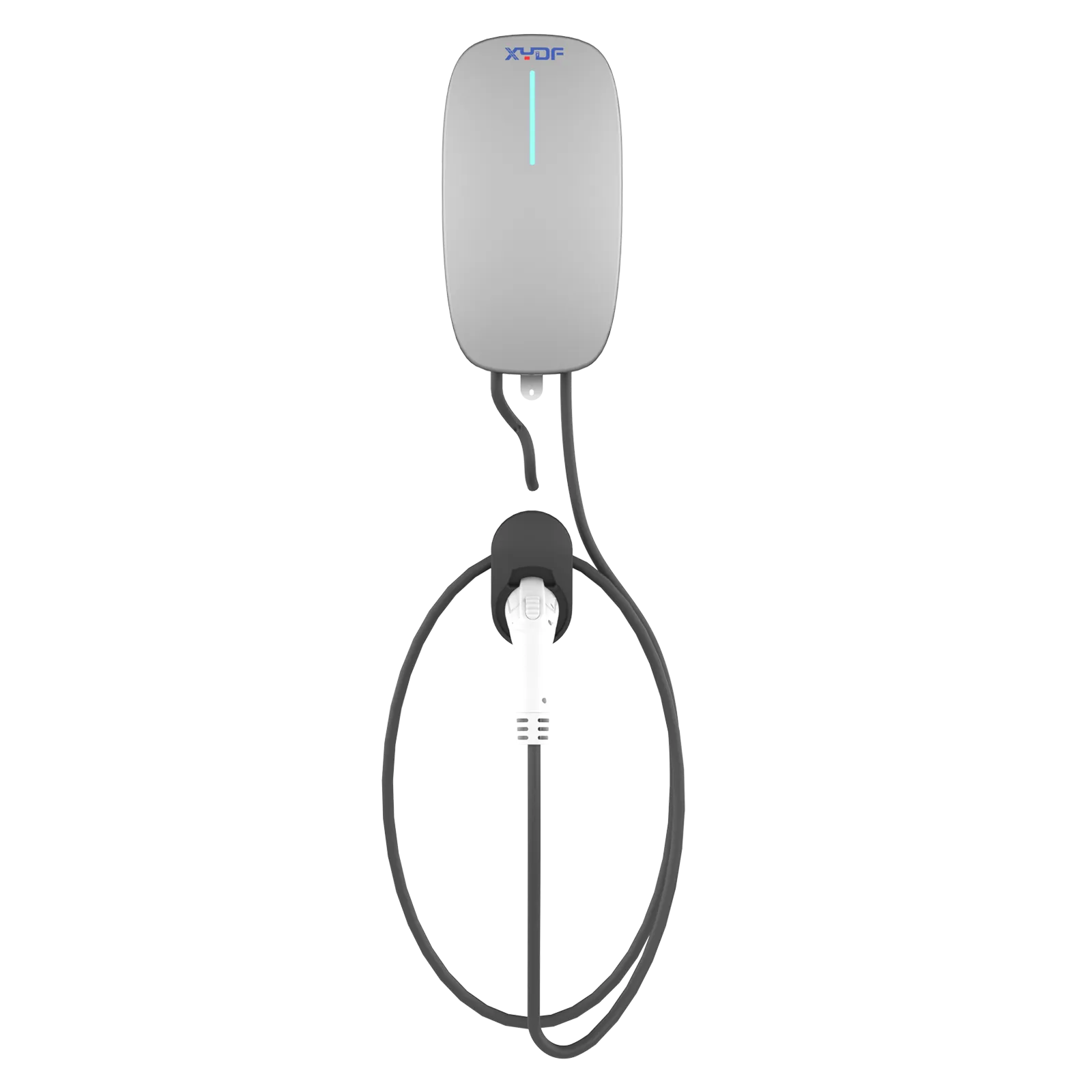
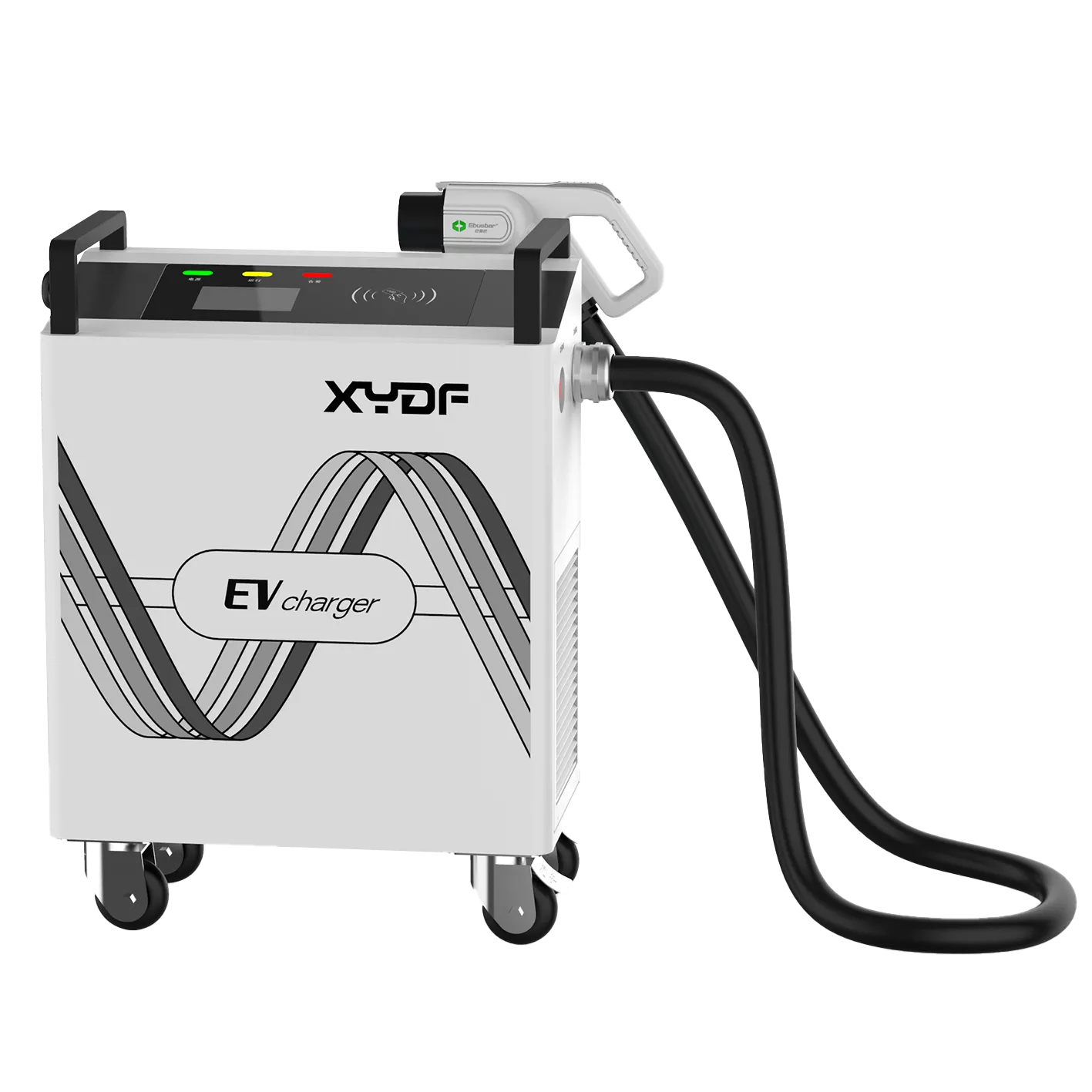
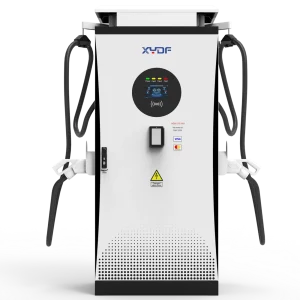
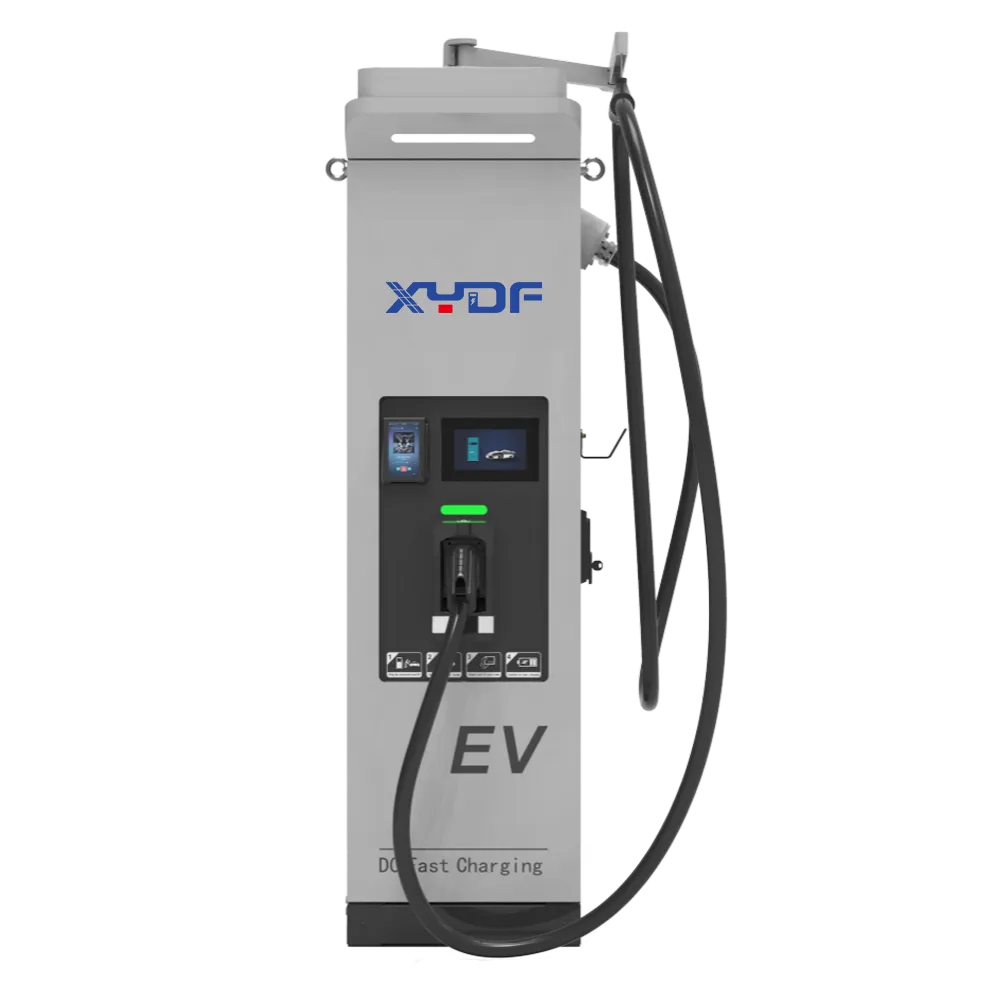
XYDF offers a full lineup covering home AC chargers (7 kW/11kW/22 kW) and commercial DC fast chargers (20 kW–960 kW), engineered to deliver stable, efficient power while matching vehicle BMS charging logic for optimal speed and battery protection.
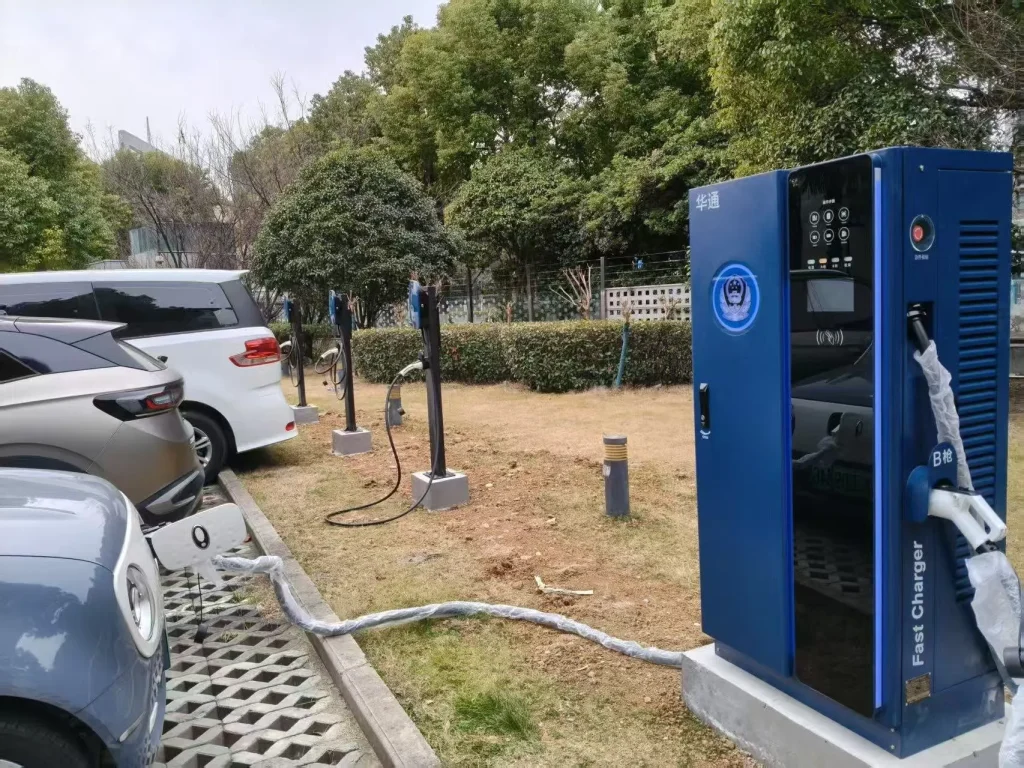
7kw ac charger and 240kw dc charger
3.5 kW AC charger: Portable home charger, can be plugged into a regular socket. At the same time, its disadvantage is the slow charging speed. It takes more than 20 hours to fully charge a 75 kWh battery.
7 kW AC charger: This is the most common home charging solution. It requires a 220V circuit and professional installation by an electrician. With a 7KW AC charger, it takes about 10-12hours to charge a passenger EV battery fully. And the 7KW AC charger is very suitable for households with fixed parking spaces.
22 kW AC charger: 22 kW AC charger needs greater voltage than 3.5 kW AC charger and 7 kW AC charger. Requiring a 380V three-phase circuit, it is commonly used in commercial and public locations. Fully charges a 75 kWh battery in about 4–5 hours.
Nearly all DC fast chargers require professional installation and a 380V power supply. And DC fast charger works differently from AC charger. DC charger bypasses the on-board charger and charges the battery directly. Meanwhile, it has a much higher voltage and current, so the charging speed of DC charger is much faster than that of the AC charger.
To protect battery lifespan, the vehicle’s Battery Management System (BMS) usually reduces charging speed after the battery reaches 80% State of Charge (SOC). For this reason, DC fast charging performance is usually rated for 20–80% charging. (This charging strategy also applies to AC chargers. However, since AC charging is much slower and takes significantly longer, this effect can generally be ignored.)
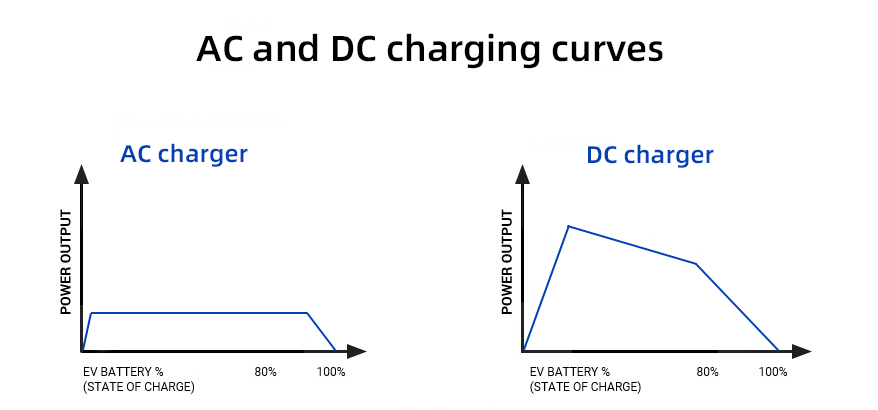
ac and dc charging curves
Since DC fast charger power varies widely, please refer to the table below.
| Vehicle Type | Passenger Vehicle | Light Truck | Heavy Truck | |||
| Battery Capacity | 60kwh | 80kwh | 100kwh | 120kwh | 300kwh | 600kwh |
| 20%-80% charging | ||||||
| 60kw (Power of EV charger) | 36min | 48min | 1h | 1h12min | 3h | 6h |
| 120kw | 18min | 24min | 30min | 36min | 1h 30min | 3h |
| 240kw | 9min | 12min | 15min | 18min | 45min | 1h 30min |
| 400kw | / | / | / | / | 27min | 54min |
| 600kw | / | / | / | / | 18min | 36min |
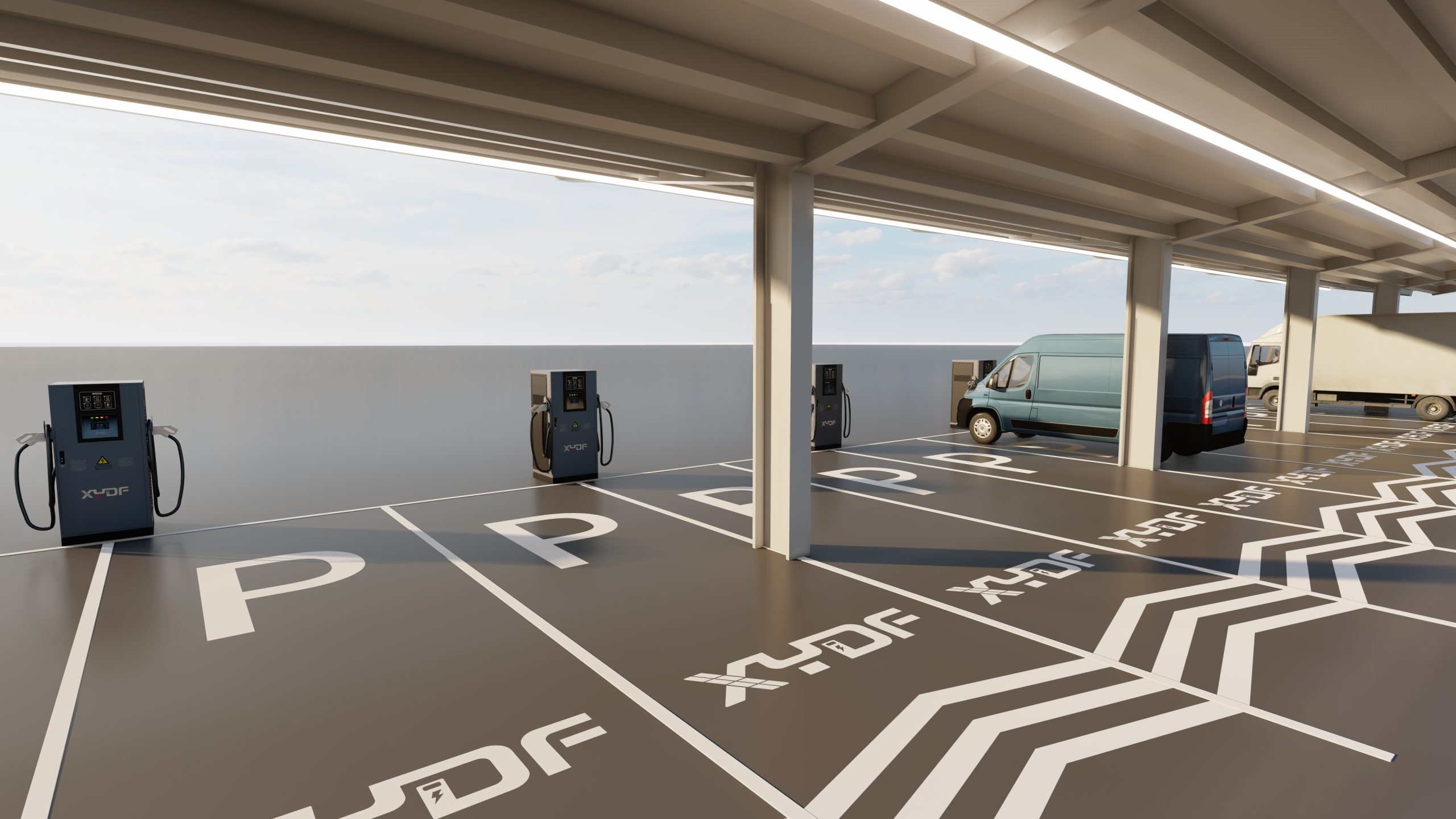
heavy truck charging station
The above times are for ideal conditions. In practice, many factors affect actual charging speed:
These are the common factors that affect EV charging time. If you’re researching charging times for business planning or station deployment, partnering with an experienced EV charger provider like XYDF ensures accurate speed estimates, reliable hardware, and optimized operational efficiency.



 Xinya Dongfang Electricity Technology Co., Ltd.