EV Charger Thermal Management: Keeping High-Temperature Sites Stable
Juil 20,2026
Blog
EV charger thermal management keeps a high-temperature site stable when the project identifies where heat is generated, protects the designed airflow or coolant path, and acts on the component that is actually limiting the session. A nameplate rating alone does not describe a specific site’s solar load, consecutive-session duty, dust exposure, cable temperature, or vehicle-side charging limit.
Part 1. What Does EV Charger Thermal Management Need to Control?
Thermal management is the coordinated control of heat in power electronics, conductors, connectors and their surrounding enclosure. IEC 61851-23 includes functions for energy transfer with a thermal-management system in the scope of its DC EVSE requirements; that does not certify a particular charger or prove output at a particular ambient temperature.
For a commercial owner, the practical question is not “does the cabinet get warm?” It is whether the site can keep the relevant component inside its documented operating conditions through the expected duty cycle. A useful plan records ambient conditions, solar exposure, cabinet clearance, charging demand, alarms and the corrective action taken.
Control target
Pourquoi c'est important
Éléments de preuve à demander
Cabinet power electronics
Internal loss must be rejected safely
Model operating documentation and alarm logic
Cable and connector
Current and contact condition can create local heat
Connector/cable configuration and inspection method
Site air path
Exhaust recirculation and dust reduce heat rejection
Layout, clearance and service-access drawing
Operating duty
Back-to-back sessions can change the thermal state
Session profile and simultaneous-port assumption
Reliable EV charger thermal management starts with a heat-path map, a documented thermal derating curve and commissioning evidence; an ambient rating is not a promise of continuous nameplate output. IEC 61851-23:2023 defines requirements for DC EV supply equipment, while IEC 60529 classifies enclosure ingress protection; neither standard by itself proves a charger will deliver a specific kW at a specific site temperature.
Part 2. Where Does Heat Build Up During a Commercial Charging Session?
Unlike a single-cause fault, a hot session can involve the cabinet, cable, connector, installation environment or vehicle. A peer-reviewed extreme-climate field study found charger-side thermal derating under severe ambient conditions; it is evidence for checking the equipment side, not a prediction for another site.
Start by separating the offered charger power, the delivered vehicle power and the alarm state. A vehicle can taper for battery reasons while a charger remains healthy. Conversely, a cabinet or connector temperature limit can reduce offered power even when the vehicle would accept more.
Do not treat repeated overheating or discoloration as an operational inconvenience. Follow the equipment manual and use qualified electrical service for inspection or repair. IEC TS 62196-3-1 specifically addresses DC connector and cable assemblies that employ thermal sensing or thermal transport.
Part 3. Which High-Temperature Site Conditions Increase Derating Risk?
At a hot site, the weather-station temperature is only one input. Direct sun, radiant surfaces, constrained cabinet clearance, recirculated exhaust, dust-loaded filters and consecutive high-power sessions can change the local heat-rejection condition.
Site observation
Planning response
Limite
Afternoon solar exposure
Document orientation and shade concept
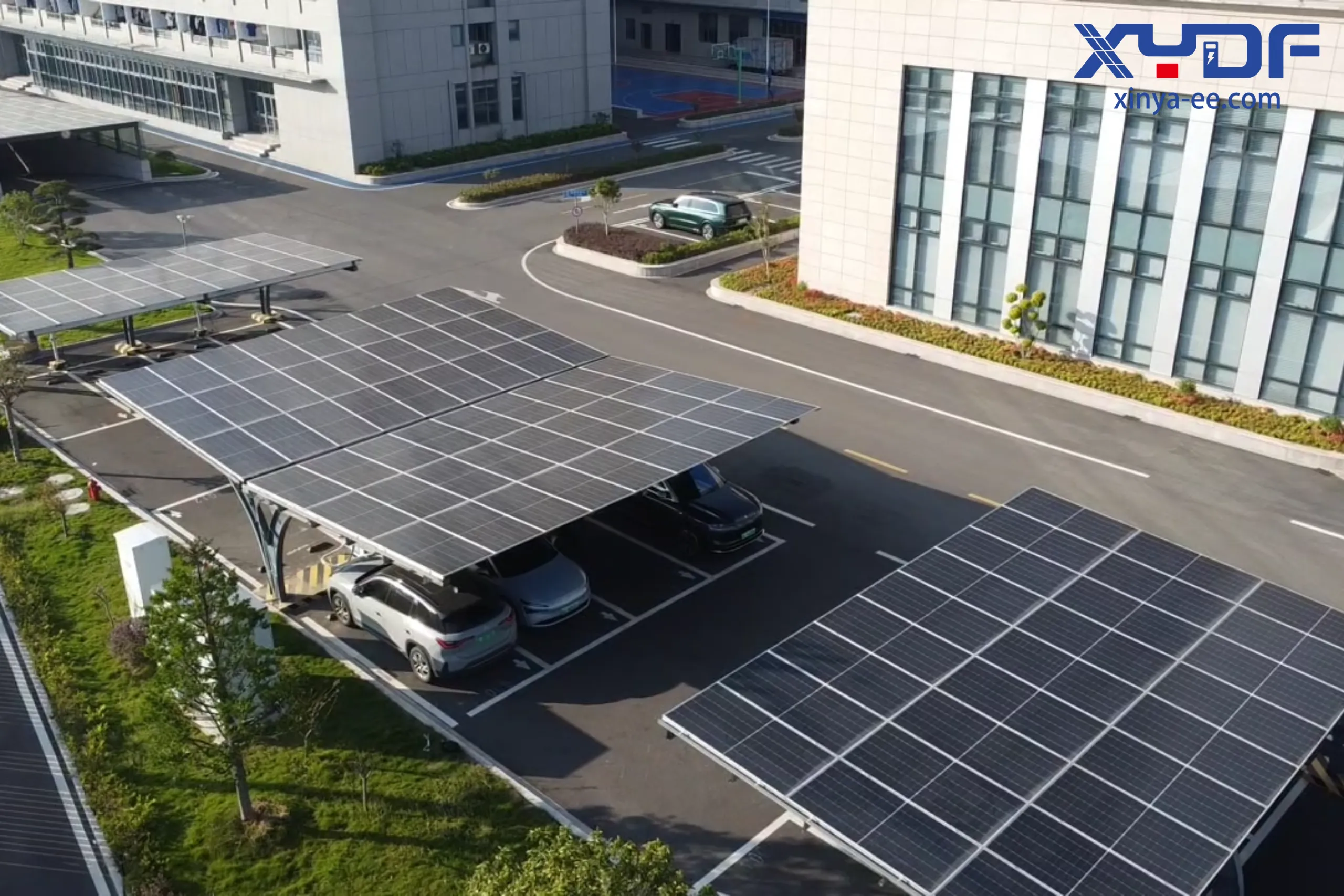
Shade does not replace model documentation
Tight wall or equipment bay
Preserve manufacturer-required clearance
Do not invent a generic clearance value
Dusty or industrial air
Plan inspection access for vents and filters
Service interval must follow the manual
Peak simultaneous sessions
Capture the actual duty profile
Do not assume nameplate power is sustained
Thermal-management guidance from Elinta highlights airflow, solar exposure, dust and trend review as site-planning factors. Use it as a checklist, then verify each offered model’s conditions with the supplier.
Decision workflow: from hot-site observation to RFQ acceptance
A practical EV charger thermal management review follows the sequence below; each gate produces evidence that can be attached to the procurement record.
Describe the duty. Record connector count, target power, simultaneous sessions, session length and back-to-back operation. A 30-minute public session and an eight-hour workplace dwell create different thermal exposure even when their daily kWh is equal.
Map every heat source and sink. Include semiconductor losses, busbars, cable/connector contacts, fan or pump heat, solar radiation, pavement reflection and exhaust recirculation. Ask the supplier which sensor or control action corresponds to each limiting component.
Request the derating evidence. The RFQ should identify ambient range, inlet-air or coolant condition, altitude, input voltage, connector configuration, continuous-duty duration and whether the curve describes offered or delivered vehicle power. Do not accept “high-temperature ready” without the test conditions.
Check the enclosure and contamination plan. IEC 60529 IP code addresses protection against ingress; it does not set a cleaning interval or guarantee airflow after dust loading. Require clearance drawings, filter access and a service method appropriate to the environment.
Define alarms and acceptance. Name the warning, derate and shutdown thresholds; specify logging, remote notification, restart behavior and who owns inspection. Commission under a representative duty and retain the raw temperature, power and ambient records.
Stage irreversible work. Install conduits, pads and service access for the approved thermal architecture, but release additional power modules or liquid-cooling equipment only when measured utilization and thermal margin justify phase two.
Transparent illustrative calculation
Assume a 120 kW DC cabinet operates at 95% conversion efficiency for one hour. The conversion loss is 120 × (1 − 0.95) = 6 kW of heat while full power is sustained. If the cabinet instead serves two 60 kW vehicles at the same efficiency, total heat remains approximately 6 kW, but charger airflow, cable routing and connector temperatures may differ. This is an illustrative calculation—not a product claim or site measurement. Replace the assumed efficiency and duty with the offered model’s test data; include auxiliary fan or pump power if the supplier reports it separately.
A second boundary matters: at 45 °C ambient, a cabinet whose curve permits 120 kW for 10 minutes but 90 kW continuously cannot be specified as a 120 kW continuous source. The project should size queue recovery and energy promises against the continuous curve, then use the short-duration value only for a clearly defined burst scenario.
Part 4. When Should a Project Compare Air, Liquid, and Cable Thermal Controls?
La fiabilité devrait être décrite comme une preuve opérationnelle observable plutôt qu’un seul chiffre marketing. Demandez des définitions des cas d’échec, de la disponibilité des sessions, de l’historique des alertes, des enregistrements de réponse et de restauration, des intervalles d’inspection, de la couverture des pièces de rechange et des conditions dans lesquelles les données ont été collectées. Le MTBF ou un chiffre de puissance nominale peuvent faire partie de l’examen, mais aucun d’eux ne remplace un processus clair de reprise des pannes et de maintenance. Pour le contexte de planification publique, voir Exigences du système de charge conductif IEC 61851-1; Le dossier d’acceptation site-spécifique reste le facteur déterminant de la décision finale.
Cooling choice is a system question. Forced-air designs depend on usable airflow through the enclosure; liquid loops add components and maintenance needs; connector and cable arrangements may incorporate thermal sensing or thermal transport within their stated scope. The correct selection depends on documented power, current, enclosure, duty and ambient conditions.
Ask for a comparison that explains what each arrangement measures, what action follows a temperature threshold, and what maintenance is expected. A statement that one approach is always better is not enough for a procurement decision.
Air, liquid and cable controls: compare the boundary, not the label
Control choice
Éléments de preuve à demander
Ne tirez pas de conclusion
Forced air
Airflow path, fan redundancy, filter access and derating curve
IP rating means dust-proof airflow
Liquid loop
Coolant type, leak detection, pump state, service interval and ambient limits
Liquid cooling removes all derating risk
Thermally sensed cable/connector
Sensor location, threshold action and connector assembly scope
A sensor repairs a damaged contact
Part 5. What Should Operators Monitor Before a Thermal Fault Becomes Repeatable?
If a site reports “slow charging,” preserve the session context before changing settings: timestamp, ambient condition, charger offered power, vehicle accepted power, connector/cable observations, alarms, concurrent sessions and prior maintenance. This makes it possible to distinguish a repeatable equipment pattern from a vehicle or network event.
Forum users describe “AC charger overheat” warnings and reduced current during hot conditions. That language is valuable because it shows the operator experience; it is not a diagnosis. Escalate persistent thermal alarms, damage, unusual odor, repeated connector heat or protective shutdown according to the model manual and qualified-service process.
Hot-climate commissioning checklist
Log ambient temperature, cabinet inlet/exhaust temperature, offered kW, delivered vehicle kW and concurrent ports at the utility’s relevant interval plus a finer control interval.
Repeat a sustained session after solar loading and a consecutive-session sequence; note when a warning, derate or shutdown occurs.
Inspect cable and connector contact condition with qualified personnel; stop operation for damage, discoloration, odor or repeated protective shutdown.
Verify alarm forwarding, local acknowledgement, safe restart and evidence retention before handover.
Capture ambient temperature, inlet and outlet conditions, filter state, delivered power and any protective derating during a witnessed high-temperature charging run, then retain the evidence with the model revision.
Part 6. Which XYDF Product Route Fits a Heat-Aware Charging RFQ?
This is not a recommendation for an unspecified liquid-cooled or high-temperature-rated model. It fits buyers who can provide model power, connector count, expected simultaneous sessions, local ambient/solar conditions, clearance, contamination exposure and alarm/service ownership. It does not fit a project that needs a certified ambient-performance commitment without first reviewing the offered model documentation.
Envoie ces entrées à XYDF to request the relevant product documentation and confirm which conditions must be reviewed before selection.
FAQ
Why do EV chargers derate in hot weather?
Thermal protection can reduce offered power when a monitored charger component approaches its documented limit. Confirm whether the limitation is charger-side or vehicle-side before changing equipment or policy.
Is a canopy enough to prevent thermal derating?
No. Shade can be one site input, but clearance, airflow, duty, contamination and the offered model’s stated conditions still need review.
Should a project always specify liquid cooling?
No. Compare the documented system architecture against actual power, current, ambient conditions, duty cycle and maintenance capability rather than selecting by a single label.
It may be justified when sustained current, cable size, ambient exposure or cabinet heat rejection exceeds a documented air-cooled boundary and the operator can support pumps, coolant and leak controls. The honest answer is conditional, not a universal power threshold.
What should operators trend?
Trend session power, alarms, ambient conditions, concurrent sessions, connector/cable observations and maintenance actions so a repeatable pattern can be investigated.
Can the vehicle cause a slow charging session?
Yes. Vehicle battery limits can reduce accepted power. Compare charger offered power with vehicle accepted power and the alarm history.
What should be included in a hot-climate RFQ?
Provide model/power need, connectors, simultaneous sessions, site exposure, clearance, contamination, available maintenance access and required alarm ownership.
State continuous and burst power, duty cycle, simultaneous ports, ambient and solar exposure, altitude, contamination, enclosure/clearance constraints, alarm ownership, maintenance access and required standards. Ask suppliers to return curves and test conditions, not only a maximum kW.
After the heat boundary is explicit, buyers can compare the Catégorie des chargeurs rapides DC, review the wider Catalogue de produits and send commissioning requirements through Contact XYDF. Strong EV charger thermal management is a chain of evidence—from heat path to alarm response—not a badge on a datasheet.
Does an IP55 enclosure guarantee operation in extreme heat?
No. IP classification concerns ingress protection under its test scope; thermal limits, derating and service access remain separate requirements. Review both the IEC 60529 code and the model-specific thermal documentation.
How can an operator tell vehicle taper from charger derating?
Compare charger-offered power, vehicle-accepted power, thermal alarms and ambient conditions in the same session. A vehicle taper without charger alarms points to the vehicle or battery; repeated charger-side alarms require equipment investigation.
Quels éléments de preuve de fiabilité devrait-on demander à un acheteur d'un chargeur pour véhicule électrique ?
Demandez des définitions des modes de défaillance, des enregistrements de disponibilité des sessions, de l’historique des alertes et des redémarrages, des temps de réponse et de restauration, des intervalles de maintenance préventive et des pièces de rechange ou de la couverture des services pour la configuration exacte. Comparez les données selon les conditions de fonctionnement et les périodes de mesure ; ne considérez pas une valeur MTBF isolée ou une déclaration de disponibilité du fournisseur comme preuve de la future disponibilité du site.
Usine du siège social du Zhejiang :
N° 2, route de Changjiang, parc industriel du pont de Wenzhou, ville de beibaixiang, ville de Yueqing, ville de Wenzhou, province du Zhejiang
Bureau de Shenzhen :
1er étage, Bâtiment A, Parc Industriel Shenkai, Communauté Tangtou, Sous-district de Shiyan, District de Bao'an, Shenzhen
Nous utilisons des cookies pour assurer le bon fonctionnement de ce site Web et, avec votre autorisation, pour mesurer la manière dont les visiteurs utilisent notre site de recharge pour VE. Voir notre Politique de confidentialité pour plus de détails.
 Xinya Dongfang Electricity Technology Co., Ltd.