 Синьцзя Дунфан Электрик Технолоджи Ко., Лтд.



EV charging data can look like routine operations information until it is combined across users, vehicles, timestamps, locations, payments, and service records. A report that helps troubleshoot a connector may therefore expose more about drivers or site activity than every recipient needs. The risk is not limited to a breach: unclear ownership, broad access, long retention, unnecessary exports, and poorly defined vendor roles can all make a charging program harder to govern. This article shows how to evaluate privacy boundaries without assuming that every system collects the same fields. It follows a practical path from data mapping and purpose definition to access controls, retention, sharing, and review of operational exports. The result is a clearer basis for deciding what should be collected, who should see it, and when it should be removed.
Трейт EV charging data as a governed business record, not an unlimited telemetry stream. GDPR Article 5 requires purpose limitation, data minimisation and storage limitation, while PCI controls apply to payment-account data handled by the payment chain rather than automatically to every charging record. Define what each role needs, tokenise payment details, set a documented retention trigger by jurisdiction and purpose, monitor access, and provide a practical deletion and account-closure route.
What charging data does a network actually need?
A session can create an account identifier, connector and station ID, timestamps, energy delivered, tariff, payment token, fault codes and support notes. An app or roaming partner may also process contact details, contract identifiers and approximate location. Technical availability does not establish a lawful need to retain a field.
| Data group | Operational purpose | Minimisation and deletion question |
|---|---|---|
| Session and energy records | Metering, billing reconciliation, uptime and dispute handling | Can a pseudonymous session ID replace a name? What event closes the dispute window? |
| Location and access events | Finding a station, fraud review and service dispatch | Use station-level or coarse location where possible; remove historic trails when the purpose ends. |
| Payment references | Authorisation, refunds and chargeback evidence | Store a provider token, not raw card data; confirm the provider’s PCI scope and retention rules. |
| Maintenance telemetry | Diagnostics, warranty and safety work | Limit driver-linked fields; separate equipment logs from account profiles unless linkage is necessary. |
How long should charging and payment data be kept?
Location-data minimisation matters because a sequence of stations can reveal a home, depot, workplace or medical visit even when no address is stored. Collect the precision needed for navigation or dispatch, then aggregate, truncate or pseudonymise it for analytics. Under GDPR, the controller must explain the purpose and legal basis; a US operator may need state-specific notice and opt-out language. One global notice is not legal advice for every market.
There is no universal retention number. The CPO should document a schedule by record type, purpose, jurisdiction, accounting or chargeback requirement and legal hold. GDPR Article 5(1)(e) calls for storage limitation, but the period is context-dependent. Payment providers may impose contractual and PCI-related controls; PCI DSS is a security standard, not permission to retain card data.
Payment tokenization keeps the charging platform from handling the primary account number where the payment architecture allows it. Procurement should identify the token service, who is the payment-data controller or processor, how refunds are supported, and which PCI responsibilities remain with the CPO, eMSP and provider.
Who can access charging records, and how do you spot misuse?
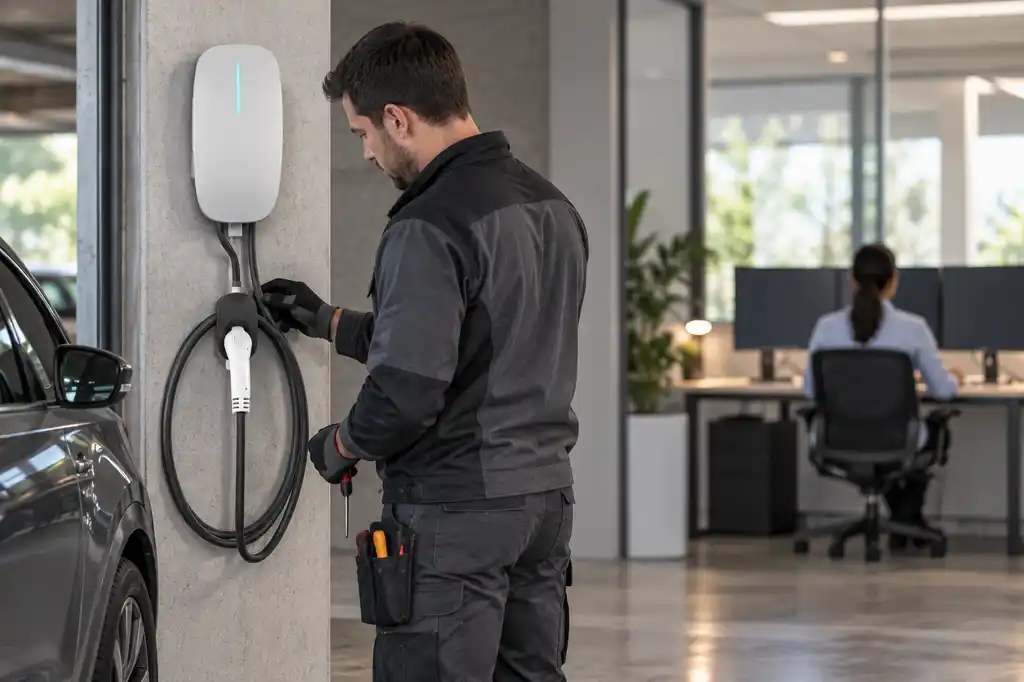
Role-based access should follow the task, not seniority. A CPO analyst may need settlement fields; EV charging data for maintenance operators should usually be limited to station, connector, fault and work-order records; an eMSP may need roaming identifiers; and a site owner may need utilisation totals. Separate production access from exports, log administrative actions and review permissions when roles change.
| Role | Default view | Control to verify in an RFQ |
|---|---|---|
| CPO operations and billing | Session, tariff, settlement and exception records | Purpose-bound fields, export approval and audit trail |
| Maintenance operator | Asset ID, alarms, diagnostics and work orders | Driver identity masked by default; time-limited vendor access |
| eMSP or roaming partner | Contract, authorisation and settlement identifiers needed for roaming | Interface-level data mapping and onward-sharing terms |
| Site owner or executive | Aggregated utilisation, revenue and availability metrics | No raw location trail unless a documented purpose exists |
Cybersecurity monitoring should cover authentication failures, unusual downloads, privilege changes, API anomalies and disabled logging. Use the NIST Privacy Framework to connect identify-governance, control, communication and protection activities; pair it with an incident plan that assigns notification decisions to the relevant jurisdiction. The FTC’s US guidance also expects reasonable security practices, but neither source creates a single global compliance test.
Which privacy controls belong in an EV charging RFQ?
- Map each field from charger, app, roaming interface, payment provider and maintenance tool to a stated purpose.
- Specify coarse location, pseudonymous IDs and aggregated reporting where precise history is not required.
- Document retention triggers and deletion workflows for account closure, data-subject requests, disputes and legal holds.
- Require tokenised payments, PCI responsibility matrices, encryption, key management and tested backup restoration.
- Define role-based access, vendor time limits, access reviews, cybersecurity alerts and evidence of incident response.
- Publish jurisdiction-specific privacy notices, consent or opt-out controls where required, and a contact route for requests.
When comparing EV charging data management solutions, assess these controls alongside the commercial EV charger portfolio. The cybersecurity RFQ guide turns them into supplier questions, while the roaming explainer clarifies which party exchanges each identifier.
Questions operators ask about EV charging data privacy
Какие данные о водителях собирает зарядная станция для электромобилей?
Он может собирать информацию о счете или идентификаторе контракта, событии авторизации, станции и соединении, временных метках, энергии, тарифе, реквизитах платежа и истории поддержки. Точный набор данных зависит от зарядного устройства, оператора электроснабжения, системы управления электроэнергией (eMSP) и системы оплаты, поэтому вместо того чтобы предполагать, что каждая станция собирает одни и те же данные, следует опубликовать уведомление на уровне поля.
Могут ли данные об зарядке указывать местоположение водителя дома или на работе?
Да. Повторяющиеся записи местоположения и времени позволяют выявить привычные действия даже в том случае, если адрес отсутствует. Ограничьте точность, отделяйте идентификаторы от аналитических данных, ограничьте доступ и удалите или агрегируйте историю, когда достигнута заявленная цель.
Насколько долго компании CPO должны хранить данные о платежах и сессиях?
Для каждого сотрудника по обработке платежей не существует единого подхода. Определите четкий график работы с учетом целей, юрисдикции, учета, возврата средств, рассмотрения споров и необходимости сохранения данных для юридических целей; отдельно от требований законодательства о защите персональных данных уточните условия сотрудничества с поставщиком платежных услуг и PCI.
Кто может получать доступ к данным об использовании электромобилей и записям технического обслуживания?
Доступ к ним должны иметь только роли, имеющие четко определенную операционную необходимость. Используйте рольные разрешения, скрытые поля драйвера, ограниченный по времени доступ поставщиков и проверенные отчеты; предоставляйте владельцам сайта обобщенные отчеты, при которых необязательно предоставлять исходные данные.
Как операторы должны защищать данные о зарядке от кибератак?
Сочетайте надежное аутентификационное обеспечение, минимальные привилегии, шифрование, патчирование, мониторинг сети и API, неизменные журналы и проверенные процедуры реагирования на инциденты. Используйте Платформу защиты данных NIST и соответствующие рекомендации регуляторов для присвоения ответственности, но проверяйте эффективность мер контроля на основе фактической архитектуры оператора.
Какие уведомления о конфиденциальности и механизмы получения согласия должны предоставлять зарядные сети?
Обязательно объясните категории данных, цели их использования, правовые основания или аналогичные механизмы раскрытия информации, партнеров, предоставляющих данные, логику хранения данных, права и каналы запроса информации в странах, в которых предоставляются услуги. Добавьте механизмы согласия или отказа только в тех случаях, когда это требуется или разрешено соответствующим законодательством, а также упростите процедуру закрытия и удаления учетных записей.
Authoritative references
- EU GDPR official text (European Union; applies according to territorial and processing conditions).
- European Data Protection Board (EU/EEA guidance and consistency work).
- PCI Security Standards Council (payment-card security standards and guidance; not a privacy-law retention schedule).
- NIST Privacy Framework (US voluntary risk-management framework).
- US Federal Trade Commission privacy and security guidance (US consumer-protection context).
EV charging data privacy is ultimately a design and governance decision, not a promise that a dashboard is secure because it has access controls. Map each field, define its purpose, limit access by role, protect payment information, set retention triggers, and document sharing and deletion routes for the jurisdictions served. Then test exports and maintenance workflows as carefully as the charger connection itself. The order matters: collect only what the operation needs, assign ownership, secure the data path, review access, and remove records when the purpose ends. GDPR, payment requirements, contracts, and local privacy laws may apply differently, so a generic retention period should never be treated as a universal rule. For teams specifying equipment and interfaces, XYDF’s EV charging range can be reviewed alongside the project’s privacy and access requirements.