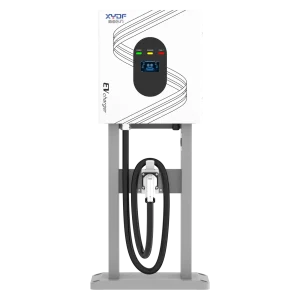
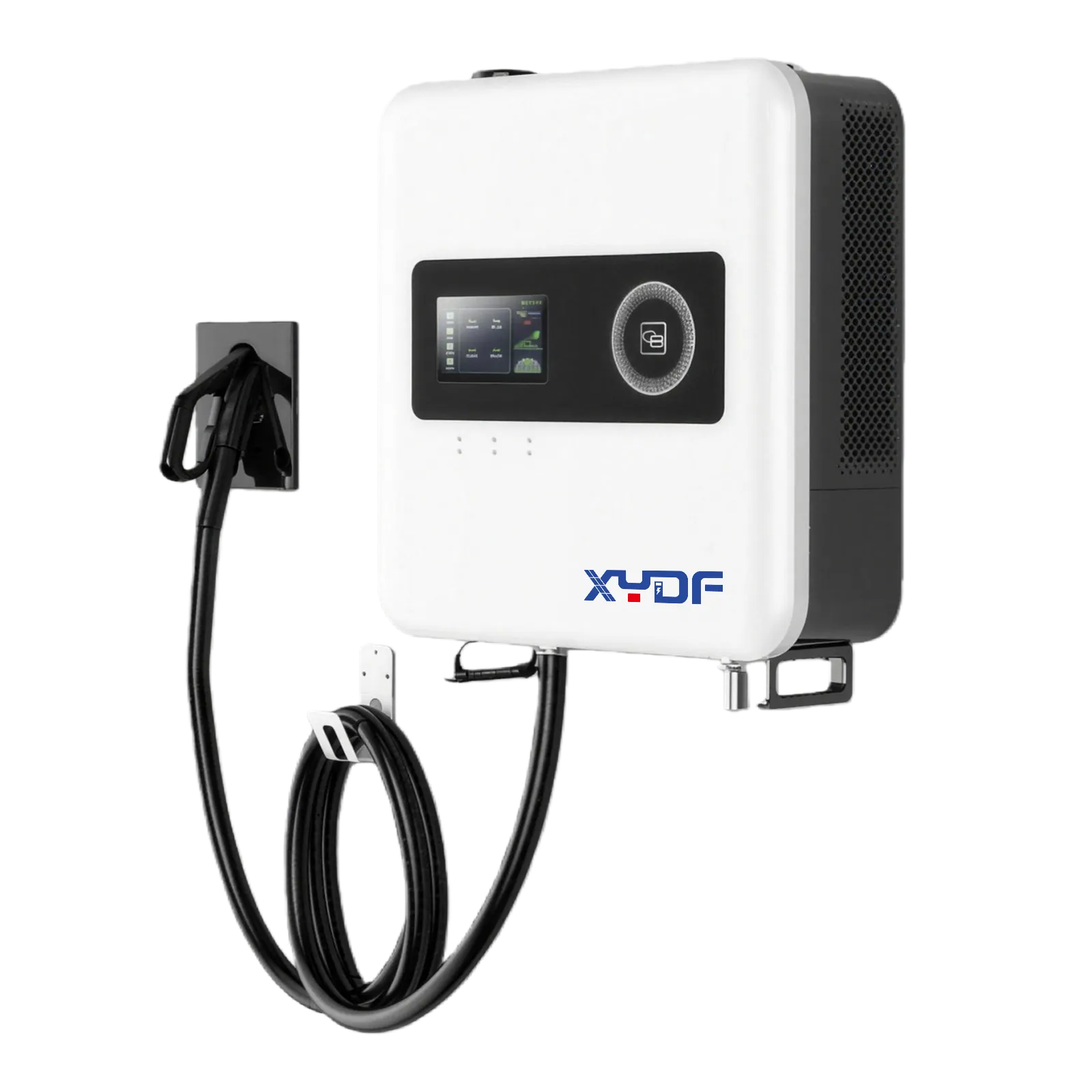
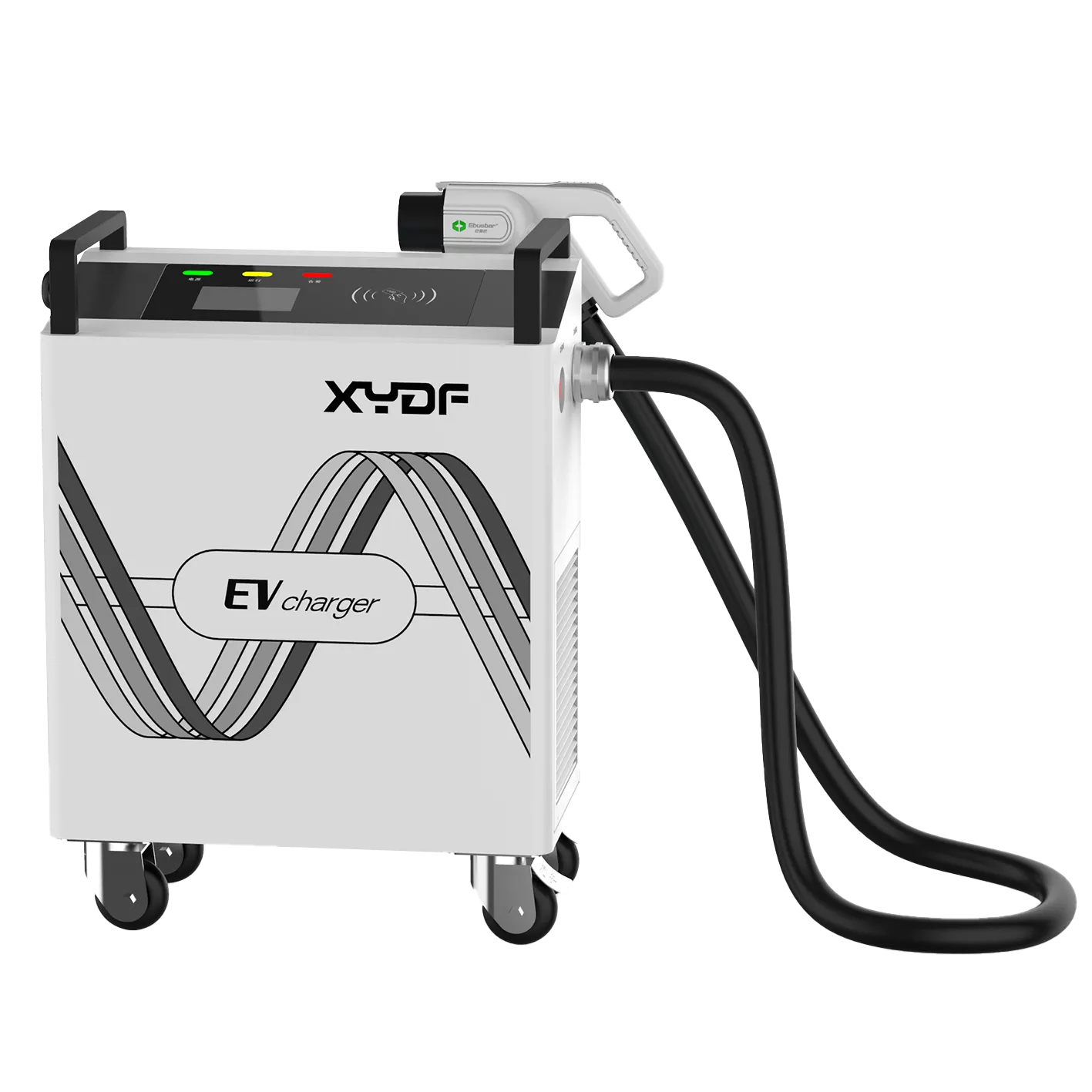
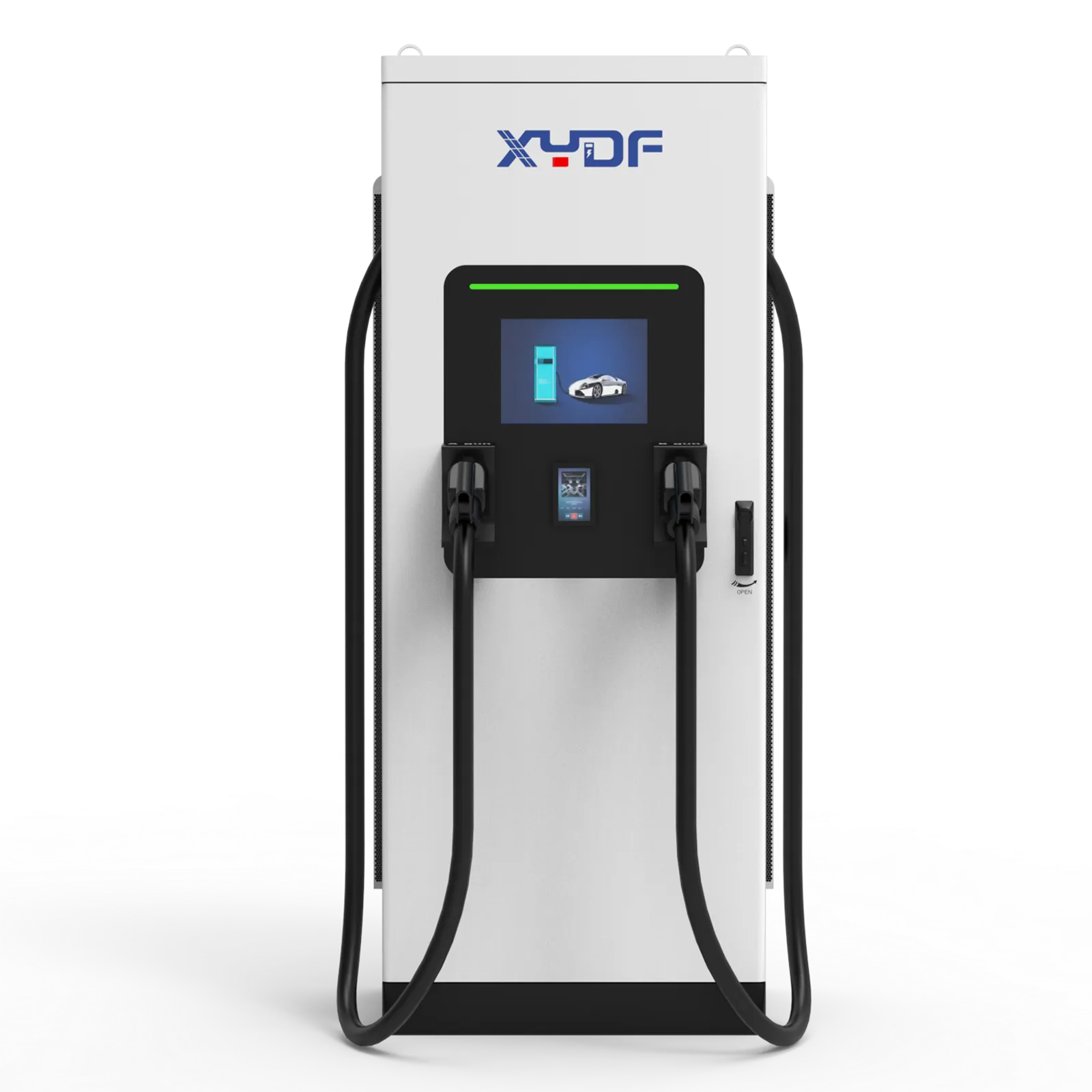
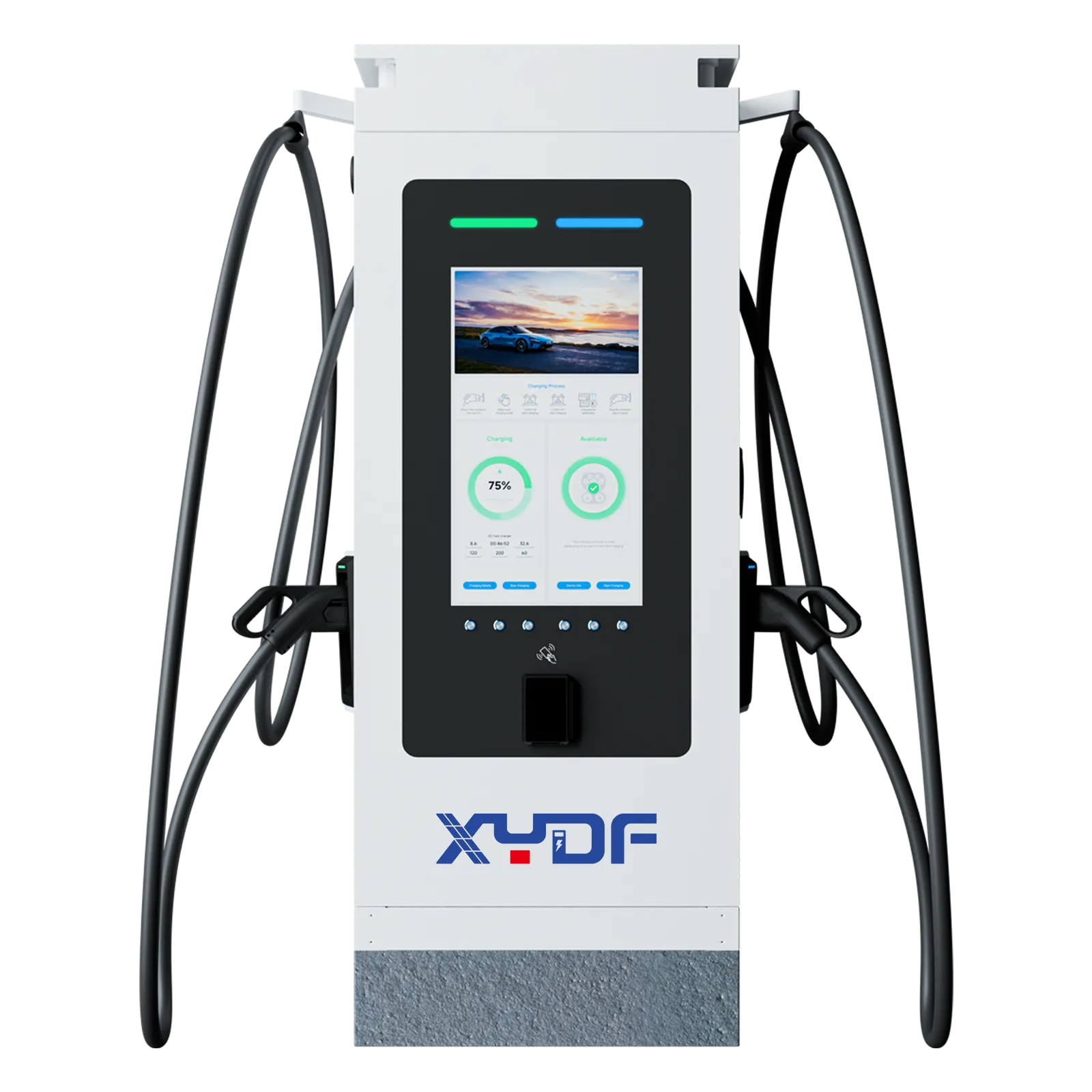
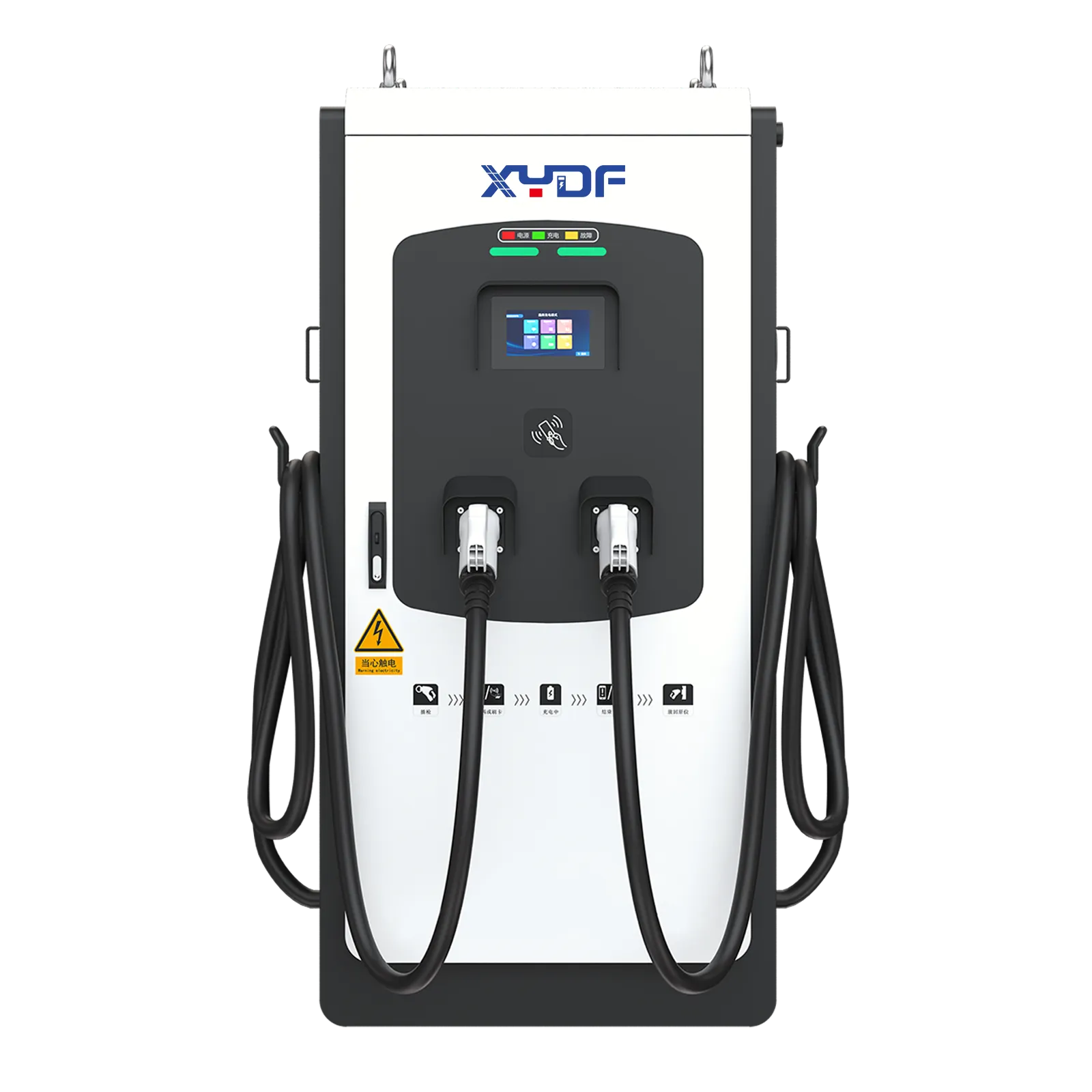
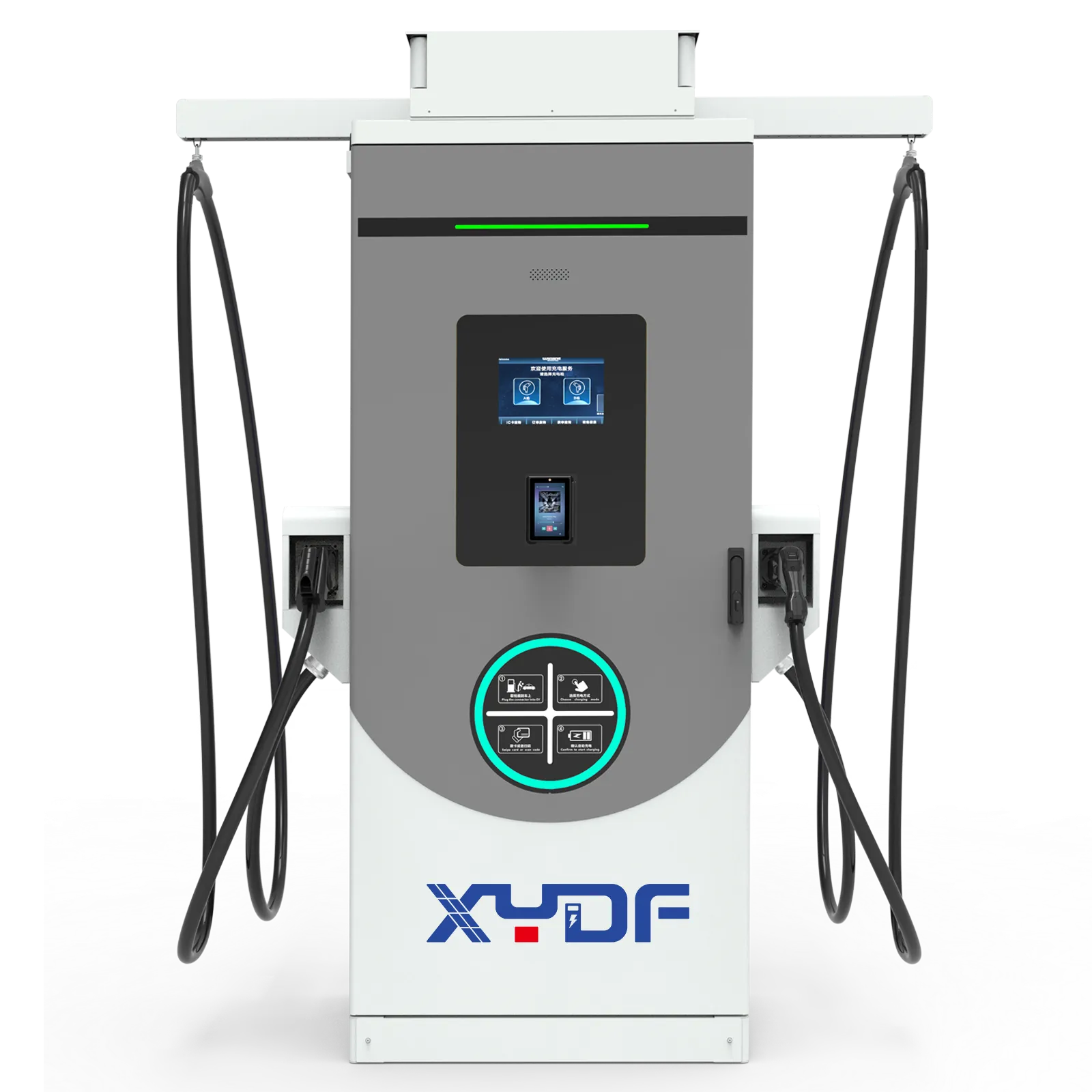
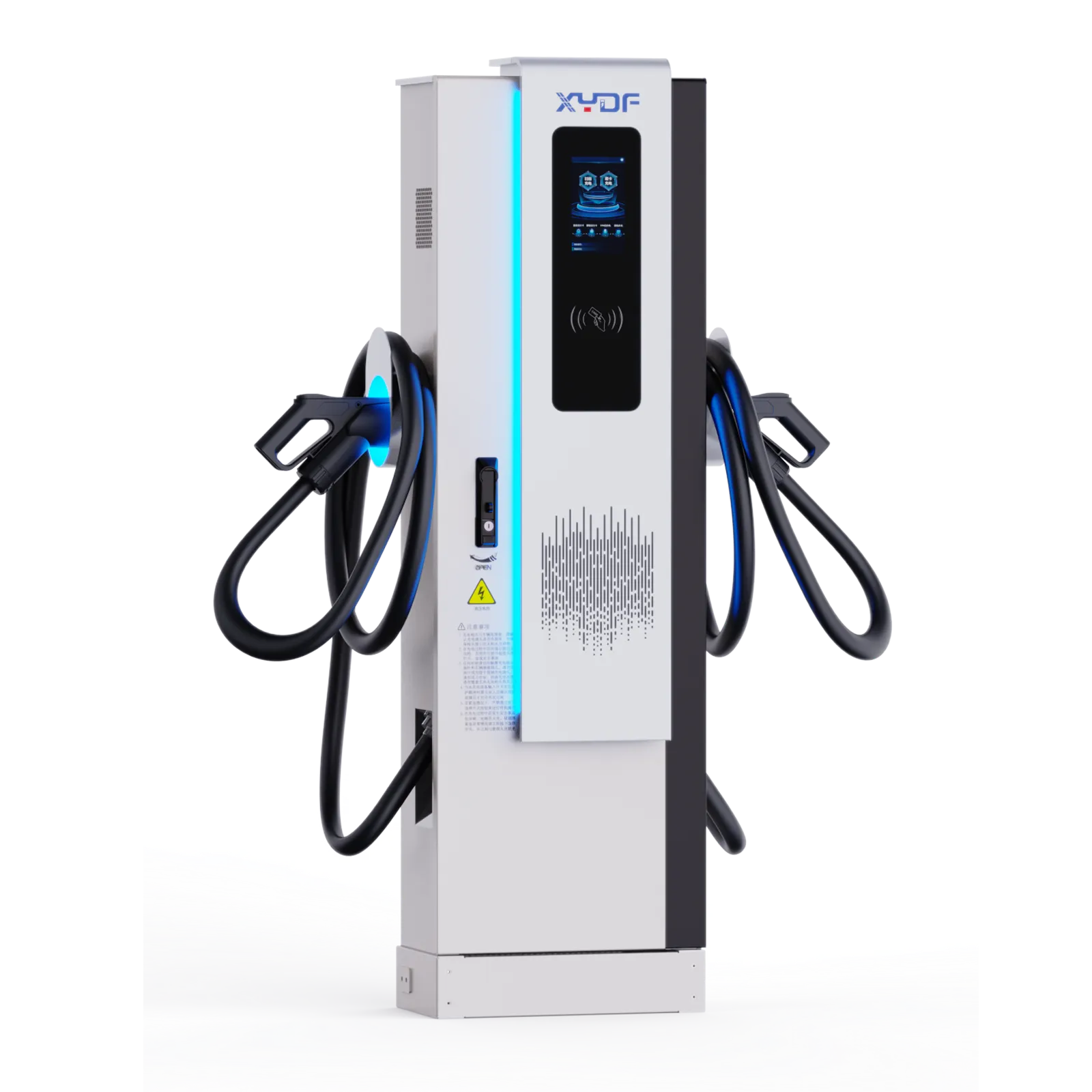
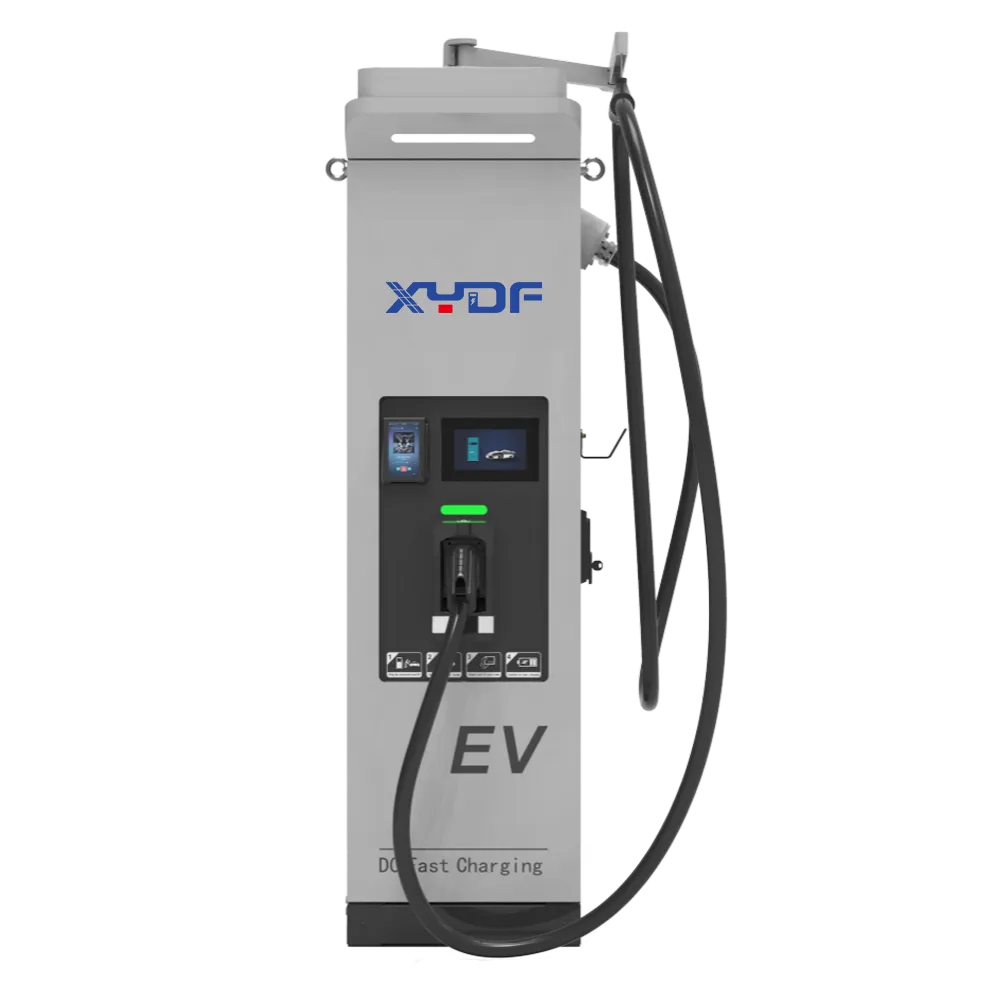
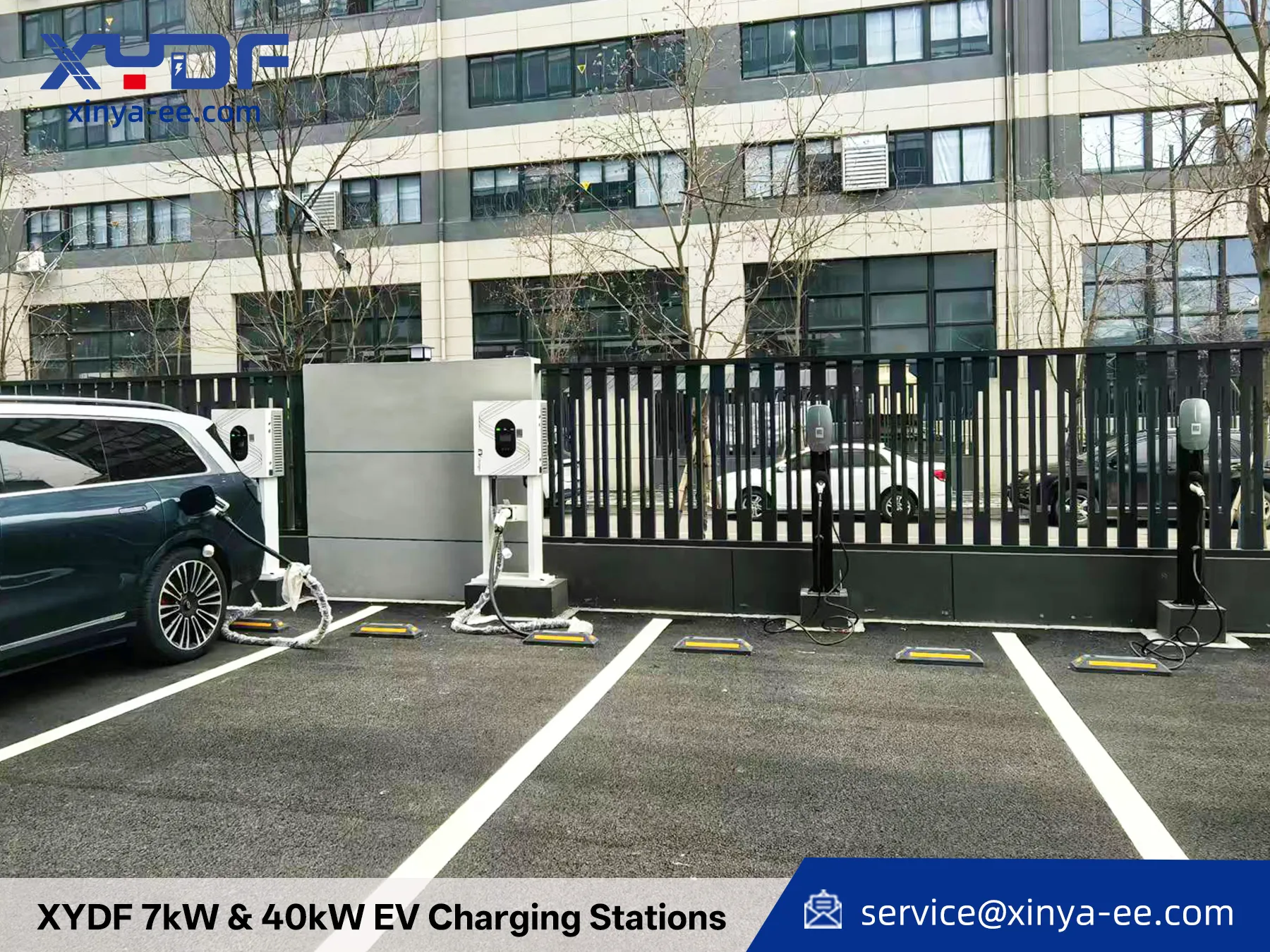
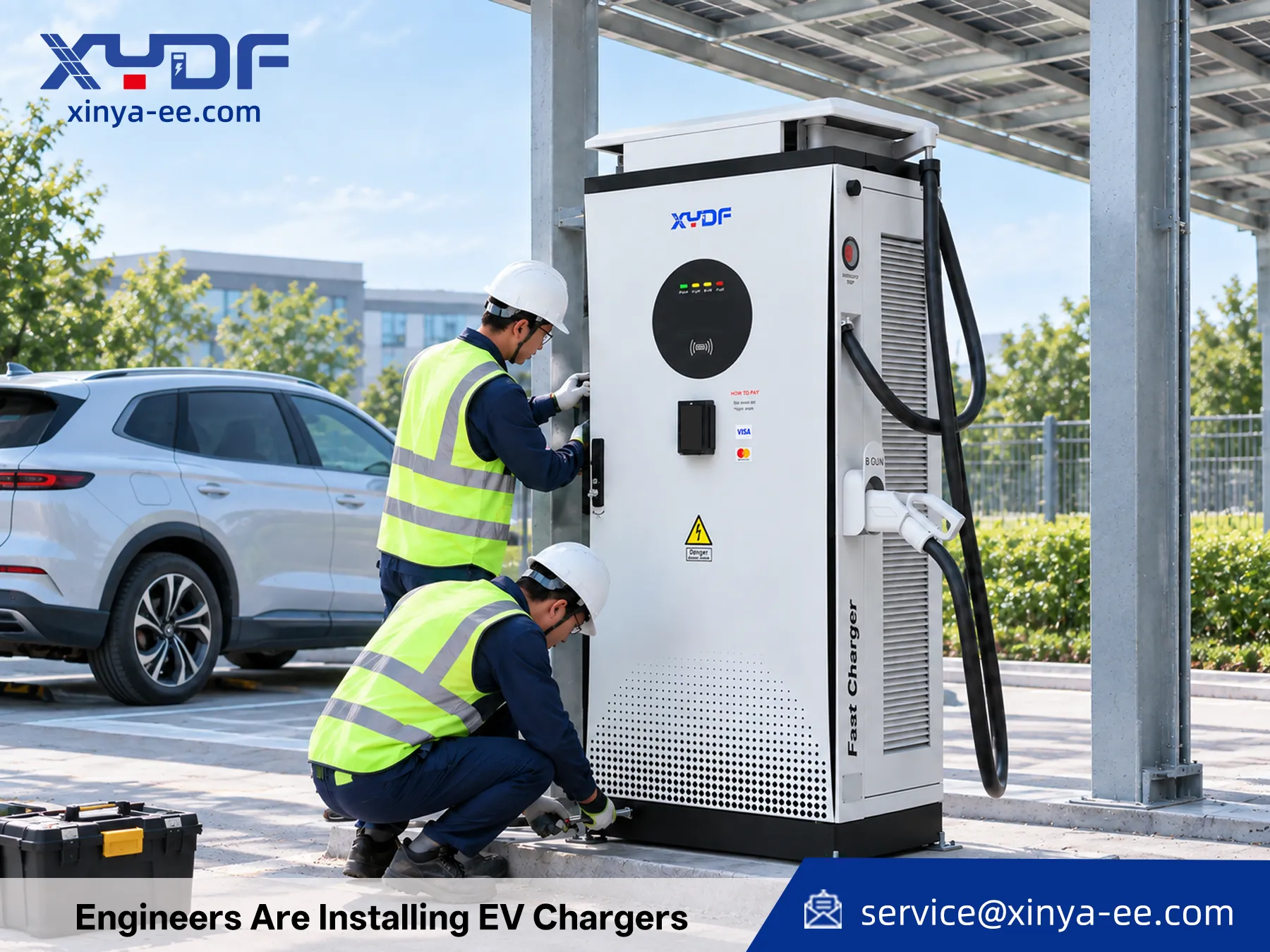
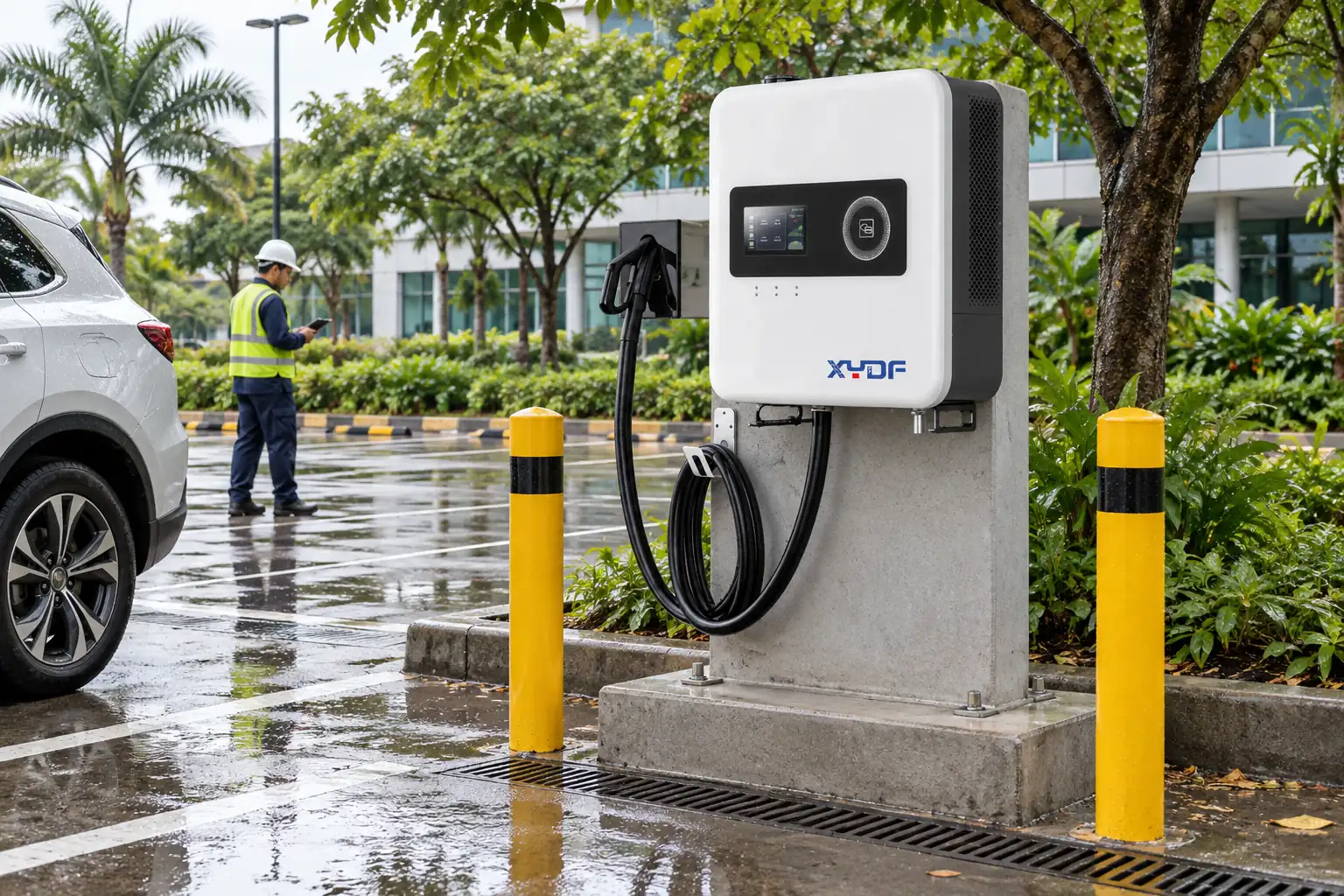
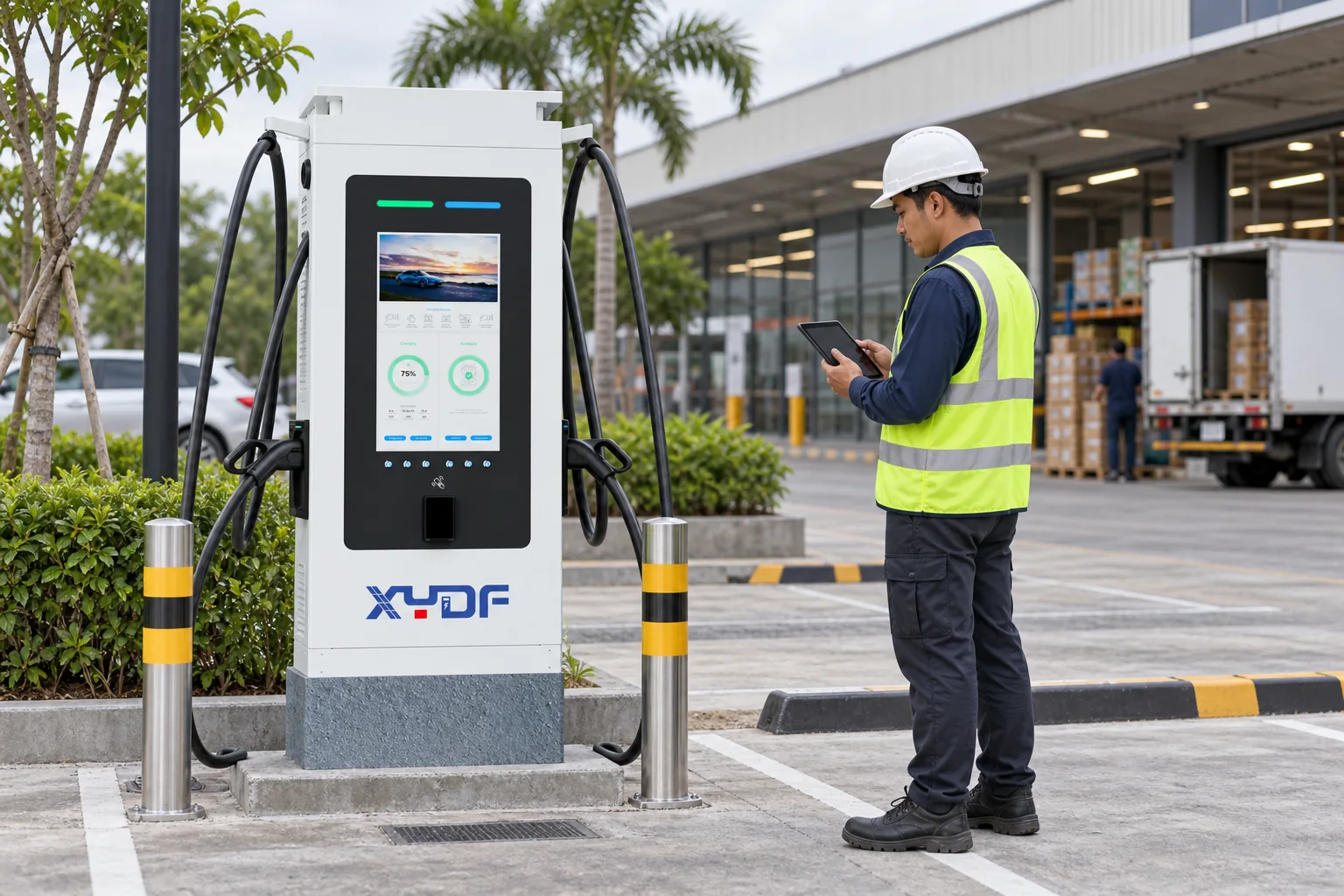
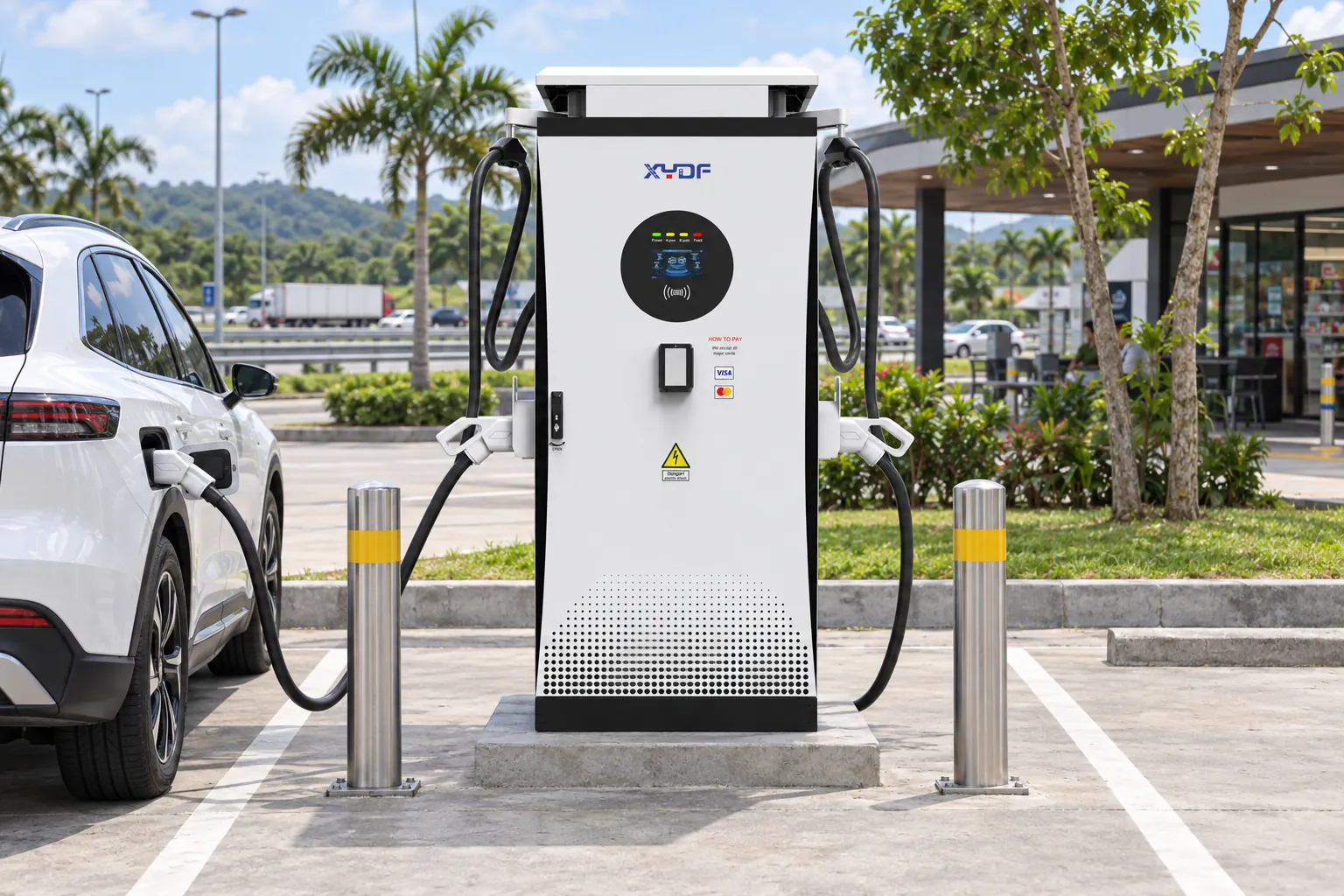
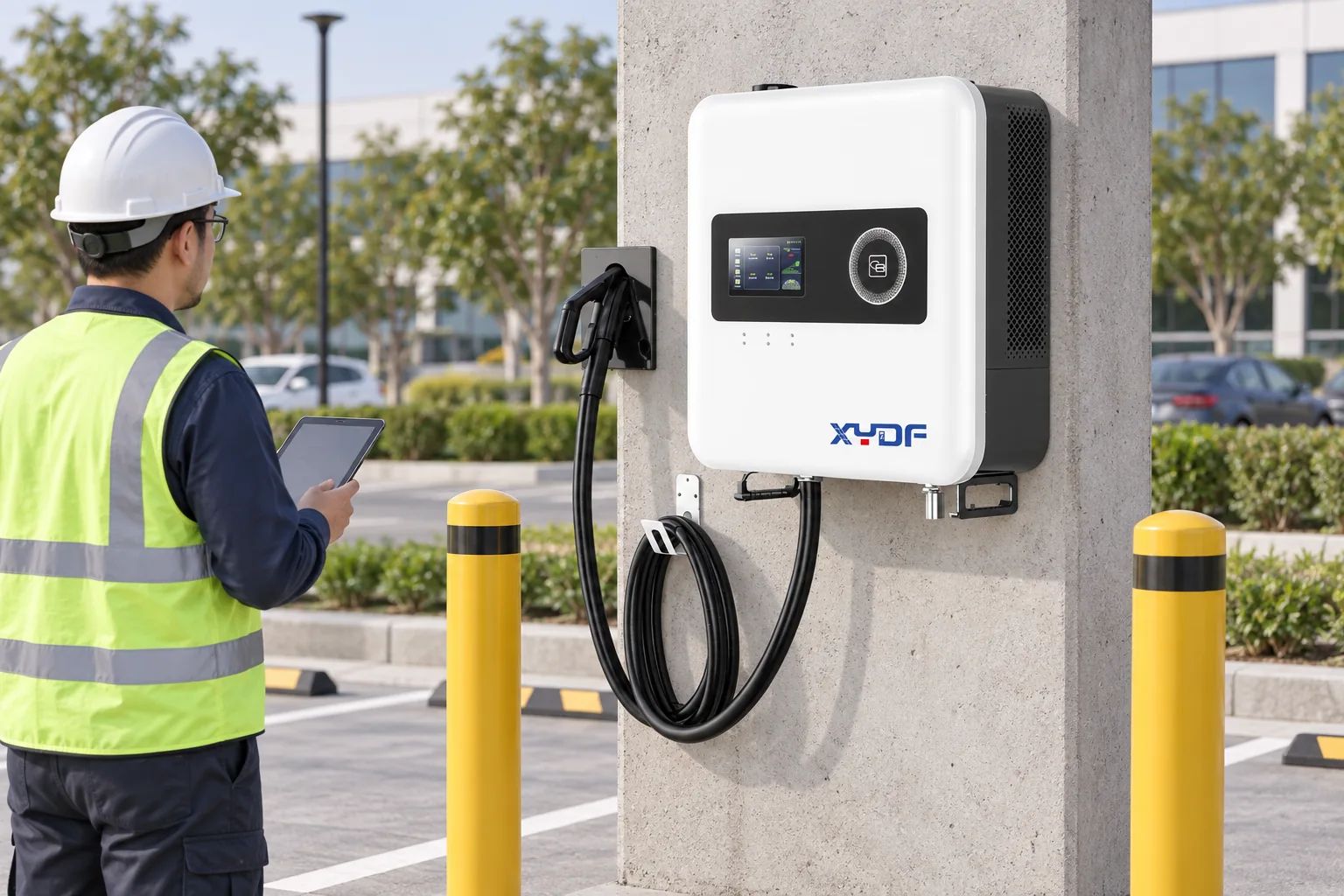
Recently, a Colombian customer reported an “unstable input voltage” issue to the XYDF after-sales team for their EV charger project.
Unstable input voltage in EV chargers can lead to power derating, charging interruptions, alarms, or protective shutdowns. The key to resolving the issue is not to blindly replace equipment, but to first identify where the voltage anomaly occurs.
Оглавление
1. Why Does Unstable Input Voltage Affect AC and DC Chargers?
Тот EV charger input voltage determines whether the charger can operate within its specified electrical conditions. Unstable voltage includes sustained overvoltage or undervoltage, short-term sags and swells, phase loss, three-phase unbalance, and significant line voltage drop after charging starts. The issue may originate from the public grid, or from overly long cables, undersized conductors, loose connections, insufficient distribution capacity, or other large loads running simultaneously.
Проблема
AC Charger Symptoms
DC Charger Symptoms
Overvoltage or undervoltage
Vehicle refuses to charge, derates, or stops charging
Power module alarms, derating, or shutdown
Line voltage drop
Voltage drops after startup; charging interrupted
Repeated restarts during high-power operation
Phase loss or three-phase unbalance
Abnormal three-phase charging
Some modules offline or limited output
During AC charging, the vehicle’s on-board charger also participates in voltage monitoring, so a charging stop does not necessarily indicate a faulty AC charger. DC chargers convert power directly through power modules and are more sensitive to three-phase input and distribution capacity.
The IEC classifies supply voltage deviations, sags, swells, unbalance, and interruptions as power quality issues. IEC TS 62749 provides the corresponding classification basis. In its 2025 interpretation, Colombia’s CREG confirmed that steady-state voltage at 60 Hz sustained for more than one minute should remain between 90% and 110% of nominal voltage. However, the specific allowable range for each charger is subject to the product specification. CREG official source
2. How to Determine Whether the Problem Is from the Grid, the Wiring, or the Charger?
Check the logs first, then measure on site. First read the charger alarms and back-end logs, then measure no-load and loaded voltages at both the distribution entry and the charger terminals; for three-phase projects, also check phase voltages, phase loss, and unbalance. Key measurements include the actual EV charger input voltage, three-phase balance, transformer and available power capacity, and cable length and line voltage drop — ideally taken at both peak and off-peak hours.
Locate the problem by results:
Wiring or distribution issue: If voltage drops significantly only after a large load starts, focus on cable distance and conductor size, terminal connections, and distribution capacity. If the cause is insufficient transformer capacity or an overloaded distribution system, consider upgrading capacity, upgrading the distribution panel, increasing cable cross-section, shortening the supply distance, or separating charging loads from other large loads and configuring a dedicated transformer — for example, four 40 kW DC chargers total 160 kW; when transformer capacity is insufficient, simultaneous charging by multiple vehicles causes voltage drops.
Equipment issue: If the same charger operates normally at other sites, an on-site power supply issue is more likely; if the fault persists after changing vehicles or supply locations, continue to inspect the equipment itself.
Tesla’s troubleshooting documentation also lists building wiring, outlets, and large loads on the same circuit as common causes of charging voltage drops. Tesla troubleshooting
3. How Does XYDF Handle Unstable Input Voltage and Match Solutions?
XYDF chargers operate within the product-defined EV charger input voltage range and protection conditions; beyond that range, they execute derating, alarm, or shutdown protection depending on the model. The engineering team can help customers locate issues using logs and on-site measurements.
XYDF’s EV chargers feature a wide input voltage design; certain models have a rated input voltage of 400V and support an input range of 400V ±15% (approximately 340V to 460V). Within this range, the charger can still operate under specified conditions despite voltage fluctuations, reducing charging interruptions caused by ordinary voltage swings; the chargers also feature over/undervoltage thresholds, dynamic derating, recovery logic, remote alarms, and customization capabilities.
For regions with significant grid voltage fluctuation, buyers should focus on the EV charger input voltage operating range, over/undervoltage protection capability, and derating and protection strategy under abnormal voltage — rather than comparing rated power alone.
On-site Condition
Recommended Action
Transient surges
Configure appropriate SPDs
Sustained voltage deviation
Evaluate a suitably sized voltage stabilizer (Grid → Transformer → Stabilizer → EV Charger)
Voltage drop when multiple chargers run
Use dynamic load management
Insufficient transformer or distribution capacity
Upgrade transformer or distribution panel, increase cable cross-section, or configure a dedicated transformer
Wiring, termination, or three-phase distribution issues
Solution selection should be based on on-site voltage measurements and total load, and comply with local electrical codes.
4. What Should Be Done Before Installing an EV Charger?
For installations in areas with unstable voltage, confirm the following:
Measure EV charger input voltage, three-phase balance, and line voltage drop under different loads; verify transformer and available capacity;
Choose a charger with a wide input voltage range and confirm over/undervoltage and surge protection;
Consider voltage stabilizers, dynamic load management, or energy storage based on on-site conditions;
Confirm local electrical codes and EV charging requirements before installation and commissioning.
5. FAQ About EV Charger Input Voltage
Q: Can voltage fluctuations damage the charger or the vehicle?
A: Equipment typically limits power or stops charging under abnormal conditions, but frequent excursions beyond the specified EV charger input voltage limits should still be investigated promptly; do not rely on protection actions long-term.
Q: Why does the charger work normally at other sites?
A: This usually suggests the issue may be related to the local grid, line voltage drop, or load distribution at this site, but confirmation still requires loaded measurements and logs.
Q: Can a wide input voltage range fully solve the problem?
A: No. A wide EV charger input voltage range helps the equipment adapt to fluctuations within a certain range, but cannot resolve phase loss, loose connections, severe surges, or insufficient capacity.
Заключительные мысли
If your project also faces unstable input voltage in EV chargers, you can provide XYDF with the project location, target charger model and power, supply configuration, loaded voltage, and fault logs. XYDF’s engineering team will help evaluate the appropriate charger selection and on-site solutions based on product configuration.
Штаб-квартира и фабрика в Чжэцзяне:
№ 2, улица Чанцзян, промышленный парк Вэньчжоу Бридж, город Бейбайсян, город Юэцин, город Вэньчжоу, провинция Чжэцзян
Шэньчжэньский филиал:
1-й этаж, здание А, промышленный парк Шэнькай, сообщество Тантоу, район Шиянь, район Баоань, Шэньчжэнь
 Синьцзя Дунфан Электрик Технолоджи Ко., Лтд.