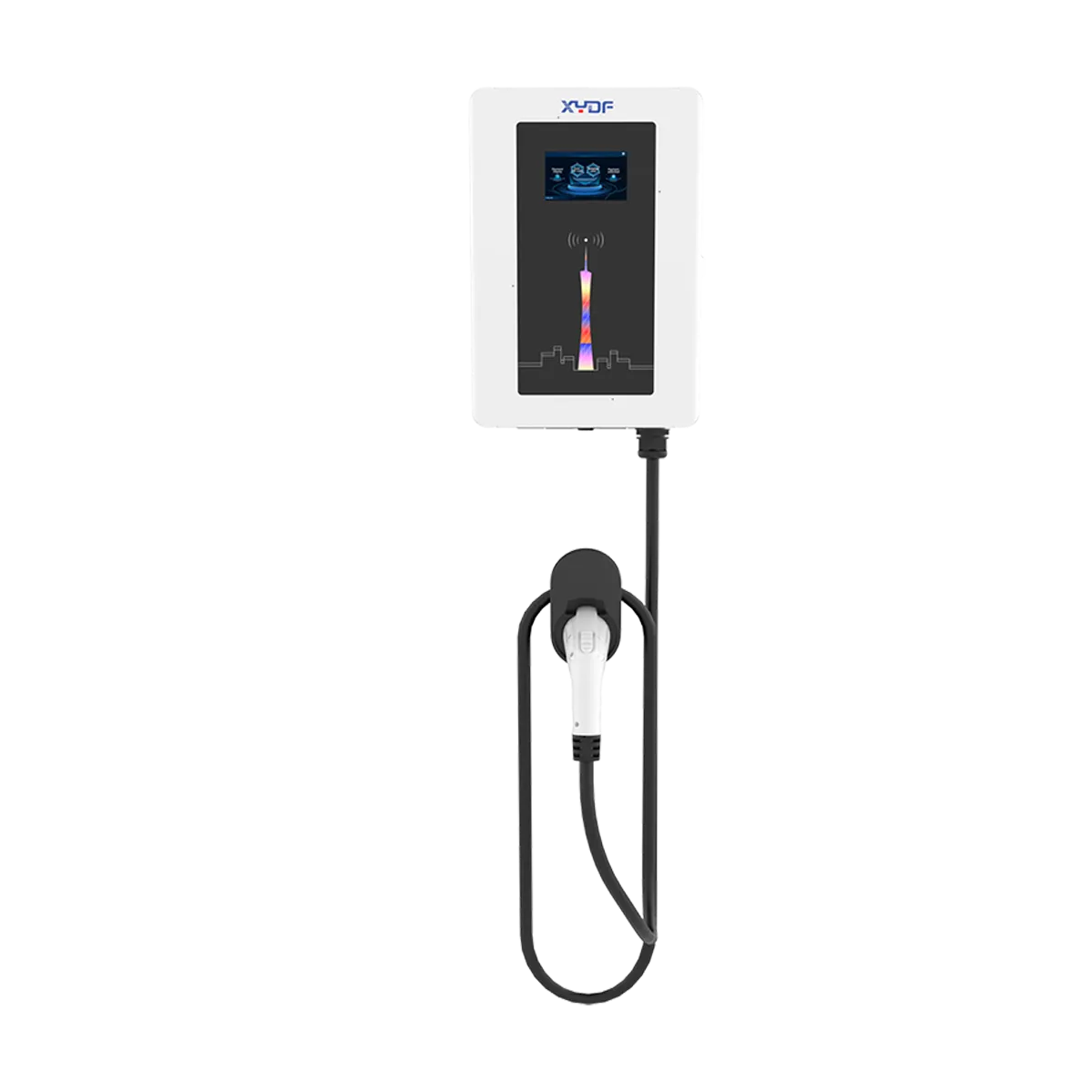
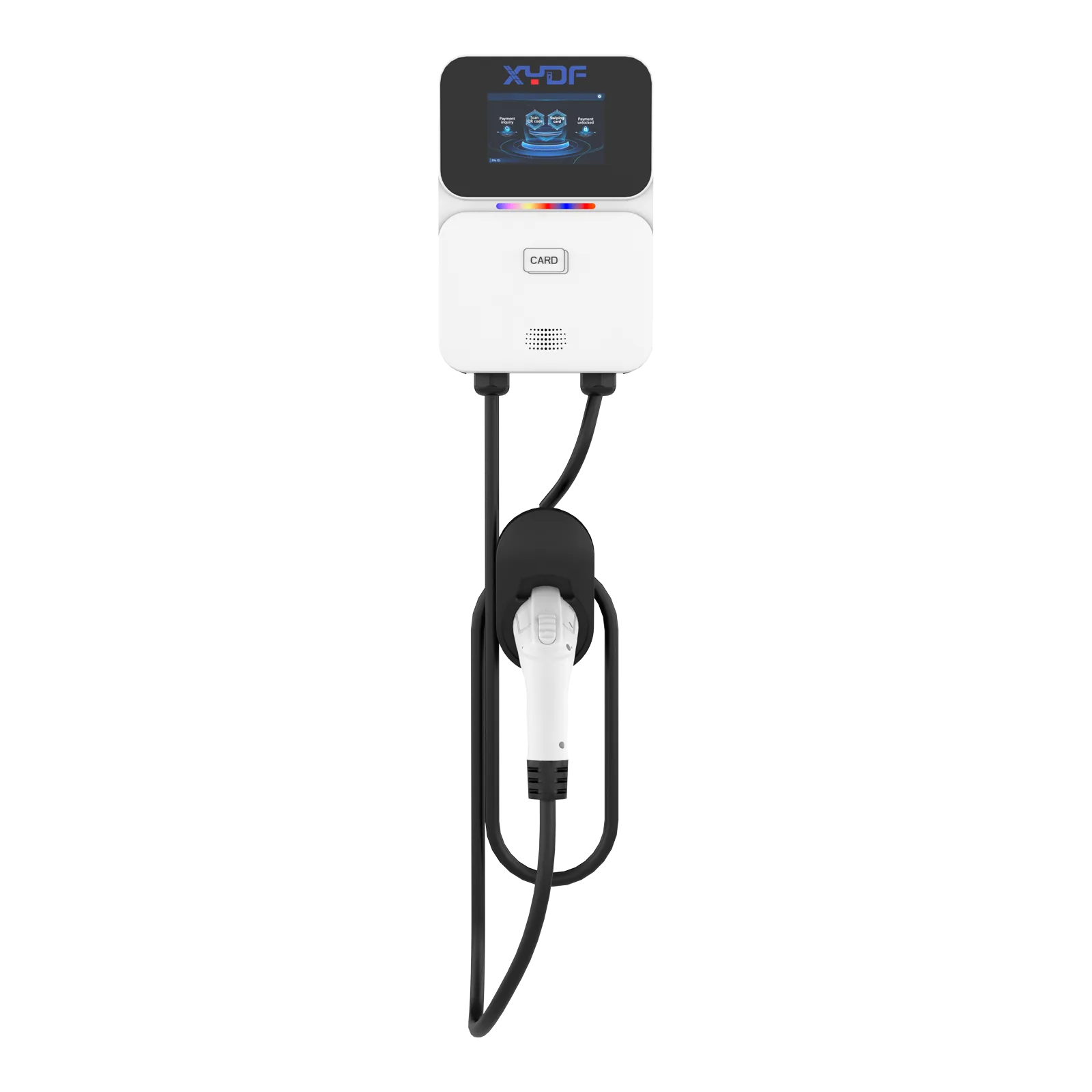
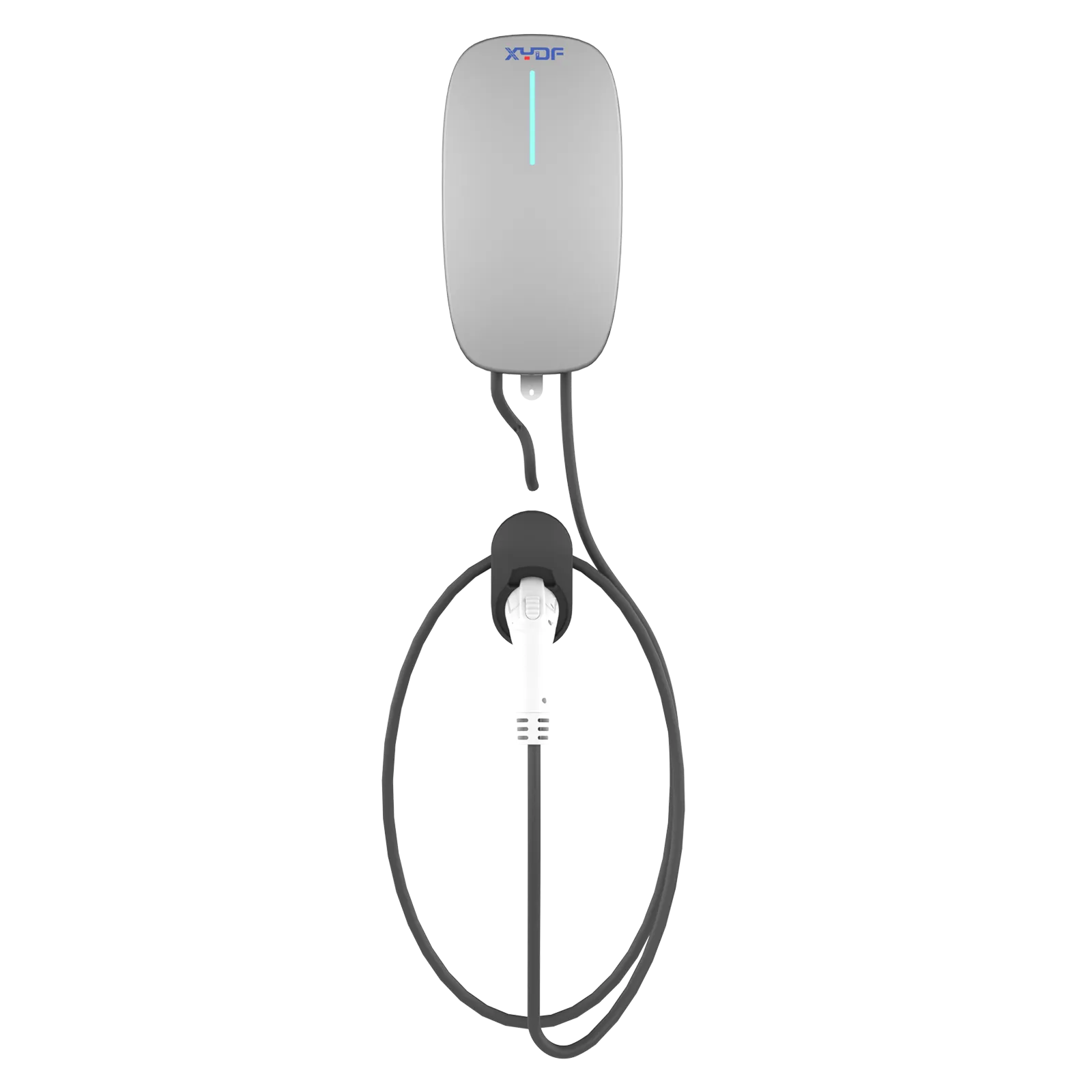
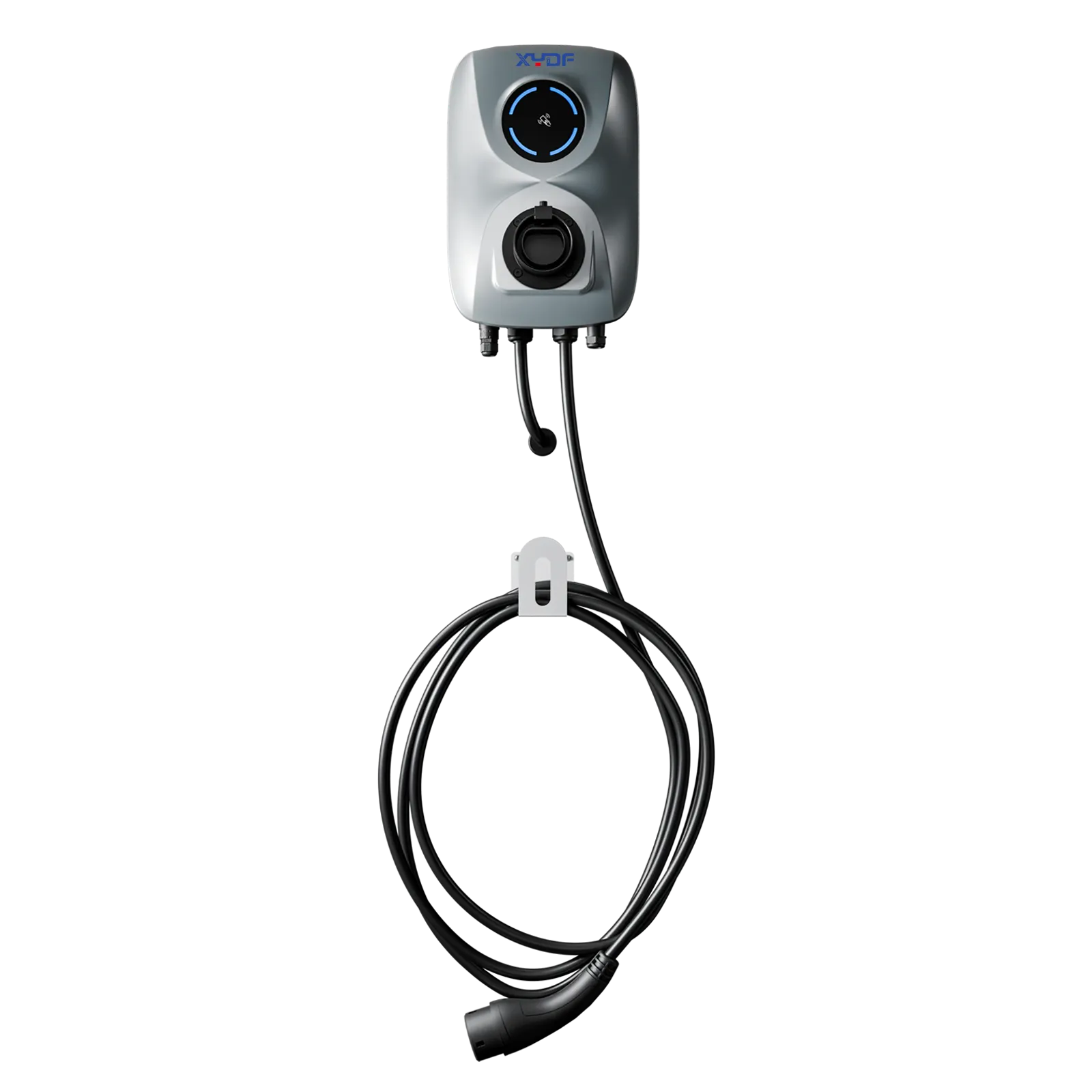
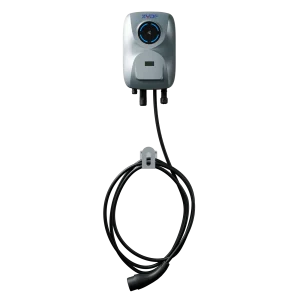
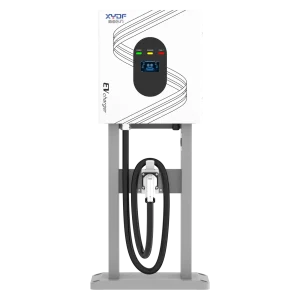
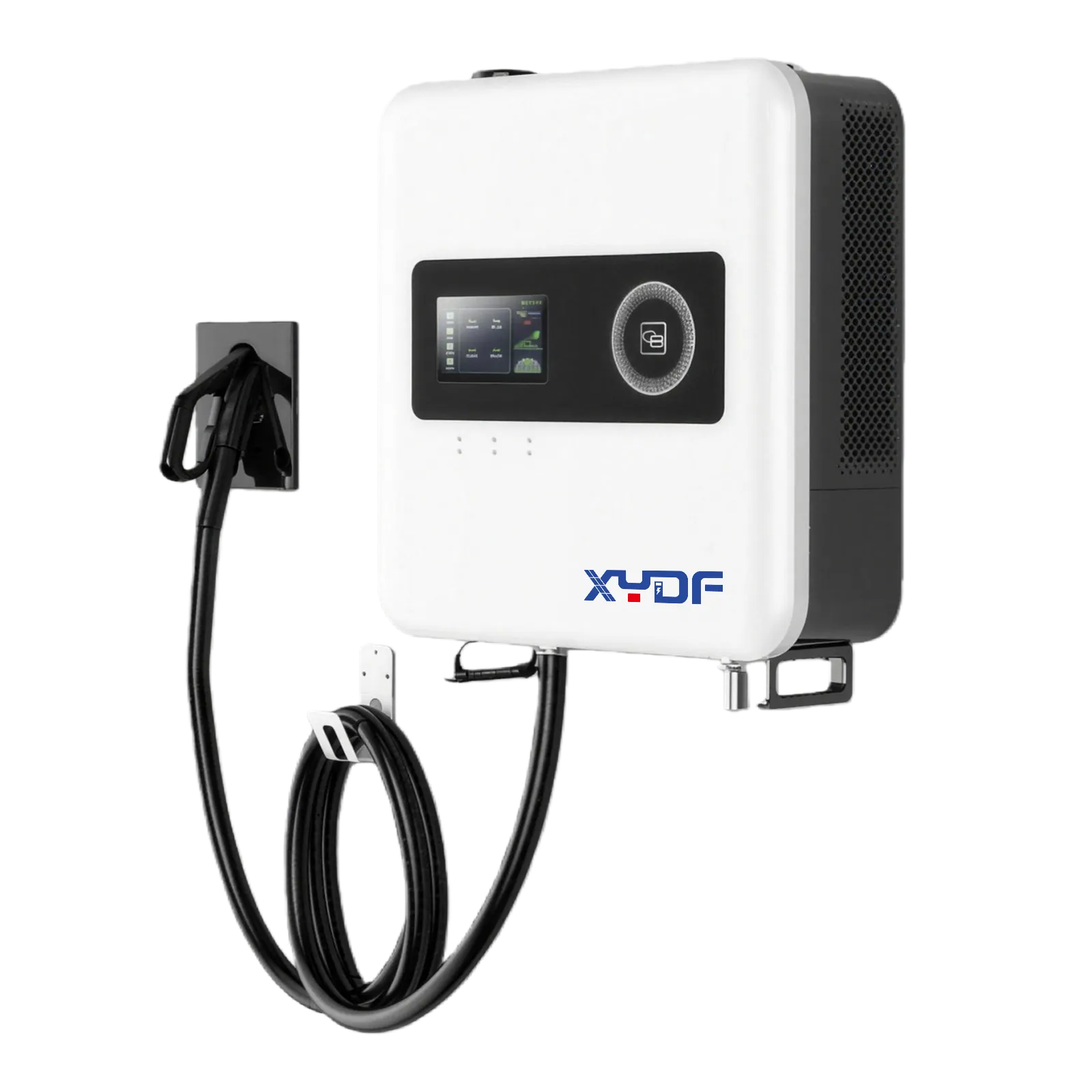
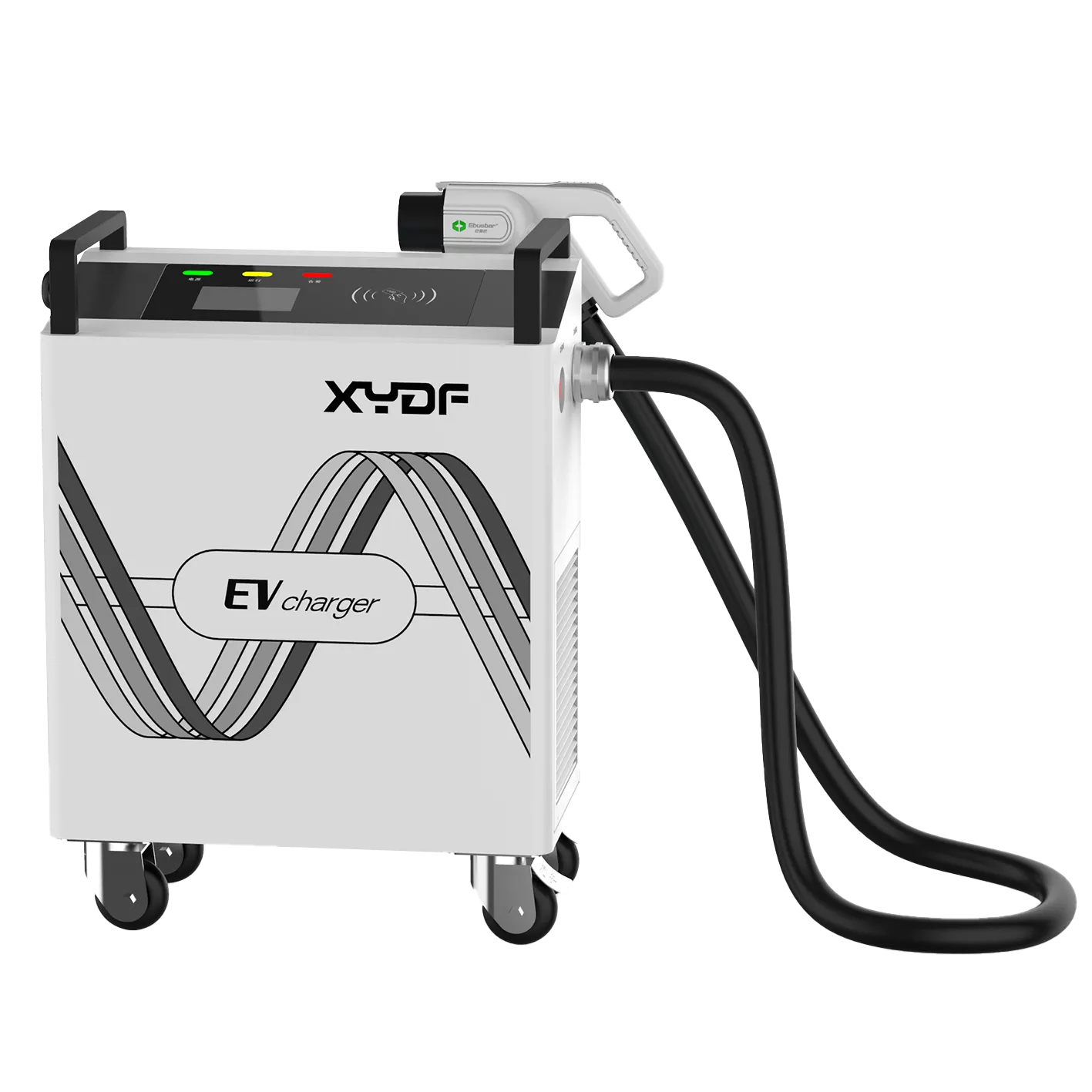
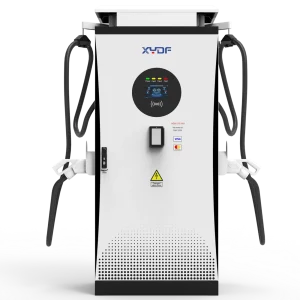
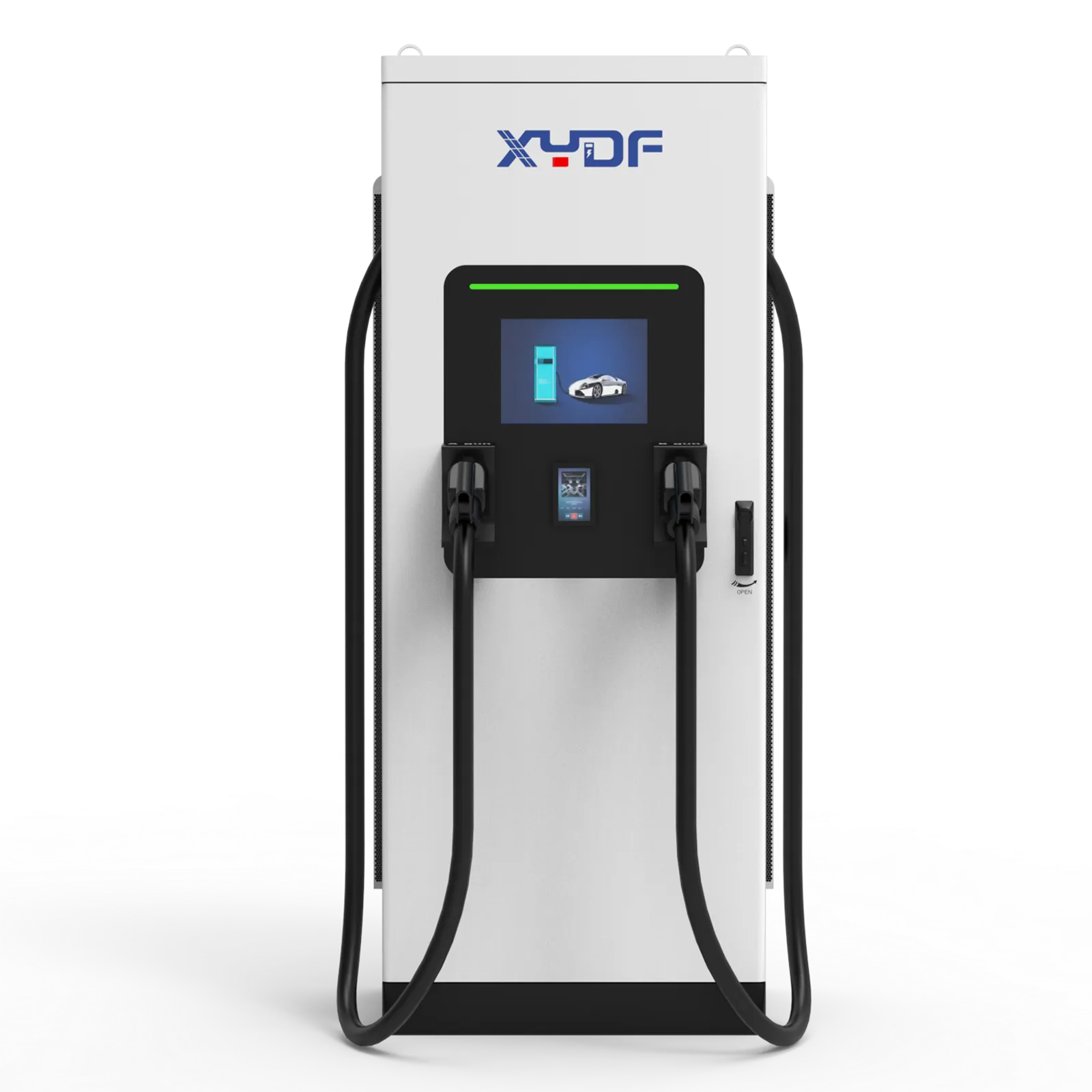
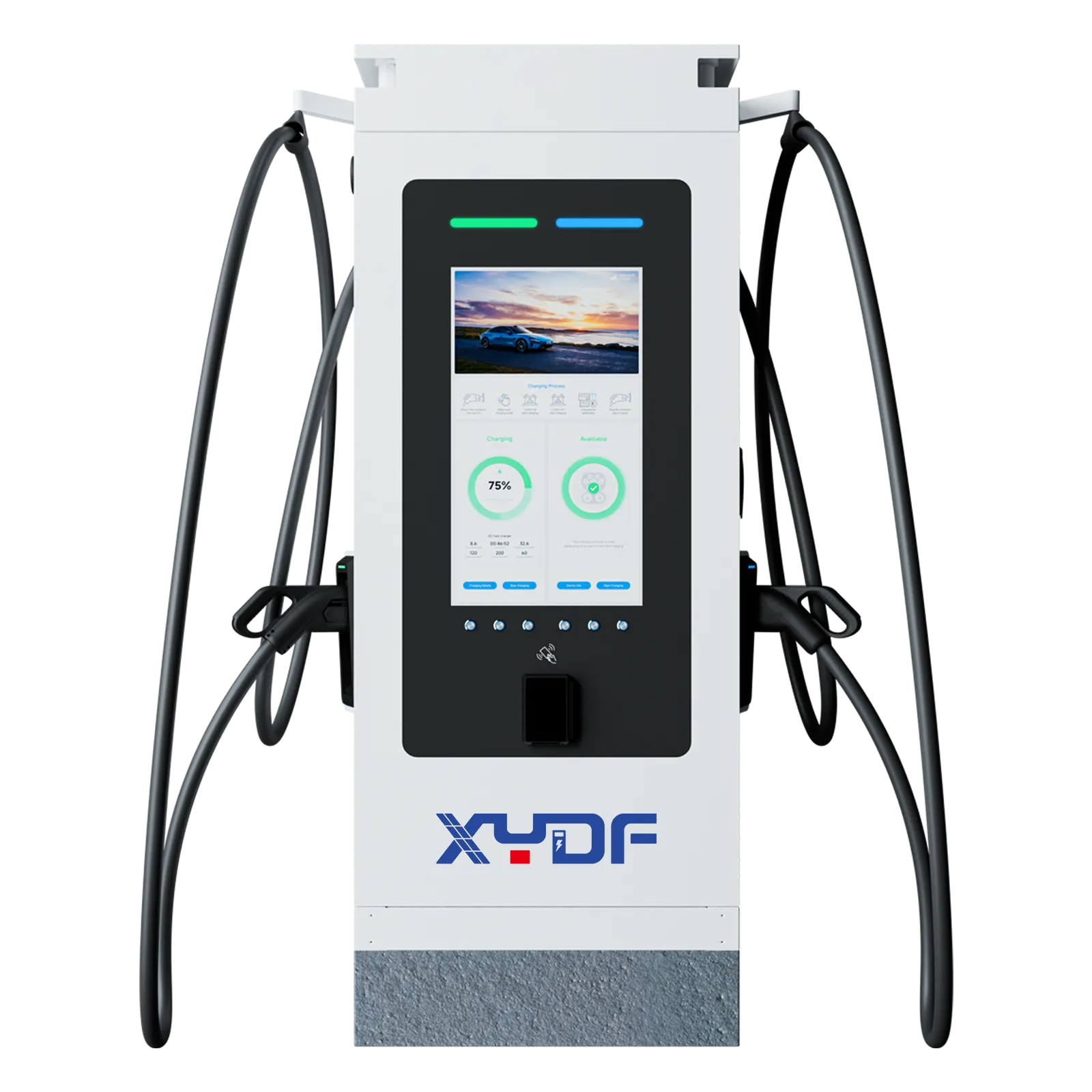
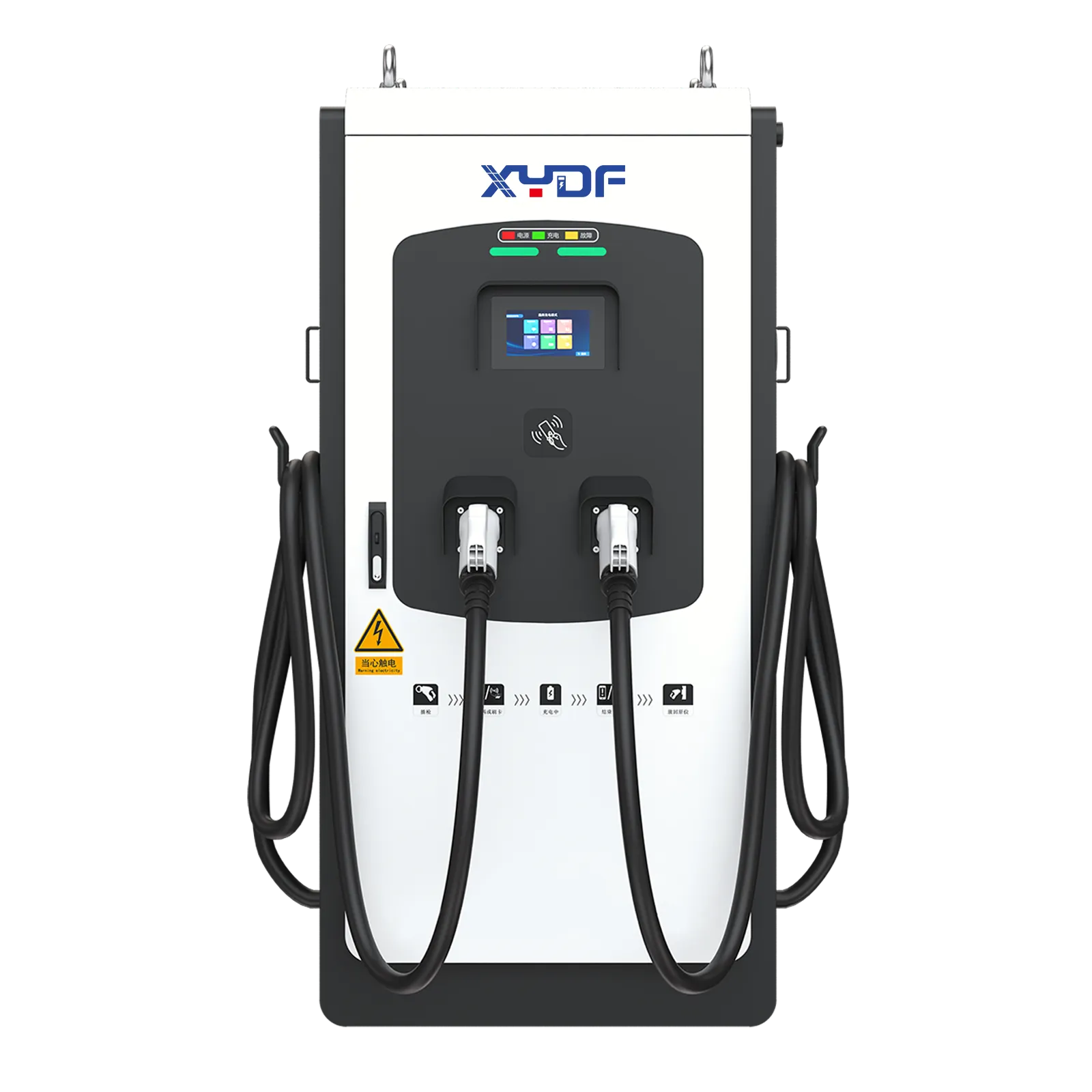
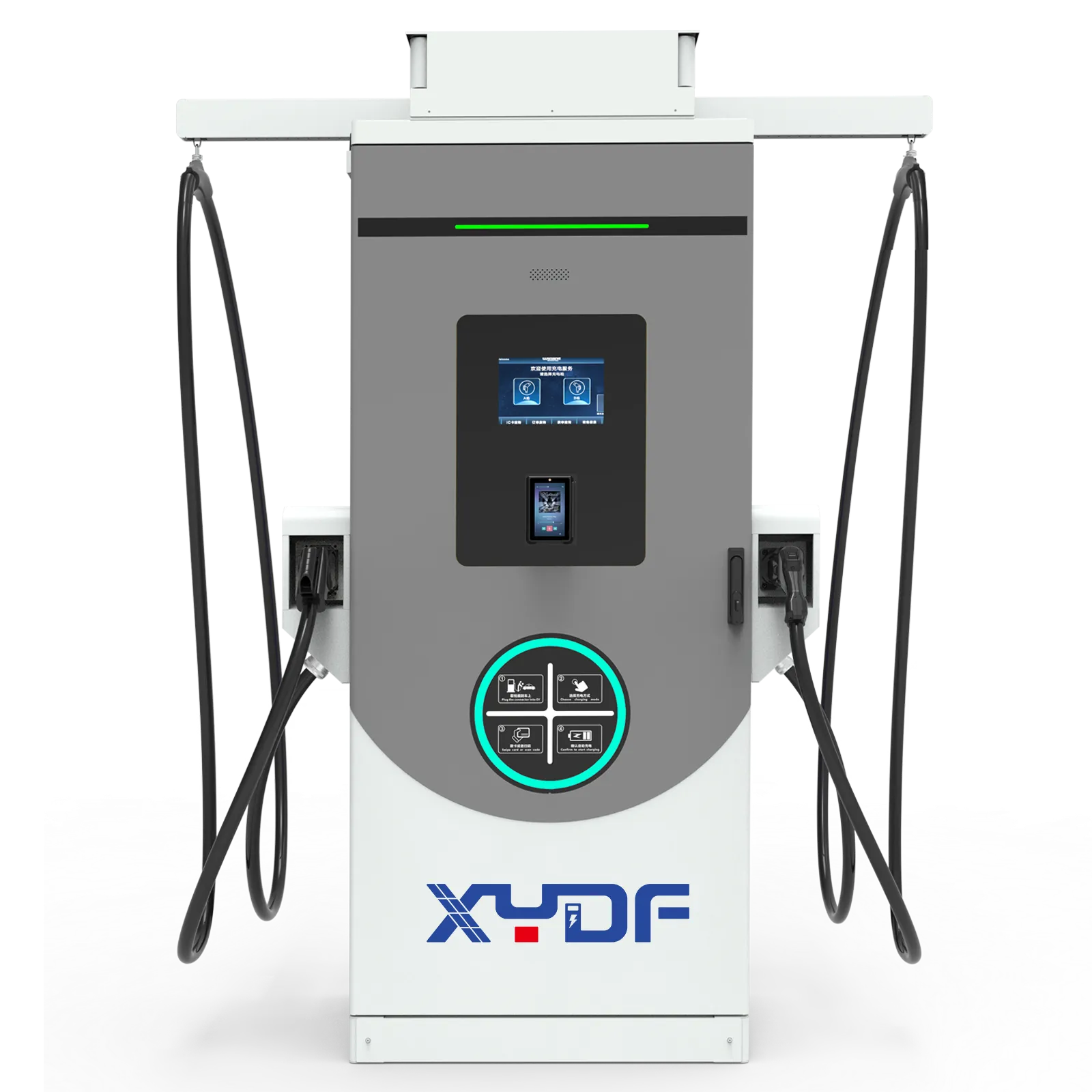
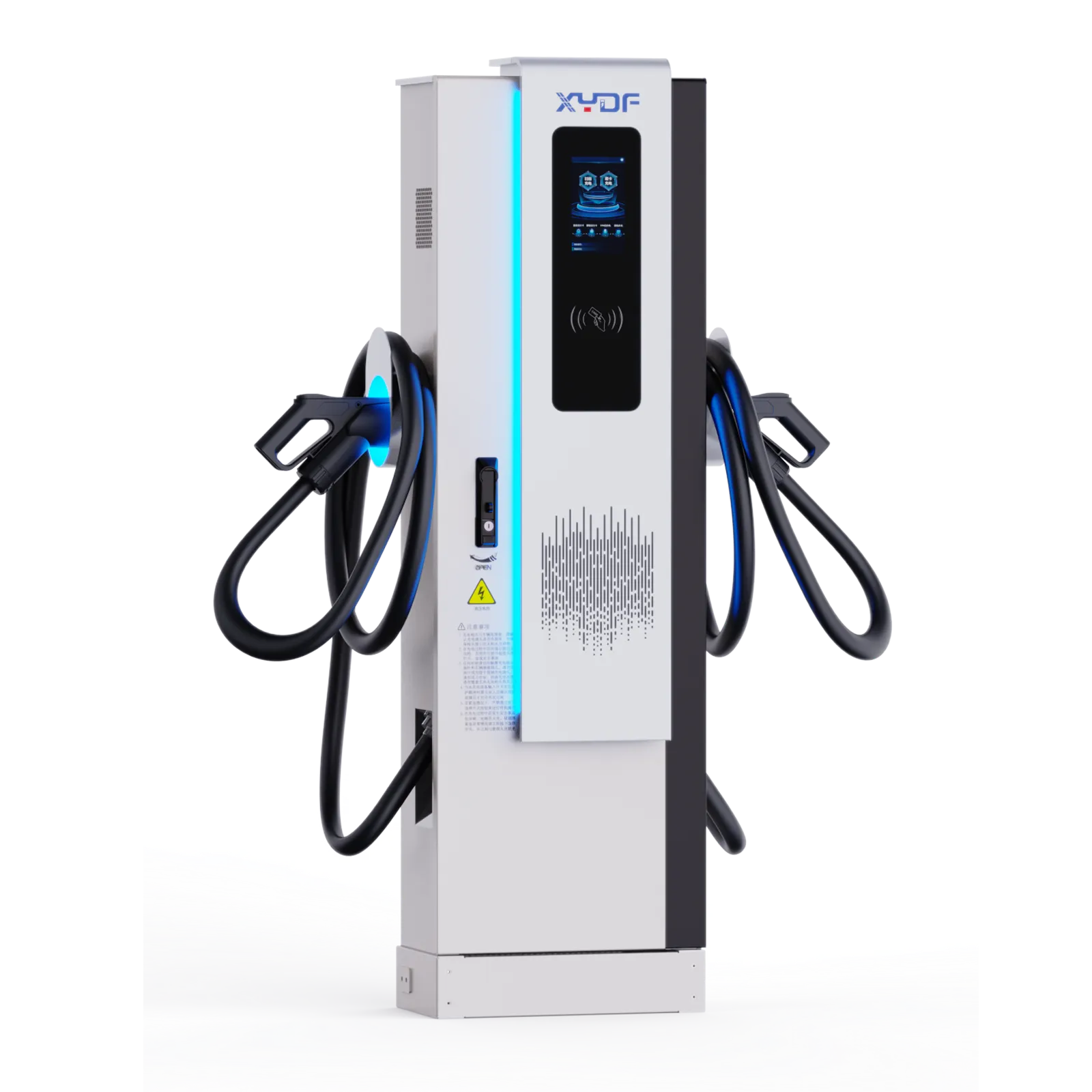
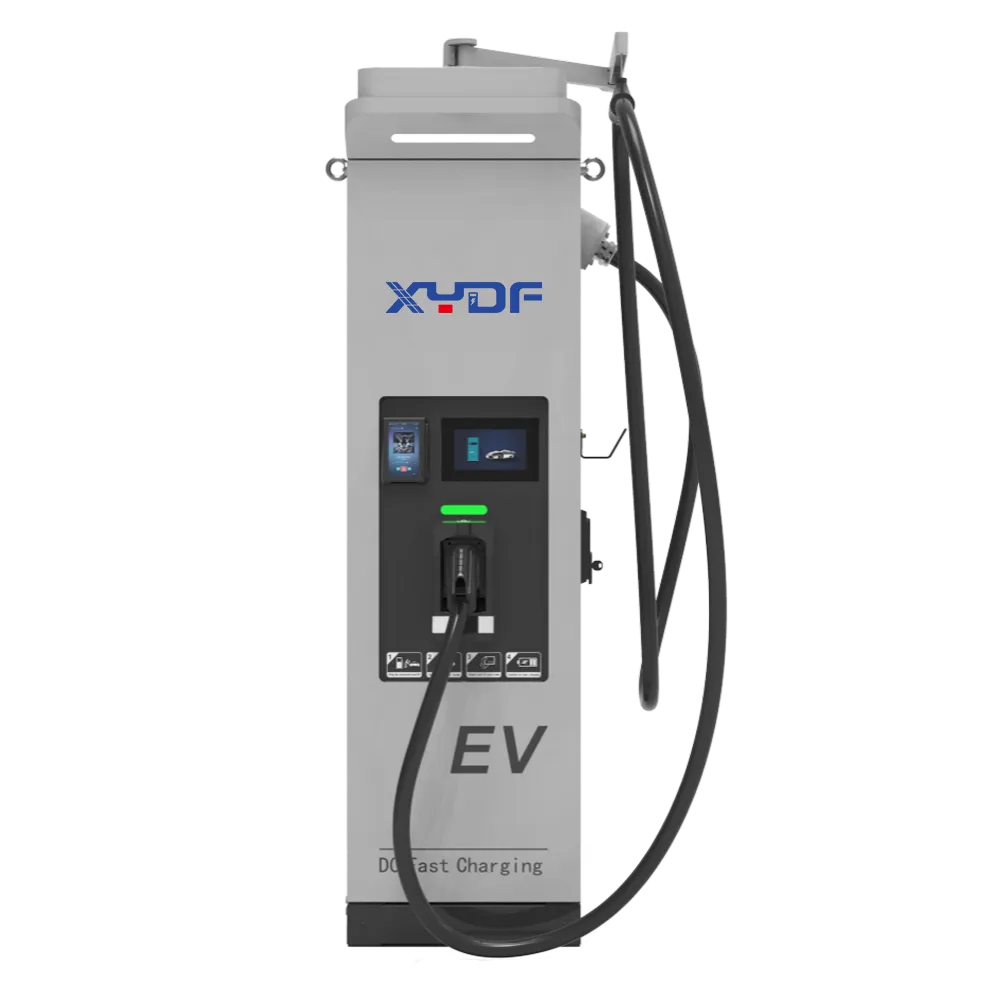
An OCPP EV Charger means the EV charger that support OCPP protocol. “OCPP” stands for Open Charge Point Protocol. OCPP like a common languge between EV chargers and CSMS, it standardizes the interaction processes and data formats, enabling EV charger to communicate with operation platforms from different vendors.
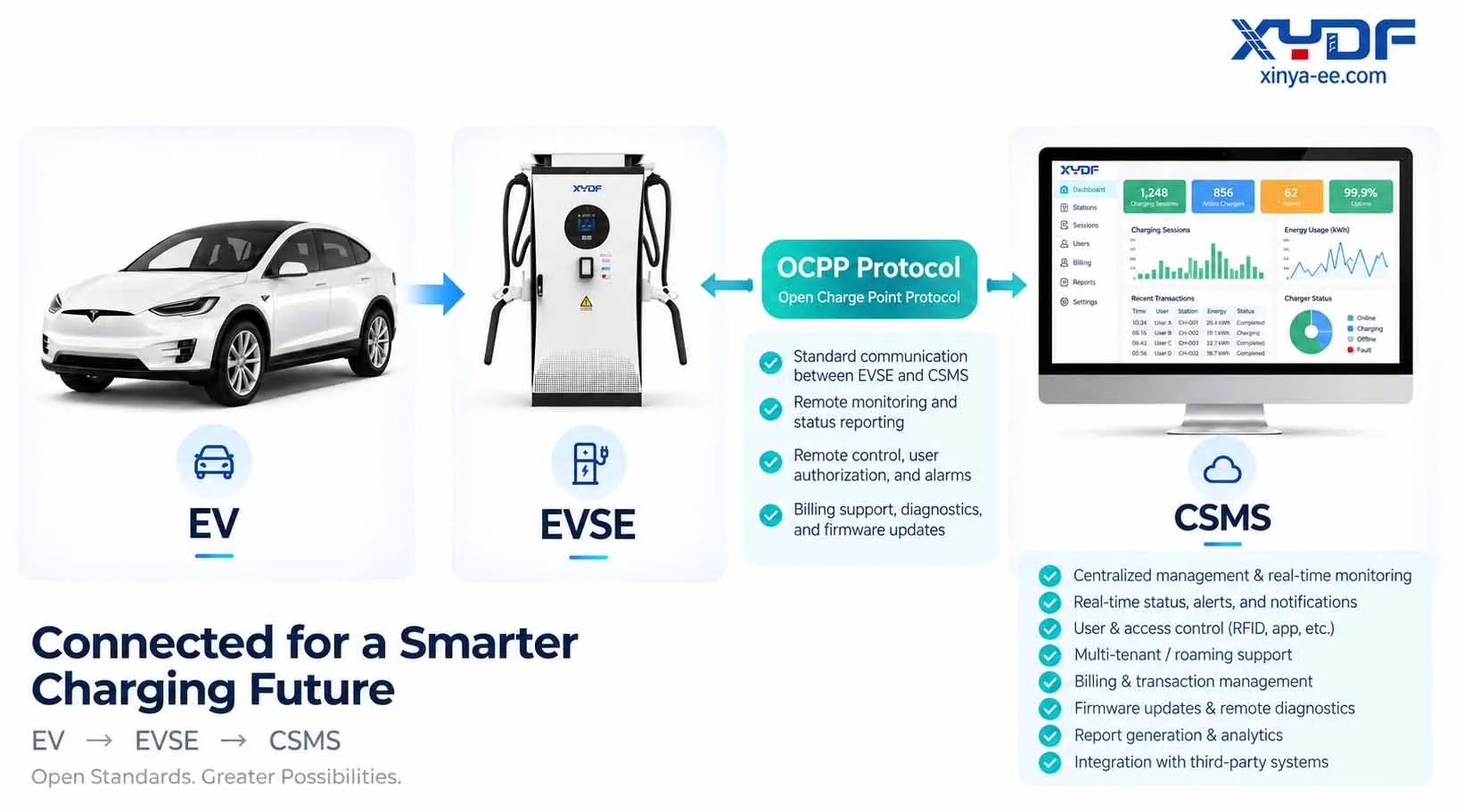
OCPP is a bidirectional communication protocol between Charging Station (CS) and Charging Staion Management System (CSMS), standardizing how operational data—such as device status, charging transactions, and maintenance control commands—is exchanged, as well as defining the interaction workflows and communication procedures between the two systems.
| CS Sends to CSMS | CSMS Sends to CS |
|---|---|
| Charger and connector status | Start or stop commands |
| Charging-session information | User authorization results |
| Energy and meter data | Power and charging limits |
| Fault and diagnostic information | Configuration and firmware commands |
Charging Point Operators (CPOs) typically use a CSMS to monitor charging stations, manage users, process transactions, and perform remote operations. Platforms such as TrendPower EV charging management software can provide these centralized management functions for connected charging networks.
| Version | Overview |
|---|---|
| OCPP 1.6J | Still widely deployed and suitable for standard transaction management, remote control and basic smart charging. |
| OCPP 2.0.1 | A newer version with enhanced security, Adoption is growing, but it is not yet as widely deployed as OCPP 1.6J. |
| OCPP 2.1 | The latest version, adding ISO 15118-20, but should currently be regarded as an emerging option rather than a widely deployed standard. |
Not sure which OCPP version is right for your project? Read our OCPP version comparison guide.
Choosing an OCPP EV charger involves more than checking whether “OCPP” appears in the specification.
If the project does not have an independent backend system or only uses the manufacturer’s own management platform, OCPP is usually not essential. However, if you want to avoid being locked into a single platform, an OCPP-enabled EV charger is worth considering.
“Supports OCPP” does not necessarily mean that the charger is compatible with every CSMS. Before purchasing, provide the manufacturer with temporary access to your CSMS for testing. Actual connection testing is more effective than reviewing documentation alone in identifying compatibility issues.
OCPP support is generally verified through manufacturer self-testing, third-party laboratory testing, or OCA certification. Manufacturer self-testing may be acceptable for some projects. If the project has specific compliance requirements, third-party testing or official OCA certification will be required.
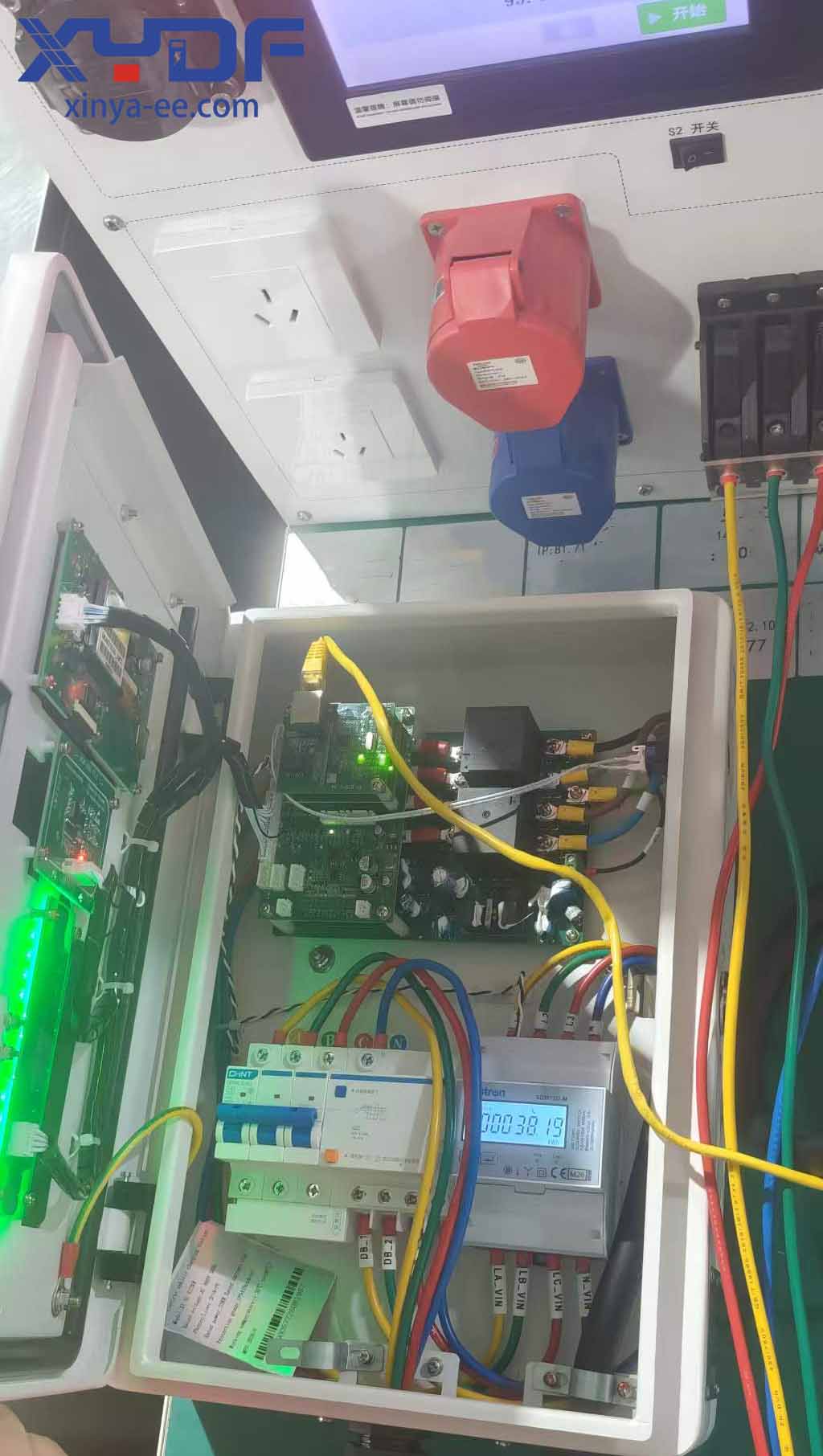
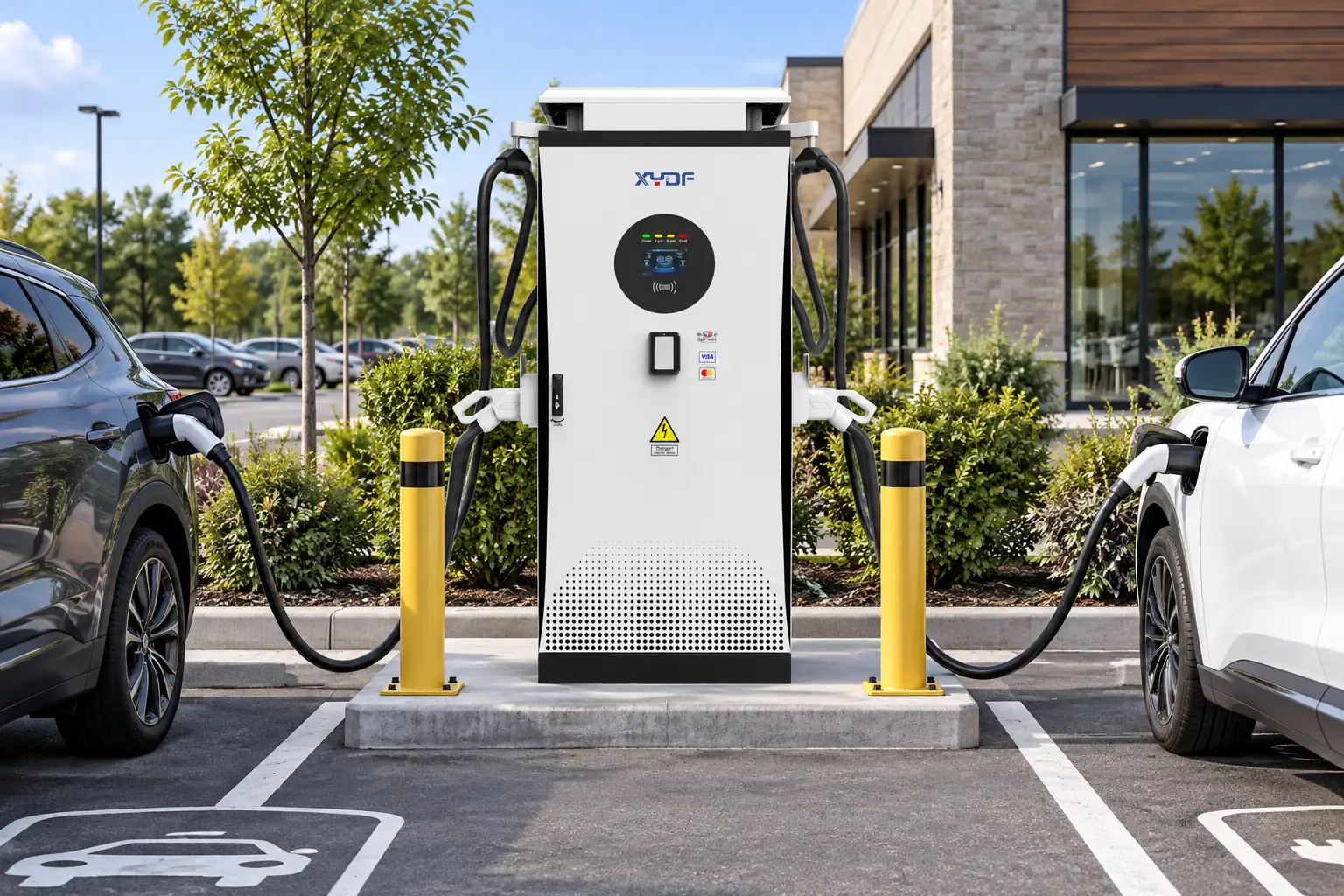
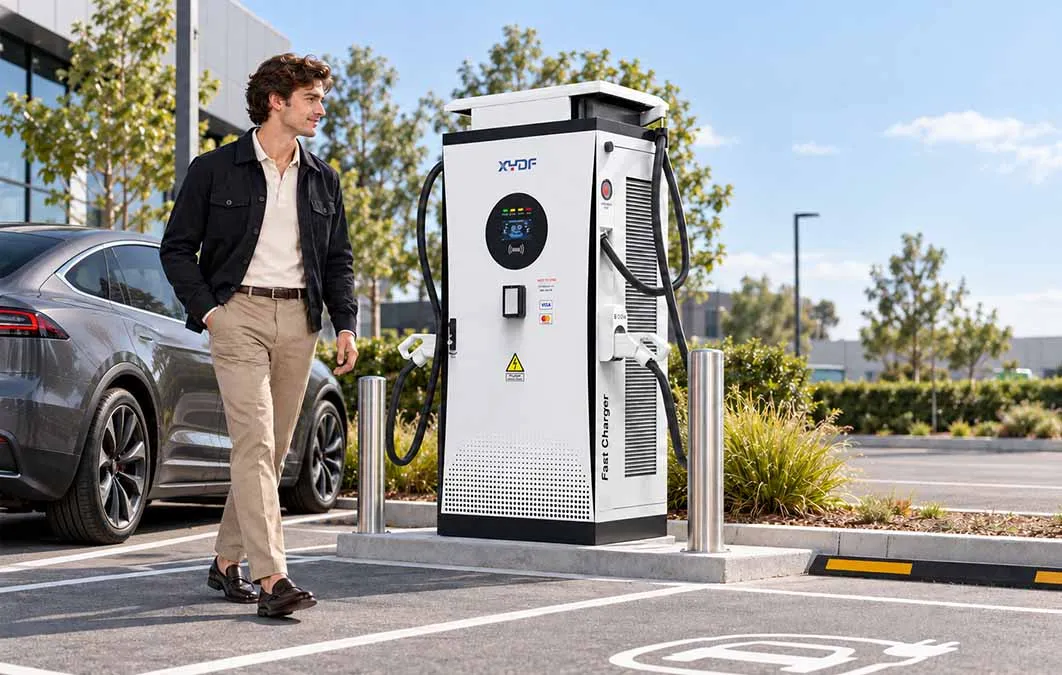
XYDF provides OCPP-enabled AC and DC EV chargers for commercial charging networks, fleet depots and public charging projects. Tell us your required OCPP version and CSMS platform, and our team can arrange compatibility testing before bulk deployment.
Check the specified OCPP version and request supporting test documents. Before bulk purchasing, ask the supplier to connect a sample charger to your CSMS for compatibility testing.
Yes, but your CSMS must support both protocols simultaneously. Most modern management platforms handle mixed fleets. Plan your migration toward 2.0.1 or 2.1 for new installations — 1.6 is adequate for legacy hardware but increasingly excluded from public tenders referencing IEC 63584.
Not universally — but practically yes. The EU's Alternative Fuels Infrastructure Regulation (AFIR) mandates interoperability, and OCPP certification is the recognized proof. Germany's Eichrecht requires calibrated metering. France's AFIR decree explicitly references OCA-certified equipment. Without certification, you're locked out of most public funding and roaming agreements.
OCPP 1.6 systems can be upgraded to newer versions like OCPP 2.0.1, but it depends on the charger hardware and firmware support.
Need help selecting OCPP-certified hardware for your European deployment? Contact our team for vendor-agnostic guidance tailored to your network size and regulatory requirements.
Standards and regional requirements may change. Please verify the latest requirements for your project location before purchasing equipment.
 Xinya Dongfang Electricity Technology Co., Ltd.