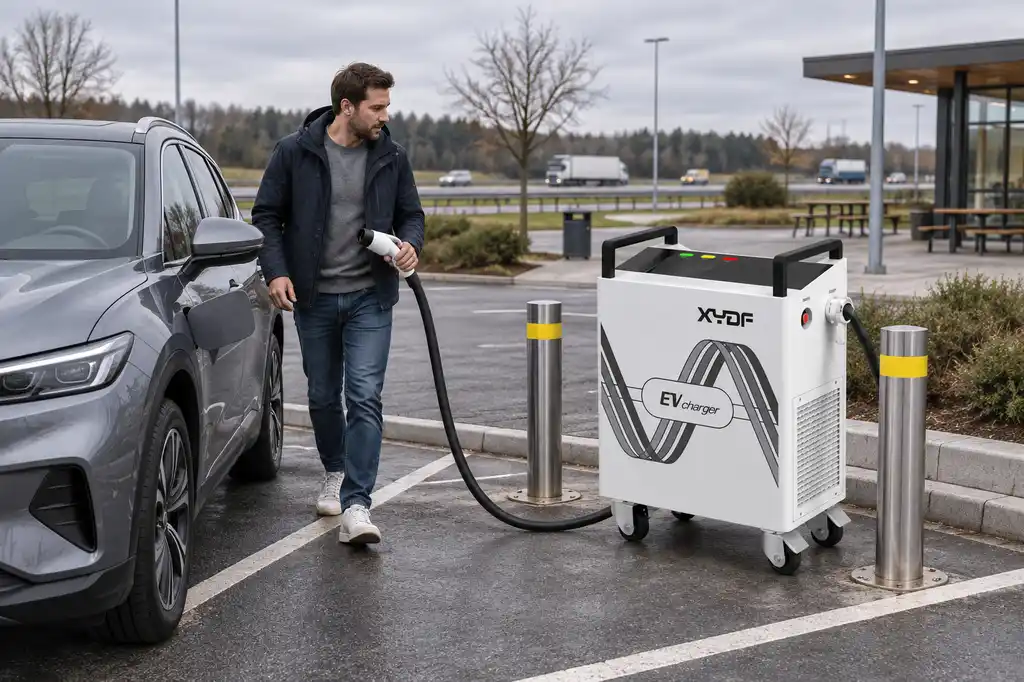
دليل تخطيط البنية التحتية لشحن المركبات الكهربائية التجارية: التصميم الهندسي، ونمذجة السعة، وإطار العمل الخاص بالمشتريات
29 يونيو 2026
مدونة
Sizing a bank of fast chargers from nameplate totals alone can overload a site transformer during a concentrated fleet recovery window and delay departures. The cause is a coincidence and capacity-modeling problem—not simply a defective charger. The design should separate arrival cohorts, add managed charging, and reserve switchgear space for growth.
commercial EV charging infrastructure planning starts with route, dwell-time, and energy data; it then verifies utility capacity, selects an AC/DC architecture, and tests interoperability. For a 20-van fleet, 1,200 kWh needed over an eight-hour window equates to 150 kW average energy delivery; allowing 90% charging efficiency and a 25% design margin produces about 209 kW of input capacity before local code and utility rules are checked. Verify the resulting input capacity against the actual load profile, local code, and utility rules. Freeze the load profile and utility assumptions before issuing a purchase order.
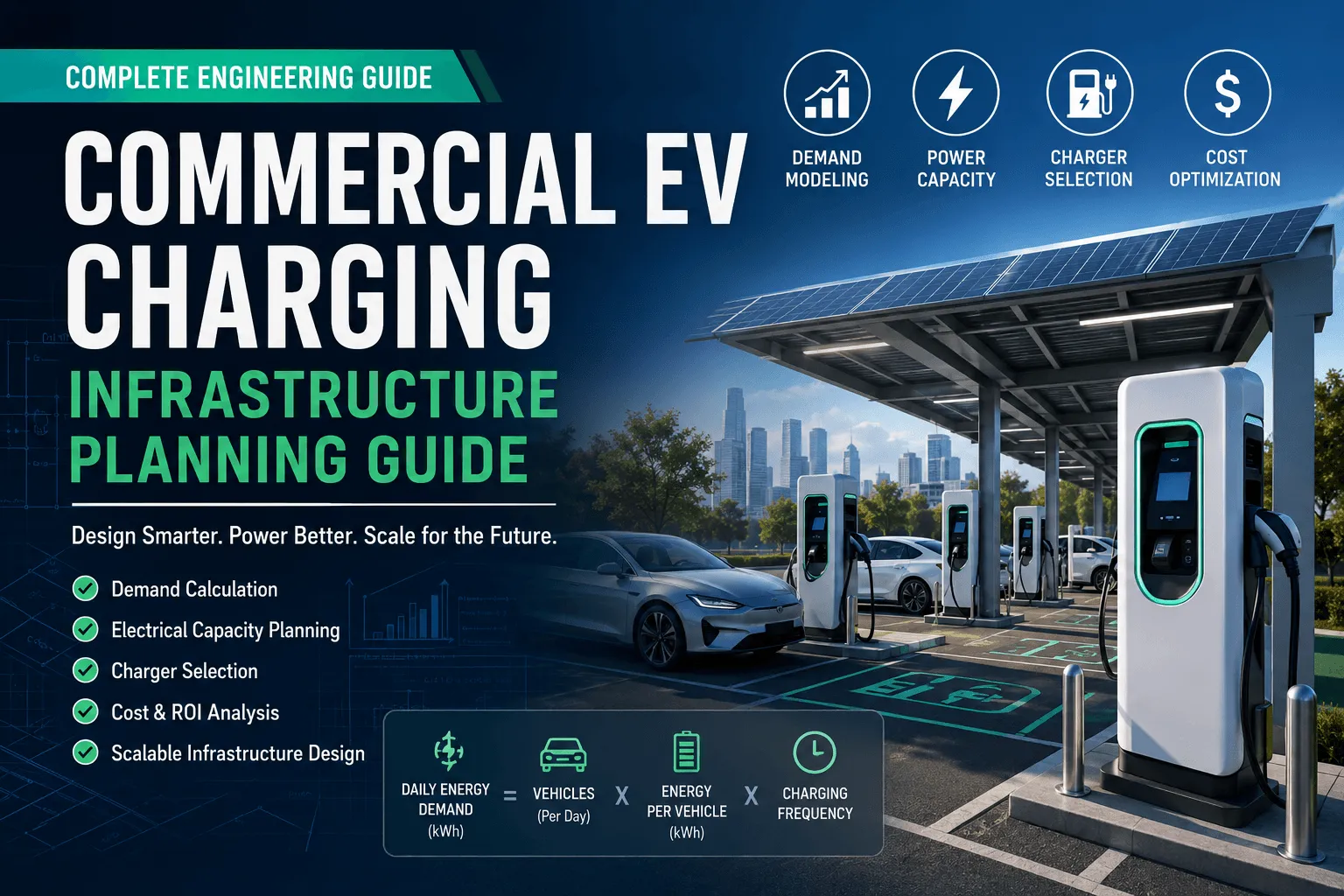
شحن المركبات الكهربائية التجاري البنية التحتية هي استثمار هندسي طويل الأجل بدلاً من كونها عملية شراء معدات قائمة بذاتها. تبدأ المشاريع الناجحة بالتنبؤ بالطلب التشغيلي، وتقييم البنية التحتية الكهربائية، واختيار بنية الشحن، ونمذجة السعة، وتخطيط التشغيل البيني، وتحليل تكلفة دورة الحياة، وتقييم الموردين. يقدم هذا الدليل إطار عمل هندسي منظم يمكّن أصحاب المشاريع ومشغلي الأساطيل ومطوري العقارات التجارية وفرق المشتريات من اتخاذ قرارات سليمة من الناحية الفنية ومستدامة ماليًا.
What demand must the charging site serve?
تحديد متطلبات الشحن باستخدام البيانات التشغيلية، نماذج تدفق حركة المرور واستهلاك الطاقة قبل اختيار أنواع الشواحن أو تصنيفات الطاقة.
Why must demand come before equipment selection?
كثير مشاريع شحن المركبات الكهربائية التجارية فشل في تحقيق الاستخدام المتوقع أو العائد على الاستثمار بسبب بدء تخطيط البنية التحتية باختيار المعدات بدلاً من تحليل الطلب.
الطلب على الشحن يؤثر بشكل مباشر على:
تحديد حجم البنية التحتية الكهربائية
كمية الشاحن
القدرة المقدرة للشاحن
قدرة المحول
الاستثمار الرأسمالي
تكلفة التشغيل مدى الحياة
قدرة التوسع المستقبلية
لذلك، ينبغي أن يصبح تحليل الطلب المهمة الهندسية الأولى في كل مشروع شحن تجاري.
Which engineering principles keep the design scalable?
يجب أن تتبع البنية التحتية للشحن التجاري خمسة مبادئ هندسية أساسية.
تصميم قائم على الطلب
يجب تحديد سعة الشحن بناءً على الطلب التشغيلي وليس حسب توافر المعدات.
ذروة الطلب أولاً
يجب تصميم الأنظمة الكهربائية لطلبات الشحن القصوى بدلاً من متوسط الاستهلاك اليومي.
البنية التحتية قبل المعدات
تحدد سعة الشبكة والبنية التحتية الكهربائية اختيار الشاحن - وليس العكس.
التوسيع النموذجي
يجب أن تحتفظ أنظمة التوزيع الكهربائي بسعة كافية للتوسع المرحلي على مدى السنوات الخمس إلى العشر القادمة.
تحسين دورة الحياة
يجب أن تقلل القرارات الهندسية من التكلفة الإجمالية لدورة الحياة بدلاً من تكلفة الشراء الأولية.
Which business scenario is the site serving?
قبل حساب الطلب على الشحن، يجب على مخططي المشاريع أولاً تحديد السيناريو التشغيلي لأن نماذج الأعمال المختلفة تنتج سلوكيات شحن مختلفة جوهريًا، ومعدلات استخدام، وأهداف استثمارية.
فئة
تطبيقات نموذجية
الاعتبارات الهندسية
شحن الأسطول
لوجستيات، توصيل، أساطيل بلدية
استخدام يومي مرتفع، نوافذ شحن يمكن التنبؤ بها
شحن الوجهة
فنادق، منتجعات، معالم سياحية
مدة وقوف طويلة، طاقة شحن أقل
شحن مكان العمل
مباني المكاتب، مجمعات الأعمال
شحن الموظفين، إدارة الأحمال النهارية
شبكة الشحن العامة
محطات شحن حضرية
ارتفاع معدل دوران المركبات، استخدام ديناميكي
شحن التجزئة
مراكز التسوق، محلات السوبر ماركت
وقت انتظار قصير، نشر مختلط بالتيار المتردد/المستمر
شحن مستودع الحافلات
المواصلات العامة
شحن تيار مستمر عالي السعة، جدولة الشحن ليلاً
مركز الشحن اللوجستي
مراكز التوزيع
تشغيل مستمر، تحسين الأسطول
اختيار سيناريو الأعمال الخاطئ غالباً ما يؤدي إلى بنية تحتية مفرطة أو قدرة شحن غير كافية.
How do site applications change the charging architecture?
تطبيق
Observed operating pattern
Architecture to evaluate
Evidence to collect
Urban fleet depot
Predictable returns; tight departure wave
Managed DC charging or mixed AC/DC
Route energy, queue tolerance, overnight window
Bus depot
High daily kWh; fixed blocks and layovers
High-power DC with pantograph or plug options as applicable
Traffic counts, tariff model, accessibility and queue plan
Which vehicle characteristics set charging power?
يحدد نوع المركبة مدة الشحن، وسعة البطارية، ومتطلبات طاقة الشاحن.
نوع المركبة
سعة البطارية النموذجية
الطاقة الموصى بها للشحن
مركبة كهربائية للركاب
50–90 كيلوواط ساعة
٧–٢٢ كيلوواط متردد / ٦٠–١٢٠ كيلوواط مستمر
شاحنة تجارية
٧٠-١٢٠ كيلوواط ساعة
60-180 كيلوواط تيار مستمر
شاحنة خفيفة
100–200 كيلوواط/ساعة
120–240 كيلوواط تيار مستمر
شاحنة ثقيلة
300-600 كيلوواط ساعي
350 كيلوواط+
حافلة كهربائية
250-500 كيلوواط/ساعة
240-480 كيلوواط تيار مستمر
مزيج المركبات هو أحد أهم المدخلات عند تحديد كمية الشواحن وهيكلية الشحن.
Which operating data should the model use?
تُشكل البيانات التشغيلية الأساس للحسابات الهندسية.
معامل
لماذا هذا مهم
حركة المرور المركبات
تحديد الطلب على الشاحن
معدل الوصول
يتنبأ بتكوين طابور
معدل المغادرة
تحديد نافذة الشحن
مدة الوقوف
يحدد مدى ملاءمة الشحن بتيار متردد أو بتيار مستمر
تكرار الشحن
يؤثر على الطلب اليومي على الطاقة
تداول المركبات
تدابير استخدام البنية التحتية
طول الطابور
يشير إلى أداء الخدمة
نسبة الشحن المتزامن
تحدد ذروة الحمل الكهربائي
معدل استخدام الشاحن
يؤثر على عائد الاستثمار
بدلاً من سؤال “كم شاحن يجب أن أشتريه؟”, ، يجب على المهندسين أولاً أن يسألوا “كم عدد المركبات التي تتطلب الشحن في وقت واحد؟”
How can engineers build an auditable decision workflow?
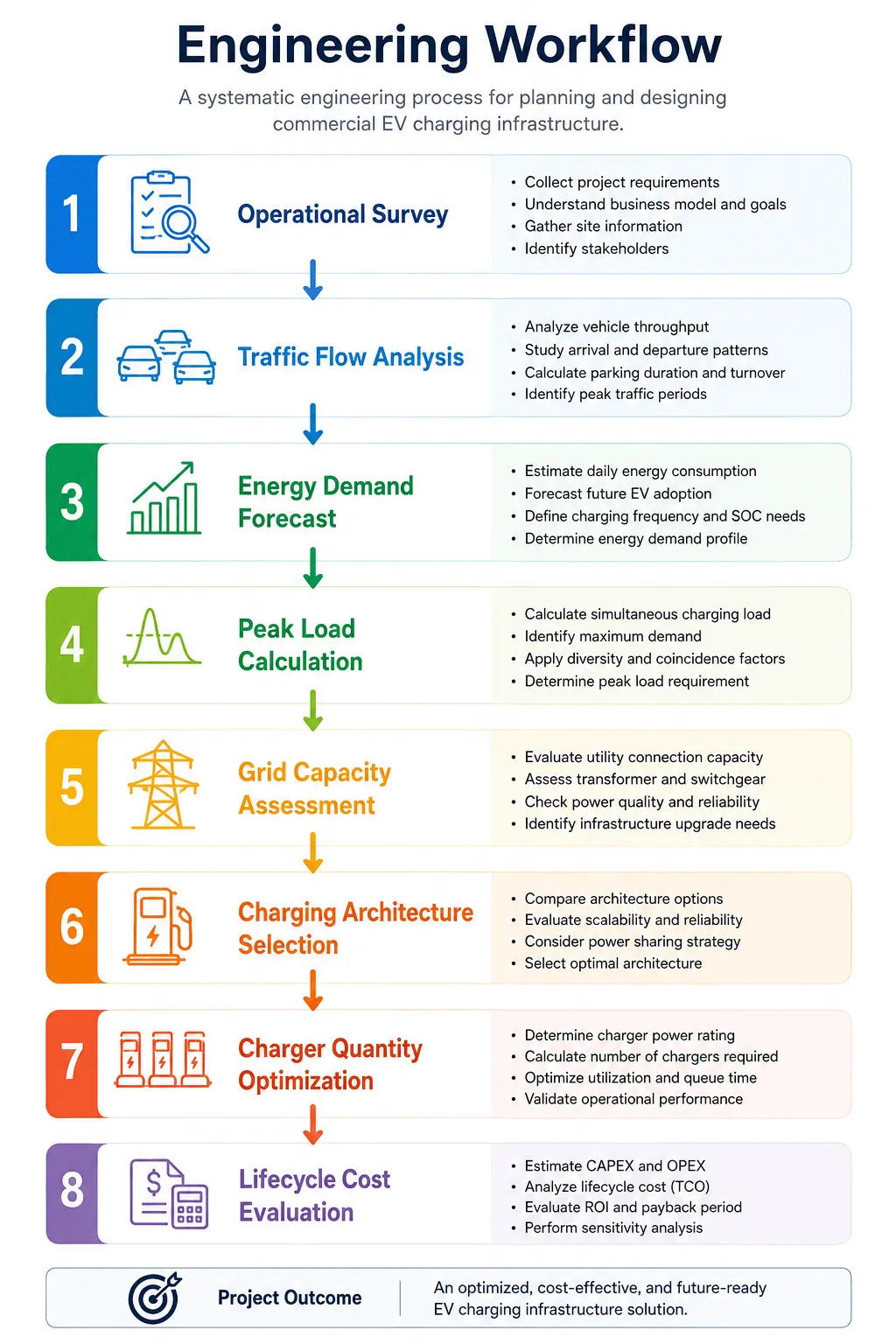
Define the service promise. Record vehicles per shift, minimum state of charge at departure, arrival/departure distributions, dwell time, weather assumptions, and acceptable queue time. Fleet telematics and interval-meter data are preferable to anecdotal peak counts.
Build two demand cases. Model a normal day and a stressed case (for example, late arrivals, cold weather, or a special event). Report daily kWh, coincident kW, sessions per connector, and the hours when demand occurs.
Check the electrical constraints. Obtain the utility service limit, transformer nameplate and loading history, fault-current data, protection settings, spare breaker positions, cable routes, and metering requirements. Ask the utility in writing what upgrade lead time and export restrictions apply.
Choose architecture against dwell time. Long parking windows usually favor distributed AC; constrained turnaround or high-energy vehicles may justify DC. Compare a centralized power cabinet, distributed dispensers, or a hybrid arrangement for maintainability and expansion.
Validate controls and operations. Define who can curtail load, how failed sessions are escalated, which backend owns the data, and how firmware and cybersecurity updates are governed. Require an acceptance test that reproduces the agreed load and communications scenarios.
How should energy demand be translated into electrical capacity?
يحدد الطلب على الطاقة متطلبات البنية التحتية الكهربائية.
معلمة هندسية
تطبيق
سعة البطارية
الطلب اليومي على الطاقة
حالة الشحن
تقدير مدة الشحن
الاستهلاك اليومي للطاقة
تخطيط سعة الشبكة
ذروة الطلب على الشحن
تحديد حجم المحولات
نافذة الشحن
جدولة الأحمال
أقصى طلب
اتصال المرافق
عامل تنوع الطلب
تحسين الحمل
عامل الصدفة
استخدام البنية التحتية
عامل القدرة
كفاءة النظام الكهربائي
نمذجة الطلب على الطاقة هي الأساس لتحديد حجم المحولات، واختيار المفاتيح الكهربائية، وتصميم المغذيات.
How should engineers model charging capacity?
Assume 20 vans each require 60 kWh per operating day and must be ready within an eight-hour overnight window. Daily energy is 20 × 60 = 1,200 kWh. Average delivered power is 1,200 ÷ 8 = 150 kW. Using a 90% planning assumption for end-to-end charging efficiency, input power is 150 ÷ 0.90 ≈ 167 kW. Applying a 1.25 planning margin gives 167 × 1.25 ≈ 209 kW. A designer could evaluate a 240 kW connection or a lower connection with managed EV charging, but the final choice depends on utility studies, local electrical code, harmonics, ambient temperature, and the vehicles’ actual charge-acceptance curves.
Do not multiply every connector’s nameplate rating and call that the service requirement. Use a coincidence or diversity assumption that is supported by the operating schedule, then test the worst credible interval. Good EV charging capacity planning should also show a five-year expansion case, spare conduit, and the point at which a second transformer or service upgrade becomes necessary.
Which financial inputs change the engineering choice?
Issue a data sheet defining connector type, voltage range, current limits, ambient conditions, ingress/impact requirements, cable reach, and accessibility—not just kW.
Request efficiency curves, standby consumption, acoustic limits, derating behavior, maintenance intervals, spare-parts availability, and a warranty process. Reject unsupported “maximum uptime” claims unless the measurement method and exclusions are stated.
Specify OCPP version and conformance evidence, cybersecurity responsibilities, remote diagnostics, firmware rollback, time synchronization, and exportable transaction data. OCPP is a protocol; it is not a blanket safety certification.
Require drawings for foundations, bollards, ventilation, fire separation, drainage, cable trenching, switchgear, and metering. Confirm who obtains permits and who pays for utility upgrades.
Set factory and site acceptance tests: insulation/protective-conductor checks, emergency-stop behavior, residual-current protection where applicable, communications loss, payment authorization, load sharing, and vehicle interoperability.
Score bids on five-year total cost of ownership: civil works, demand charges, energy losses, network fees, planned service, downtime response, and expansion cost. Use the دليل شراء شاحن السيارات الكهربائية as a supplementary commercial checklist, then verify every requirement against the project’s jurisdiction.
Which site constraints determine project feasibility?
غالبًا ما تحدد الظروف المادية للموقع جدوى المشروع أكثر من مواصفات المعدات.
إمدادات الطاقة والبنية التحتية الكهربائية
يحدد هذا القسم كمية الطاقة التي يمكن توفيرها للموقع وكيفية توزيع هذه الطاقة:
سعة الشبكة: أقصى سعة متاحة يمكن للشبكة الرئيسية توفيرها للموقع. غالبًا ما يكون هذا هو العائق الأساسي لبناء محطات شحن سريع عالية الطاقة.
سعة المحولات: تحدد سعة المحولات الموجودة في الموقع - أو إمكانية توسيع السعة - بشكل مباشر عدد الوحدات التي يمكن تشغيلها في وقت واحد.
لوحات المفاتيح الكهربائية (خزائن التوزيع جهد عالي/منخفض): معدات حيوية للتحكم في نظام الطاقة وحمايته وعزله؛ ويحد مكانها المادي وتصنيفاتها الحالية من إضافة دوائر جديدة.
لوحة التوزيع: وحدة توزيع الطاقة الطرفية؛ من الضروري تقييم ما إذا كانت هناك فتحات دوائر احتياطية كافية (مساحات قواطع) وقدرة تحمل كافية.
توجيه الكابلات: المسار الذي تسلكه الكابلات من غرفة توزيع الطاقة إلى المعدات الطرفية. تؤثر عوامل مثل حالة التربة، والمرافق تحت الأرض القائمة، والأسطح المعبدة على طول المسار وتعقيد الإنشاء، مما يؤثر بشكل مباشر على التكاليف.
مساحة، أرض وتصميم مادي
Available Land: The actual usable net area of the site where equipment, transformers, and auxiliary facilities can be legally installed.
تخطيط مواقف السيارات: بالنسبة لمشاريع المركبات الكهربائية، يجب أن يضمن تصميم مساحة وقوف السيارات (عمودي، مائل، أو مواقف للمركبات الثقيلة) وأبعادها سهولة دخول المركبات والسماح لكابلات الشحن بالوصول بسهولة إلى منفذ شحن المركبة.
السلامة والبيئة والمرافق
شروط الدعم المساعدة المطلوبة لضمان التشغيل المستقر للنظام على المدى الطويل والامتثال التنظيمي:
شبكة الاتصالات: توافر إشارات شبكة الهاتف المحمول في الموقع (4G/5G) أو تغطية النطاق العريض السلكي. هذا أمر بالغ الأهمية لتوصيل المعدات والإدارة الخلفية (مثل اتصالات OCPP) ومعالجة الدفع.
متطلبات التبريد: تولد المعدات عالية الطاقة وعالية الجهد (مثل الشواحن الفائقة والمحولات) حرارة كبيرة أثناء التشغيل؛ يجب أن يوفر الموقع تهوية كافية أو مساحة كافية لوحدات مياه التبريد المتخصصة أو وحدات التبريد الهوائي. الحماية من الحرائق: الامتثال للوائح السلامة المحلية من الحرائق (على سبيل المثال، مسافات الفصل من الحرائق، توفير معدات إطفاء الحرائق، ومسارات الإخلاء الآمنة)، لا سيما متطلبات السلامة الإلزامية من الحرائق للمرافق ذات الجهد العالي والمرافق المتعلقة بالبطاريات.
الصرف: قدرة الصرف للمواقع الخارجية أو المرائب تحت الأرض. يجب اتخاذ تدابير لمنع مياه الأمطار المتجمعة من إغراق قواعد المعدات الكهربائية، مما يضمن السلامة الكهربائية.
Which failure modes should acceptance tests cover?
Failure mode
Early warning
Control or acceptance test
Transformer overload
High coincident kW; nuisance trips
Interval-meter baseline, staged energization, load-shed test
Connector or cable mismatch
Vehicle rejects sessions; adapters used informally
Verify regional connector requirements and test representative vehicles
Network outage
Heartbeat gaps or offline transactions
Document fallback authorization, local queuing, and recovery reconciliation
Water, heat, or impact exposure
Standing water, derating, blocked bollards
Drainage, ingress/environmental ratings, clearances, and inspection plan
Vendor lock-in
Closed APIs or paid data export
Contract for documented interfaces, data ownership, and exit testing
Which standards and interfaces must work together?
واجهة الشحن ومعايير الموصل
يغطي هذا القسم واجهات الشحن المادية الرئيسية (الموصلات) والمعايير الكهربائية المميزة عبر مناطق مختلفة حول العالم:
CCS1 (نظام الشحن المدمج 1): المعيار الرئيسي للشحن السريع بالتيار المستمر في سوق أمريكا الشمالية، ويستند إلى واجهة التيار المتردد من النوع 1 (SAE J1772).
CCS2 (نظام الشحن الموحد 2): معيار الشحن السريع بالتيار المستمر السائد في أوروبا ومعظم المناطق الأخرى، يعتمد على واجهة التيار المتردد من النوع 2 (Mennekes).
NACS (معيار الشحن لأمريكا الشمالية): معيار شحن لأمريكا الشمالية (كان في الأصل واجهة تسلا الخاصة؛ تم توحيده الآن بواسطة SAE كـ J3400 وأصبح المعيار السائد في سوق أمريكا الشمالية.
GB/T (المعيار الوطني الصيني): معيار شحن المركبات الكهربائية للسوق الصيني (يغطي تيار متردد GB/T 20234.2 وتيار مستمر GB/T 20234.3؛ يتطور حاليًا نحو معيار ChaoJi من الجيل التالي).
SAE J1772: المعيار لأمريكا الشمالية لواجهات الشحن أحادية الطور بتيار متردد (النوع 1)، والمستخدم على نطاق واسع لمحطات الشحن البطيء السكنية.
المعايير الأساسية للكهرباء والسلامة
IEC 61851: المعيار الشامل لأنظمة الشحن الموصل للمركبات الكهربائية، والذي يحدد أوضاع الشحن (الأوضاع 1-4)، ومتطلبات السلامة، وإشارات الطيار التحكم الأساسية (PWM).
ISO 15118: بروتوكول الاتصال بين السيارة ومحطة الشحن (D2C / الاتصال بين السيارة والشاحن). يدعم الميزات المتقدمة مثل Plug & Charge، وإدارة الشحن الذكية، والشحن ثنائي الاتجاه (D2C).
بروتوكول نقطة الشحن المفتوح (OCPP 2.0.1): بروتوكول اتصال مفتوح بين محطات الشحن ونظام إدارة مركزي (الواجهة السحابية). يقدم الإصدار 2.0.1 تحسينات كبيرة في الأمان وإدارة الأجهزة ودعم ISO 15118.
بروتوكول التجوال (OCPI) بين مشغلي نقاط الشحن (CPOs) ومقدمي خدمات التنقل الكهربائي (eMSPs) الذي يمكّن مستخدمي السيارات الكهربائية من الشحن وتسوية المدفوعات عبر شبكات شحن مختلفة.
Design implication: Designing projects and developing products based on EV charging open standards (such as OCPP, ISO 15118, etc.) يقلل بشكل فعال الاعتماد على بائعين معينين (مع تجنب الارتباط ببائع واحد) ويبسّط بشكل كبير ترقيات النظام المستقبلية، وتوسيع السعة، والتشغيل البيني عبر الأنظمة الأساسية.
Which official standards and references should be verified?
Apply the edition adopted in the destination market and by the authority having jurisdiction. IEC 61851 covers conductive charging-system modes and control; IEC 62196 addresses plugs, socket-outlets, vehicle connectors, and inlets. ISO 15118 specifies vehicle-to-grid communication functions, while OCPP 2.0.1 is an Open Charge Alliance communications protocol between charge points and a central system. In North America, connector and installation requirements may also involve SAE J1772/J3400 and the National Electrical Code (NFPA 70); confirm the locally adopted edition rather than treating a protocol as a permit.
Which charging architecture fits each application?
سيناريو
الهندسة المعمارية الموصى بها
أولوية التصميم
أسطول لوجستي
شحن مركزي لتيار مباشر
استعادة أسطول
مستودع حافلات
شحن تيار مستمر عالي الطاقة
شحن طوال الليل
مبنى مكاتب
شحن التيار المتردد
راحة الموظف
فندق
شحن الوجهة AC
وقت الإقامة الطويل
مركز تسوق
HVDC + AC هجين
تجربة العميل
محطة شحن عامة
الشحن السريع الموزع
أقصى استفادة
Which planning mistakes cause overload, waste, or lock-in?
اختيار قوة الشاحن قبل إكمال تحليل الطلب.
تجاهل الشحن المتزامن خلال ساعات التشغيل القصوى.
التقليل من تقدير حمل المحول.
التصميم لتلبية الطلب الحالي فقط دون تخصيص سعة للتوسع.
المبالغة في تقدير استخدام الشاحن بدون نمذجة حركة المرور.
تجاهل رسوم الطلب في حسابات تكلفة دورة الحياة.
اختيار بروتوكولات اتصال خاصة تحد من قابلية التشغيل البيني المستقبلية.
What should be verified before design freeze?
نموذج عمل شحن
✅ تحليل مزيج المركبات وتدفق حركة المرور
✅ حساب الطلب اليومي وذروة الطاقة
✅ التحقق من سعة المحول والشبكة
✅ اختيار بنية الشحن
✅ التحقق من معايير التشغيل البيني
✅ تكلفة دورة حياة النموذج وعائد الاستثمار
✅ حجز سعة للتوسع المستقبلي
What should the project team carry forward?
تحليل طلب شحن المركبات الكهربائية التجارية ليس مجرد حساب لكمية الشواحن. إنه الأساس الهندسي الذي يحدد تصميم البنية التحتية الكهربائية، وهيكلية الشحن، والاستثمار الرأسمالي، والكفاءة التشغيلية، وقابلية التوسع على المدى الطويل. المشاريع التي تعطي الأولوية للتحليل التشغيلي قبل اختيار المعدات تحقق باستمرار استخدامًا أعلى للشواحن، وتكاليف أقل لدورة الحياة، ومرونة أكبر مع نمو تبني المركبات الكهربائية.
الأسئلة الشائعة
Why should demand analysis be conducted before selecting charging equipment?
Many projects fail because they start with equipment selection rather than operational data analysis. Charging demand (derived from vehicle throughput, arrival rates, and parking duration) directly dictates critical infrastructure sizing, including charger quantity, power ratings, transformer capacity, and initial CAPEX. Prioritizing demand analysis ensures higher charger utilization and avoids costly oversized or under-capacity installations.
What are the risks of ignoring “Simultaneous Charging Ratio” during peak hours?
Designing electrical systems based on average daily consumption rather than peak demand is a common engineering mistake. Ignoring the simultaneous charging ratio during peak hours usually leads to severe transformer overloading, tripped switchgear, or localized grid failure. Engineers must ask “How many vehicles require charging simultaneously?” to accurately size transformers and design load-scheduling strategies.
How do site constraints like “Grid Capacity” act as a bottleneck for commercial charging projects?
Physical site conditions frequently determine project feasibility more than equipment. Grid capacity—the maximum available power specifications the upstream grid can supply—is often the primary bottleneck for high-power fast-charging stations. If the existing grid or transformer capacity is insufficient and cannot be expanded, the project cannot support advanced DC fast chargers regardless of the equipment specifications.
Why is a “Modular Expansion” approach recommended for electrical distribution design?
EV adoption scales over time. Designing infrastructure only for current demand without reserving expansion capacity is a critical mistake. Electrical distribution systems should follow the “Infrastructure Before Equipment” principle, reserving sufficient space and capacity (such as spare breaker spaces in distribution panels) for phased, seamless expansion over the next 5–10 years.
What is the significance of adopting open standards like OCPP 2.0.1 and ISO 15118?
Selecting proprietary communication protocols limits future interoperability and leads to vendor lock-in. Designing around open standards ensures compatibility between vehicles, chargers, and cloud networks. Specifically, ISO 15118 enables advanced features like Plug & Charge and bidirectional charging (V2G), while OCPP 2.0.1 enhances security and backend device management, greatly simplifying future system upgrades.
How should charging architectures be matched to different business scenarios?
Planners must match the architecture to the parking behavior of the scenario. For instance, Logistics Fleets and Bus Depots require Centralized/High-power DC Charging to ensure fast vehicle turnaround or overnight scheduling. Conversely, Office Buildings and Hotels should deploy AC Charging because employees and guests have long parking durations (dwell times), making daytime load management more practical and cost-effective.
Why must “Demand Charges” be included in lifecycle cost calculations?
Engineering decisions should minimize the EV charging total lifecycle cost (LCO) instead of initial procurement cost (CAPEX). Relying solely on equipment cost and simple energy consumption while ignoring utility demand charges—tariffs based on peak power draw—leads to severely warped ROI models. Factoring in demand charges allows engineers to implement peak-shaving and load-optimization strategies to minimize operational expenses (OPEX).
What auxiliary site systems are critical for maintaining safety and compliance?
Beyond the chargers themselves, three auxiliary systems are critical:
Fire Protection: Compliance with local fire safety distances and mandatory mitigation for high-voltage and battery systems.
Cooling Requirements: Ensuring adequate ventilation or space for chilled-water units to handle the massive heat generated by superchargers.
Drainage: Proper drainage capacity in outdoor or underground sites to prevent accumulated rainwater from submerging electrical equipment bases, supporting electrical safety.
How much electrical capacity does a commercial charging site need?
There is no universal number. Calculate coincident kW from the vehicle schedule, charging efficiency, diversity, and a documented design margin; then validate the result with the utility and the authority having jurisdiction. Include a normal case, stressed case, and expansion case.
Is a 240 kW charger suitable for every fleet?
No. Vehicle charge-acceptance limits, dwell time, service capacity, and queue behavior determine suitability. A 240 kW unit may be useful for short-turnaround operations, while managed AC can be more economical for overnight parking; compare both against measured duty cycles.
What should an EV charging tender include besides charger power?
Specify connectors, electrical environment, thermal derating, safety functions, networking, data ownership, service response, civil works, acceptance tests, and expansion provisions. Ask bidders to identify assumptions and exclusions so proposals can be compared on total cost rather than headline kW.
How can a site keep charging during an internet outage?
Define an offline authorization and transaction-queue policy, local safety controls, and a reconciliation process after connectivity returns. Test the policy with the selected backend and payment method; behavior varies by implementation and market rules.
Do IEC, ISO, or OCPP references prove product certification?
No. IEC and ISO documents can define requirements or communication functions, and OCPP defines an open protocol. Request the specific accredited test report, listing, or declaration required by the destination market, and check its scope and expiry.
ما الذي ينبغي على فرق المشاريع القيام به بعد ذلك؟
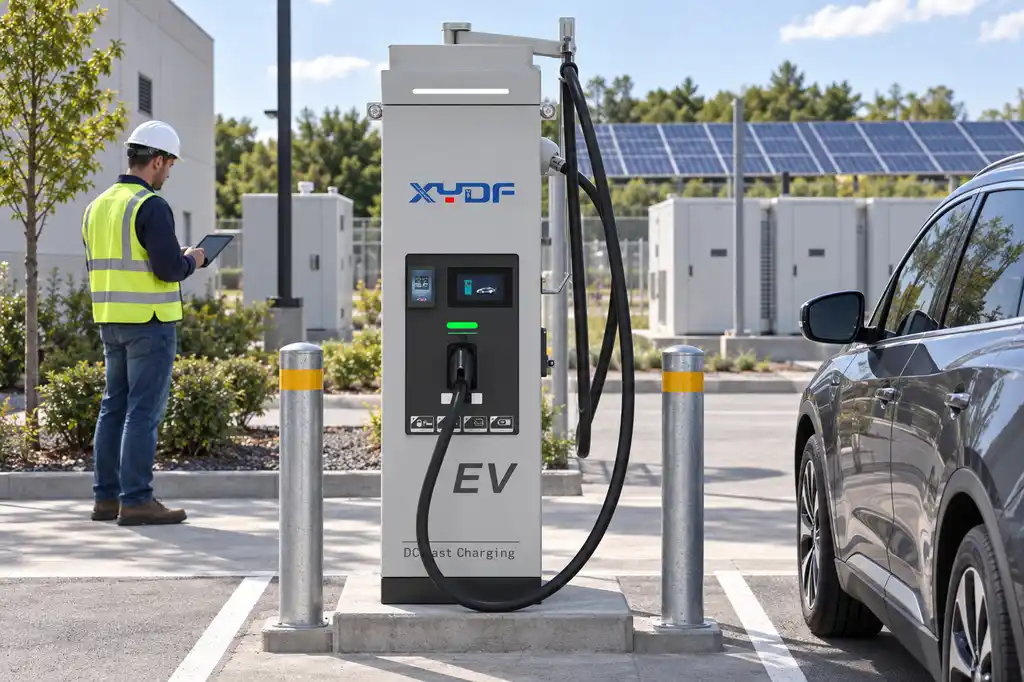
Use an evidence trail from route data to utility approval, then from factory test to site acceptance. XYDF can be considered alongside other suppliers when its documented configuration, testing records, and support model fit the project; review the commercial EV charging solution overview and any relevant 240 kW DC fast-charger information without assuming unverified specifications. For a project-specific review of a commercial EV charging station, contact the team with the load profile, site constraints, connector market, and expansion plan. The durable principle is simple: size the service for the operation you can prove, and procure the equipment you can test.
نستخدم ملفات تعريف الارتباط (الكوكيز) لضمان عمل هذا الموقع، وبإذنك، لقياس كيفية استخدام الزوار لموقع شحن المركبات الكهربائية الخاص بنا. انظر إلى سياسة الخصوصية للتفاصيل.
 شركة شينيا دونغفانغ لتكنولوجيا الكهرباء المحدودة.