How to Plan EV Charging Wayfinding at Commercial Sites
Aug 09,2026
Blog
Commercial charging wayfinding is part of the operating system, not a decorative sign package. Drivers need different information at the entrance, decision points, charging bay, payment step, and exit; an outdated sign can send a vehicle toward a closed bay even when the charger itself is working. This guide turns the driver journey into a sign and digital-information plan, then links each message to accessibility, availability data, traffic control, and an acceptance test.
The short answer is to map every driver decision before ordering signs. Show the route to the charging area, bay status, connector and payment instructions, accessibility information, out-of-service alternatives, and the exit route. Test the plan with a first-time driver in daylight and low visibility, then repeat it with a blocked bay or unavailable charger so the fallback message is proven rather than assumed.
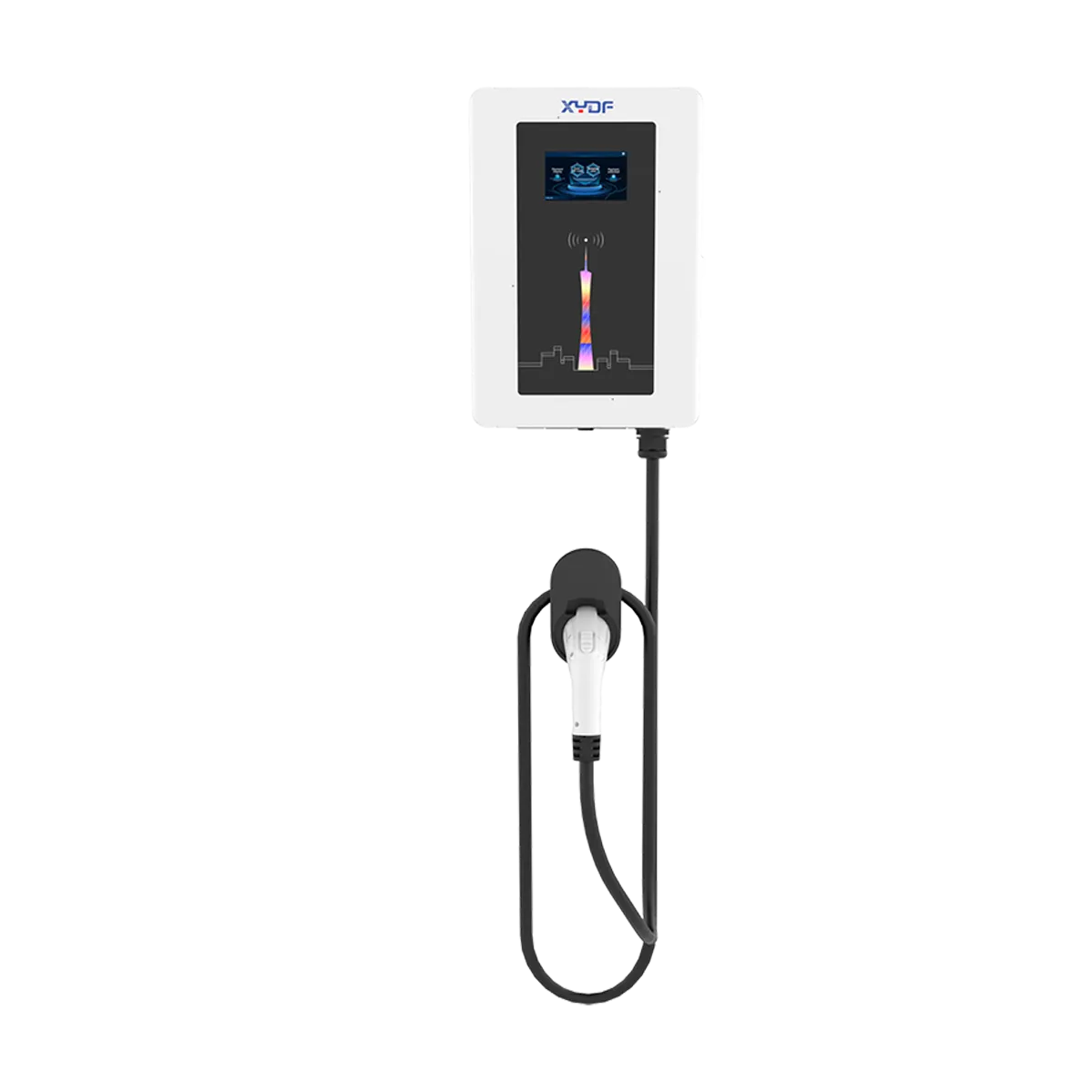
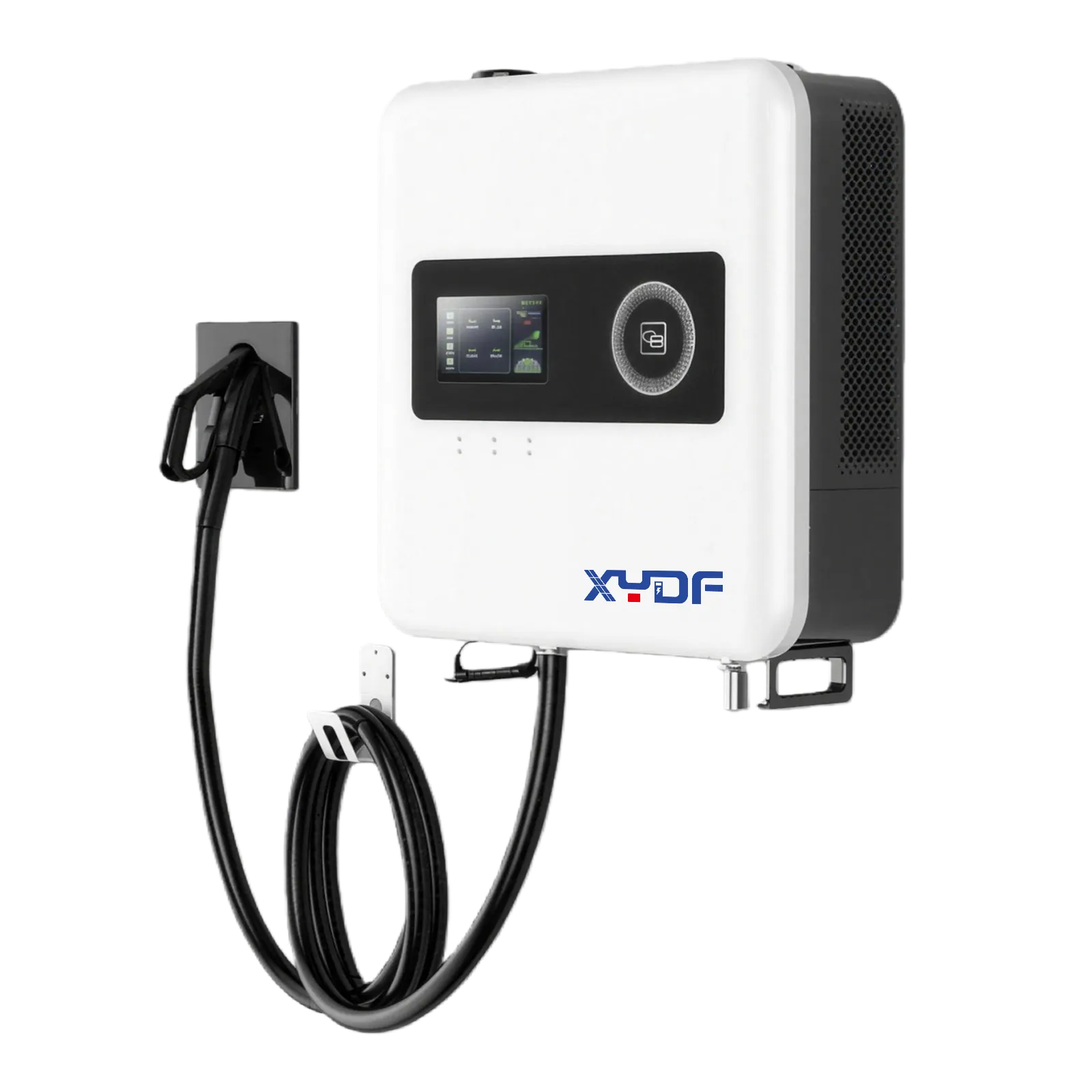
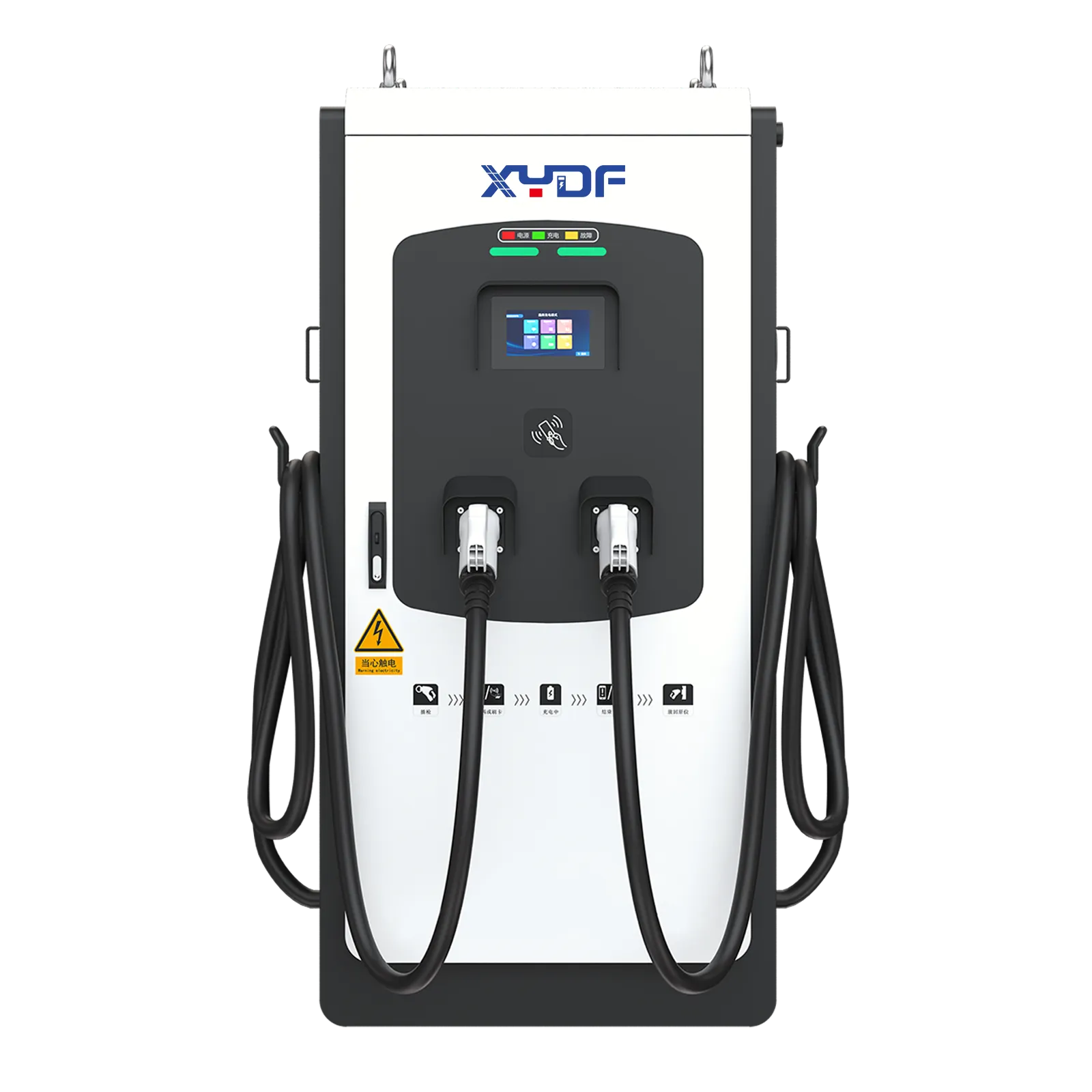
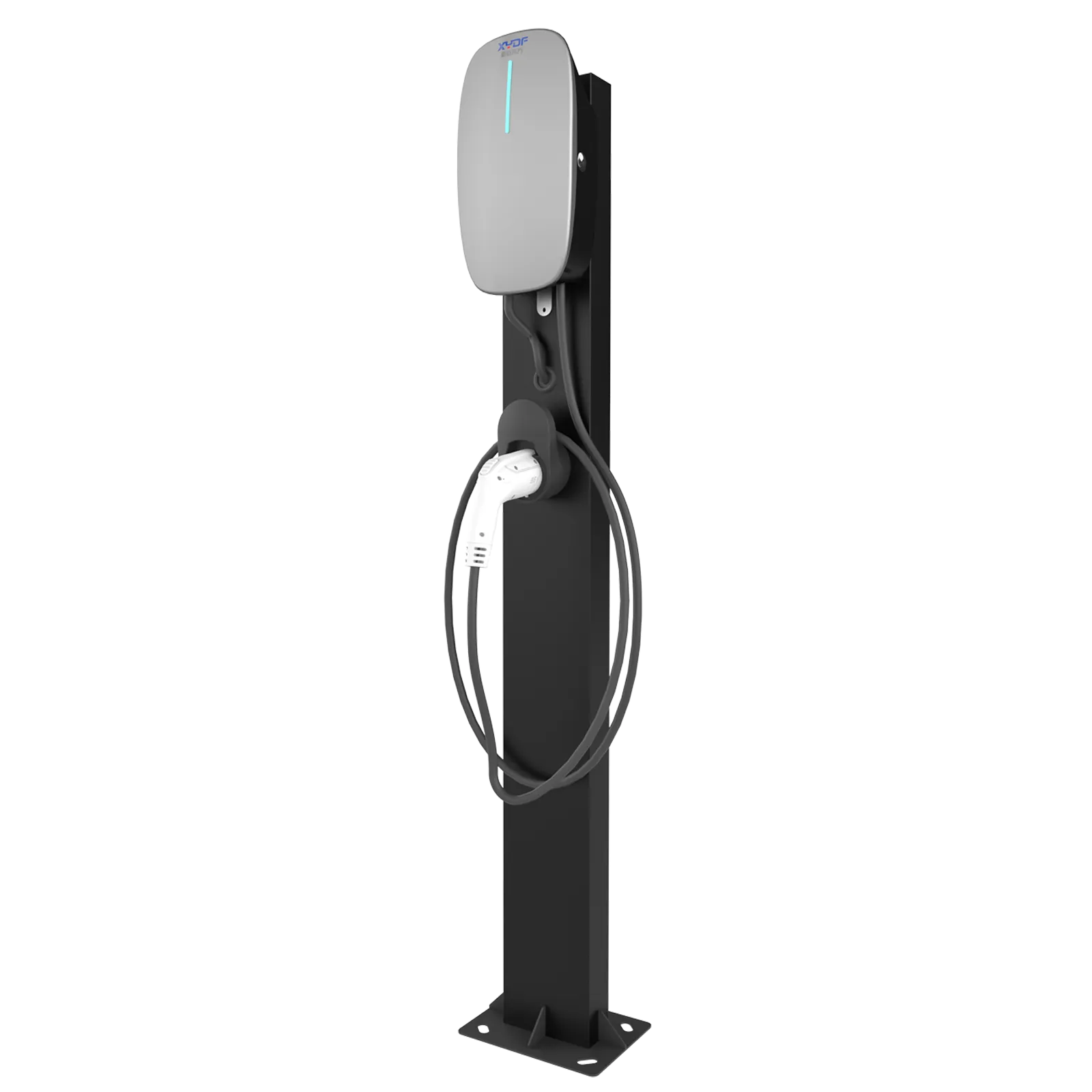
Equipment context only; the image does not demonstrate a particular signage or access workflow.
Why does wayfinding change how a charging site performs?
Drivers cannot use a charging service they cannot locate or interpret. A sign visible only after a driver has chosen the wrong lane does not solve the arrival problem, while a clear bay marking without start instructions leaves the session problem unresolved.
Separate the information journey into four decisions: where to enter, where to drive, where to park, and what to do at the charger. This makes a site review more useful than asking whether it has “enough signs.” The Alternative Fuels Data Center guidance supports planning around actual site and user needs rather than equipment alone.
What does the driver need to know at each stage?
Different visitors arrive with different context. A regular employee may already know the parking zone, a hotel guest may need the route from reception, and a first-time public visitor may not know whether the bays are private, paid, reserved, or temporarily unavailable.
User moment
Information needed
Owner to confirm
Site approach
Charging-zone route and entry restriction
Parking or facilities team
Parking decision
Bay eligibility, dwell rule, and accessible route
Site operator and local reviewer
Charger interaction
Access method, session-start instruction, and support route
Charging operator
Exception
Unavailable bay, alternate location, or escalation contact
Named operations owner
The commercial charging access-control guide is useful for defining who may use the service. Wayfinding should then make that policy understandable before a vehicle blocks a bay.
How should a commercial site organize charging information?
Use a charging-site sign hierarchy rather than a single large sign. The entrance layer points toward the zone; a route layer confirms turns or levels; a bay layer defines who may park; and the charger layer gives the immediate action and support information. Each layer answers one decision close to where the decision is made.
Do not copy the same detail into every layer. At the entrance, drivers need direction. At the bay, they need eligibility and parking guidance. At the charger, they need the current session instruction. Repeated dense text makes the critical instruction harder to find.
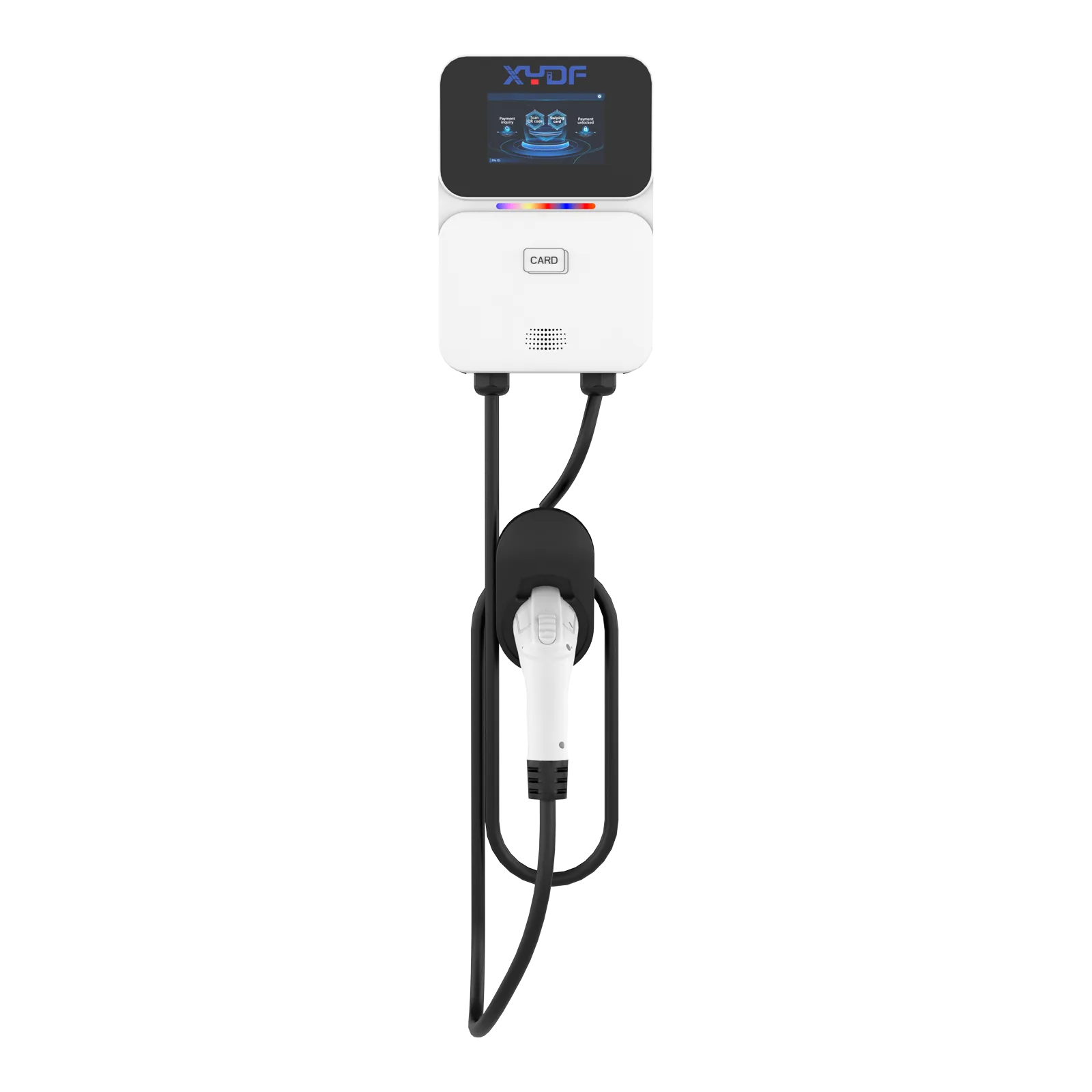
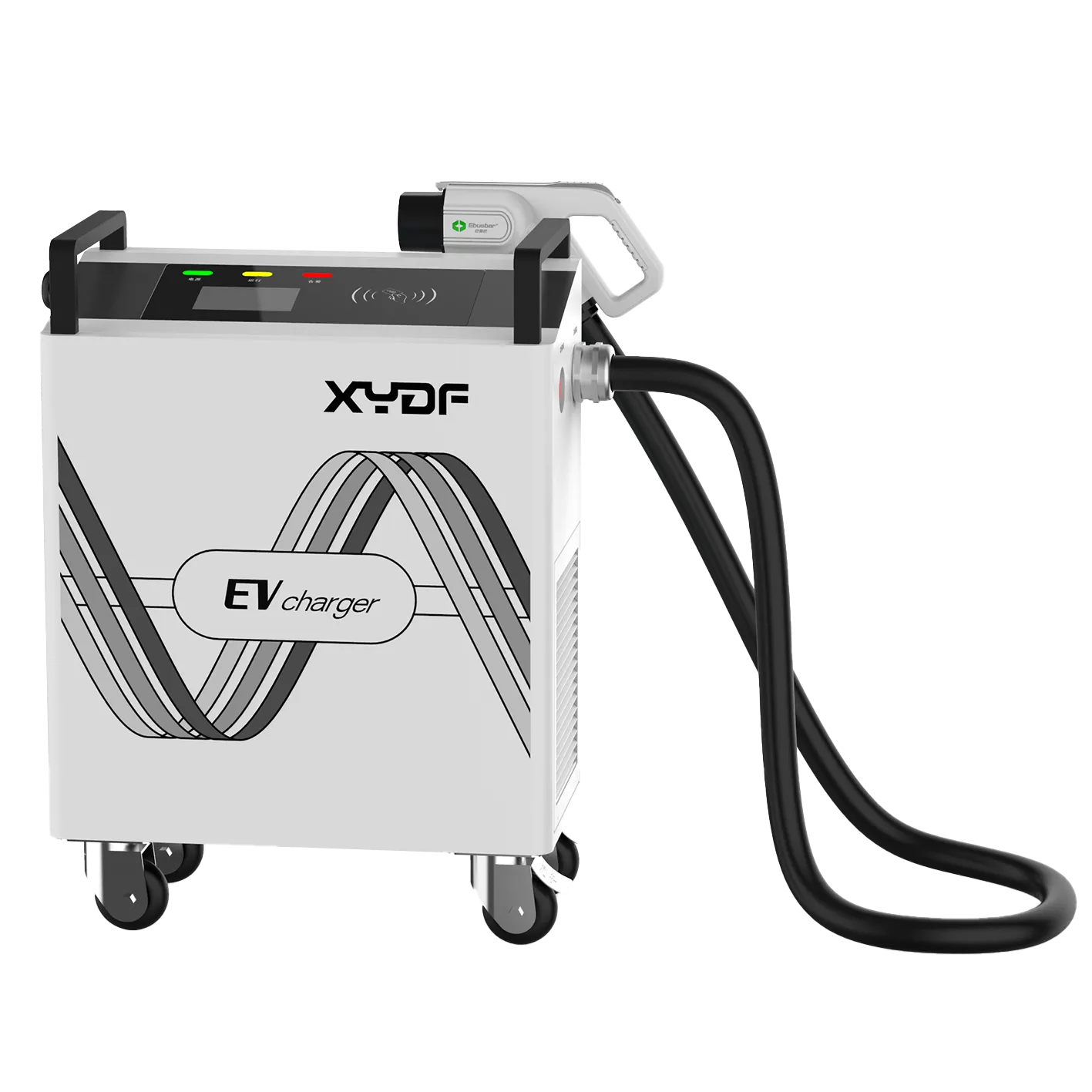
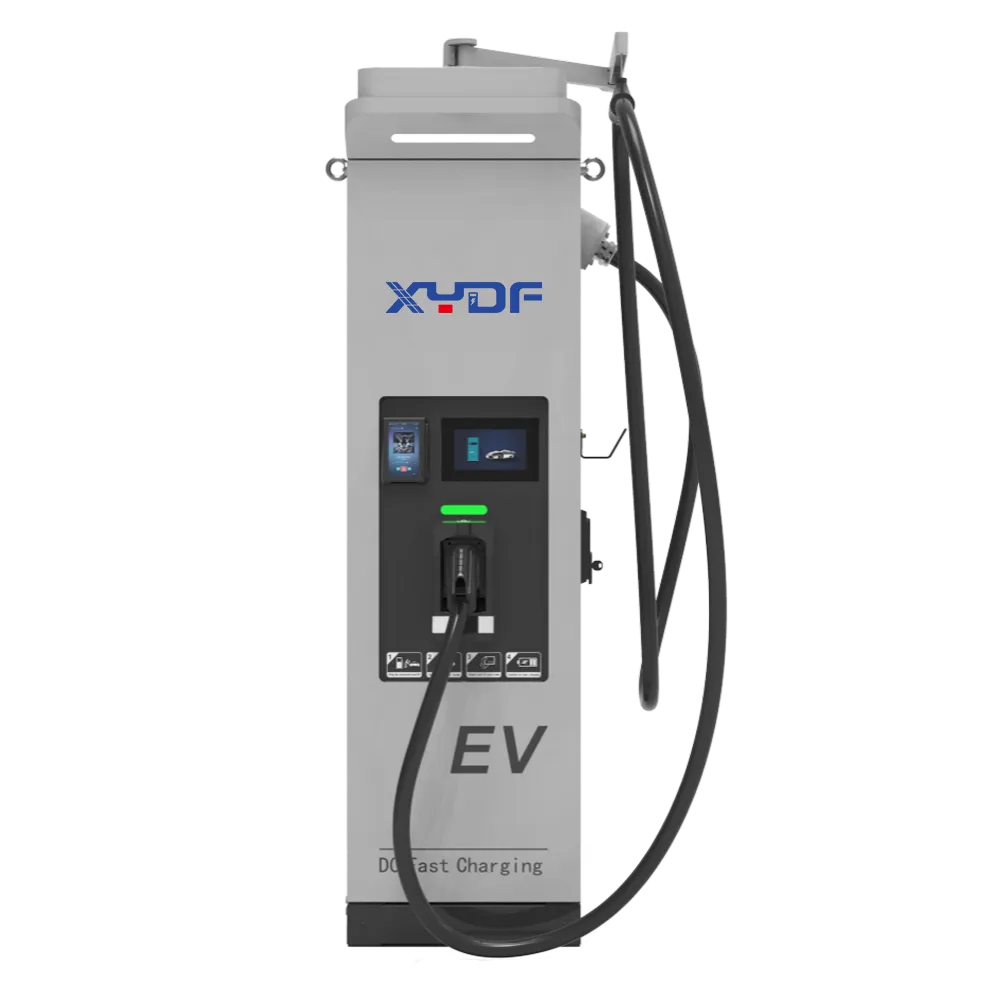
Charger-level equipment context; final placement and information design require site-specific review.
For physical-space questions such as vehicle clearance, cable path, and bay geometry, use the commercial EV charging infrastructure planning guide. Those engineering questions are distinct from an information plan.
What should signs and instructions tell drivers?
Write the on-site message around the decision it supports. A bay marker can state the eligible use and any parking condition. A charger instruction can direct the driver to the supported session-start method and help channel. An exception notice can identify what is unavailable and where the driver should go instead.
A useful message answers one decision at a time: where to turn, which bay is available, which connector is present, how to start and pay, what the session status means, and where to go if the charger is unavailable. Keep the wording and symbols consistent with the backend status and the site’s accessibility plan. During commissioning, record the sign location, viewing distance, lighting condition, language, and the fallback route used when the preferred bay is closed.
Important: Do not treat a generic “EV charging” label as proof that a bay is available to every driver or that a charging session can start. The UK Government public-chargepoint guidance illustrates why market and operator obligations must be checked separately; apply the destination-market requirements to the actual operating model.
Avoid adding claims that have not been operationally confirmed, such as a payment method, reservation promise, accessibility feature, support time, or real-time availability feed. An owner should approve every customer-facing statement and the process for changing it.
How should the site handle closed or unavailable bays?
The information plan needs an exception route for unavailable-bay messaging. Assign who changes a temporary message when construction reroutes traffic, a bay is reserved, a charger is out of service, or the access policy changes. Also decide where the alternate instruction appears: entrance, parking level, bay, charger screen, website, or support channel.
Review temporary notices after the event. A sign that remains after an outage has ended can be as misleading as no sign at all. The useful record is simple: event, affected bays, message owner, posting time, removal trigger, and confirmation that the normal message is restored.
Treat each message as a controlled site state: normal service, reserved bay, unavailable charger, or alternate route. During acceptance, record wrong turns, stops to search for instructions, help requests, and the point at which the driver receives the correction. This gives the operator a repeatable way to decide whether a sign change fixed the journey or merely moved the confusion to another decision point.
What should buyers include in a wayfinding RFQ?
Before choosing the product route, run a wayfinding acceptance test: walk the arrival, turn, bay, start, help, and unavailable-bay paths with a first-time user, record the decision points, and obtain operator sign-off. Choose the product route only after the service path is clear. Long-dwell sites may begin with the AC charger range; faster-turnover locations may review the DC fast charger range. Neither route states that a product includes a signage, payment, or access-control system.
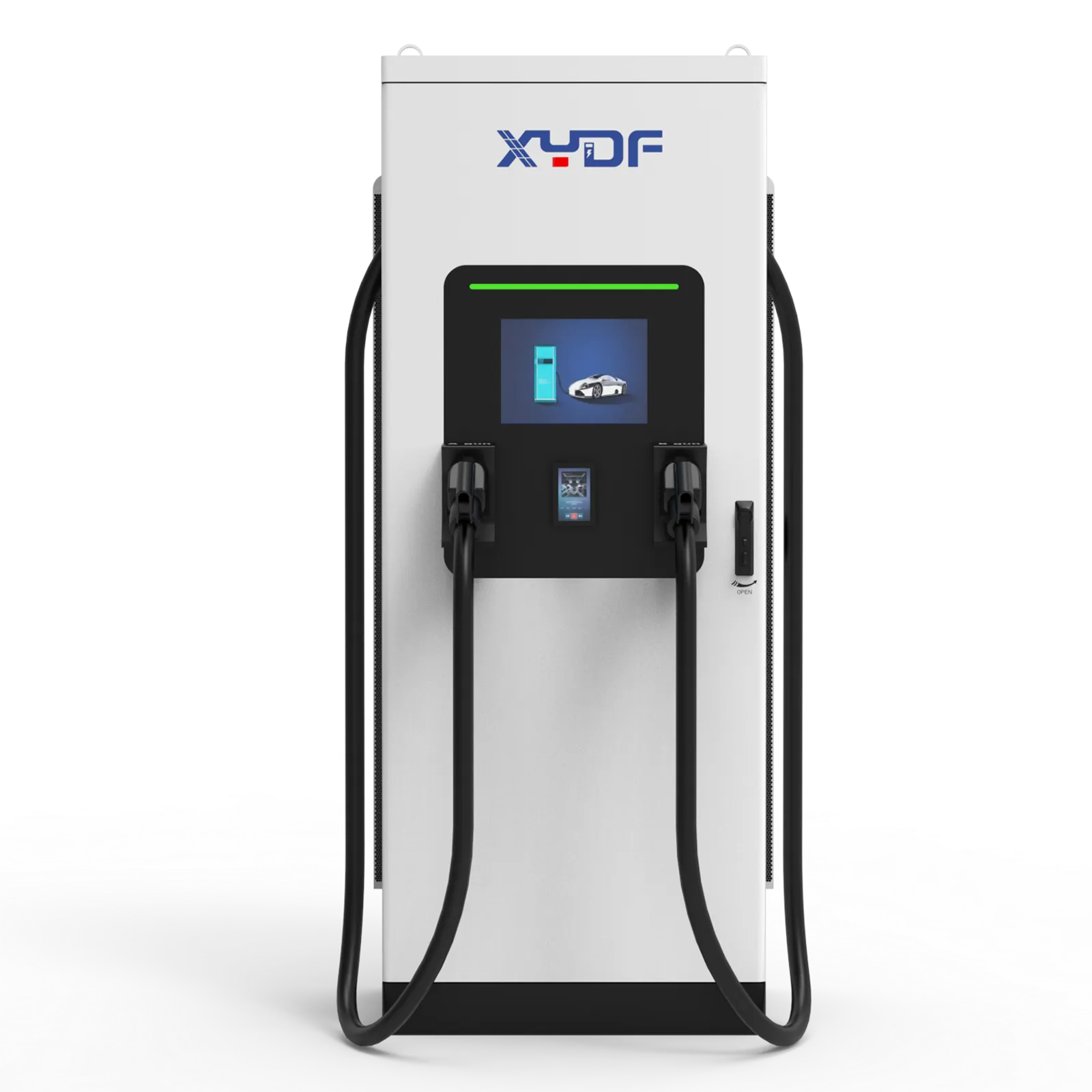
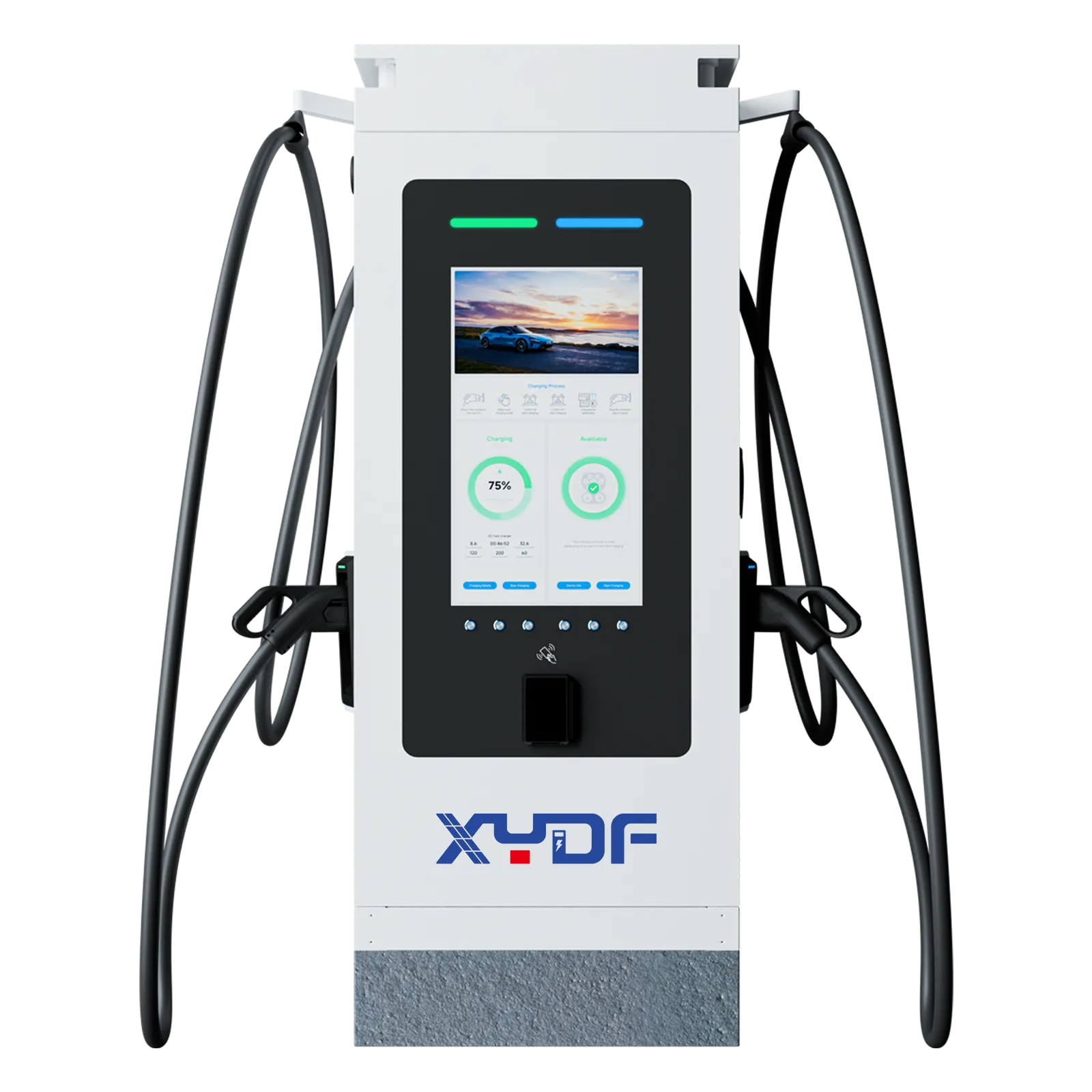
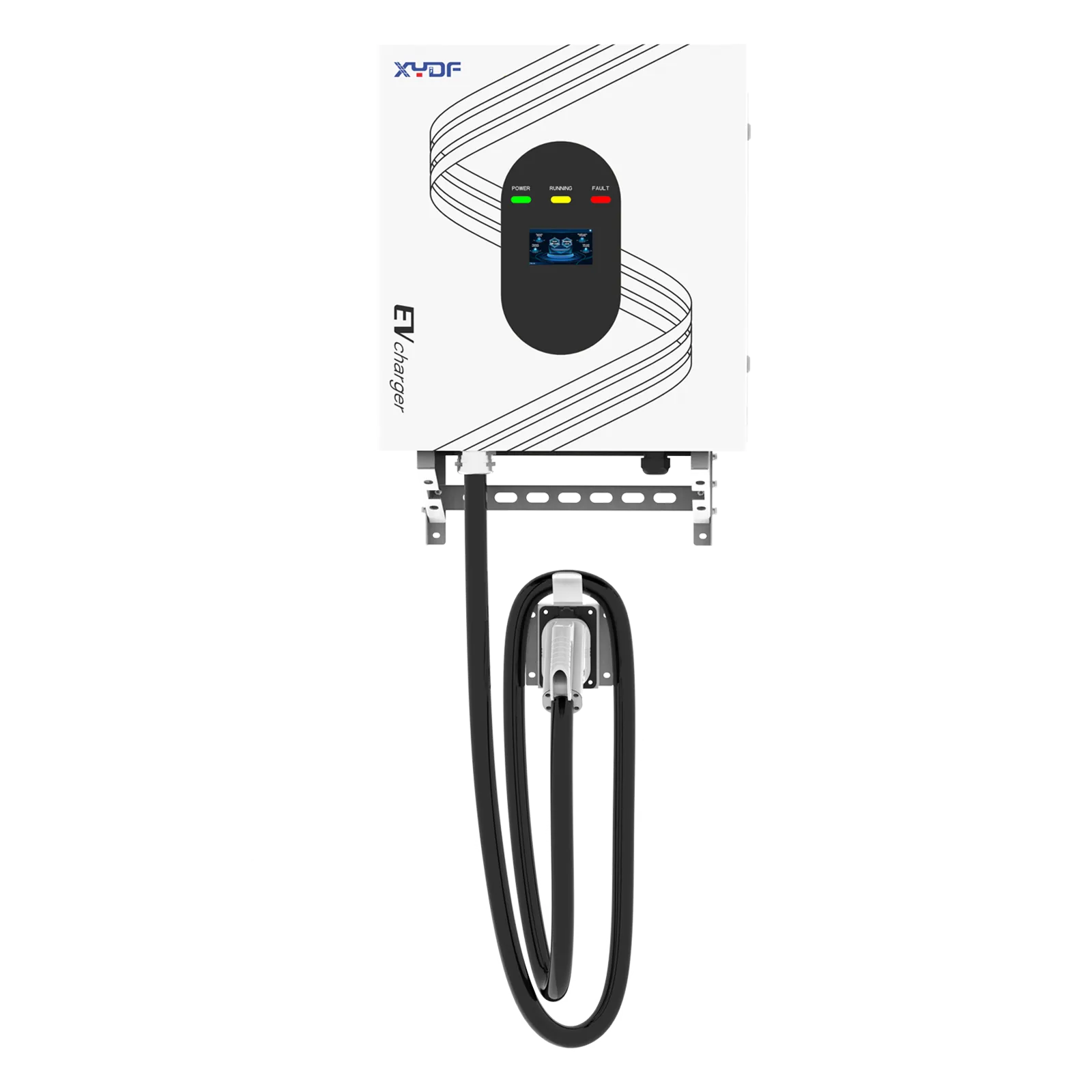
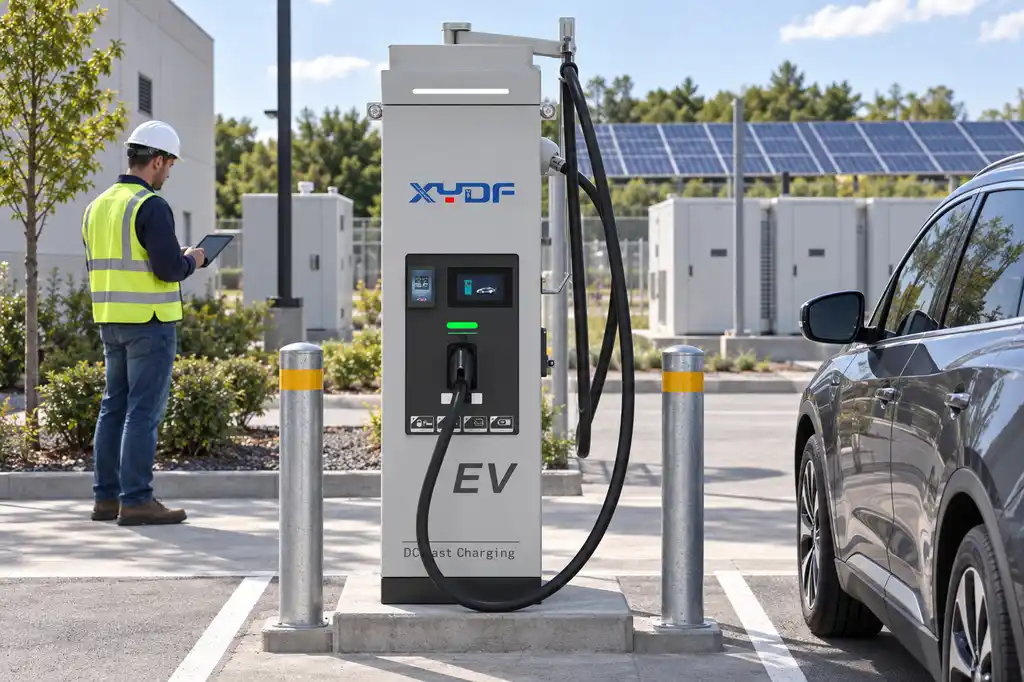
Product-route illustration only; confirm installation and operating requirements before selection.
Buyer should provide
Why it matters
Common mistake
Site plan and arrival routes
Locates each decision point
Placing all information only at the charger
User groups and access policy
Defines eligibility wording
Assuming every visitor has the same permission
Language and local review needs
Sets readable, applicable content
Copying a sign from another market
Exception and support process
Defines out-of-service messages
Leaving a temporary notice without an owner
Charger route, dwell time, and connector needs
Frames product discussion
Treating a product image as a site-operating specification
For a commercial project discussion, send XYDF the site type, charger route, expected user groups, connector requirements, and the approved information or access assumptions. Local professionals should validate final traffic, parking, and regulatory requirements.
Questions operators ask about charging-site wayfinding
Where should EV charging signs be placed?
Place information at the approach, route, bay, and charger decision points. The exact positions depend on traffic flow and the local site plan.
What should a charging-bay sign show?
It should state the permitted use and any site-approved parking condition in language that matches the operating policy.
How do drivers find chargers in a large parking area?
Use a sequence of entrance, route, and bay information rather than relying on a single charger-mounted instruction.
Should a charger display access instructions?
Yes, the immediate start method and support route should be clear, but exact UI and access features must be confirmed for the proposed configuration.
How should an unavailable charger be communicated?
Use an approved temporary message, name an alternate route or support path where appropriate, and assign a removal trigger.
Do signs replace the charger user interface?
No. Signs support the site journey; the charger or approved operating channel still handles the applicable session interaction.
What should a buyer include in a signage RFQ?
Include routes, user groups, policy, language needs, exception process, and any local review requirements.
We use cookies to keep this website working and, with your permission, to measure how visitors use our EV charging site. See our Privacy Policy for details.
 Xinya Dongfang Electricity Technology Co., Ltd.