EV Charging Station Site Cabling: Route Planning, Cable Sizing and Future Expansion
Nov 21,2026
Blog
EV-Charger-Power-Cable-Installation
Power cables are like the blood vessels of an EV charging station. If the initial planning is incomplete, the site may later need “surgery” to dig up the pavement again, increasing construction costs and potentially disrupting normal operations.
So how can you give your EV charging infrastructure a head start through cable layout, cable selection, and planning for future expansion?
How Do You Plan the Power Cable Route for an EV Charging Station?
Mark the distribution board and proposed charger locations on a site plan, then walk the site to identify possible routes between them. If the board and charging bays are on opposite sides of a car park, one route might cross the access road directly, while another follows the edge of the site.
Compare the length of each route and the work it would involve. Crossing the road may shorten the cable run, but if the pavement needs to be cut, consider how vehicles will get through during construction and how much resurfacing will be needed. For the route around the edge, measure the extra distance and look for obstacles such as drainage channels or retaining walls. If more charging bays are planned, consider which route would be easier to extend.
Once you’ve identified a preferred route, sketch its path and note the measured length so you can discuss its feasibility with the installer.
What Power Supply Does Your EV Charging Station Require?
AC chargers may use a single-phase or three-phase supply. Commercial DC fast chargers typically take three-phase AC power and convert it to DC inside the cabinet. For the cable between the distribution board and the charger, start with the AC input voltage, phase configuration and maximum input current specified for the model supplied in your market.
For an AC charger example: On a 230/400 V system, an EV charger drawing 32 A from a 230 V single-phase supply can deliver about 7.4 kW. A three-phase model drawing 32 A per phase at 400 V can deliver about 22 kW. If your site uses a different supply voltage, check the cable manufacturer’s rating for that configuration before using the figures for cable planning.
ForDC fast charger excample: 180 kW describes the output available to vehicles. The supply voltage can vary by market even within the same product family. For example, ABB specifies a nominal 400 V AC input for its European Terra 184 and 480 V AC for its North American Terra 184 Gen2. Both are 180 kW chargers.
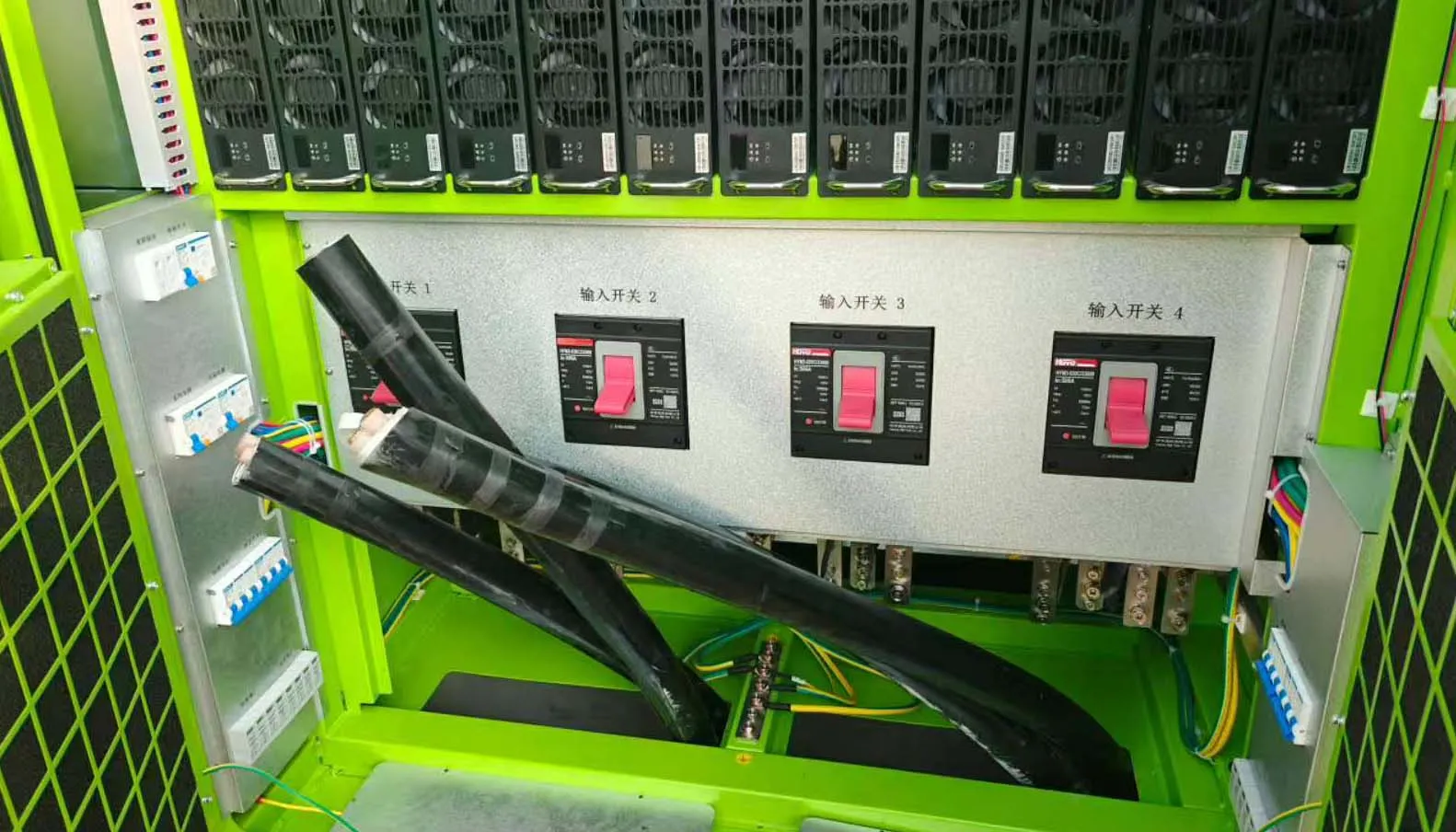
Before specifying the supply cable, take the maximum AC input current from the installation manual for the exact charger being installed. Use its wiring diagram to confirm the required conductors, including whether a neutral is needed. These details give the electrical designer a starting point for selecting the cable type and conductor size.
Which Cable Type Fits the Installation Route?
Cable designations vary by market. Once you have planned the cable route, check local wiring regulations and the conditions along the route to confirm that the cable is suitable for your site.
Installation route
What to look for
Indoor conduit
Insulated conductors or sheathed cable suitable for conduit installation.
Outdoor or underground conduit
Conductors or cable suitable for wet locations where required. Check sunlight resistance on exposed sections.
Concrete cable trench
Power cable suitable for the actual trench conditions. Check drainage, moisture exposure, and how the cable will be supported and protected.
Direct burial
Cable specifically rated for direct burial. Check the permitted soil conditions and local requirements for burial depth and mechanical protection.
If the route passes through different environments and you plan to use the same cable throughout, confirm that it is suitable for every section. A cable manufacturer can use the site details you provide to recommend suitable cable types and supply the corresponding technical datasheets.
How Do You Size the Power Cable for an EV Charger?
Start with the charger’s maximum AC input current at the site’s supply voltage. Use that figure and the applicable local wiring rules to determine the circuit’s design current. Then choose a conductor size that can carry that current under the actual installation conditions and keep voltage drop within the permitted limit over the full cable run.
Consider two identical 22 kW chargers rated at 32 A per phase on a 400 V three-phase supply. One sits beside the distribution board. The other is across the car park, and part of its cable route shares a duct with other loaded circuits. Two factors can change the conductor size:
Heat dissipation. Cables grouped in a duct have less room to dissipate heat. Apply the relevant grouping and temperature factors, then check that the conductor can still carry the design current.
Voltage drop. At the same current, a longer run produces a greater voltage drop for the same conductor size. Use the measured route length to check whether the charger at the far end needs a larger conductor.
Before ordering, confirm that the selected conductor size is compatible with the circuit protection and that the charger terminals accept its size and material.
How Do You Plan Cabling for Multiple Chargers or Future Expansion?
Suppose a car park installs four 22 kW chargers now and adds four later. Size each charger’s branch circuit for the equipment it serves, then assess the combined demand on the shared upstream feeder. If you plan to use dynamic load balancing, confirm whether local rules allow the configured demand limit to be used for feeder sizing.
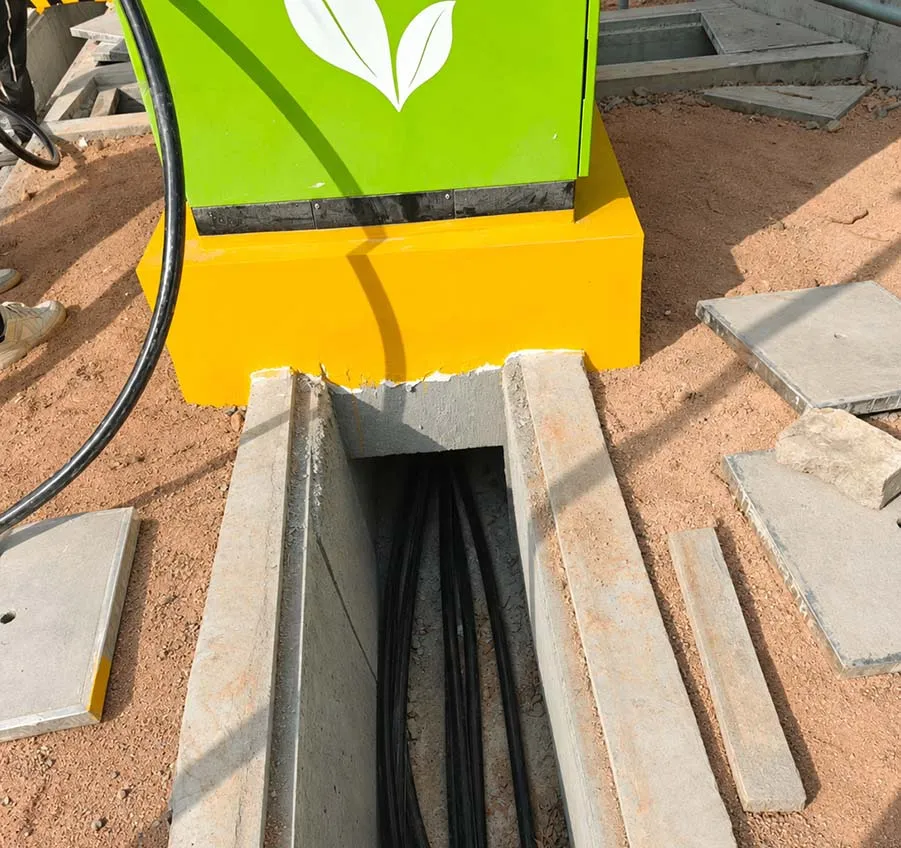
Before paving, consider installing spare conduit to future bays and reserving breaker spaces in the distribution board. Check available capacity upstream as well. Spare conduit gives future cables a route. Available electrical capacity determines how much additional charging the site can support.
ev charging station construction site
When Do EV Charger Power Cables Need Special Ratings?
Flood-prone sites and waterlogged trenches
If a cable trench or underground duct can stay flooded for long periods, specify a cable that the manufacturer confirms is suitable for prolonged water exposure or immersion, as applicable. Some armoured cables are rated for direct burial in free-draining soil, with separate restrictions for permanently waterlogged ground. Check the exact model’s datasheet before ordering.
Cold-weather installation
For winter projects, check both the minimum operating temperature and the minimum installation temperature. A cable that can operate at the site’s winter temperature may still need to be kept warmer while it is pulled and bent. Confirm both limits before scheduling installation.
Enclosed car parks and indoor cable routes
If the route passes through an enclosed car park or a building, check the project’s fire specification for the applicable cable requirements. Low smoke, limited flame spread and maintaining circuit integrity during a fire are separate properties. Ask for test documentation that covers the specified requirements and the exact cable model being quoted.
What Should You Document Before Cable Trenches Are Backfilled?
If your car park opens with four charging bays and adds four more later, the next contractor will need to know where the spare conduits start, where they end, and which bays they serve. Before the trenches are backfilled, ask the installer to record three things:
The route actually installed. Mark the cable and conduit routes on the site plan, including road crossings, changes in direction and any deviations from the original drawing. Record measurements from fixed features such as building corners so the routes can be located after paving.
Both ends of each spare conduit. Give each conduit an identifier, label both ends and use the same identifier on the plan. Note which future bay it serves and where its ends can be accessed.
Photos tied to the plan. Take an overview of each open trench and close-ups of crossings and conduit ends. Mark each photo location and viewing direction on the plan so a future contractor can tell which section it shows.
Keep the marked-up plan and photos together in the site’s handover records. For a final check, pick one future bay and see whether someone who was not involved in construction can trace its spare conduit from end to end using those records.
Frequently Asked Questions
What cable size does a 22 kW EV charger need?
A 22 kW charger rated for a 400 V three-phase supply typically draws about 32 A per phase. To determine the cable size, use the model’s maximum input current and check the route length, installation method, and allowable voltage drop.
Can I reuse an existing power cable for an EV charger?
Possibly. Have your electrical contractor verify the existing cable’s condition, conductor size, current-carrying capacity, and voltage drop. The existing circuit protection and the new charger’s terminal requirements also need to be checked.
Can I use aluminium cable instead of copper?
Check whether the charger and upstream equipment terminals accept aluminium and whether local wiring rules permit it. If the charger requires copper at its terminals, ask your electrical designer whether an approved transition is suitable for the project.
Does a longer cable run need a larger conductor?
It can. A longer run can exceed the allowable voltage drop even when the conductor can carry the required current. Calculate voltage drop for the actual route before ordering the cable.
Planning an EV Charging Station Project?
Whether you’re adding EV chargers to a commercial car park or electrifying a fleet depot, plan for the bays you need today and those you expect to add later. Explore XYDF’s EV charging solutions to see how AC charging, DC fast charging, and load management can fit your site.
We use cookies to keep this website working and, with your permission, to measure how visitors use our EV charging site. See our Privacy Policy for details.
 Xinya Dongfang Electricity Technology Co., Ltd.