EV Green Charging Station Design with Solar and Battery Storage
Aug 22,2026
Blog
Solar EV charging projects often fail at the handoff between generation, storage, and vehicle demand. A site may produce plenty of solar energy during the day yet still miss a morning fleet departure, exceed its import limit, or leave the battery cycling without a clear operating purpose. The key question is not whether solar can charge a vehicle, but how the system should allocate power when sunlight, arrivals, tariffs, and grid limits do not line up. This guide explains the roles of PV, storage, chargers, and the energy-management system, then shows how to compare solar-plus-storage with a grid-only design. It also sets out the electrical, safety, and commissioning checks that should be completed before an owner treats an expected saving or resilience benefit as a project result.
The short answer is that solar-plus-storage can reduce grid import and align charging with daytime generation, but it does not guarantee zero-grid charging or backup operation. Start with a route and interval-load profile, then model PV yield, battery usable energy and power, import limit, reserve, and control priorities. PVWatts or a comparable yield model can estimate generation; final electrical protection, anti-islanding, fire separation, and interconnection must be checked for the destination market. A grid-only design may be simpler where connection capacity and tariffs are acceptable. The correct choice is the architecture that meets the departure requirement under ordinary and low-solar conditions.
How solar, storage, and chargers share power
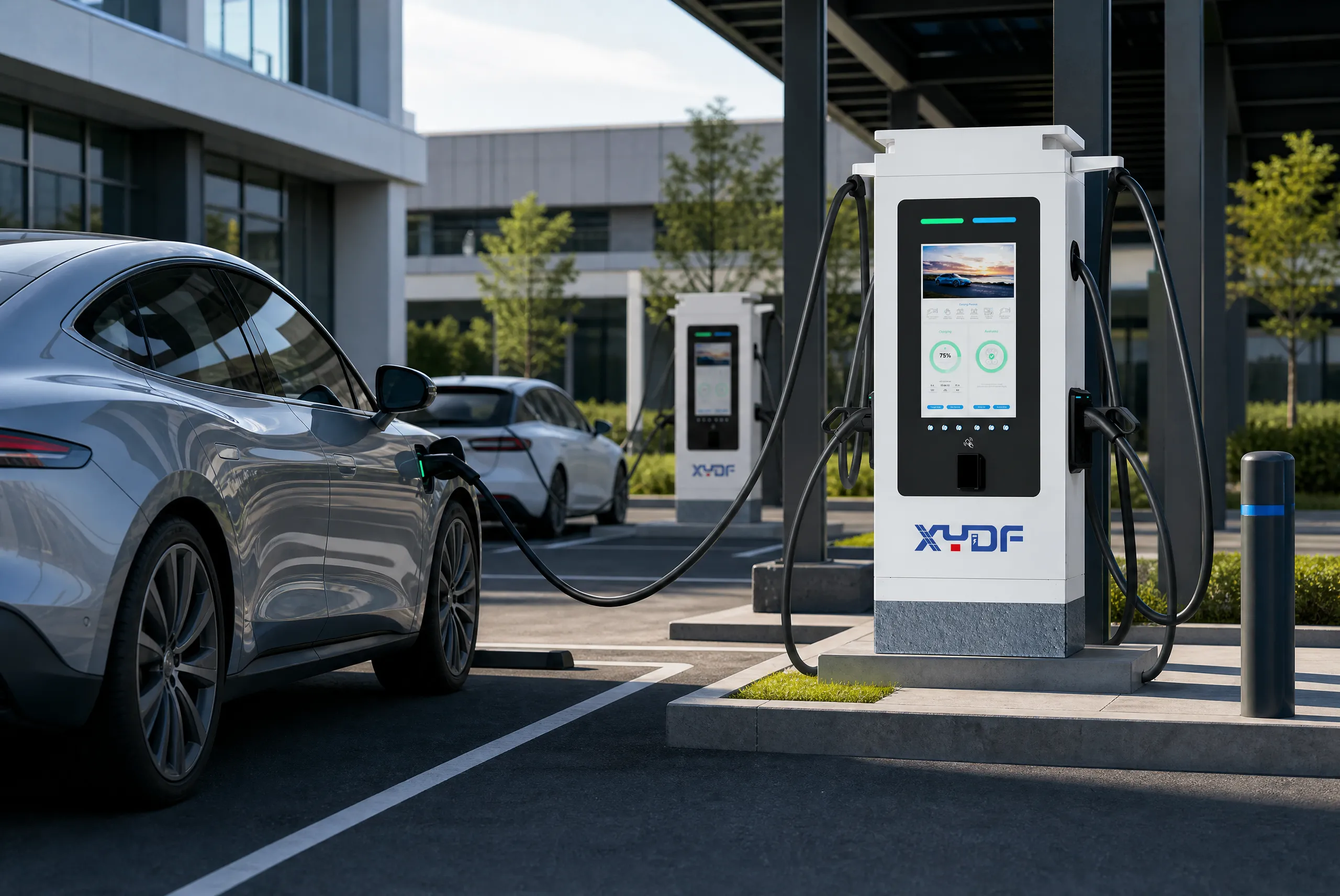
PV modules feed a DC or AC-coupled battery and an inverter. The controller forecasts solar output, vehicle arrivals, tariff periods, and battery state of charge. It assigns power to each connector while maintaining a reserve for fleet departures. During a cloud event, storage fills the gap; overnight, the grid can recharge the battery during a low-tariff window.
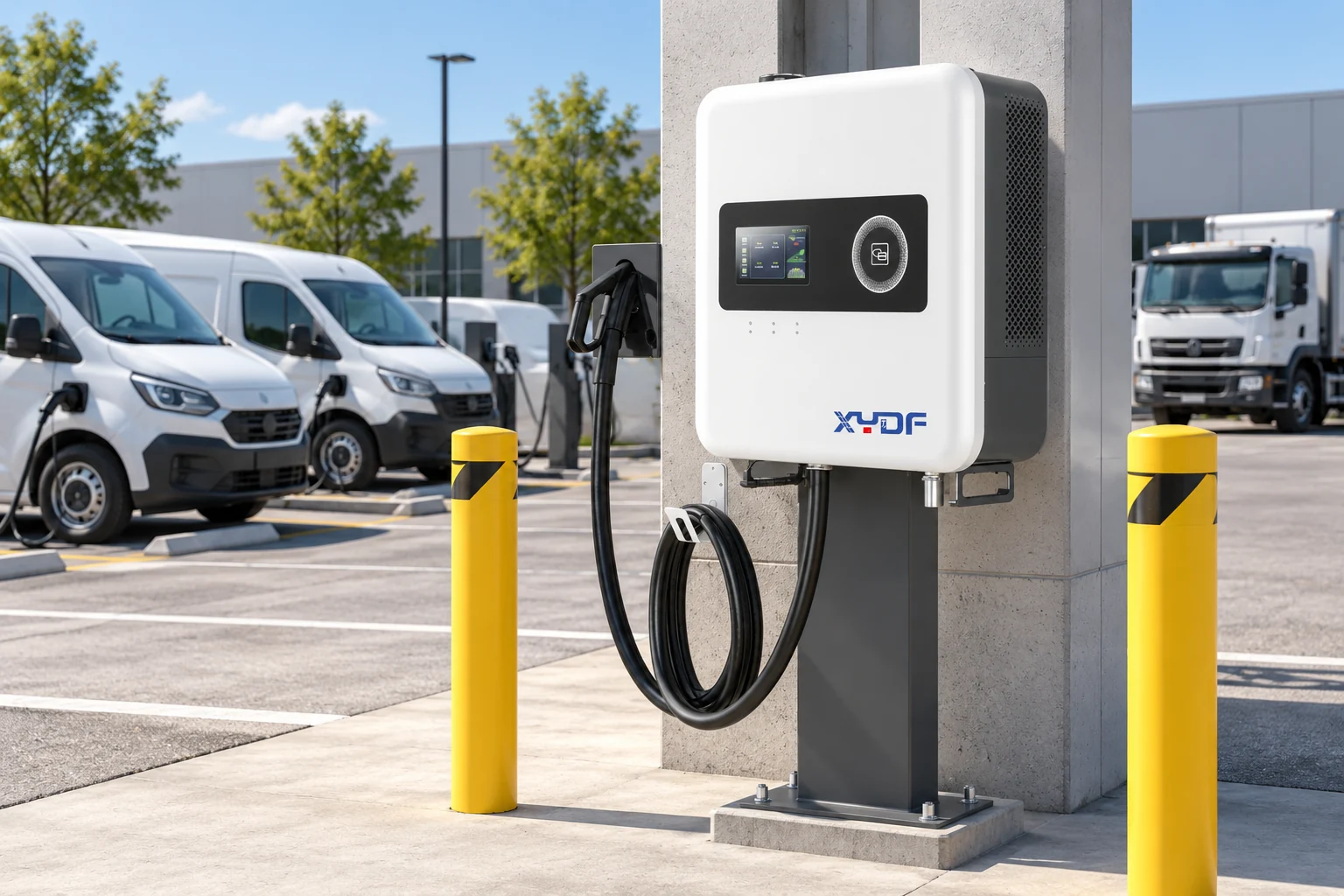
The best projects begin with a load profile. Record vehicle energy per route, dwell time, seasonal sunlight, and the transformer limit. A green motion charging station may need fewer peak-rated chargers when storage can buffer simultaneous departures.
Solar, storage, and managed charging create a resilient energy hub.
What solar and storage can improve—and what they cannot
Lower daytime energy purchases and exposure to peak tariffs.
Reduced transformer upgrades through peak shaving.
Visible carbon reduction for fleets, campuses, and retail sites.
Backup capability for critical charging during grid events.
Expandable architecture for future PV, storage, or ports.
How solar-plus-storage compares with grid-only charging
Dimension
Solar + storage
Grid-only
Energy source
On-site generation plus grid backup
Utility supply
Peak management
Battery can shave peaks
Often requires larger service
Resilience
Can support priority loads
Depends on grid availability
Planning
Needs weather and storage modeling
Simpler but tariff-exposed
What the electrical and safety design must include
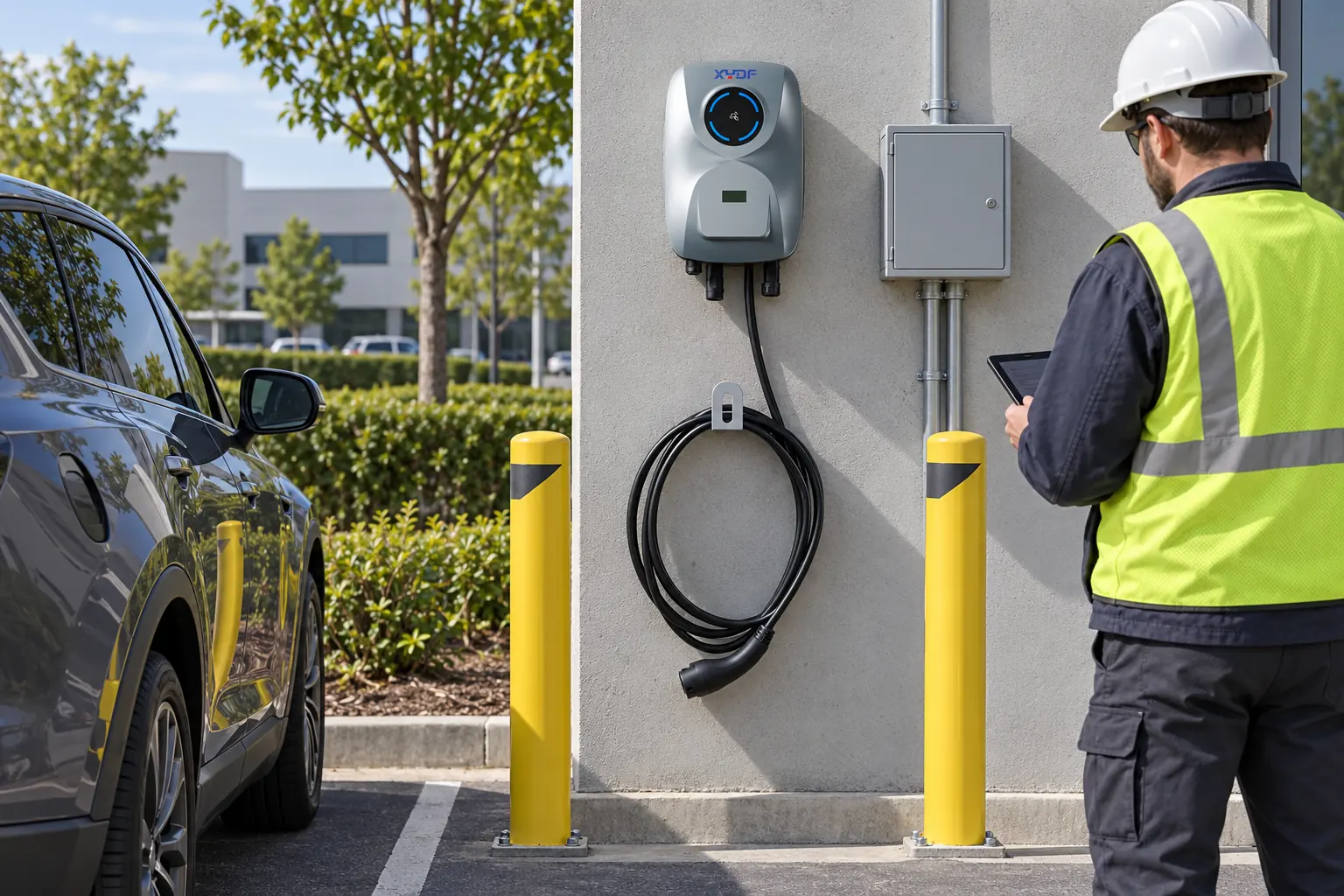
Specify PV string protection, inverter anti-islanding, battery thermal management, fire detection, ventilation, and separation distances. Charging equipment must meet local electrical rules and connector requirements. Use OCPP for sessions, alarms, and remote updates. Cybersecurity, role-based access, and offline fallback belong in the operating plan.
A design review should show the import limit, the controller’s priority order, the battery operating window, and the behavior when communications fail. Anti-islanding and protection settings must be coordinated with the utility; storage should not be described as backup unless the transfer arrangement and critical-load scope have been commissioned. For procurement, ask for the single-line diagram, protection assumptions, fire-safety responsibilities, monitoring fields, and a test plan for low-solar and grid-limited operation.
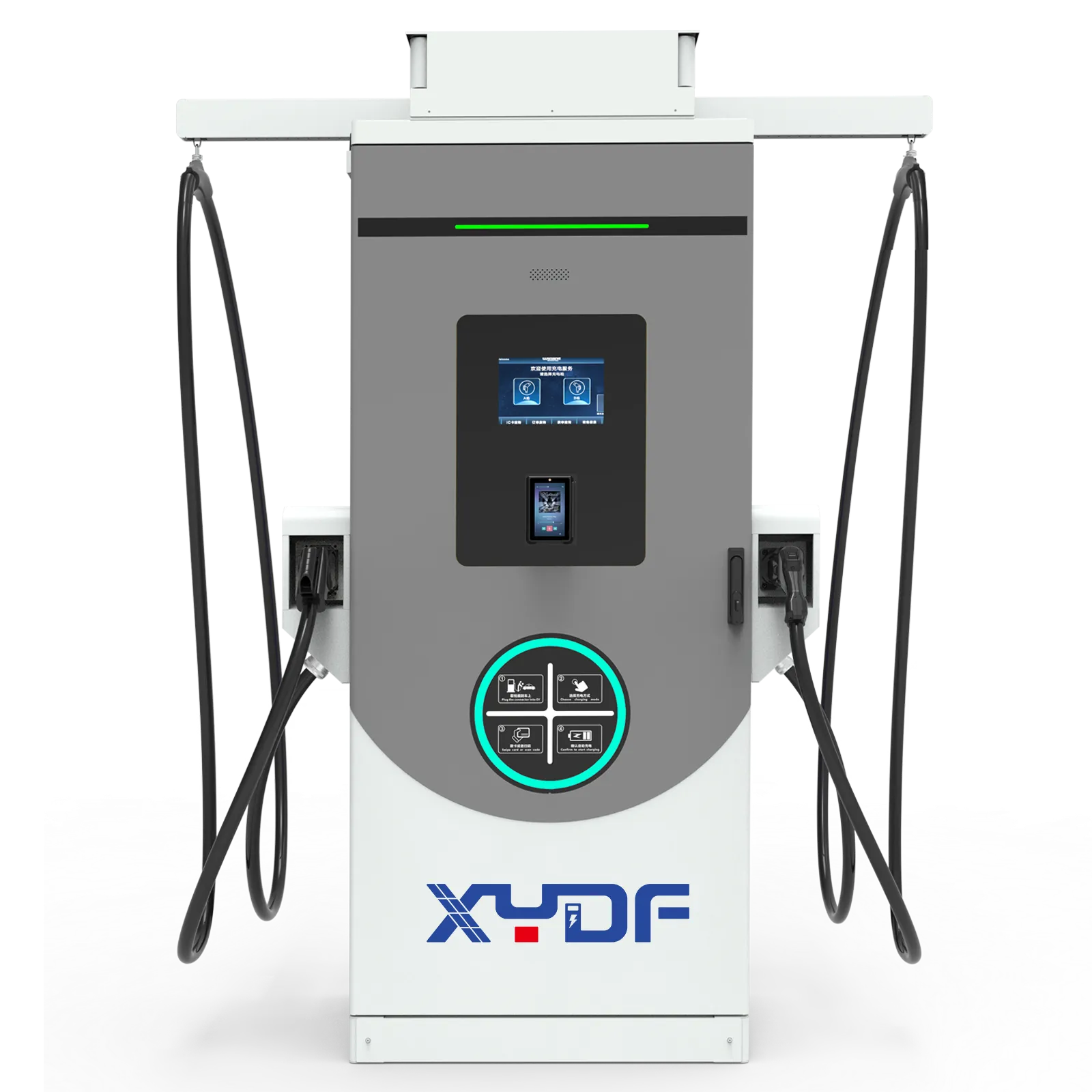
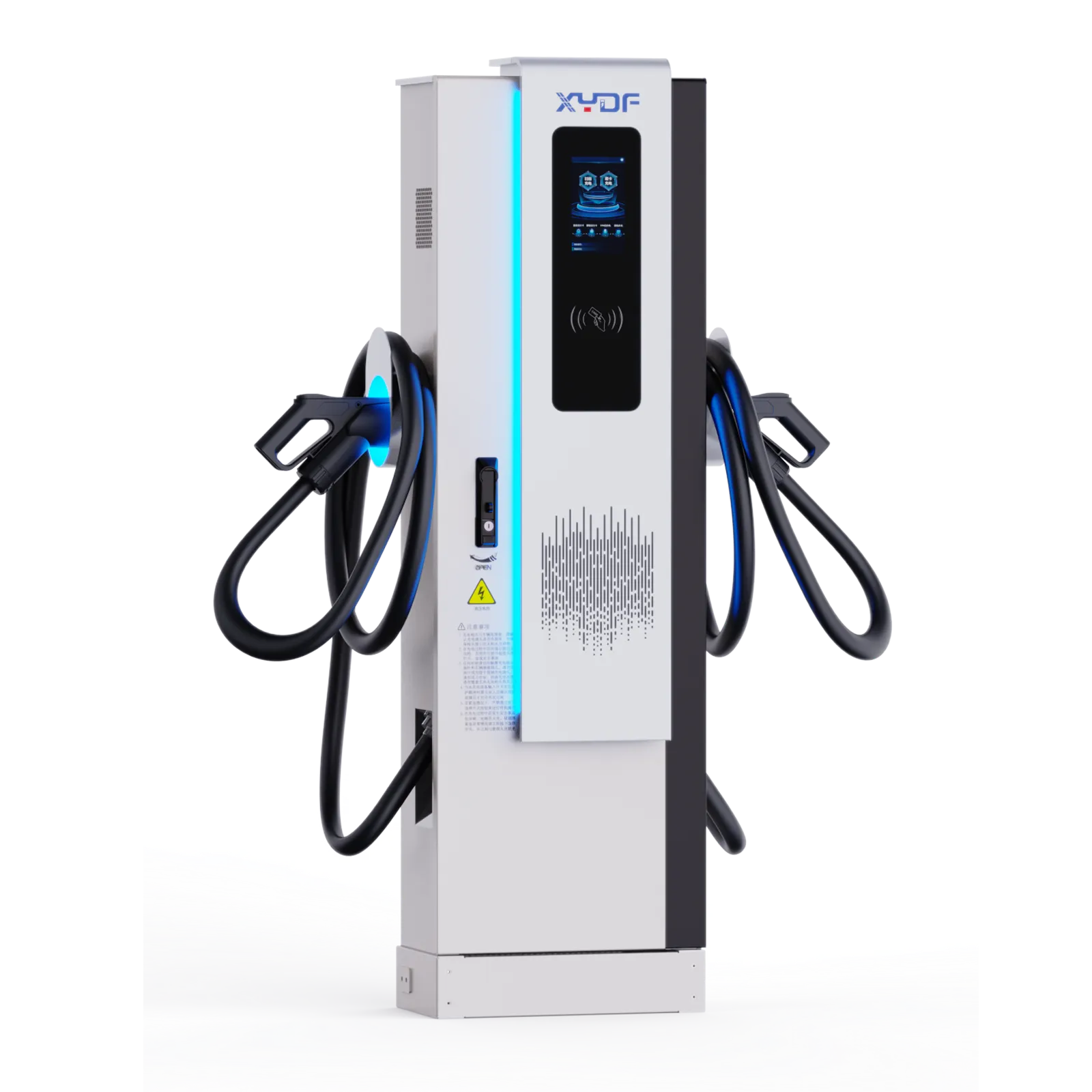
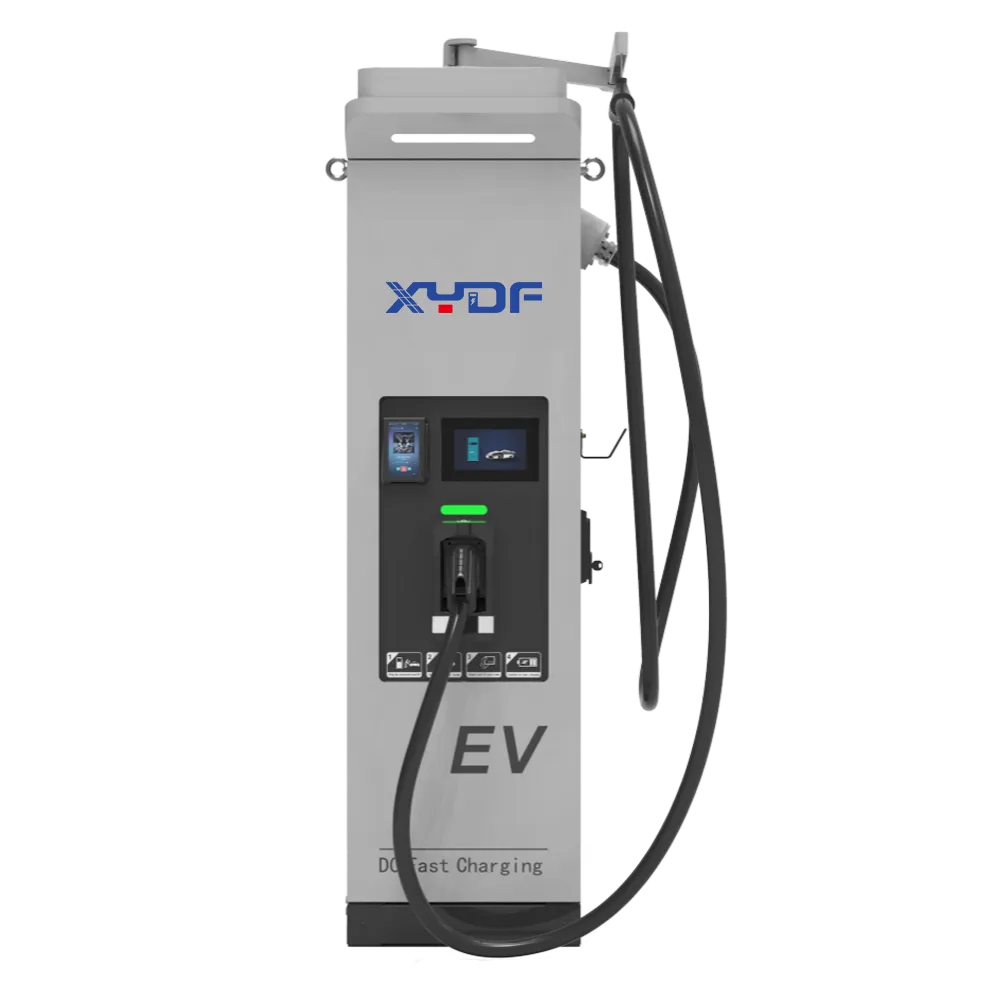
For a multi-port ev green charging station, the energy-management controller should enforce import limits and publish a priority order: safety first, critical fleet energy second, solar self-consumption third, and discretionary charging last. This avoids installing solar panels without controlling simultaneous charger demand.
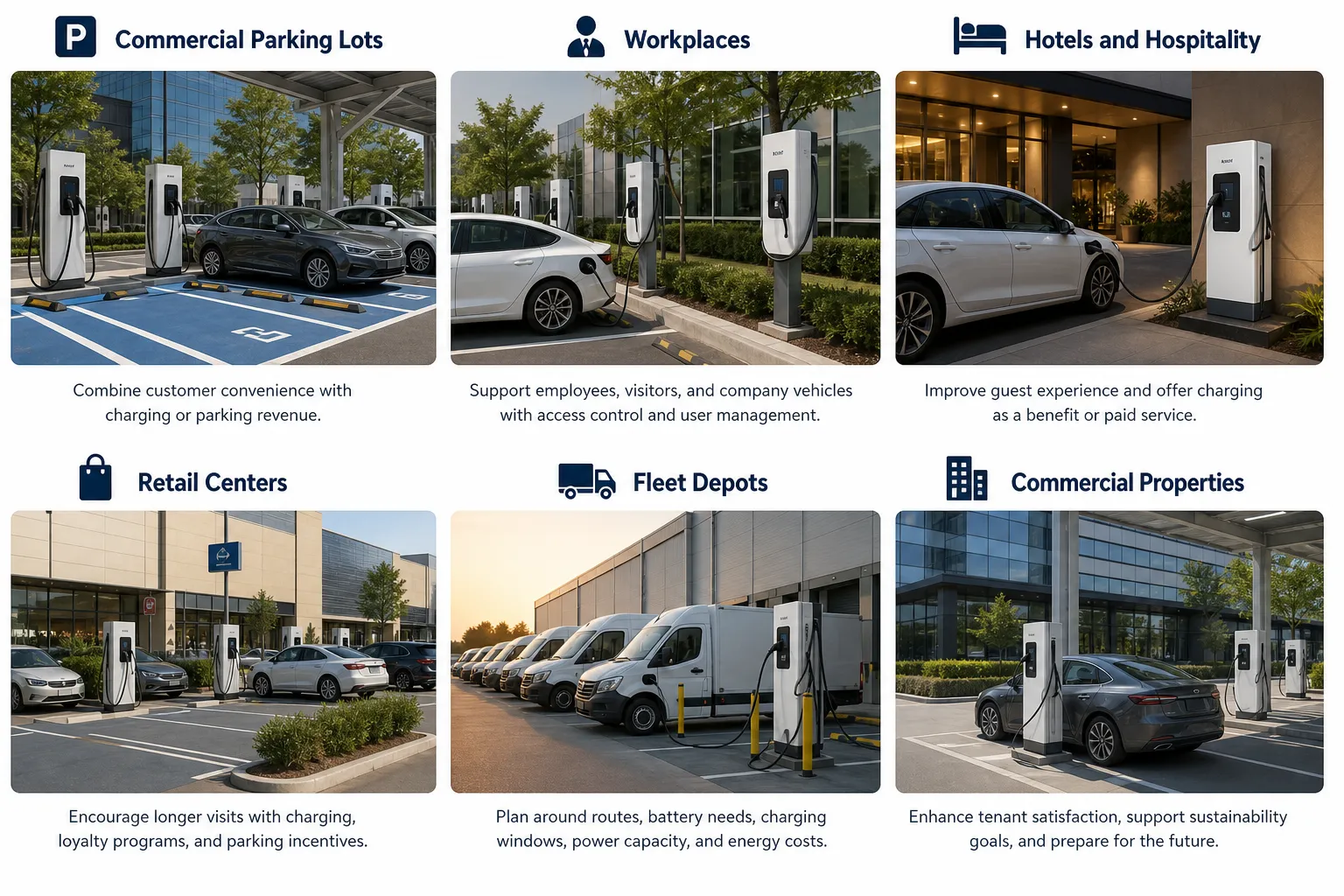
Commercial layouts should leave room for future PV and storage capacity.
Which project details should be fixed before procurement
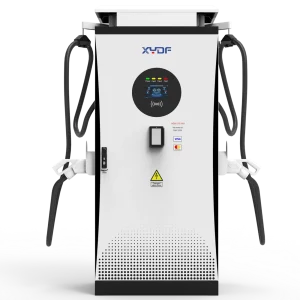
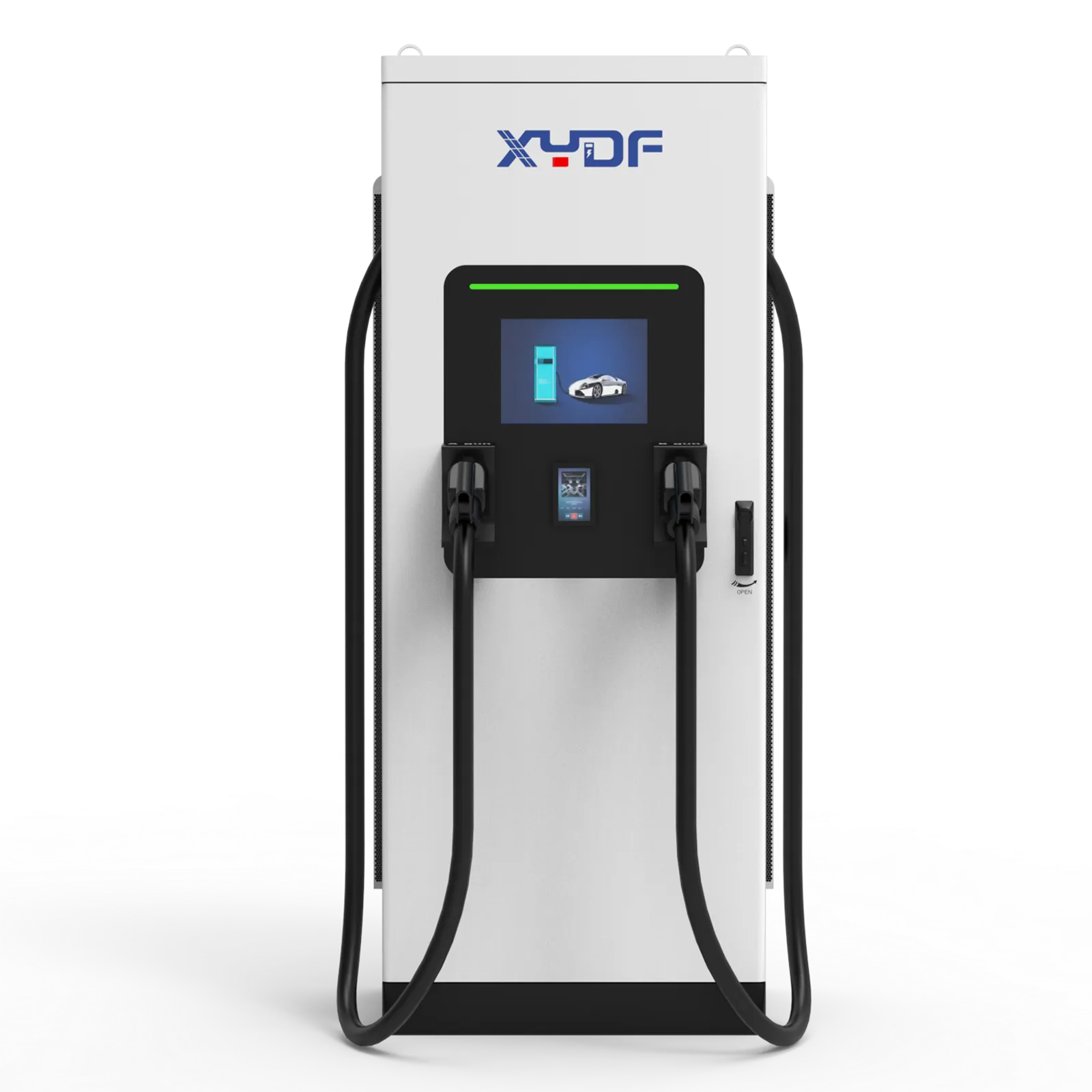
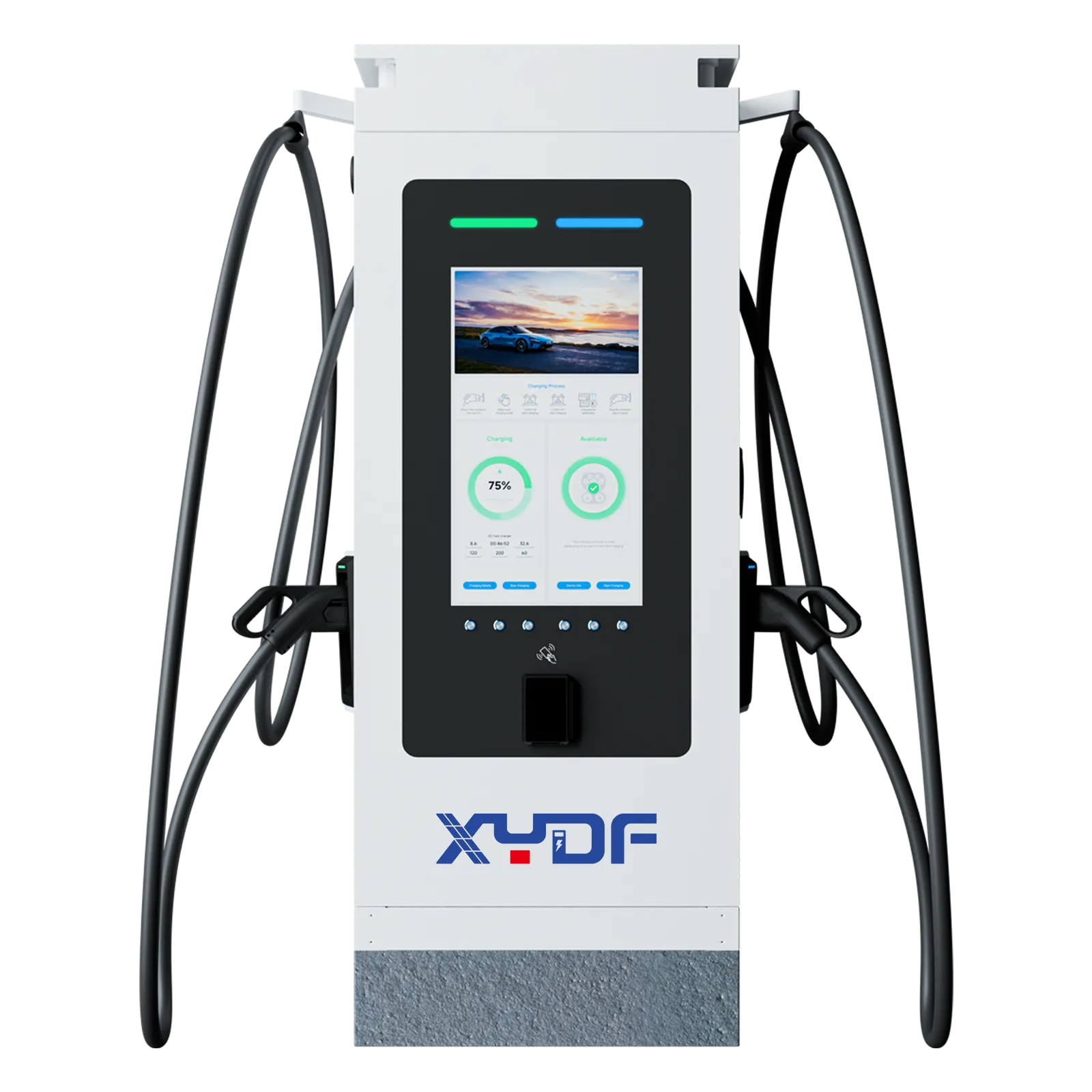
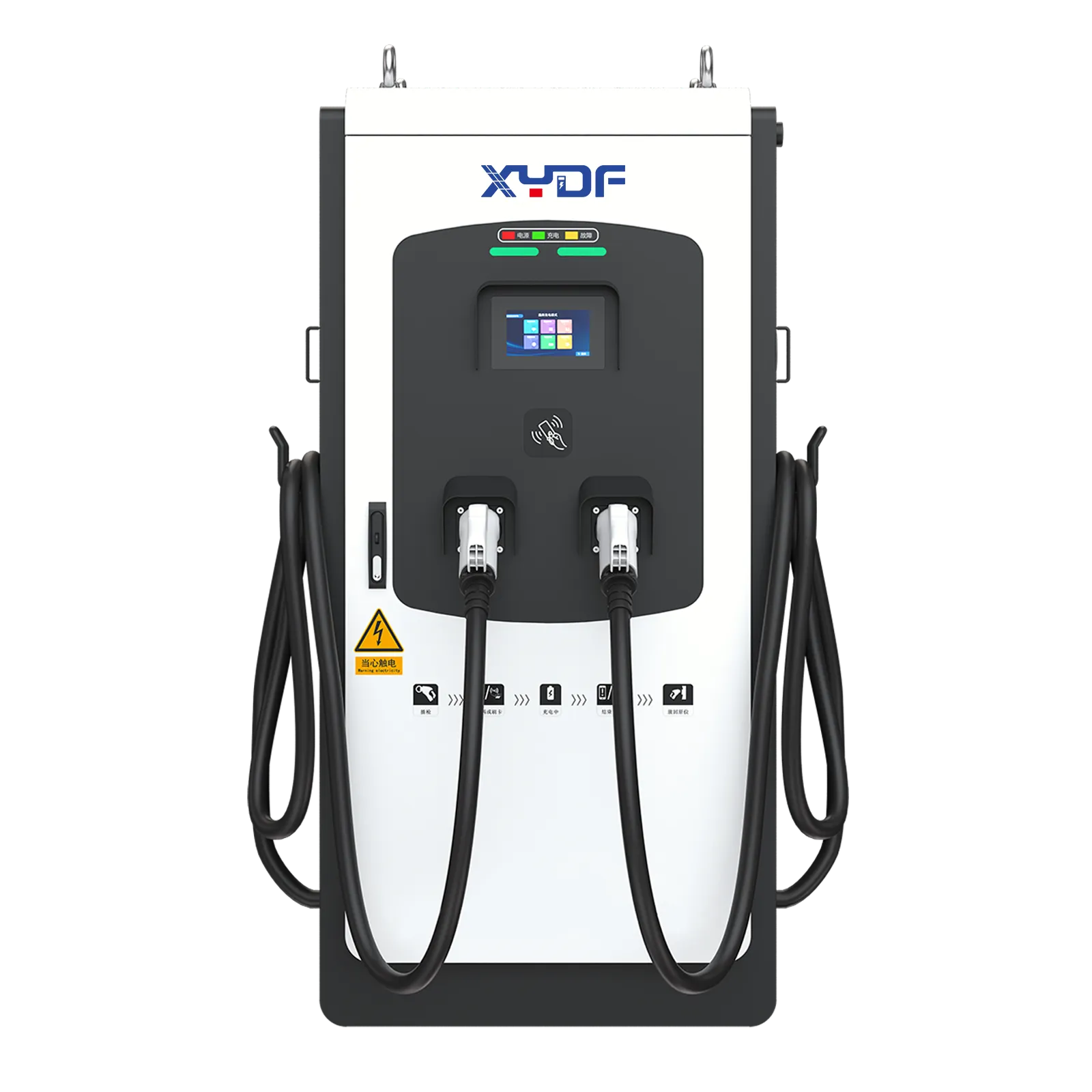
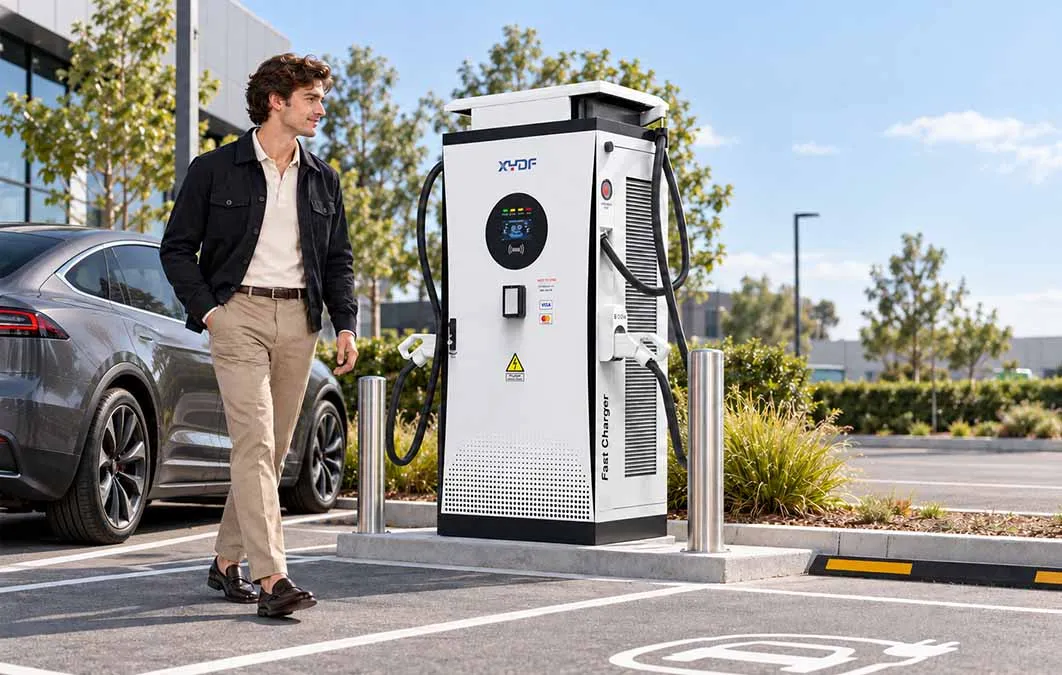
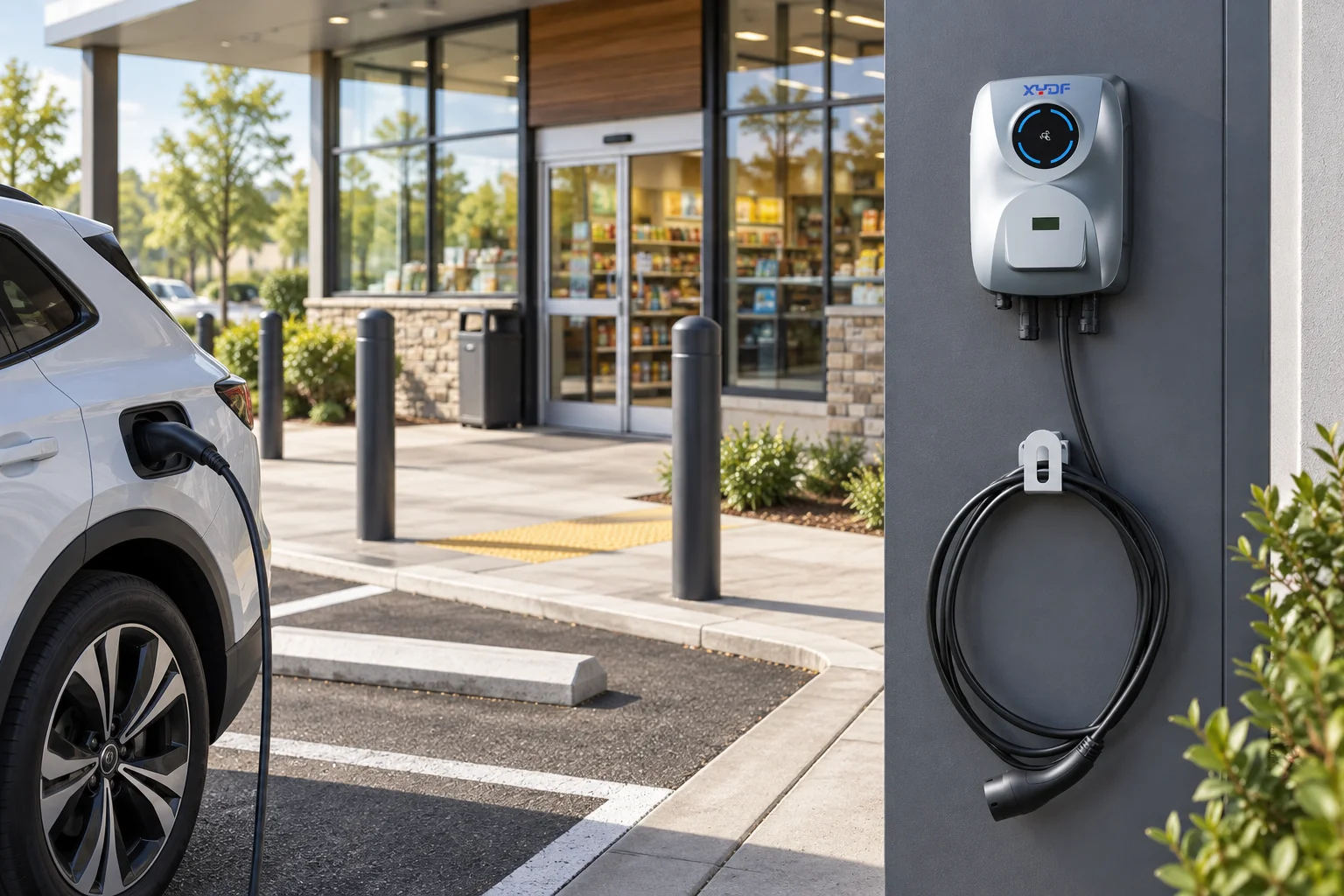
XYDF can combine AC and DC equipment with monitoring, load balancing, and a documented commissioning plan. Review our EV charging products, then pair a workplace AC charger or DC fast charger with storage. Expose energy, uptime, and carbon metrics so owners can verify savings.
A practical checklist for sizing the system
Model annual solar yield, battery cycles, and fleet demand.
Set an import limit the utility and protection system support.
Choose an EMS with open data access and fail-safe behavior.
Plan fire response, maintenance access, drainage, and shading.
Reserve conduits and switchgear space for expansion.
Questions buyers ask about solar EV charging
Can an EV charging station be powered by solar?
Yes. Solar can supply chargers directly or through a battery, with grid backup when generation is low.
Is it possible to charge an EV with solar?
Yes, but the rate varies with irradiance unless storage or grid support stabilizes output.
What are the three types of EV charging systems?
They are commonly AC Level 1, AC Level 2, and DC fast charging. Solar projects can combine all three.
Which is the fastest EV charging station?
High-power DC systems are fastest for short dwell times; the choice still depends on vehicle limits and grid capacity.
What is the 80/20 rule for EV charging?
Many drivers use roughly 80% daily and reserve the final 20% for trips because charging tapers near full.
Does charging EV to 100% damage the battery?
Occasional 100% charging is normal when recommended by the vehicle maker. Avoid leaving a battery full for long periods unless advised.
A solar-powered EV charging site should be judged as one operating system. The owner first needs the fleet duty cycle, departure requirement, interval load, local solar resource, and grid boundary; only then can the team compare PV size, usable battery energy, charger mix, import control, and reserve. Solar can reduce purchases and storage can move energy in time, but neither removes the need for protection, anti-islanding, fire planning, maintenance access, and a tested low-solar mode. The right design is the one that meets the charging duty on an ordinary day and has a documented response when generation, communications, or the grid limit changes. For a project-specific review, compare the XYDF EV charging equipment range with the measured load and commissioning brief.
We use cookies to keep this website working and, with your permission, to measure how visitors use our EV charging site. See our Privacy Policy for details.
 Xinya Dongfang Electricity Technology Co., Ltd.