 Xinya Dongfang Electricity Technology Co., Ltd.


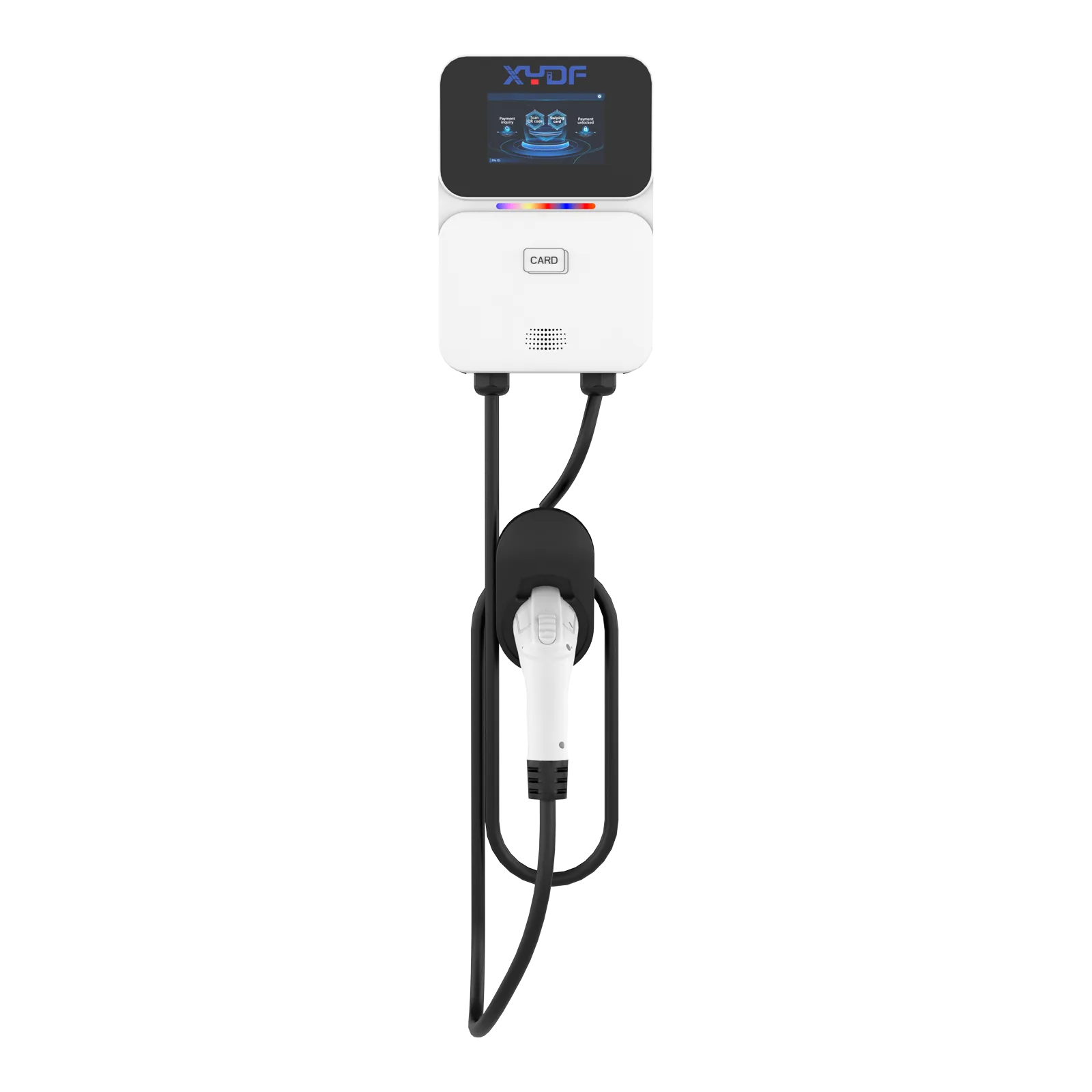
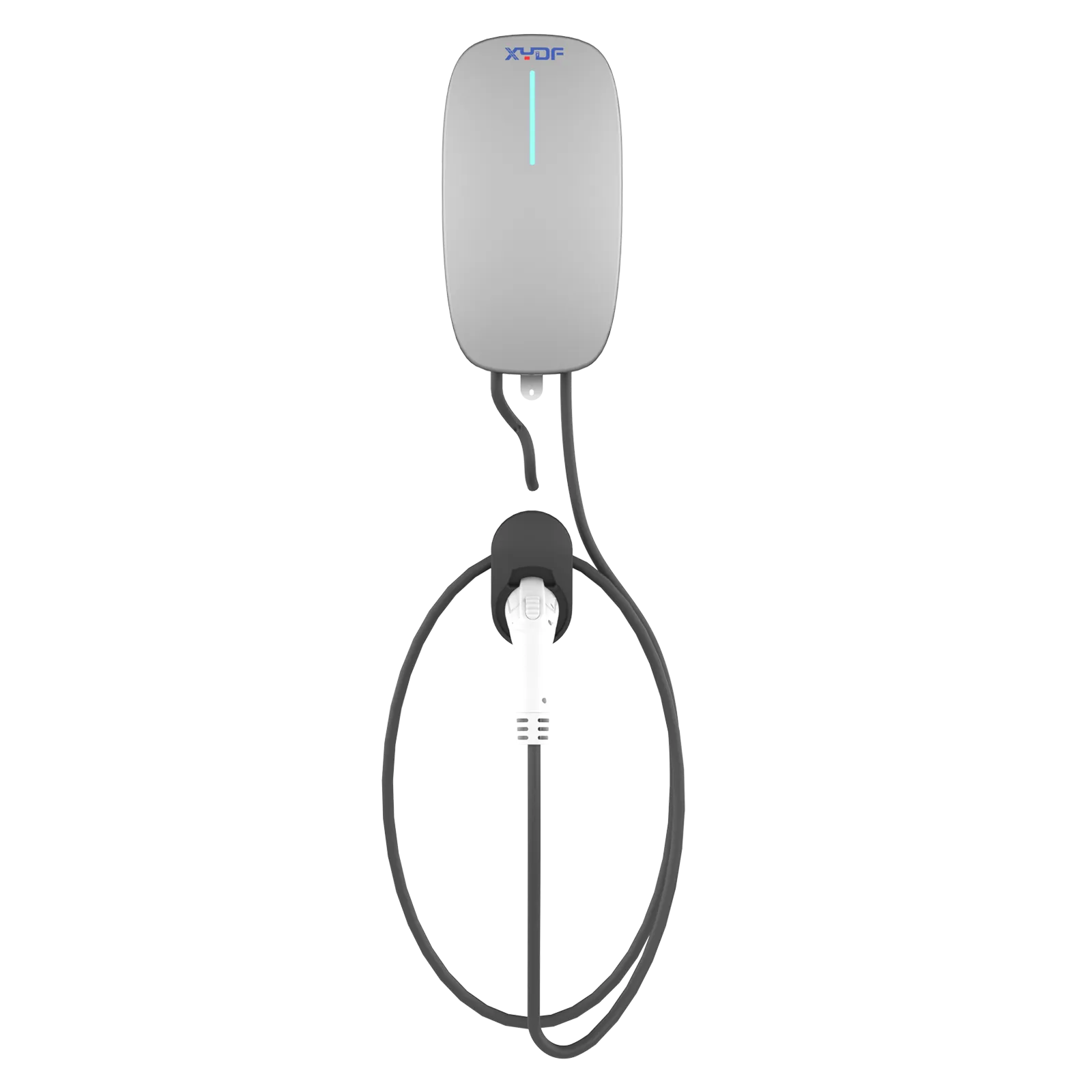
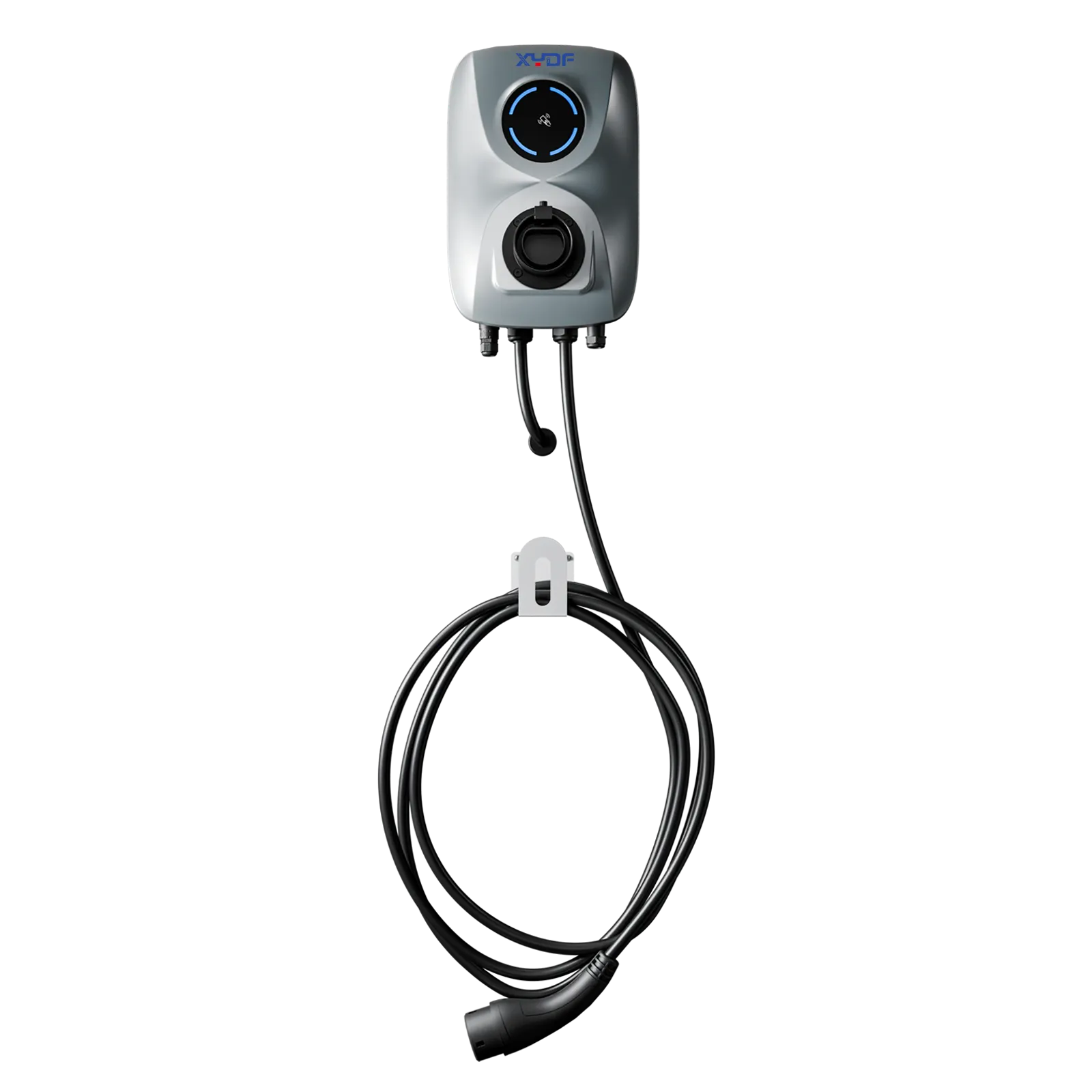
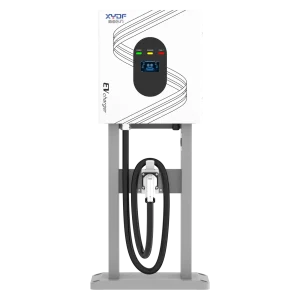

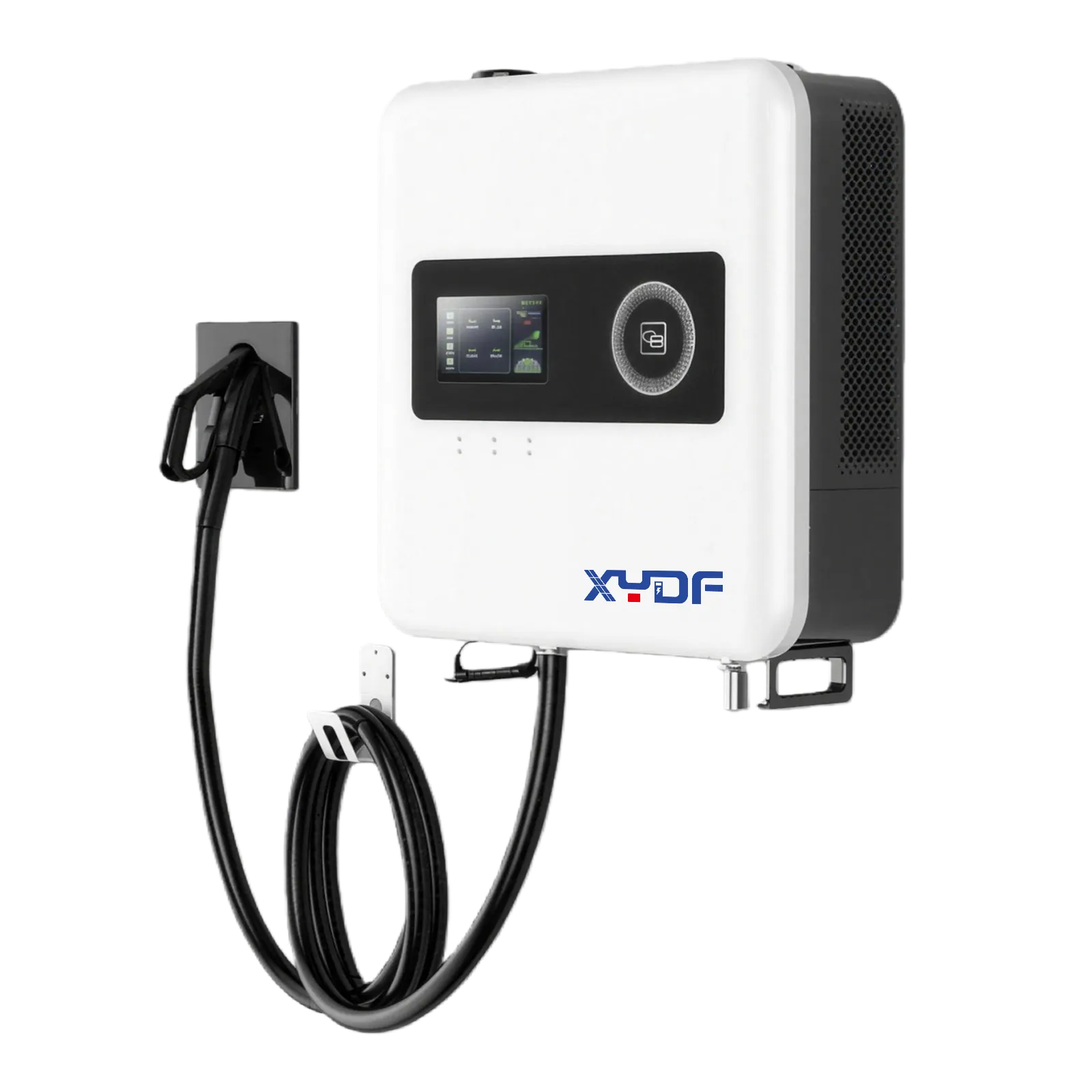
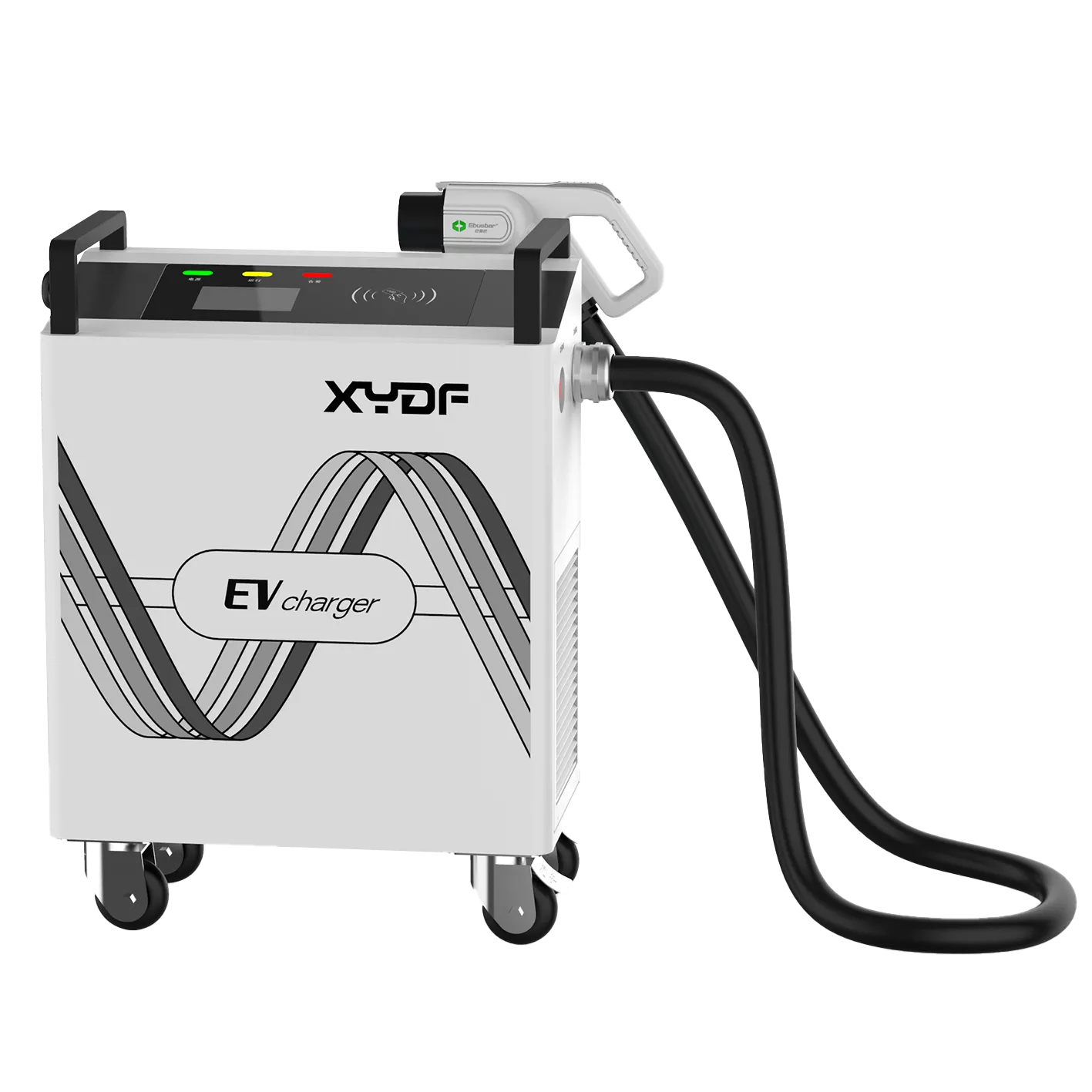
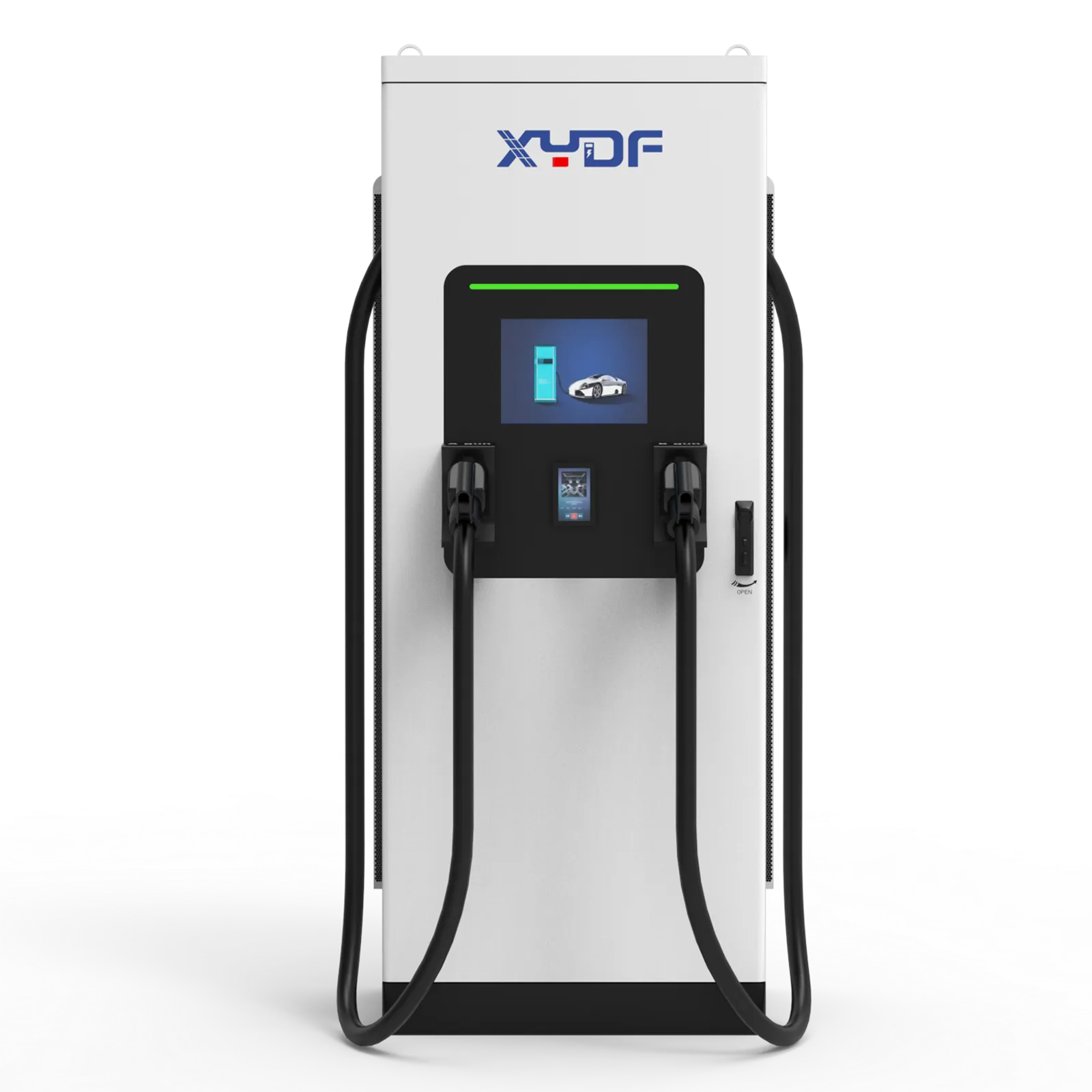
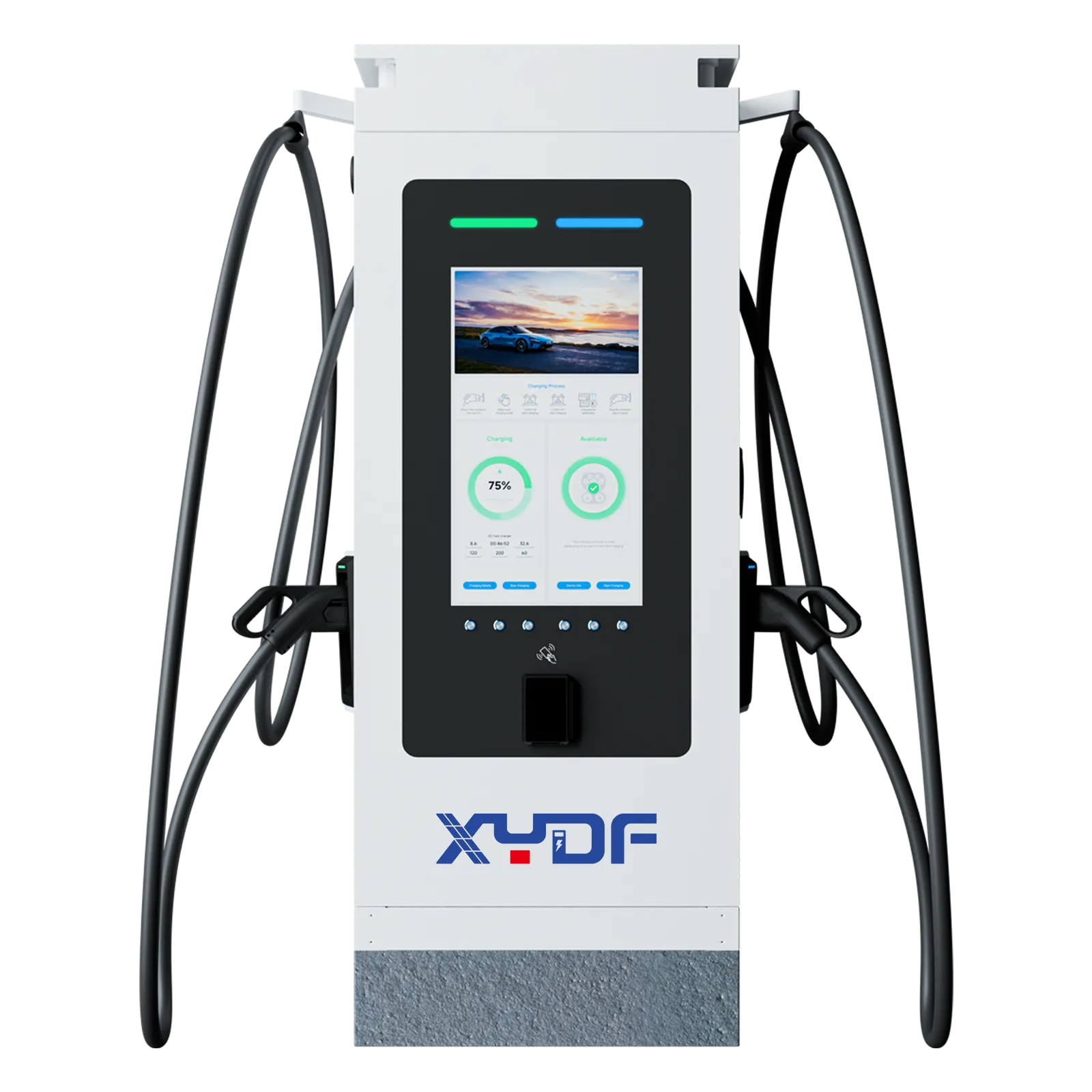
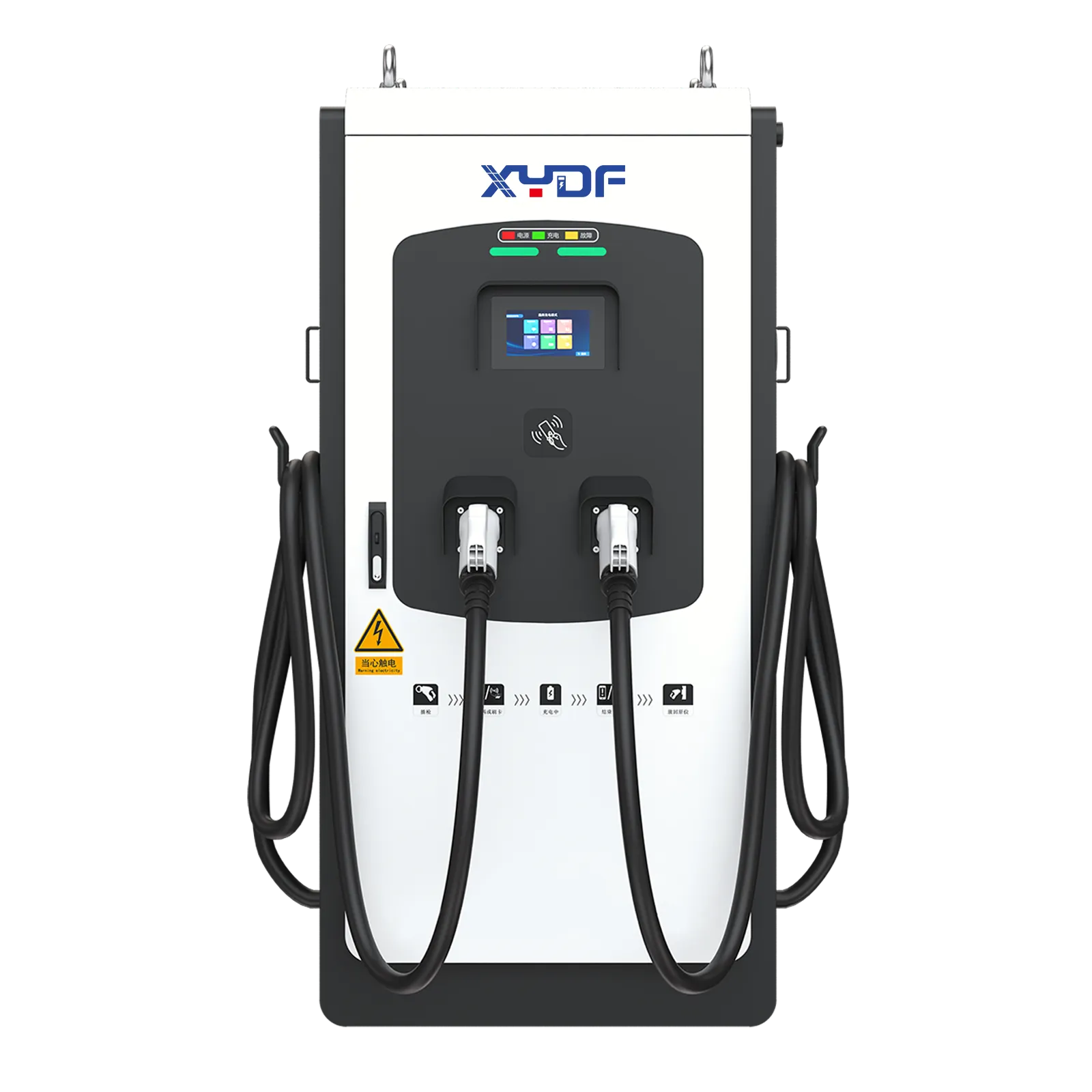
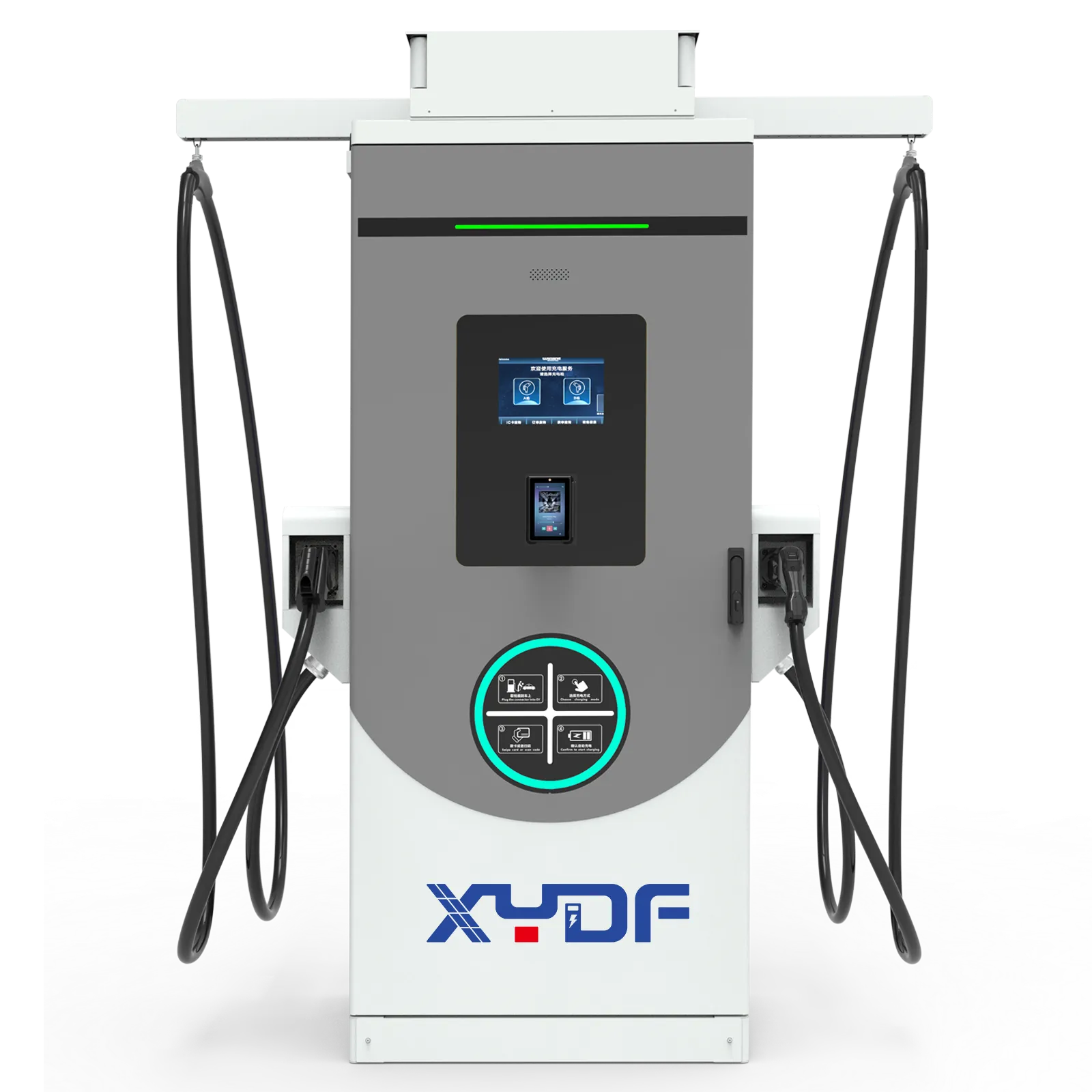
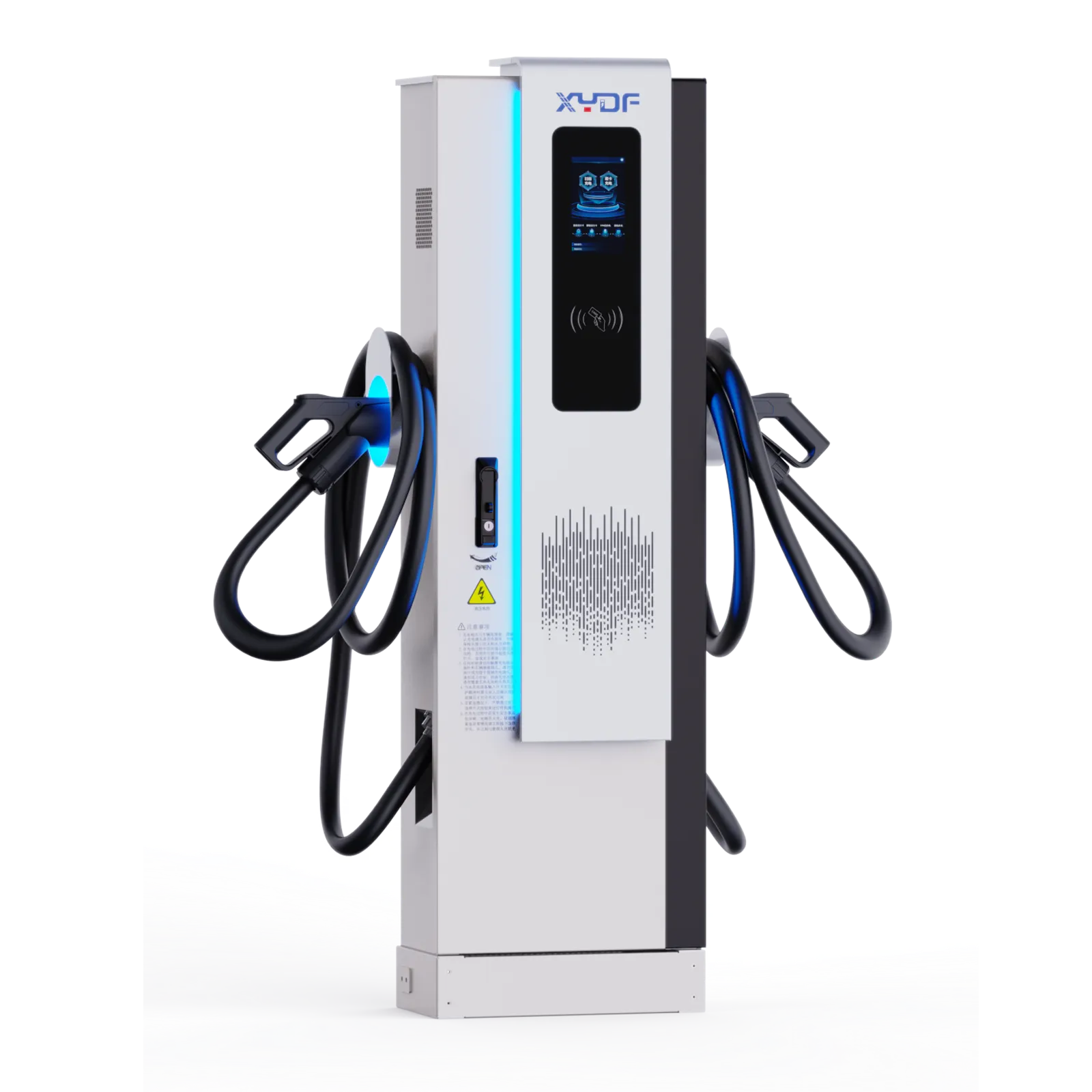
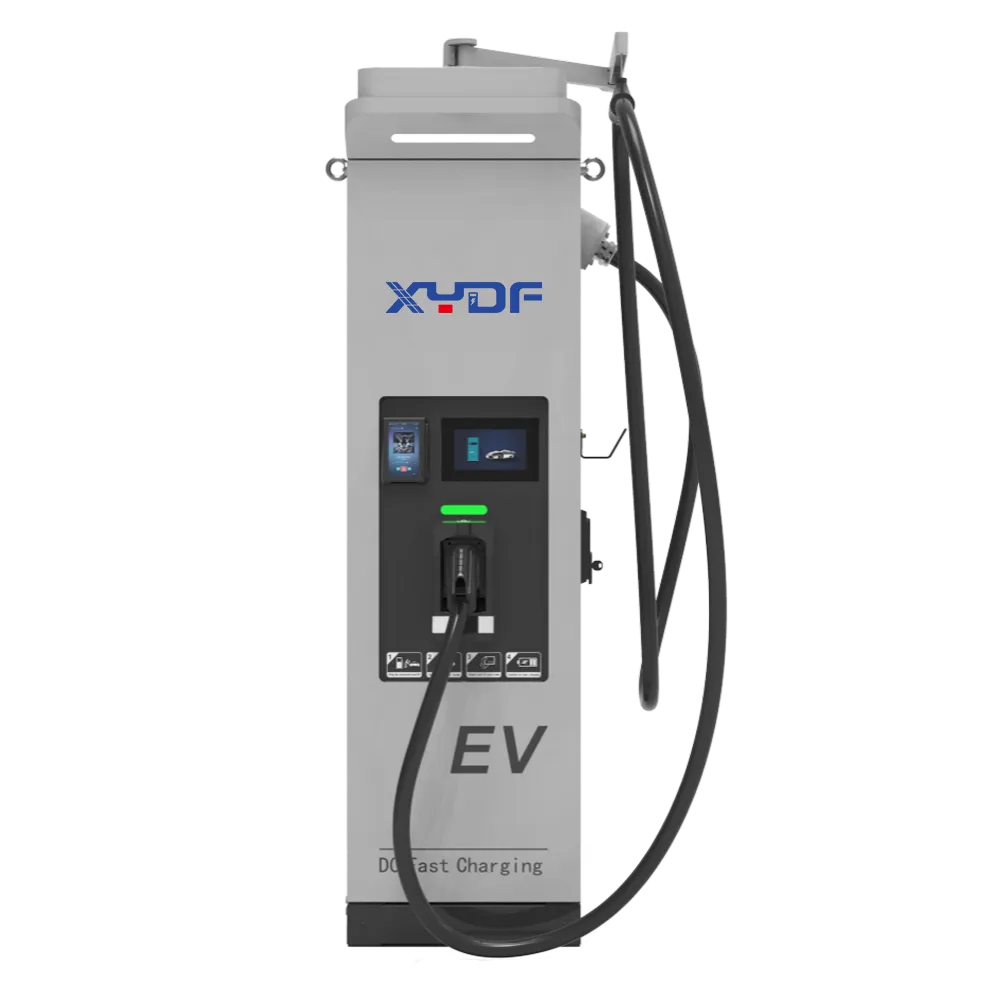
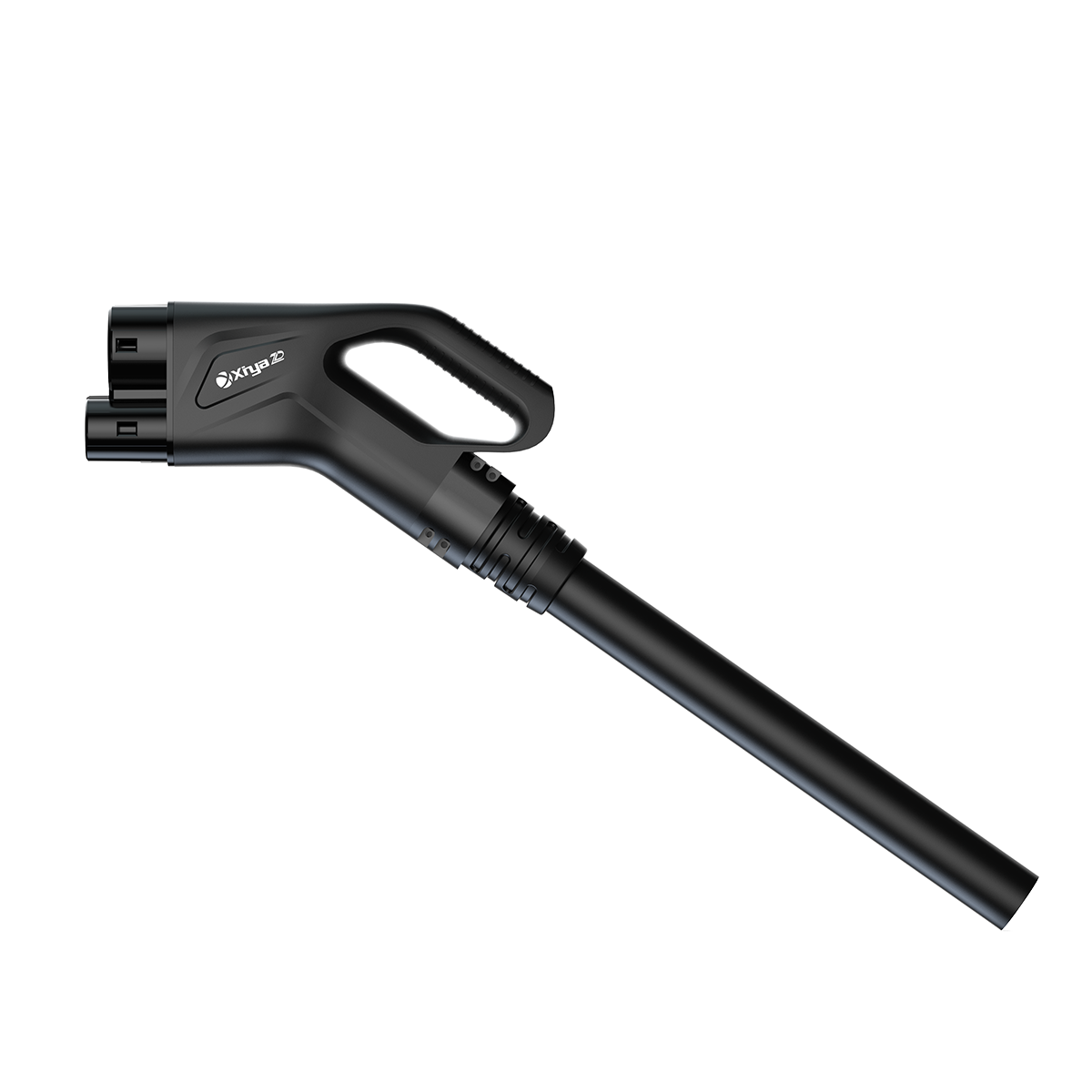
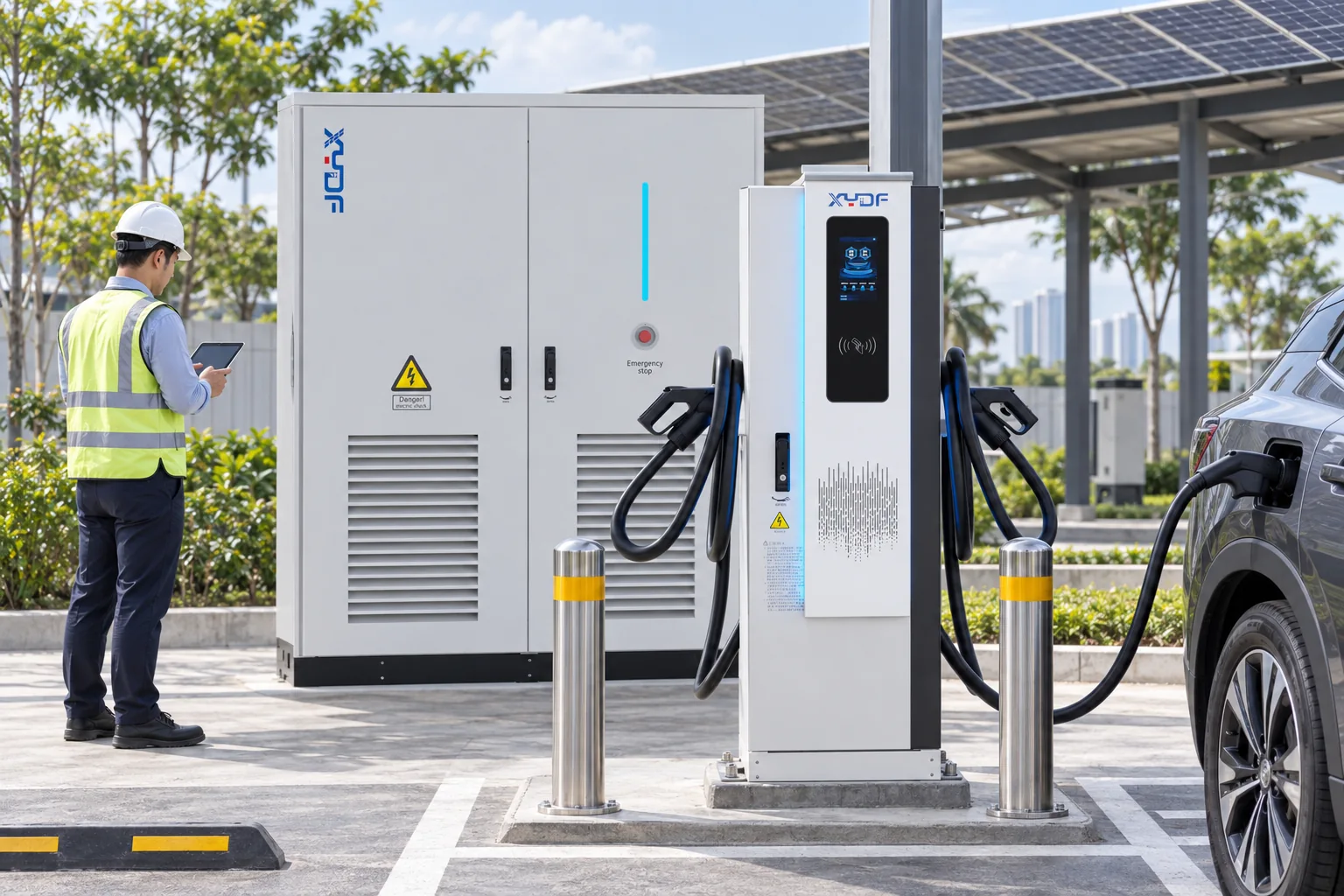
When a XYDF service engineer reviews a proposed charging site with a developer in Abu Dhabi, the first walk-through can look reassuring: chargers are positioned, parking bays are marked, and the electrical room is nearby. Then a midday visit exposes the weakness. Vehicles sit in direct sun, cable handles are too hot to hold comfortably, and the project team is worried that a summer peak could trigger thermal derating just when the fleet needs to move. In this illustrative field-review scenario, the issue is not automatically a bad charger. It is the interaction between canopy design, thermal clearance, electrical capacity, storage, controls and the site’s operating schedule.
Résumé : Treat a Gulf charging hub as a three-layer system: shade the vehicle and equipment, verify the heat and sand path through the enclosure and power electronics, then control charging against site load and solar availability. A borne de recharge VE commerciale should be specified against the project’s actual ambient, duty cycle and protection requirements; IEC 61851 addresses conductive charging-system safety and communication, while enclosure ingress claims require their own evidence. A canopy can improve comfort and energy yield, but it does not remove the need for thermal, corrosion and demand-management engineering.
Why Gulf charging hubs need a canopy and operating strategy
Gulf sites combine high solar gain, long hot seasons, airborne dust and, in coastal areas, salt-laden humidity. Those conditions influence more than photovoltaic output. They affect connector handling, enclosure temperatures, ventilation paths, cleaning cycles, civil works and the time at which a site reaches its electrical limit. The International Energy Agency’s Global EV Outlook shows why charging demand is expanding with electric-vehicle adoption and electric vehicles charging infrastructure; the local design question is how to make each installed connection useful during the hours of greatest heat and traffic.
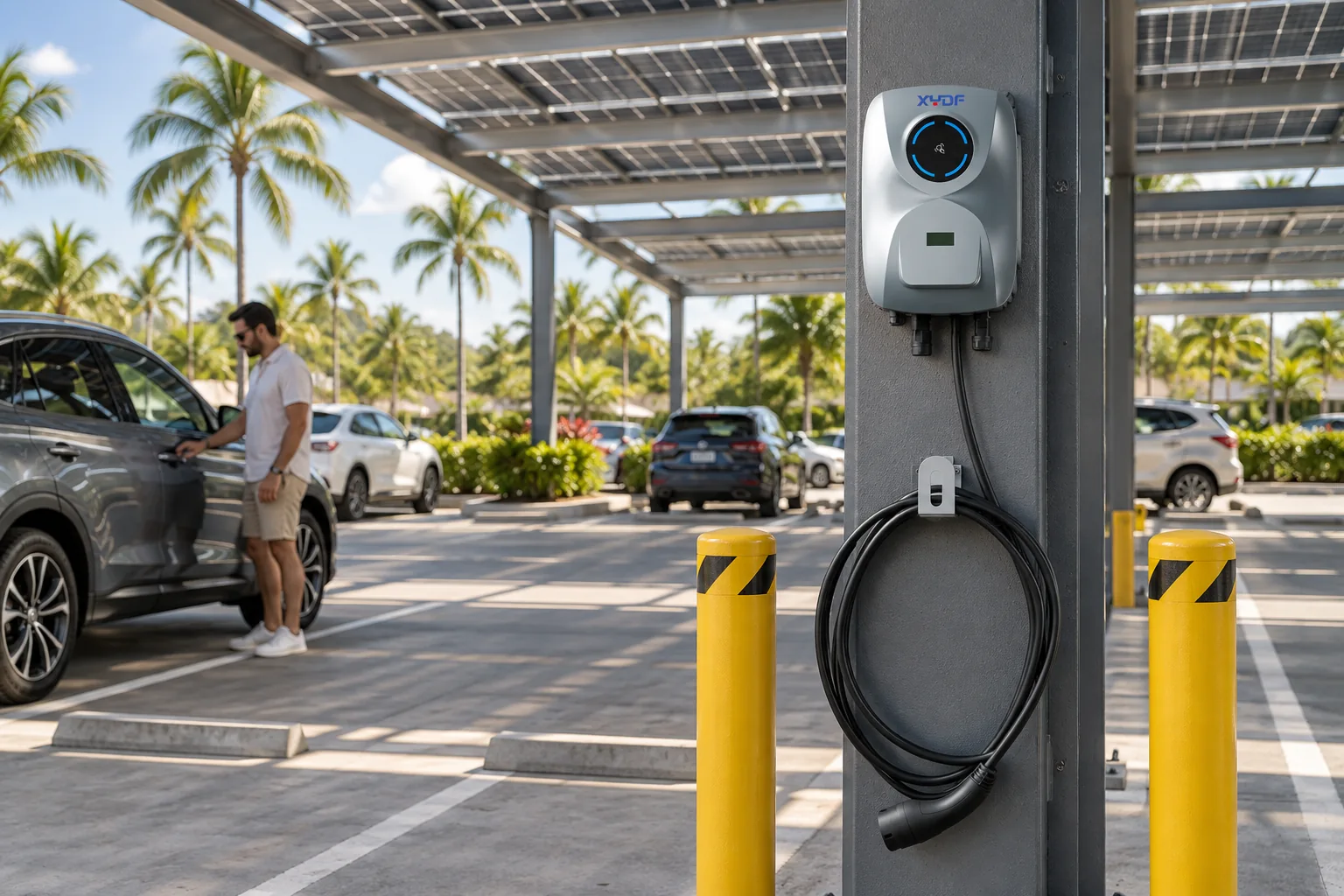
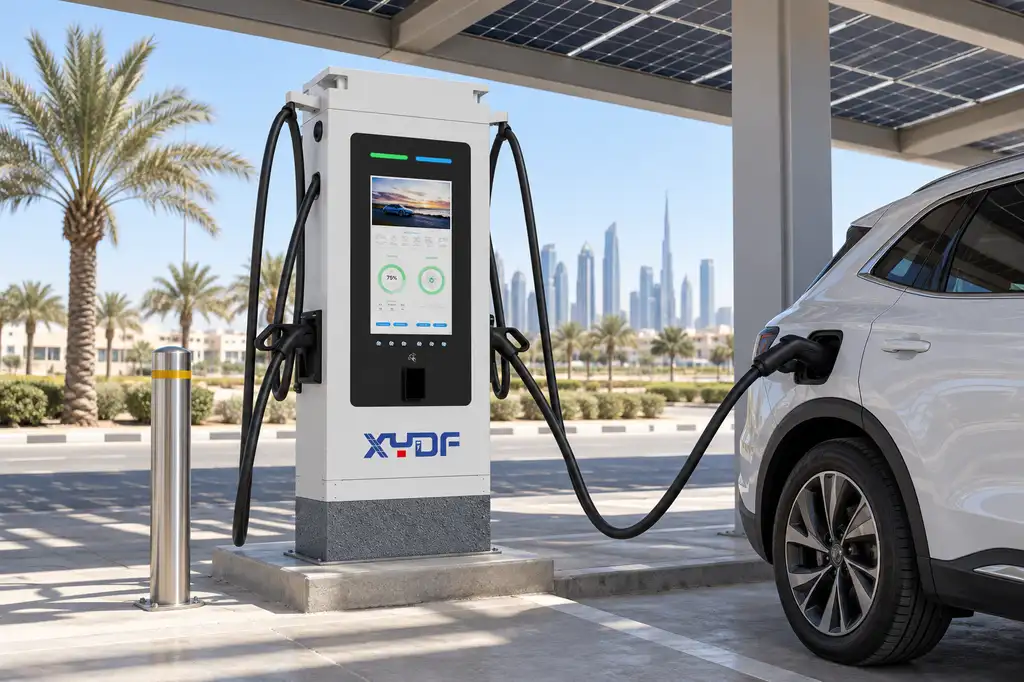
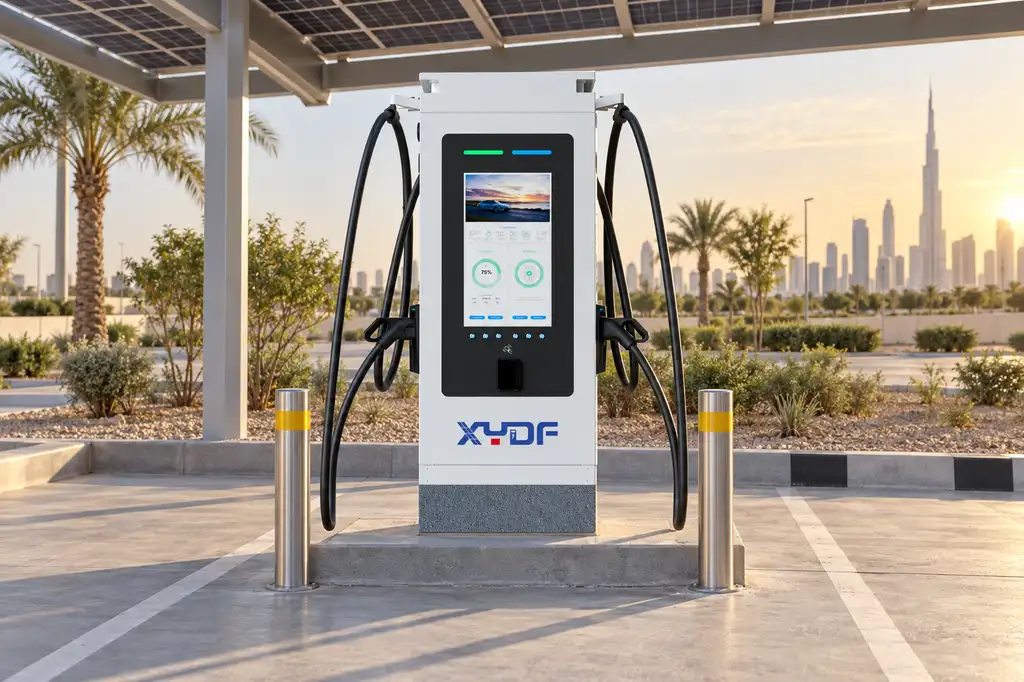
Solar canopies are valuable first as a passive-control measure. Roof geometry shades vehicles and charging cabinets, reduces radiant load on painted and polymer surfaces, and gives drivers a more usable waiting area. The photovoltaic array is a second benefit, not a promise of direct charger-to-solar matching. Generation varies with orientation, dust, temperature and inverter limits, while fleet arrivals may cluster after the solar peak. A well-designed solar charging station therefore needs an operating plan alongside its array.
For a fleet depot, retail destination or workplace, map the site’s hourly load before choosing equipment. A daytime workplace can align a meaningful share of charging with generation; a logistics depot may need overnight energy, managed sequencing or storage. In both cases, a solar charging station is best understood as an integrated civil, electrical and software design rather than a charger with panels mounted above it.
Designing for heat, dust, corrosion and driver comfort
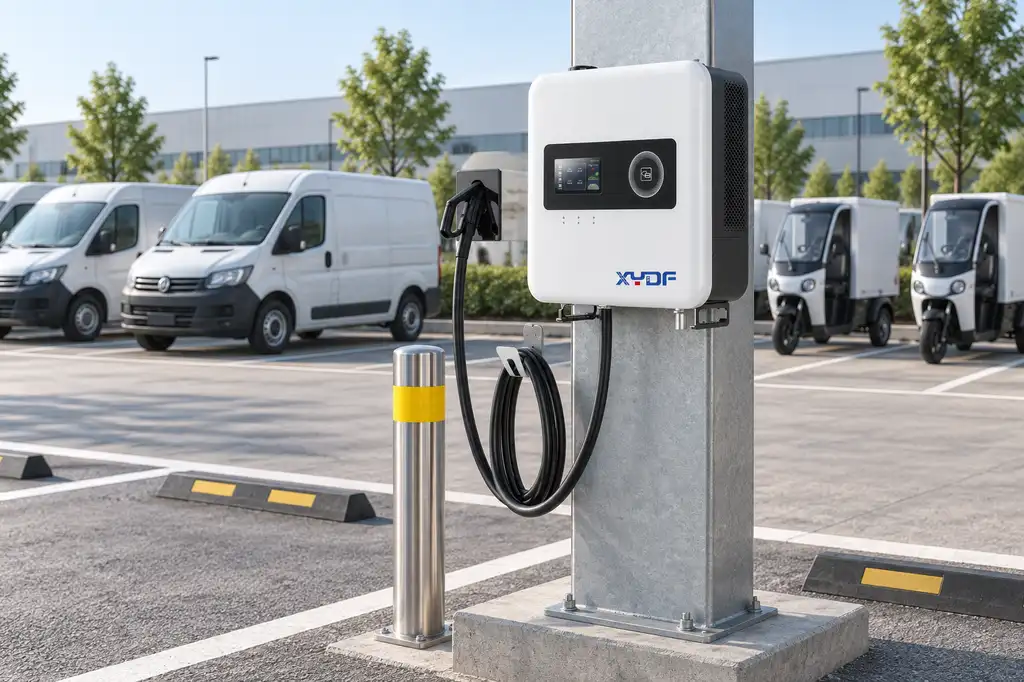
Start with a thermal envelope. Ask the charger supplier for ambient operating assumptions, derating curves, installation clearances and the test conditions behind them. Do not convert a marketing temperature into a guaranteed output: cable length, simultaneous sessions, incoming voltage, airflow and cabinet orientation can all change delivered power. A canopy should preserve those clearances and avoid recirculating hot air under a low roof. This is the first check for any borne de recharge VE commerciale planned for exposed Gulf bays.
Dust control is a maintenance decision as much as an enclosure decision. Detail sloped surfaces, protected cable parking, drain paths and accessible filters where used; define inspection and wash-down intervals around the site’s dust profile. Near the coast, specify a corrosion review for fasteners, supports, cable glands and exposed electrical interfaces. The IEC standards catalogue is the appropriate starting point for identifying the current editions of charging, enclosure and safety standards relevant to the final design; the applicable edition and national deviations must be confirmed for the destination market.
Driver comfort has operational value. Shade at the connector position, a safe cable route, non-glare lighting and a clear pedestrian path shorten dwell friction and reduce the temptation to unplug early. For an EV charger for business, those details can matter as much as peak nameplate power because they influence turnover, accessibility and perceived reliability.
Comparing hub architectures before selecting hardware
The right architecture depends on arrival patterns, available grid capacity and how much of the canopy’s generation can be used on site. The table below is a decision aid, not a performance guarantee.
| Architecture | Where it fits | Strengths | Watch-outs |
|---|---|---|---|
| Grid-led canopy | Sites with dependable capacity and predictable daytime sessions | Simple energy accounting; fewer conversion stages | Canopy output may be curtailed; peak demand remains a tariff and transformer issue |
| Solar plus managed charging | Workplaces, retail and depots with flexible dwell time | Shifts sessions toward available generation and site limits | Needs reliable metering, control logic and user-priority rules |
| Solar plus battery | Constrained grid connections or evening fleet peaks | Can buffer solar and reduce short demand spikes when sized correctly | Added thermal management, fire-safety review, controls and replacement planning |
| High-power fast-charge island | Short dwell, highway-adjacent or turnaround operations | High vehicle throughput when upstream capacity supports it | Greater heat rejection, conductor size, protection coordination and demand exposure |
Second dimension: match controls to the operating profile
| Site profile | Primary control question | Evidence to request |
|---|---|---|
| Workplace or office | Can sessions be staggered through the solar window? | Arrival distribution, dwell time, load-management sequence and user override policy |
| Retail or hospitality | How will shade, wayfinding and queueing affect turnover? | Bay layout, pedestrian plan, accessibility review and cleaning schedule |
| Dépôt de flotte | Which vehicles must leave first, and at what state of charge? | Dispatch roster, route energy model, charging priorities and contingency mode |
| Public rapid-charging site | How will the site protect power quality during coincident peaks? | Transformer study, protection settings, demand forecast and storage dispatch logic |
Managing summer demand, storage and lifecycle risk
Extreme summer demand should be modelled as a sequence of operating states, not one maximum number. Define a normal state, a hot-day state, a grid-constrained state and a recovery state after a control event. Confirm what the charger does when available power is reduced: does it share power, pause new sessions, or preserve a minimum allocation for priority vehicles? Those behaviours belong in commissioning tests and the operating manual.
Battery storage is optional. It becomes more compelling when the grid connection is limited, tariff peaks are material, or fleet dispatch needs predictable power after sunset. Size it from an hourly load profile, not from the photovoltaic nameplate alone; include round-trip efficiency, reserve state of charge, battery temperature control, degradation assumptions and fire-protection requirements. Our guidance on sizing battery storage for an EV charging station et solar-and-battery charging design can help structure that study.
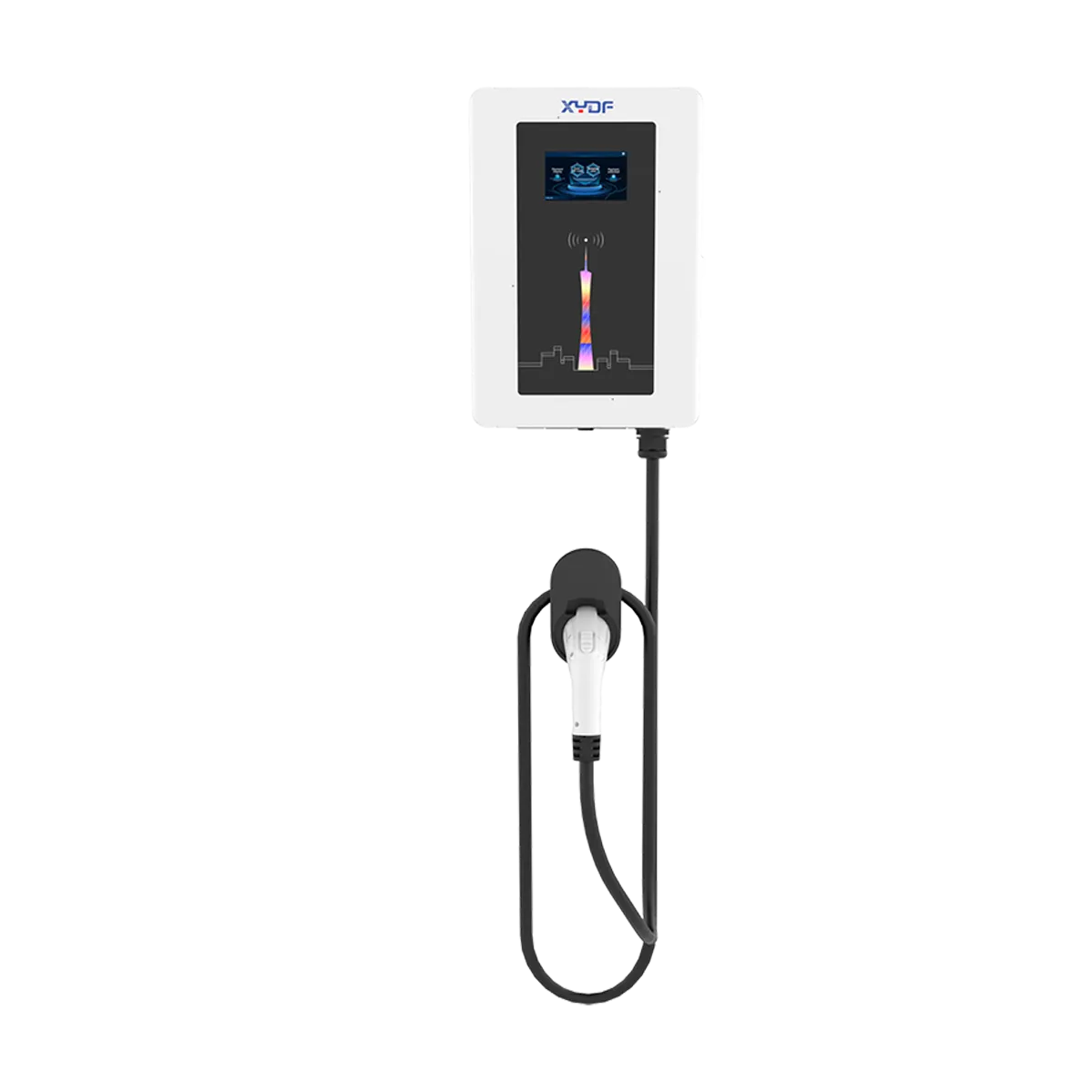
Demand control also protects the business case. A borne de recharge intelligente can sequence vehicles, cap the site’s import and use solar or storage when available, but its value depends on measured signals and clear priorities. Pair the controls with a maintenance plan: inspect canopy drainage, wash modules according to soiling conditions, check cable and gland integrity, and trend alarms before hot-season traffic peaks. For tariff and peak-demand considerations, see contrôle des coûts de pointe pour la recharge de véhicules électriques commerciaux. Those controls are what turn a borne de recharge intelligente from a label into an operating method.
Standards, compliance and a practical procurement sequence
Use standards with precise scope. IEC 61851 is a charging-system framework; it is not a blanket declaration that every installation will perform at a specified temperature. IEC 60529 IP codes describe enclosure ingress protection when tested under the relevant conditions; an IP code should never be inferred from a roof or from a product family name. Local electrical, fire, building, accessibility and utility-interconnection rules govern the completed Gulf site and may add requirements beyond international standards.
Unsupported claims create commercial risk: a tender may be rejected, a warranty boundary may be disputed, or an authority may require redesign. Ask for the exact model datasheet, installation manual, applicable test reports, derating data, environmental assumptions and declaration of conformity for the destination market. Confirm who owns the interface between the canopy EPC, charger supplier, storage integrator and site electrical contractor. This evidence is especially important when an EV charger for business is being compared across suppliers.
- Build an hourly design case. Combine arrivals, dwell, route energy, solar production, ambient temperature and the site’s non-EV load.
- Verify the thermal and environmental envelope. Review clearances, airflow, dust, salt exposure, drainage, cleaning and cable handling at the actual bay.
- Define control priorities. State which vehicles are protected during a power limit, how users are informed and what happens after a fault or communications loss.
- Plan evidence and handover. Require drawings, test records, settings, spares, training and a hot-season maintenance calendar.
XYDF can be considered during this evidence-led stage when a project needs configurable charging equipment, documentation coordination and a clear interface with the canopy and energy-management teams. Final suitability still depends on verified model data, local approvals and site-specific engineering.
Foire aux questions
Why are solar canopy charging hubs useful in Gulf climates?
They reduce direct solar exposure over vehicles and equipment while creating an opportunity to use on-site generation during daytime charging. The canopy does not replace thermal design, cleaning or demand management; its value depends on orientation, soiling, electrical integration and the site’s load profile.
Can solar canopies reduce EV charger heat exposure?
Yes, shading can reduce radiant heat on cabinets, connectors and vehicle interiors, provided the structure does not trap hot air or block required clearances. Confirm the supplier’s ambient assumptions and derating behaviour under the final canopy geometry rather than assuming a fixed power improvement.
How should a Gulf charging hub manage extreme summer demand?
Model hot-day operating states, set import limits and sequence sessions by dispatch priority, dwell time and energy need. Commission the control response with representative loads, and provide a manual or degraded mode for communications or meter failure.
Is battery storage needed with a solar canopy charging hub?
No. Storage is a design option for constrained grid connections, evening demand or short peaks; it adds thermal, fire-safety, controls and lifecycle obligations. Compare its value with managed charging and network reinforcement using an hourly model.
What materials withstand heat, sand and UV exposure?
Specify materials and finishes through a corrosion, UV and temperature review covering the canopy steel or aluminium, fasteners, cable jackets, seals, glands and charger enclosure. The correct choice depends on coastal exposure, cleaning chemistry, mechanical loads and the applicable local specification; do not infer durability from colour or a generic “outdoor” label.
How can a solar canopy improve driver comfort while charging?
Provide shade at the connector, a short and protected cable path, glare-controlled lighting, drainage and an accessible pedestrian route. Pair those physical measures with clear bay status and predictable session controls so drivers are not left waiting in direct heat.
Références
- International Energy Agency, Global EV Outlook 2024.
- U.S. Department of Energy Alternative Fuels Data Center, Electric Vehicle Charging Infrastructure Trends.
- International Electrotechnical Commission, IEC standards catalogue (confirm the current editions of IEC 61851 and IEC 60529 for the project).
In the Gulf, the canopy is part of the charging system’s performance envelope—not a decorative roof above it. Design shade, thermal paths, controls and maintenance as one operating strategy, then verify every claim against the site and the applicable standard.
When your team is ready to turn that strategy into a documented scope, review the borne de recharge VE commerciale range from XYDF and contact the engineering team with your climate data, load profile and bay plan.