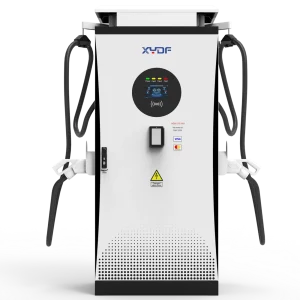
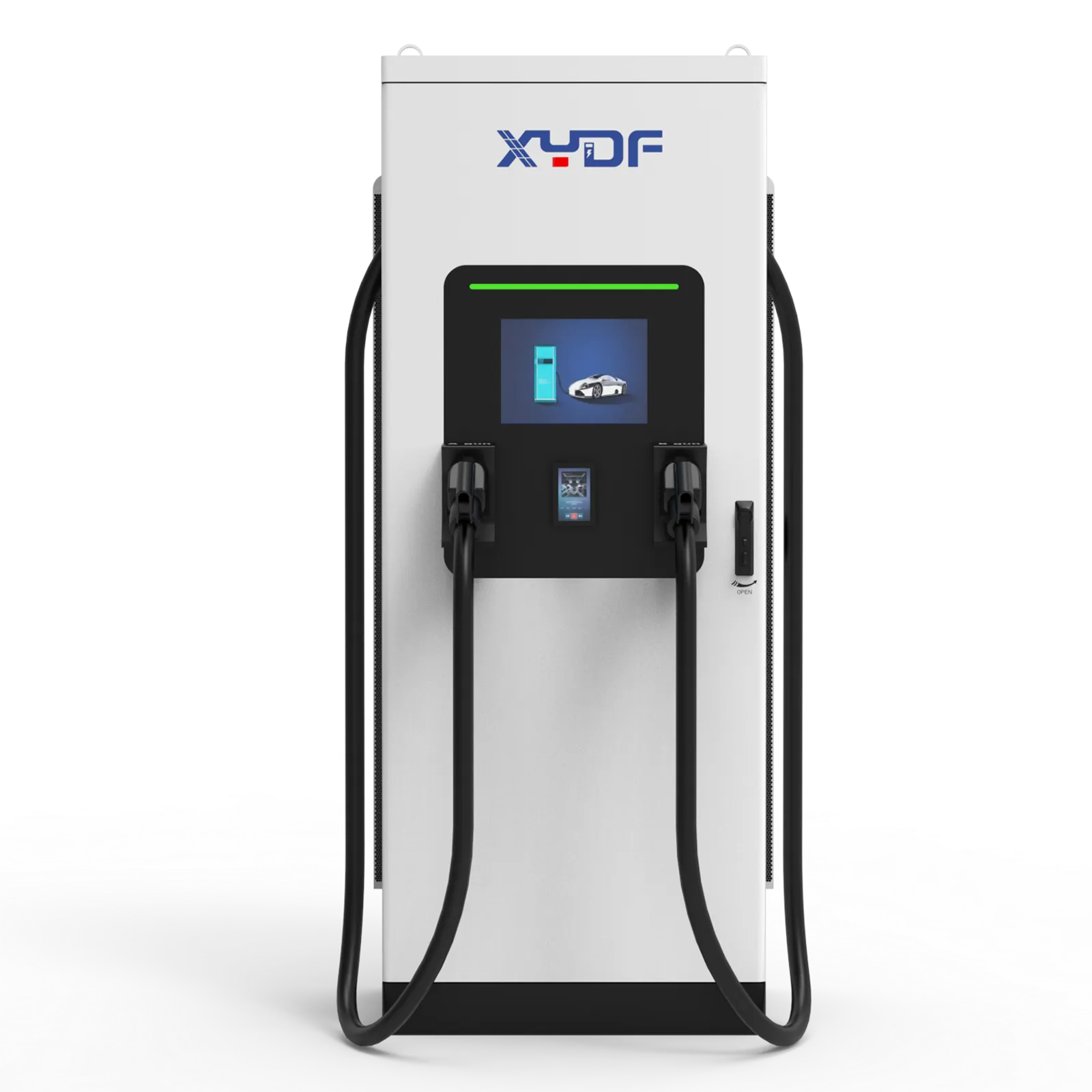
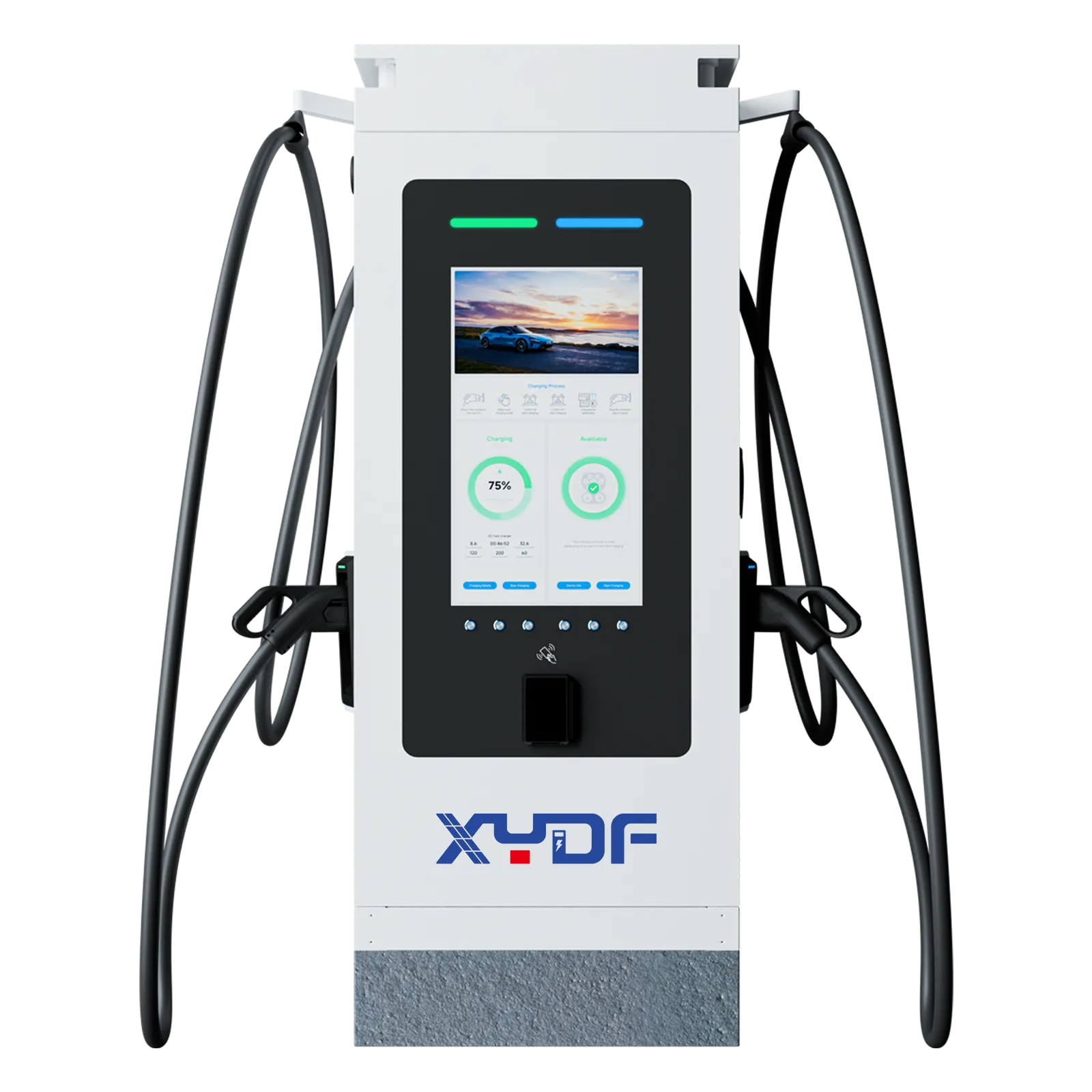
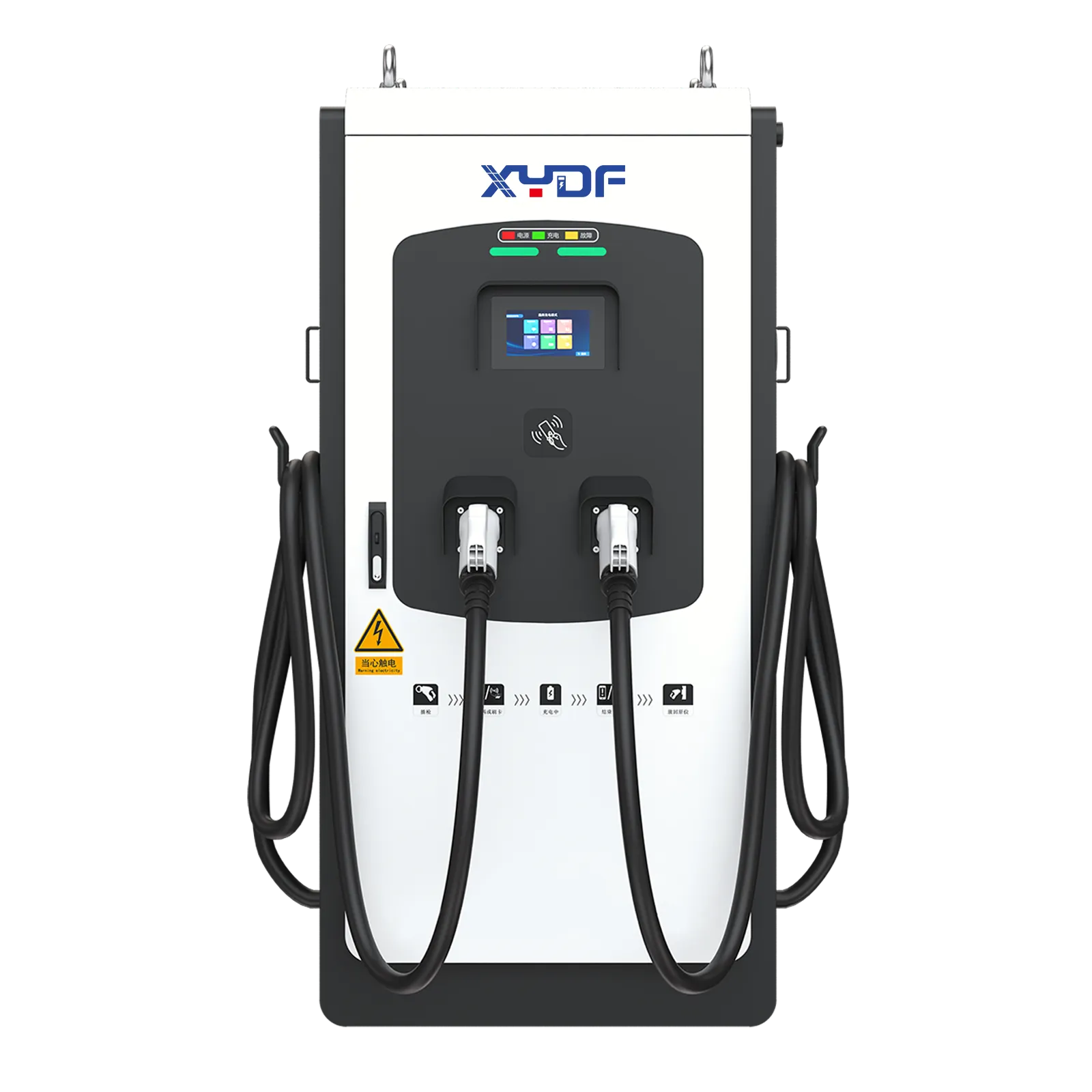
With the rapid adoption of electric vehicles worldwide, the demand for supporting charging infrastructure continues to rise, especially for corporate and workplace charging stations. Installing EV chargers on-site serves as a practical employee benefit and demonstrates a company’s commitment to environmental protection and sustainable operations. This guide covers everything business owners need to know about workplace EV charging, including its core benefits, step-by-step implementation process, and answers to common technical and operational questions.
On-site EV charging is a practical employee perk and a forward-thinking corporate investment. The key advantages for businesses are listed below:
Modern job seekers and employees pay increasing attention to corporate welfare and eco-friendly operational concepts. Equipping workplace EV chargers helps companies improve their benefit system, and enhance employer attractiveness.
Providing on-site charging access helps lower the overall carbon footprint of a company. It supports green corporate initiatives, facilitates carbon neutrality progress, and aligns with corporate social responsibility and ESG development requirements.
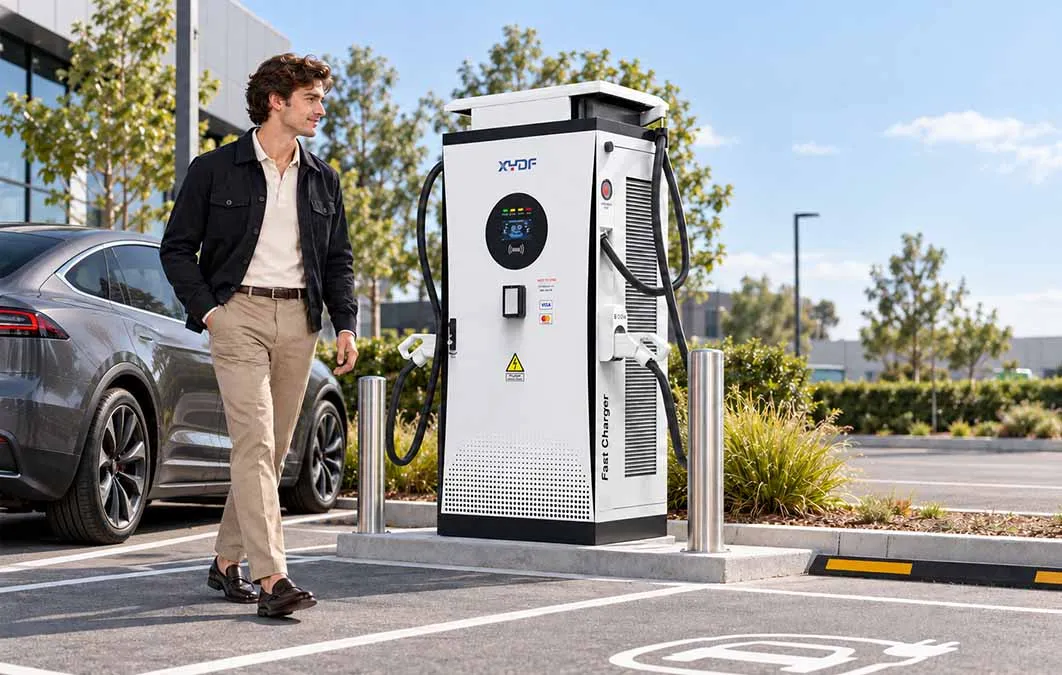
EV Charging at Workplace
Many businesses assume workplace charging projects are complicated to deploy. However, with reasonable planning, the entire installation and operation process can be systematic and efficient. Below is a standardized deployment procedure.
Before project initiation, companies should survey internal demand. Collect data on current EV-owning employees and record future EV purchase plans among staff. This data helps determine the reasonable number of chargers, suitable charger types, and matching power specifications, avoiding equipment shortages or resource waste.
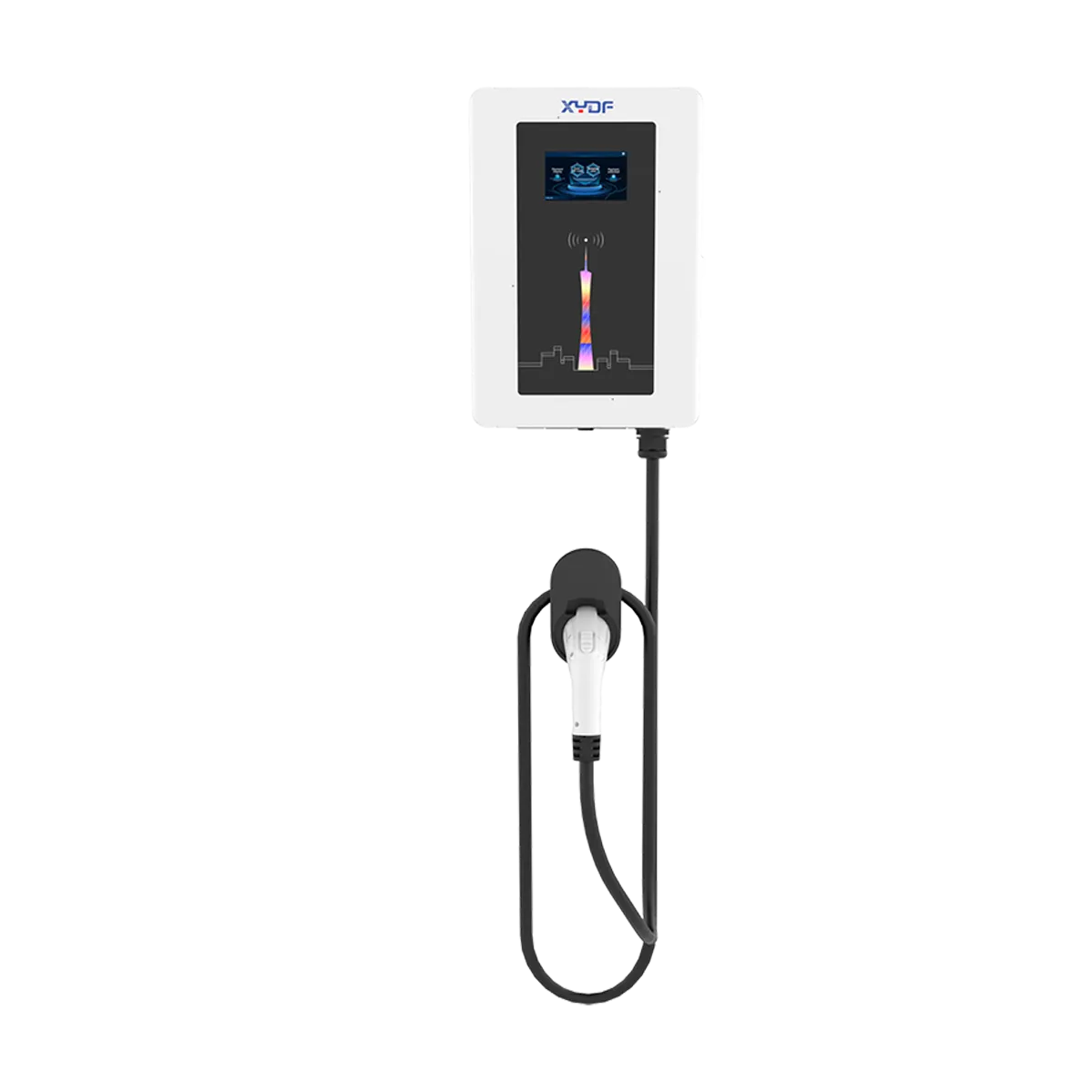
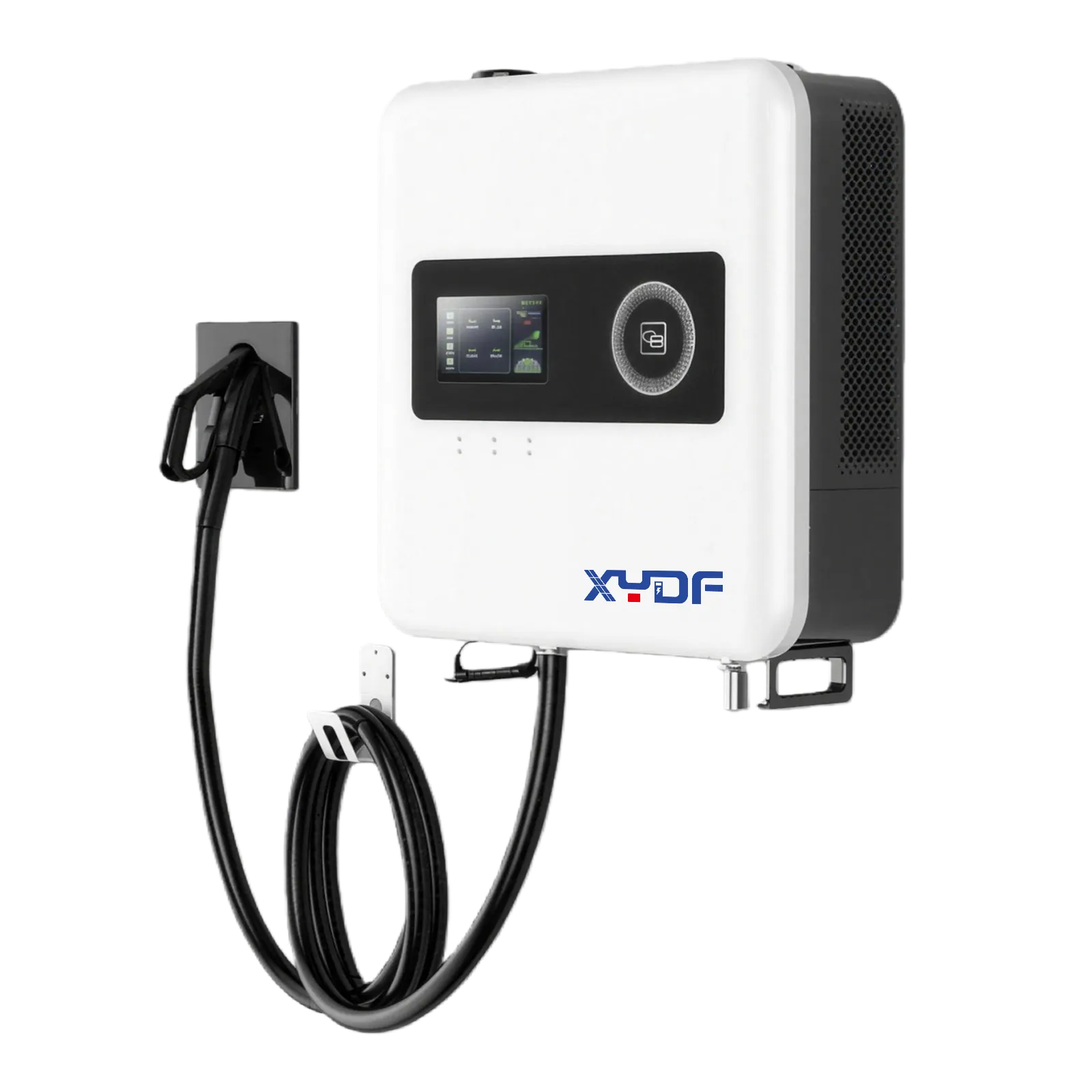
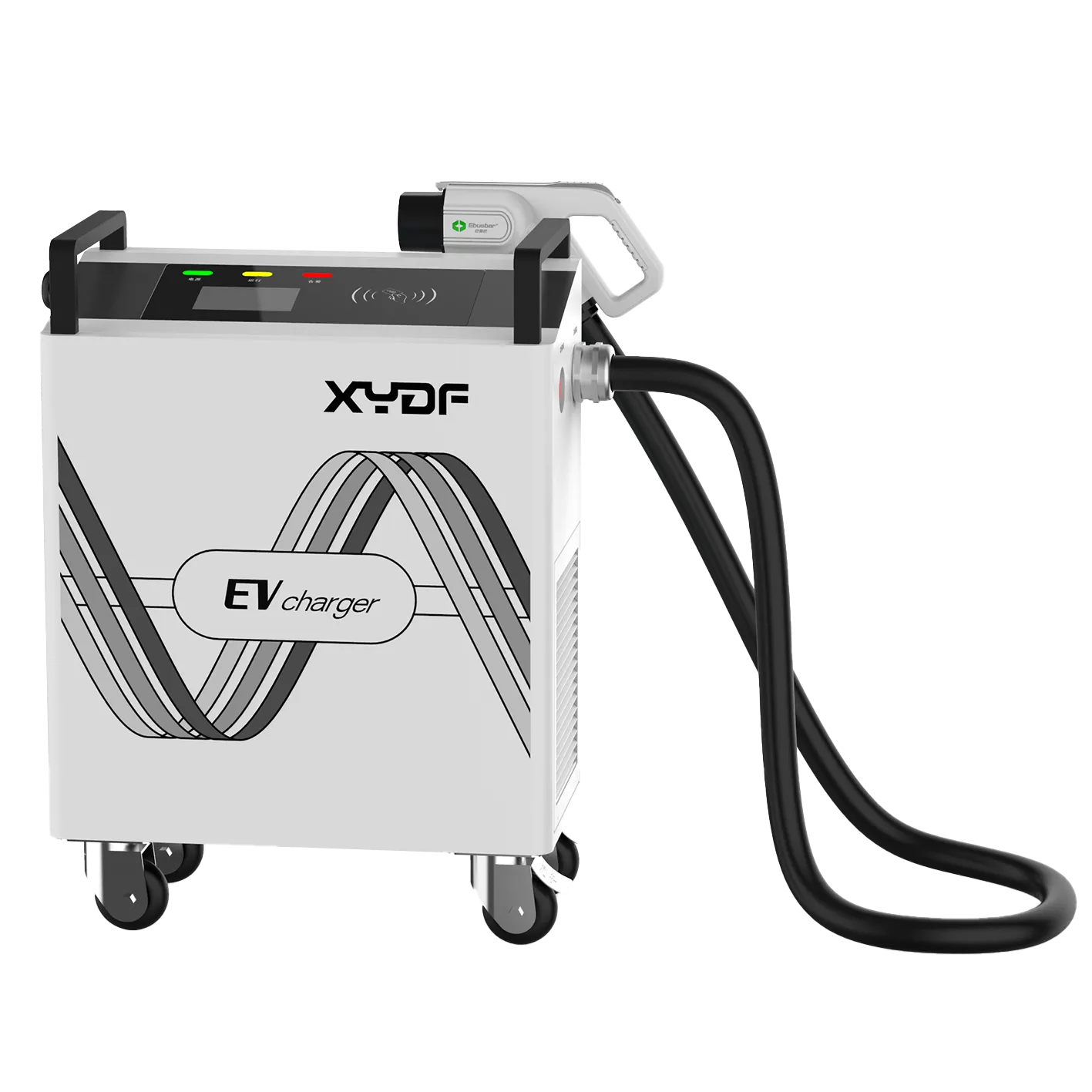
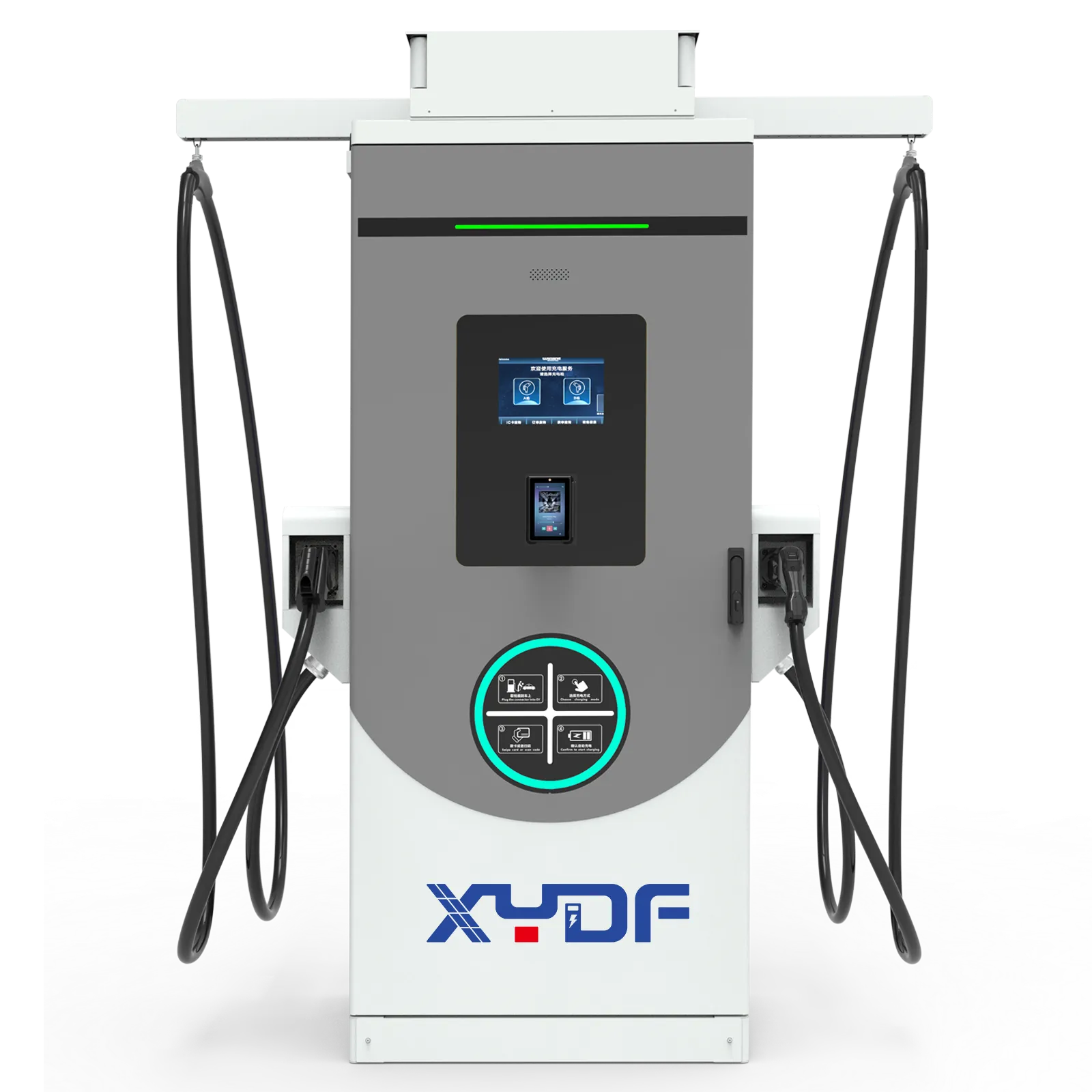
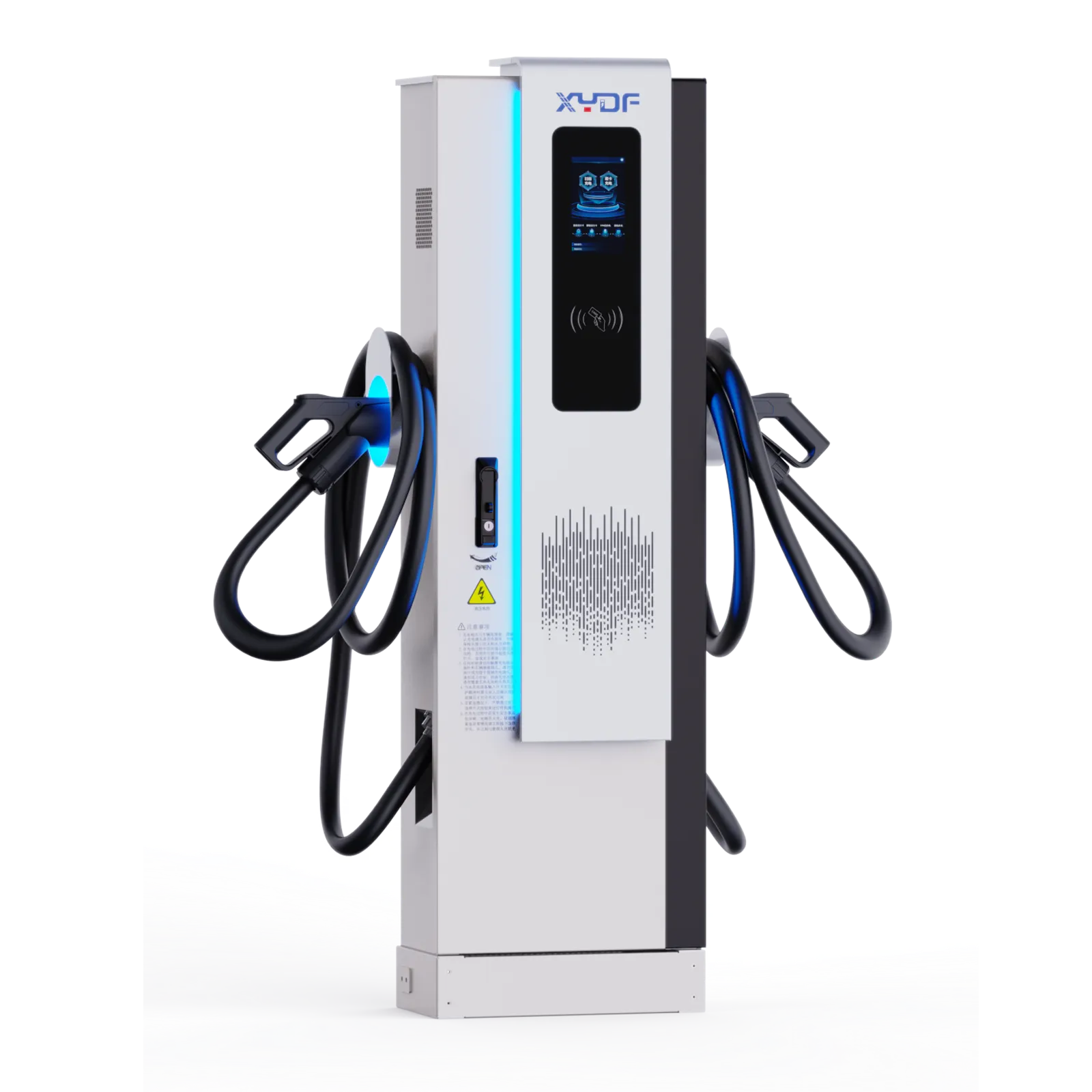
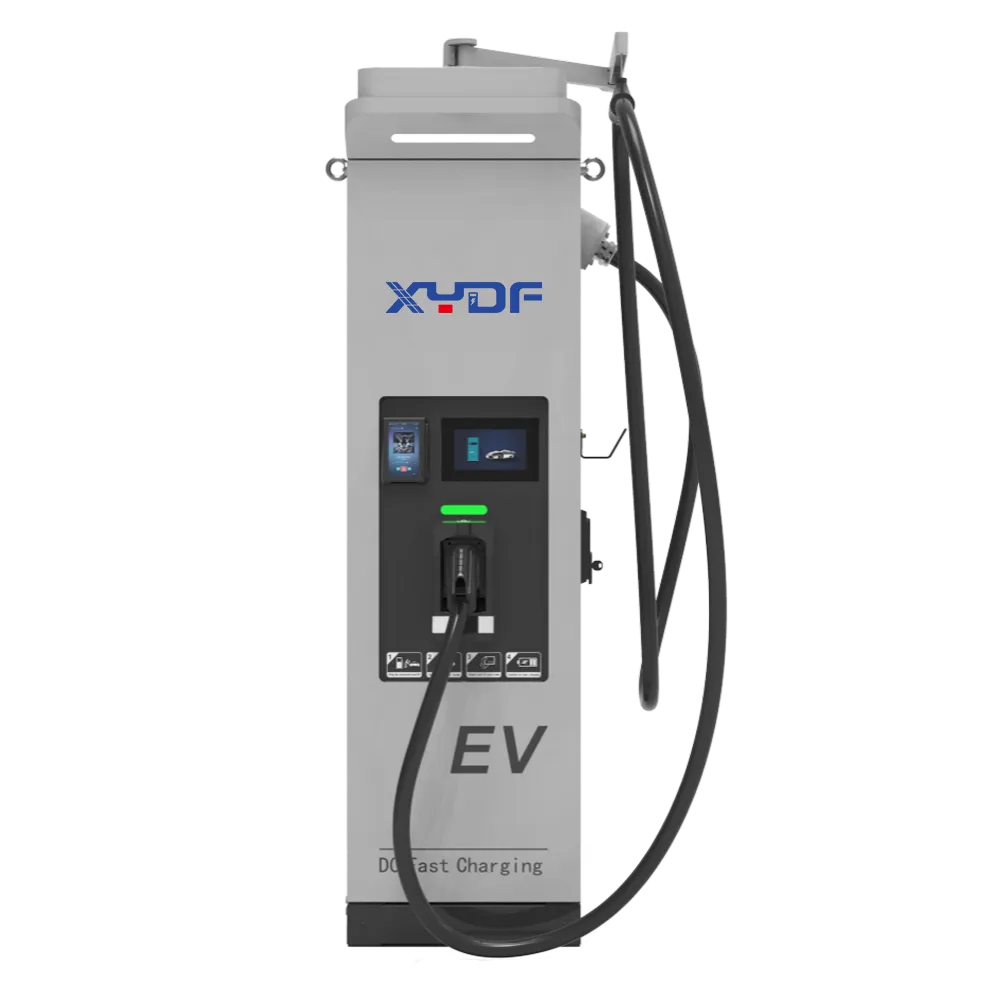
EV chargers are mainly divided into AC charger and DC charger. AC chargers (240V) are cost-effective, easy to be installed, and suitable for daily low-speed workplace charging, making them the most common choice for corporate campuses. DC fast chargers (400V) can fully recharge most EVs within 0.5 to 2 hours, delivering much faster charging speed, though they require higher budgets and more complex installation construction.
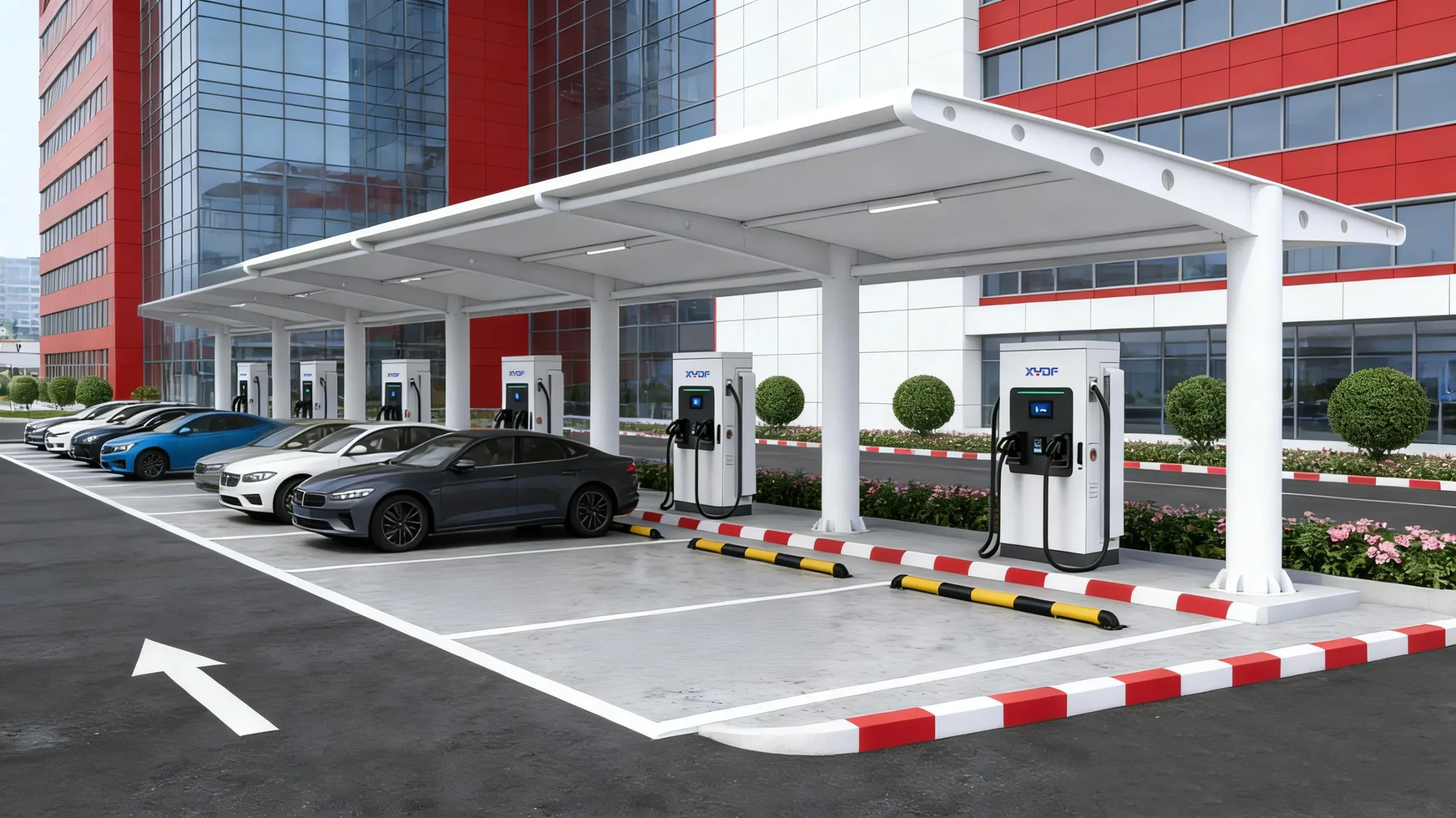
Enterprises can select customized charger combinations based on site conditions, grid load capacity, and actual employee charging needs. With years of experience in EV charging solution deployment, XYDF has delivered reliable charging projects for over 1000 of government and corporate clients. The parking lot charging project for the Nanjing Traffic Police Detachment serves as a mature and practical reference case for standardizing workplace charging station construction.
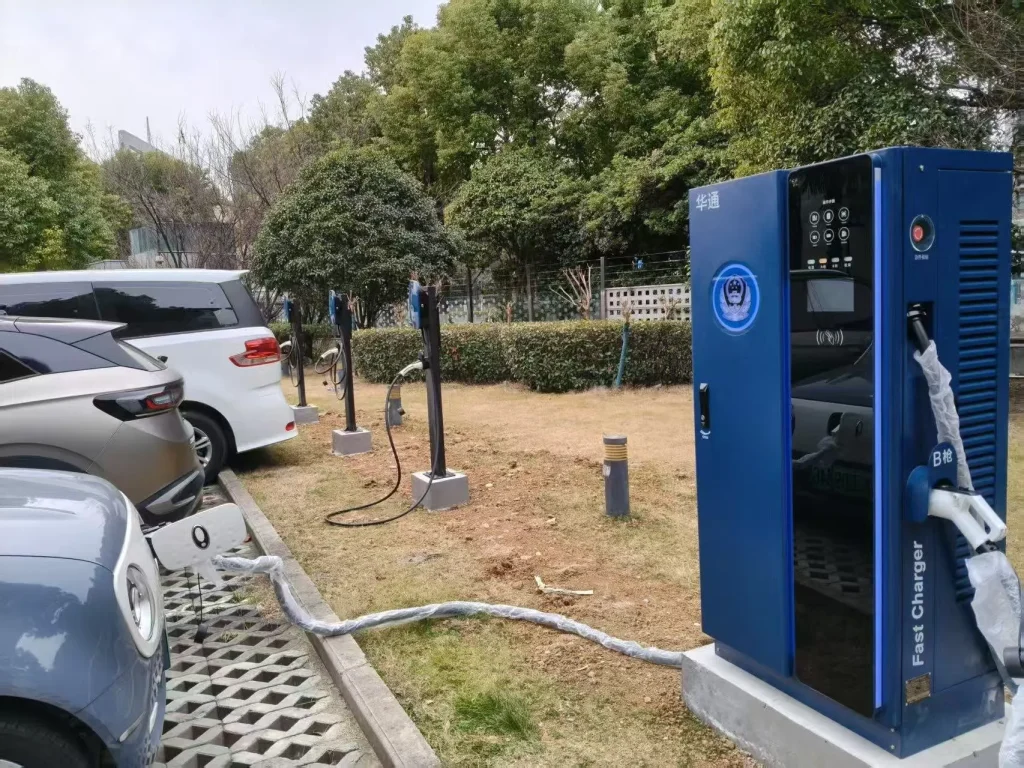
Nanjing Traffic Police Detachment Charging Station
Cooperate with certified professional electrical contractors to inspect the workplace’s existing power system and circuit infrastructure. Evaluate whether current electrical facilities support new charging equipment. The overall budget should cover equipment procurement, on-site construction, official electrical permits, and necessary grid upgrades to avoid hidden costs.
Companies can flexibly formulate operational rules for on-site chargers, including free charging or paid charging modes for employees. Businesses may also define access policies to control whether customers or external visitors can use the workplace charging facilities.
After installation and commissioning, promote the new charging service to all employees through internal emails, office notifications, and on-site announcements. Workplace green charging facilities also help shape a responsible corporate image and showcase the company’s sustainable development efforts to the public.
The total investment mainly includes 3 parts:
Additionally, enterprises can check local government subsidies, tax credits, and incentive programs for EV charging infrastructure to offset initial construction costs and reduce project investment pressure.
A: The standard project cycle ranges from 3 to 6 months, covering solution planning, official permit application, on-site electrical construction, and equipment debugging. The specific timeline depends on the complexity of on-site grid renovation.
A: The quantity of chargers depends on the proportion of EV-using employees in the company. The industry-recommended standard is one single gun charger for every five EV-driving employees. It is advisable to reserve spare capacity to accommodate the growing popularity of electric vehicles in the future.
Installing EV charging stations at the workplace is a practical and sustainable corporate investment. As a valuable employee benefit, on-site charging improves employee satisfaction, supports corporate ESG and carbon reduction targets, and helps enterprises adapt to the growing trend of electric vehicle popularization. Companies can design reasonable charging deployment plans based on their actual site conditions, staffing scale, and budget, and make full use of policy incentives to build cost-effective, easy-to-maintain, and fully functional workplace EV charging systems.
 Xinya Dongfang Electricity Technology Co., Ltd.