Fleet Depot Charging Schedules: Planning for Shift Changes
أغسطس 12,2026
مدونة
Fleet depot charging schedules should start with when vehicles return and when they must leave again. A workable plan connects those windows to energy need, charger access, and the depot’s available capacity. It should not assume that every vehicle can charge at once or that a charger automatically manages the fleet’s timetable.
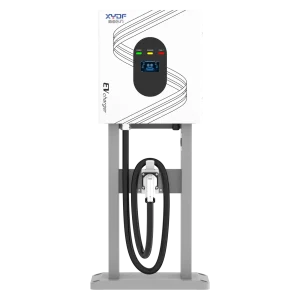
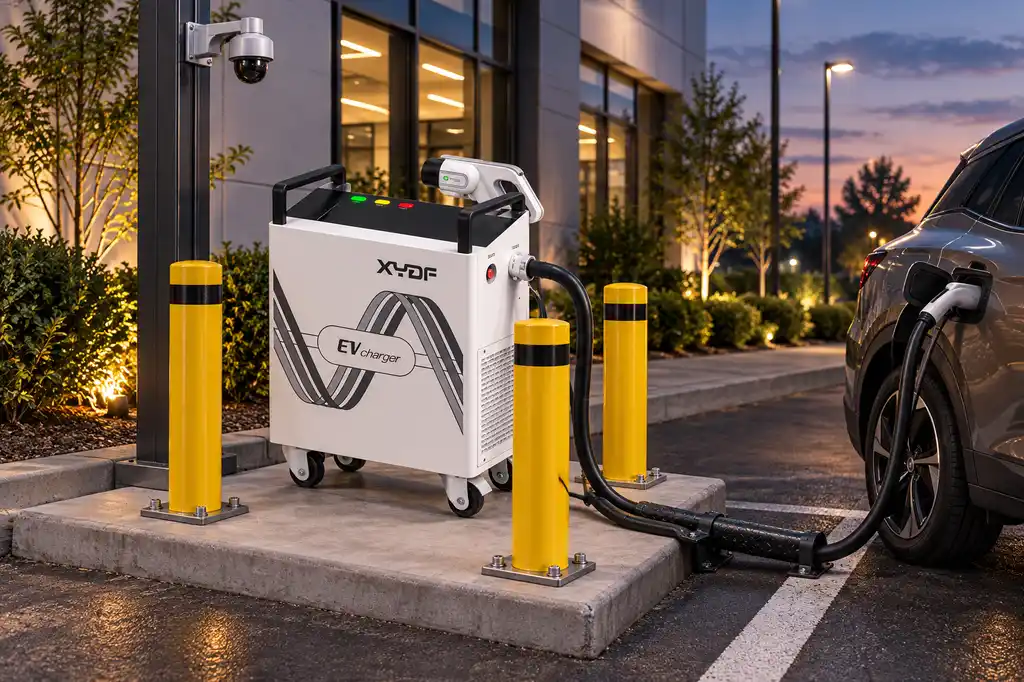
Equipment context only; the charging sequence and site suitability require project-specific review.
Part 1. Why do shift changes make depot charging different?
A depot works around vehicle duty cycles, not around an abstract average charging session. A vehicle that returns at the end of one shift and leaves before the next has a usable window; a vehicle that stays available for dispatch has a constraint. The IEA’s market outlook و IAEI charging-infrastructure planning article both place vehicle operations alongside charging infrastructure planning.
The practical question is not simply how many connectors are installed. It is whether the planned energy can be delivered before each vehicle’s ready-to-go time, while the depot still supports its other loads and operating routines.
Treat the required departure state of charge as a vehicle-specific operating constraint, not as one percentage for the whole fleet. Dispatch should derive it from the assigned route’s expected energy plus an approved operating reserve. Because weather, terrain, payload, traffic, cabin conditioning, and auxiliary equipment can change consumption, compare the plan with recent route telemetry and define when uncertainty requires a higher target or a different vehicle. The U.S. Department of Energy’s fleet EV guidance likewise recommends assessing route, mileage, dwell time, weather, terrain, heating/cooling, and auxiliary loads.
Part 2. Which vehicle times should the charging plan record?
Build the first version from real records rather than a nominal shift chart. For each vehicle group, log typical return time, next departure time, distance or energy use, parking location, and the exceptions that regularly break the pattern.
Operating input
Why it changes the plan
Useful owner
Return time
Defines when a vehicle can first connect
Dispatch or depot supervisor
Required departure time
Sets the non-negotiable readiness point
Operations planner
Energy used per duty cycle
Indicates the amount that must be restored
Fleet or vehicle team
Parking and connector access
Shows whether the planned bay is actually available
Depot manager
Late-return pattern
Identifies where a fixed sequence will fail
Shift lead
An average can hide the vehicles that create the real bottleneck. Separate predictable overnight vehicles from short-turnaround or reserve vehicles before deciding how many charging opportunities must overlap.
The working dataset should connect vehicle ID, assigned route, scheduled and actual return, scheduled departure, arrival SoC, target SoC, bay and connector, plug-in time, energy delivered, charging power, session status, fault code, and unplug time. Track exceptions as operational KPIs: departures below target SoC, minutes late, undelivered kWh, delayed session starts, charger-unavailable minutes, manual priority overrides, and repeated shortfalls by route. These measures reveal whether the cause is an unrealistic route estimate, a missed connection, a failed charger, or insufficient site capacity.
Part 3. How should the depot match charging windows to vehicle need?
Match each vehicle’s charging opportunity to the time available and the energy it needs for the next duty cycle. A long-dwell vehicle may have flexibility; a late-arriving vehicle with an early dispatch can become the critical case. That distinction is more useful than labeling every vehicle as equally urgent.
Start with a simple sequence: identify the next required departures, estimate each vehicle’s required replenishment from verified operating data, and allocate access accordingly. Recheck the sequence when routes, weather exposure, payload, or vehicle utilization changes the expected energy use.
Calculate a minimum feasible charging window before assigning a bay. Illustrative assumptions: a vehicle with 240 kWh of usable battery energy arrives at 30% SoC and needs 80% at departure, so it must accept 120 kWh. If its expected average accepted power over that SoC range is 90 kW, charging takes about 1 hour 20 minutes; adding an assumed 15 minutes for parking, connection, checks, and movement produces a minimum window of about 1 hour 35 minutes. This is a planning example, not a charger guarantee: use vehicle-specific acceptance limits, temperature effects, charging-curve behavior, and measured process time.
A useful EV charging schedule ranks vehicles by remaining slack: time to departure minus estimated charging time and handling buffer. Vehicles with the least slack move first, while the energy deficit determines how much power and time they need. First-come-only sequencing can leave an early-arriving, long-dwell vehicle occupying capacity while a later vehicle approaches a hard departure deadline.
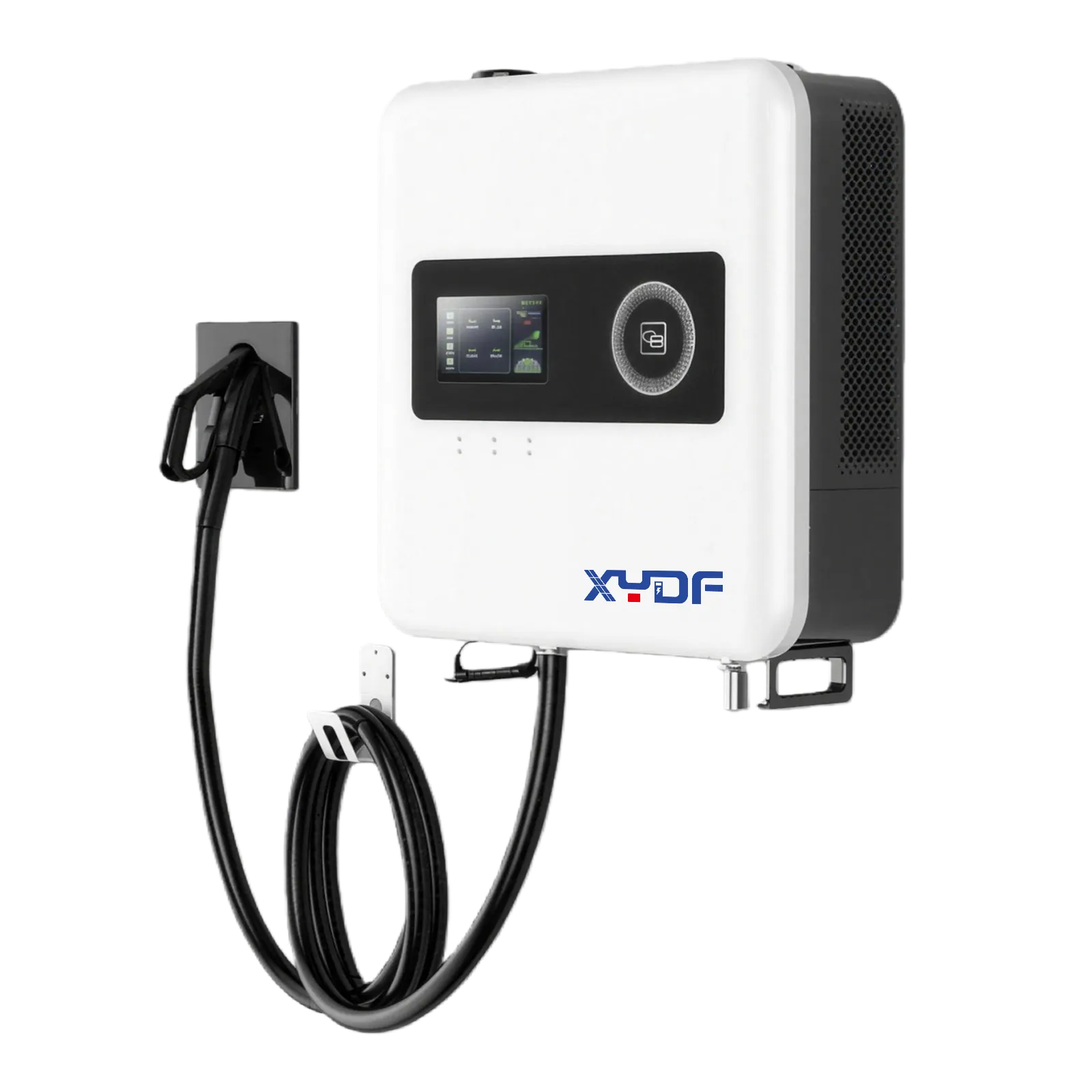
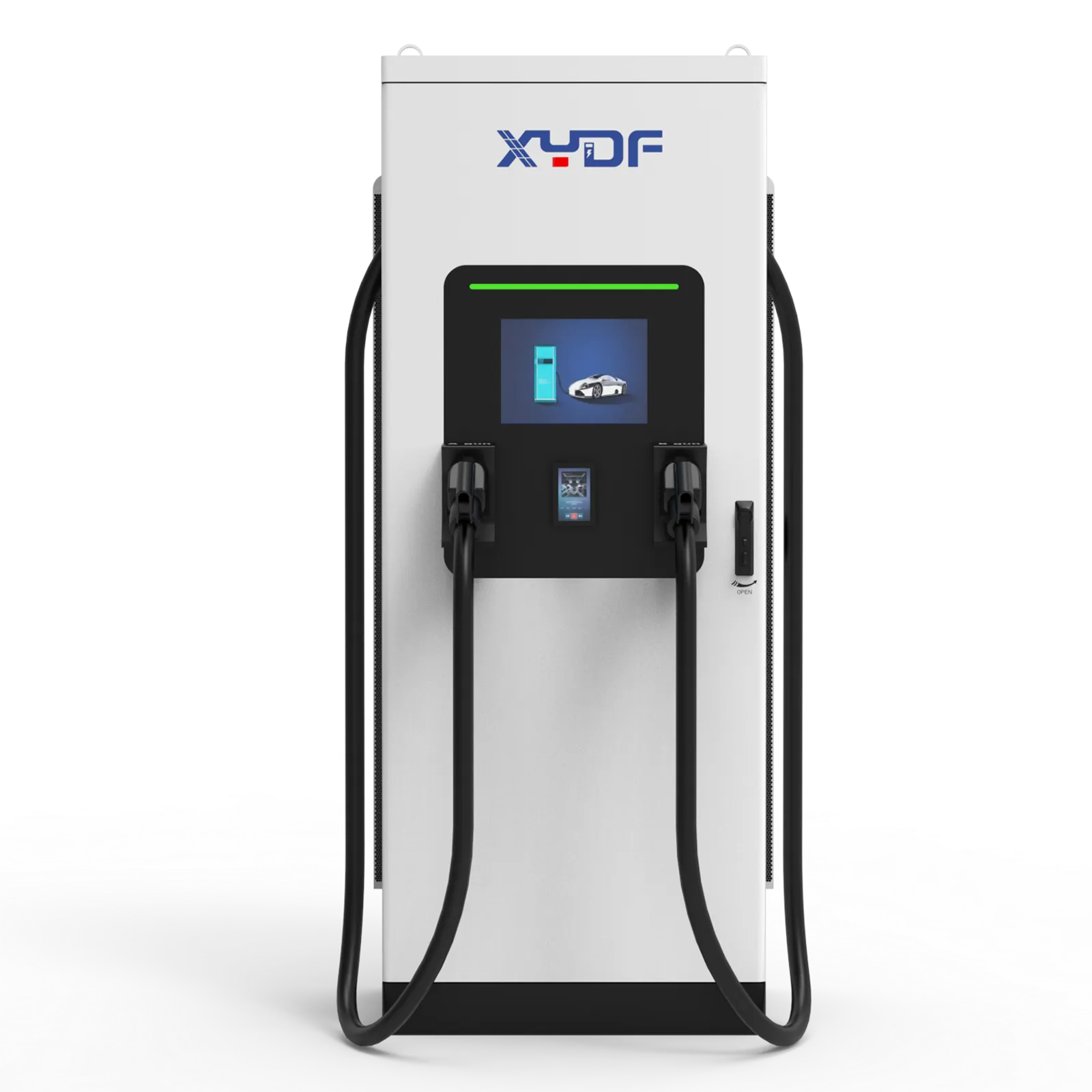
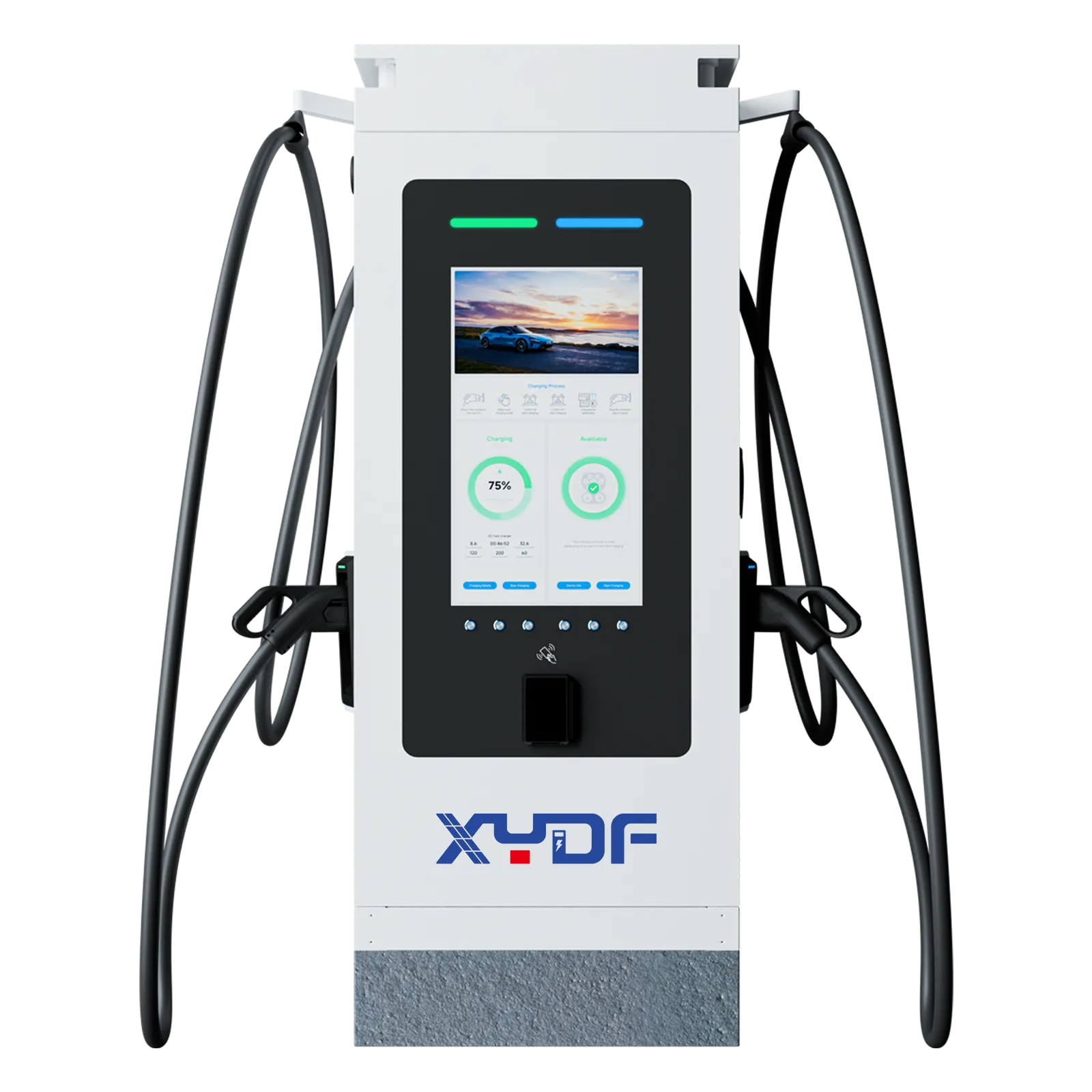
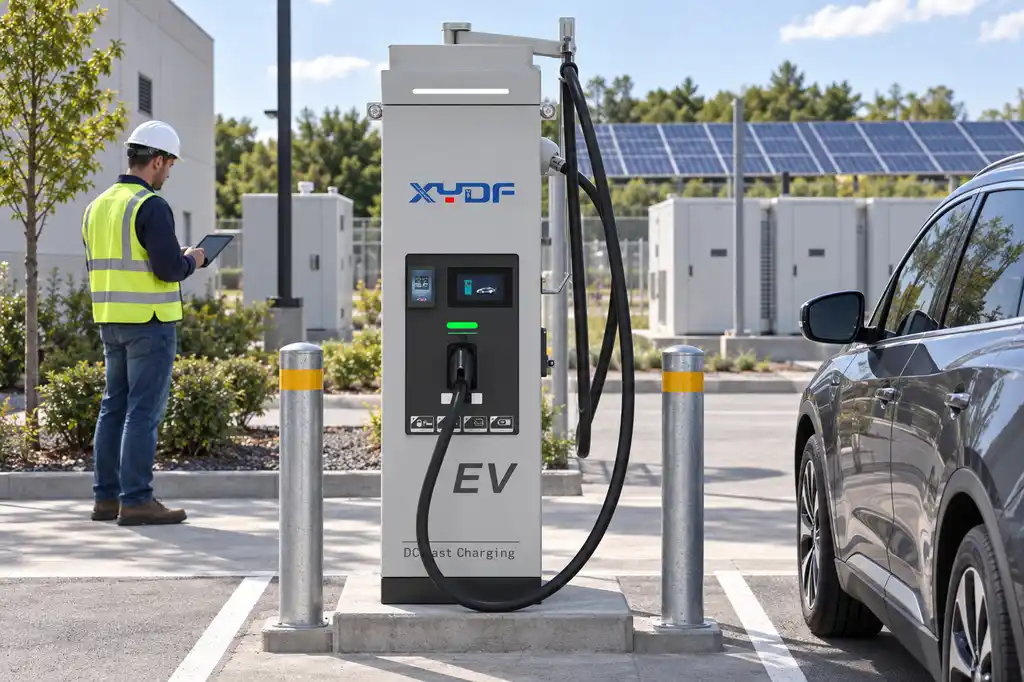
Product context only; selection must follow confirmed vehicle, connector, site, and operating inputs.
ال fleet charging project factors guide is useful for the broader project view. This article narrows the discussion to the daily time window that links a charging plan to actual departures.
Part 4. When does simultaneous charging become a capacity question?
Simultaneous access is not the same as simultaneous full-power demand. The difference matters whenever several vehicles return together, another depot load is active, or the team changes a sequence to recover from a delay.
Network Rail’s EV infrastructure guidance emphasizes assessing the incoming supply and additional demand early. Apply that principle at depot level: compare the planned overlap with verified site capacity and other coincident loads, then have qualified electrical professionals determine the final design and controls.
Set a sanctioned site charging ceiling that reflects the approved connection, distribution limits, protected non-EV loads, and the site’s control design. إدارة الحمولة الديناميكية can allocate that permitted charging power among connected vehicles as priorities change, but it cannot create capacity or recover energy after the feasible window has passed. Specify meter inputs, update intervals, communications-loss behavior, fallback limits, alarms, and manual-override authority so the schedule remains within the approved envelope during normal and degraded operation.
Important: Do not treat a fleet timetable as proof of electrical capacity. The connection, protection, distribution design, applicable local requirements, and any control behavior must be confirmed for the specific depot. Network Rail guidance provides the infrastructure-planning context.
For the underlying site study, see the commercial charging load-profiling guide. It addresses the electrical-load questions that a schedule alone cannot answer.
Part 5. How should a fleet handle late returns and priority vehicles?
Every schedule needs an exception rule because late arrivals, maintenance holds, route changes, and unexpected dispatches happen. Define which vehicles are mission critical, who can change the order, and what information triggers an escalation.
Avoid a rule that depends on drivers improvising electrical decisions. A shift lead can identify an operational priority, while the responsible electrical and site teams retain control of the safe operating arrangement. Log the exception so the next planning review can distinguish a one-off event from a repeatable demand pattern.
For a late return, recalculate energy deficit, feasible window, and slack as soon as the vehicle connects. For a charger outage, isolate the unavailable unit under the site’s procedure, move the affected vehicle to a confirmed compatible bay, and pause or reduce lower-urgency sessions only within the approved control rules. If the target is no longer feasible, dispatch—not the charging system—must decide whether to swap vehicles, shorten or reassign the route, or invoke an approved fallback. Record which recovery action was used and whether the vehicle still met its departure target.
Part 6. Who owns the daily charging plan?
The plan works best when ownership is visible. Dispatch supplies departure priorities, fleet operations confirms vehicle readiness requirements, and the depot team confirms access and routine conditions. Electrical responsibility remains with the qualified people assigned to the site process.
Use a short handover record that notes vehicles still awaiting charge, vehicles with changed departure times, unavailable bays, and any condition requiring follow-up. The record is operational evidence, not a substitute for commissioning, inspection, or a technical design review.
Make the handover boundary explicit: dispatch owns departure times, route assignment, and operational priority; fleet operations owns vehicle availability and target-SoC policy; the depot shift owns correct parking and connection; and the energy or electrical team owns the sanctioned load ceiling and charger-availability status. The incoming shift should acknowledge unresolved exceptions with a timestamp and named owner. Software may execute the approved priorities, but it should not silently become the decision owner.
Part 7. What should a fleet include in a charging RFQ?
An RFQ should make the charging window visible to the supplier and project team. “Fleet charging” alone is too broad to establish equipment fit, installation scope, or an operating sequence.
يجب على المشتري توفير
Why the supplier needs it
Vehicle count and connector types
Checks physical compatibility and access planning
Return and departure windows
Reveals the usable charging period
Typical and exceptional energy needs
Shows which duty cycles require attention
Number of vehicles expected to connect together
Frames simultaneous-access assumptions
Existing and planned depot loads
Supports the capacity discussion
Site electrical information and local requirements
Lets the responsible project team define the design boundary
Environmental and parking conditions
Identifies installation and operating questions
Telemetry fields, retention period, and system interface
Confirms that operations can reconstruct sessions, exceptions, and departure readiness
Late-return and charger-outage recovery rules
Defines degraded-operation behavior before the depot is under deadline pressure
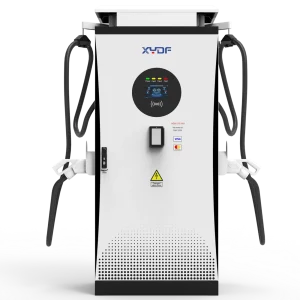
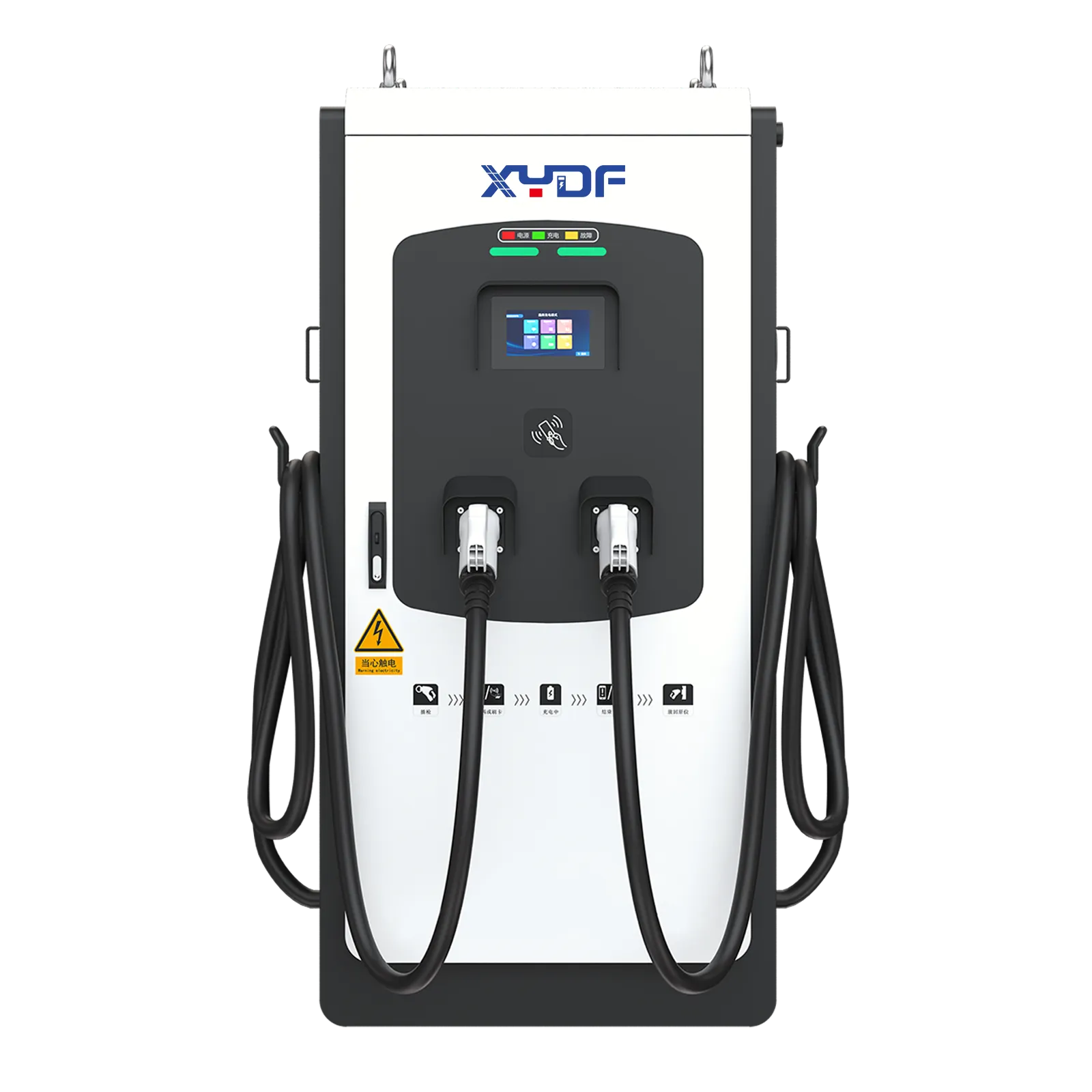
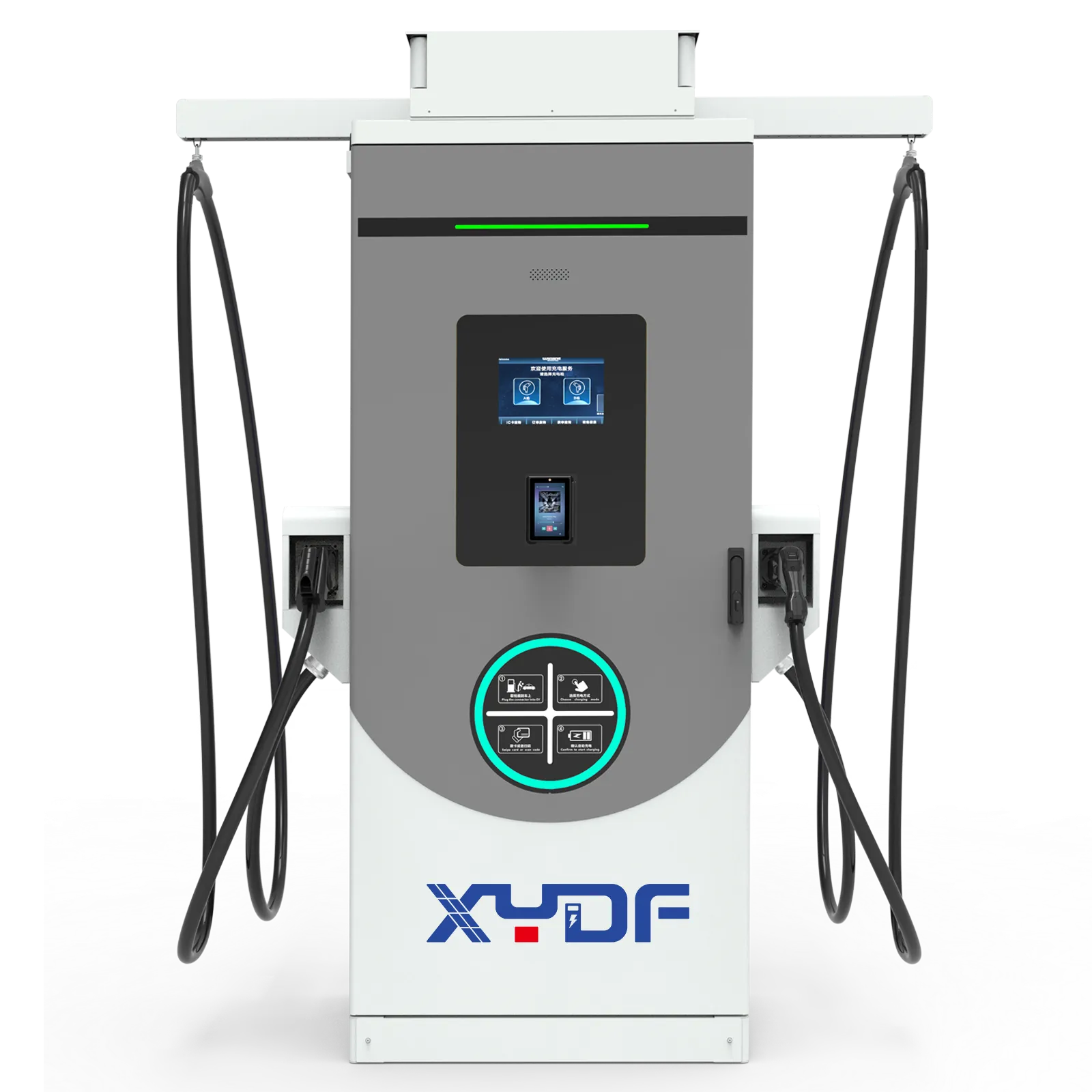
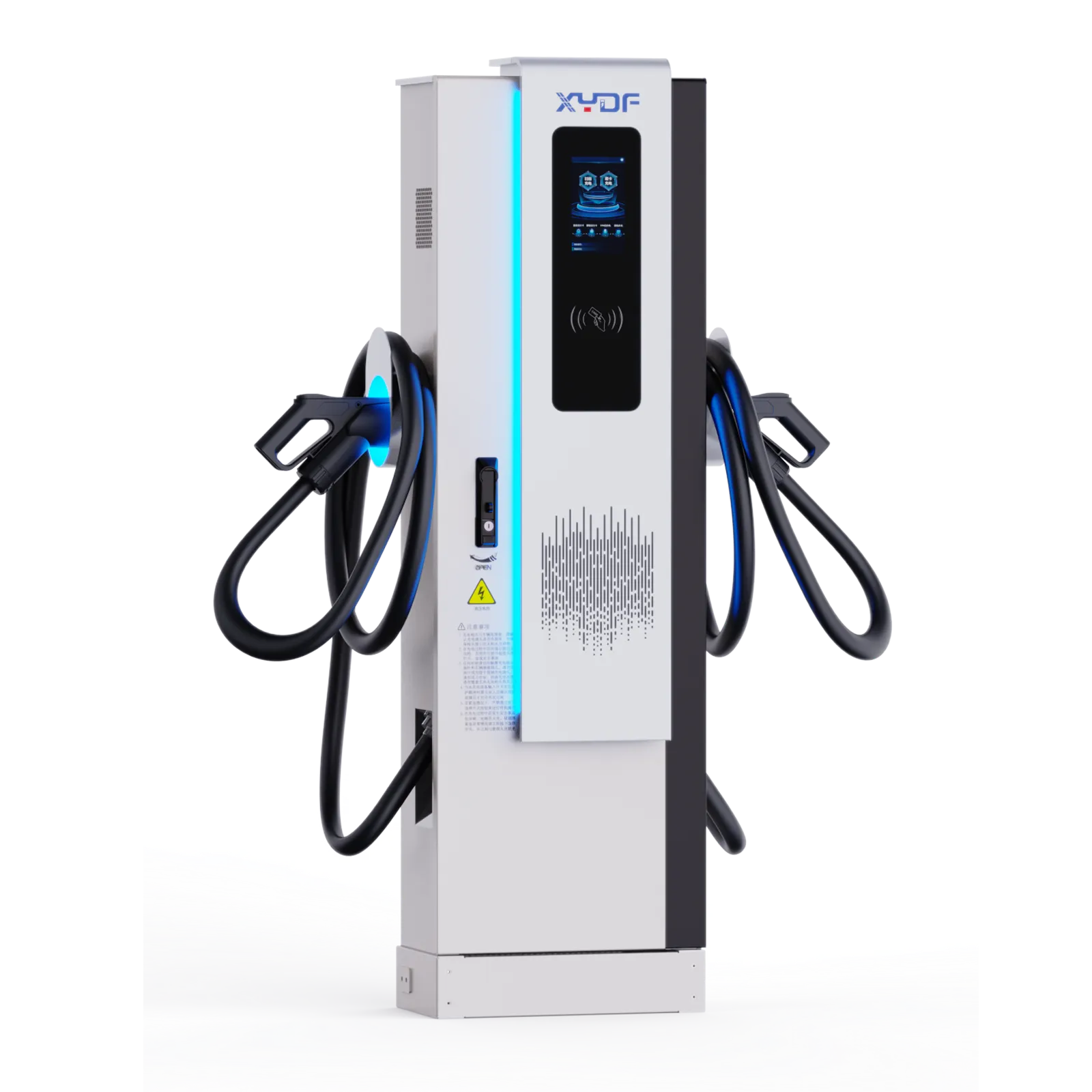
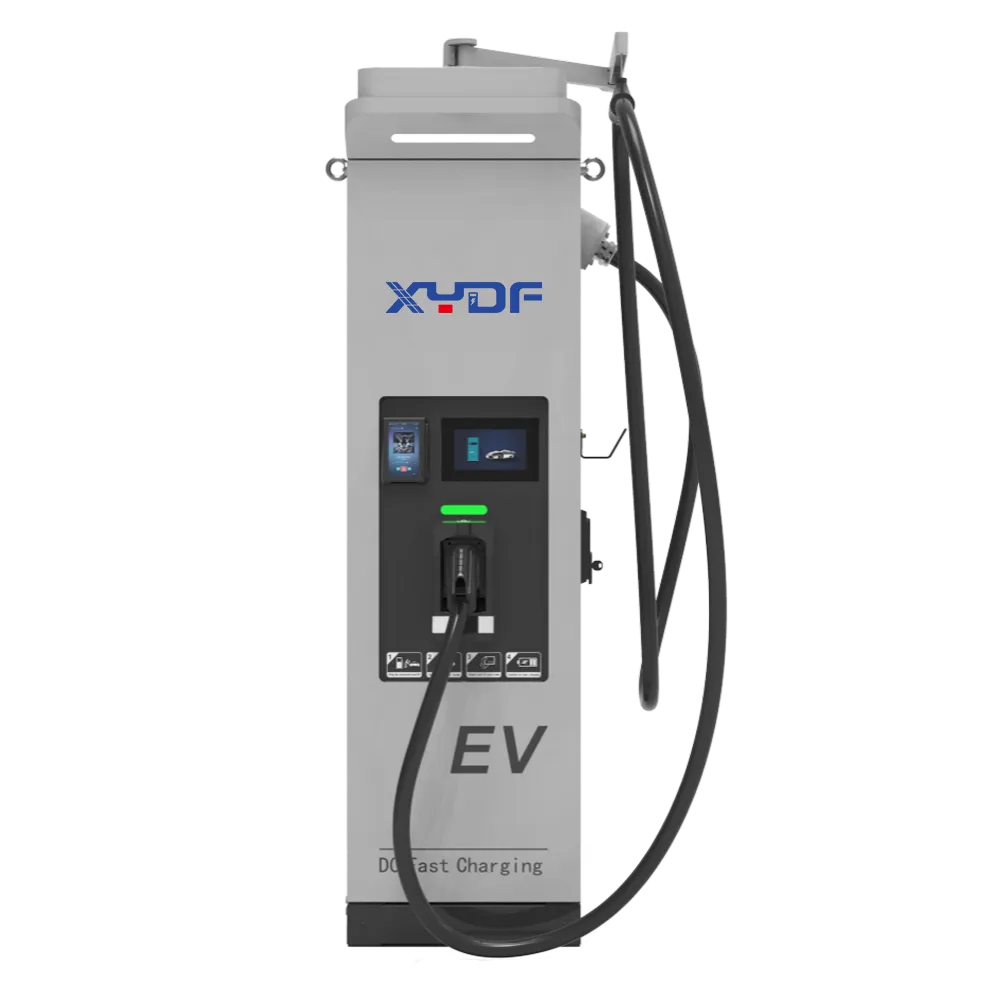
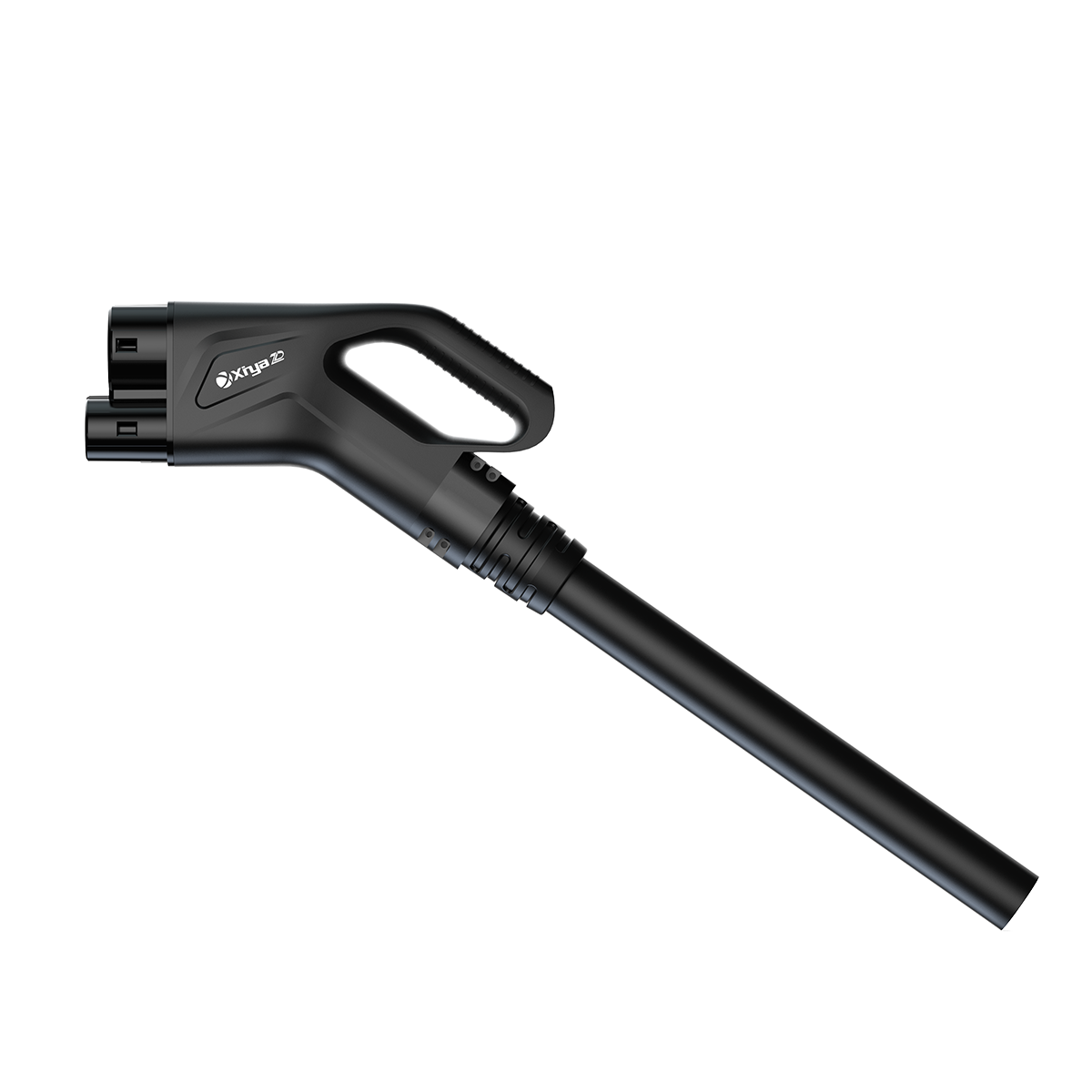
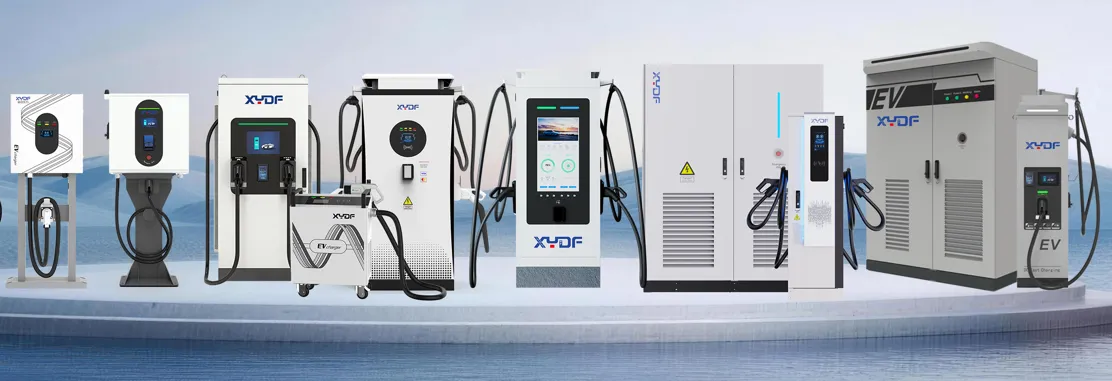
After those inputs are known, buyers can review the مجموعة شواحن DC السريعة with the project team. XYDF should be asked to respond to the documented requirement; this guide does not assert that a named model schedules vehicles or guarantees a departure outcome. Use the صفحة الاتصال to share the operating window, vehicle information, site conditions, and target project scope.
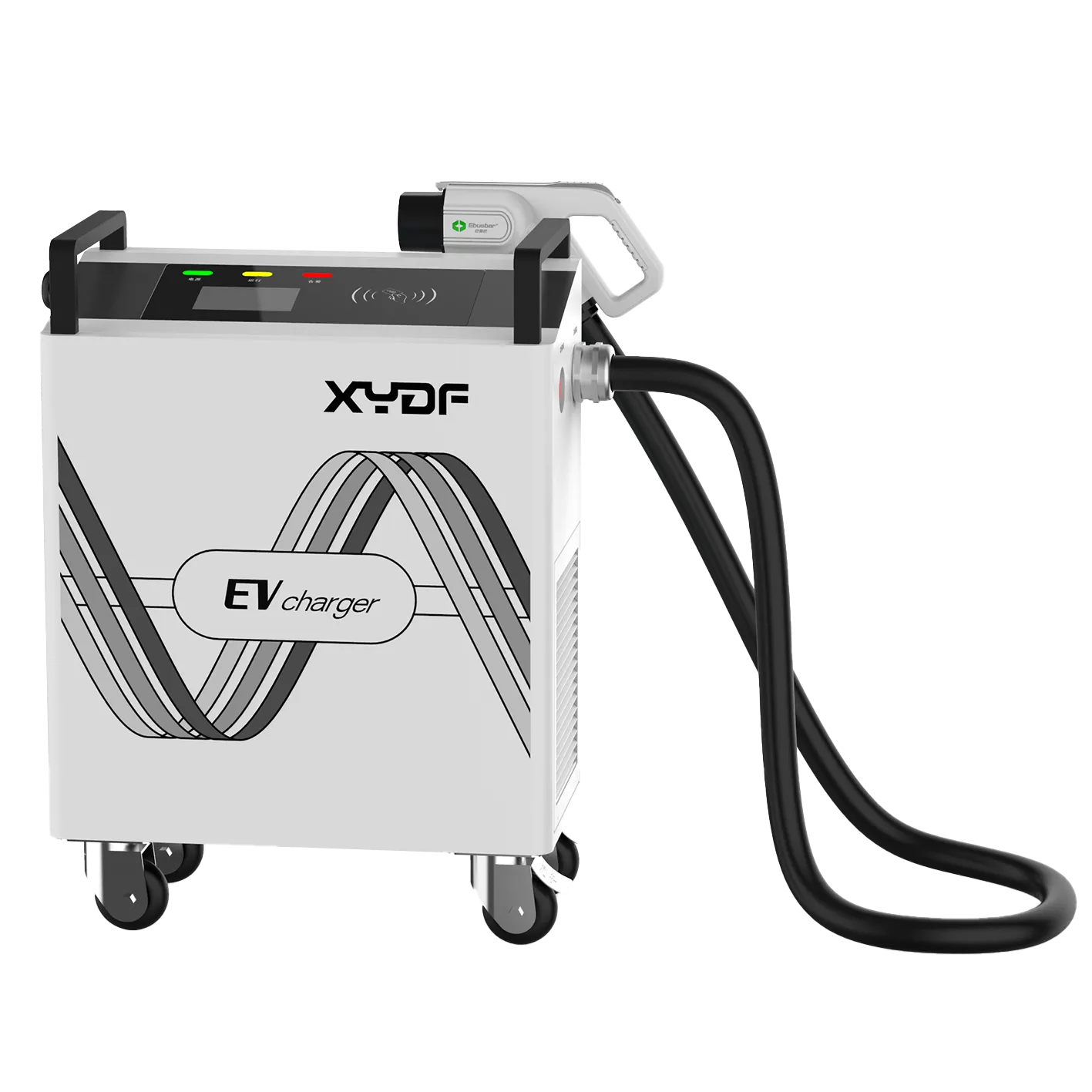
Equipment context only; final product and installation suitability depend on verified project requirements.
الأسئلة الشائعة
How should a fleet schedule charging around shifts?
Record actual return and departure times first, then sequence access around the next required departures and verified energy need. Revisit the sequence when duty cycles or operating exceptions change.
What data is needed before buying depot chargers?
Provide vehicle count, connector mix, return and departure windows, energy needs, expected simultaneous access, site loads, electrical information, and environmental conditions. These inputs define the questions a supplier and qualified project team must resolve.
Can every vehicle charge at the same time?
Not by assumption. The allowable overlap depends on verified site capacity, other coincident loads, equipment, distribution design, and any project-specific controls.
What happens when a vehicle returns late?
Use a documented exception rule that identifies priority vehicles, the person who may change the operational sequence, and when the issue must be escalated. Record repeat events so the planning data stays realistic.
How should a depot prioritize vehicles?
Prioritize by the next essential departure and the energy required for that duty cycle, not merely by arrival order. Operational priority does not change the need for a safe, site-approved electrical arrangement.
Is a bigger charger always the answer?
No. Charger selection must be considered with dwell time, vehicle acceptance, connector needs, site capacity, installation conditions, and the operating plan. A higher nameplate value alone does not resolve access or capacity constraints.
Who should own the daily charging plan?
Fleet operations, dispatch, and depot management should have clear operating responsibilities, while qualified electrical personnel remain responsible for the electrical process. The exact roles should be documented for the project.
نستخدم ملفات تعريف الارتباط (الكوكيز) لضمان عمل هذا الموقع، وبإذنك، لقياس كيفية استخدام الزوار لموقع شحن المركبات الكهربائية الخاص بنا. انظر إلى سياسة الخصوصية للتفاصيل.
 شركة شينيا دونغفانغ لتكنولوجيا الكهرباء المحدودة.