400V vs 800V Vehicles: How Should a Site Select DC Chargers?
Août 10,2026
Blog
Choosing between 400 V et 800 V capability is a vehicle-and-site matching exercise, not a race to print the larger voltage on a datasheet. The useful questions are which vehicles will arrive, what DC voltage and current range the charger can actually regulate, how power is shared between connectors, and how much turnaround time the site needs. This guide gives buyers a practical way to specify mixed-voltage service without promising a vehicle will receive its peak kW in every state of charge.
The short answer is to compare the vehicle battery voltage, the charger operating window, current limit, power-sharing logic, and dwell time together. An 800 V-capable charger can serve some lower-voltage vehicles, but the vehicle and charger negotiate the usable operating point and the vehicle may taper. Require a voltage/current matrix and representative acceptance tests instead of treating 400 V or 800 V as a universal speed label.
Is 400 V or 800 V the right starting question?
The useful question is whether the charger can deliver the voltage and current requested by the vehicles that will actually use the site. “400V” and “800V” are convenient descriptions of vehicle architectures, but a DC charging session operates inside a negotiated voltage, current, and power envelope.
That distinction prevents a common procurement error: treating a 150 kW, 240 kW, or 350 kW nameplate as proof of high-voltage compatibility. Power is the product of voltage and current. A charger can have a high power rating while its stated output-voltage window, available current, cable rating, or power allocation does not match the vehicle and session pattern a site expects.
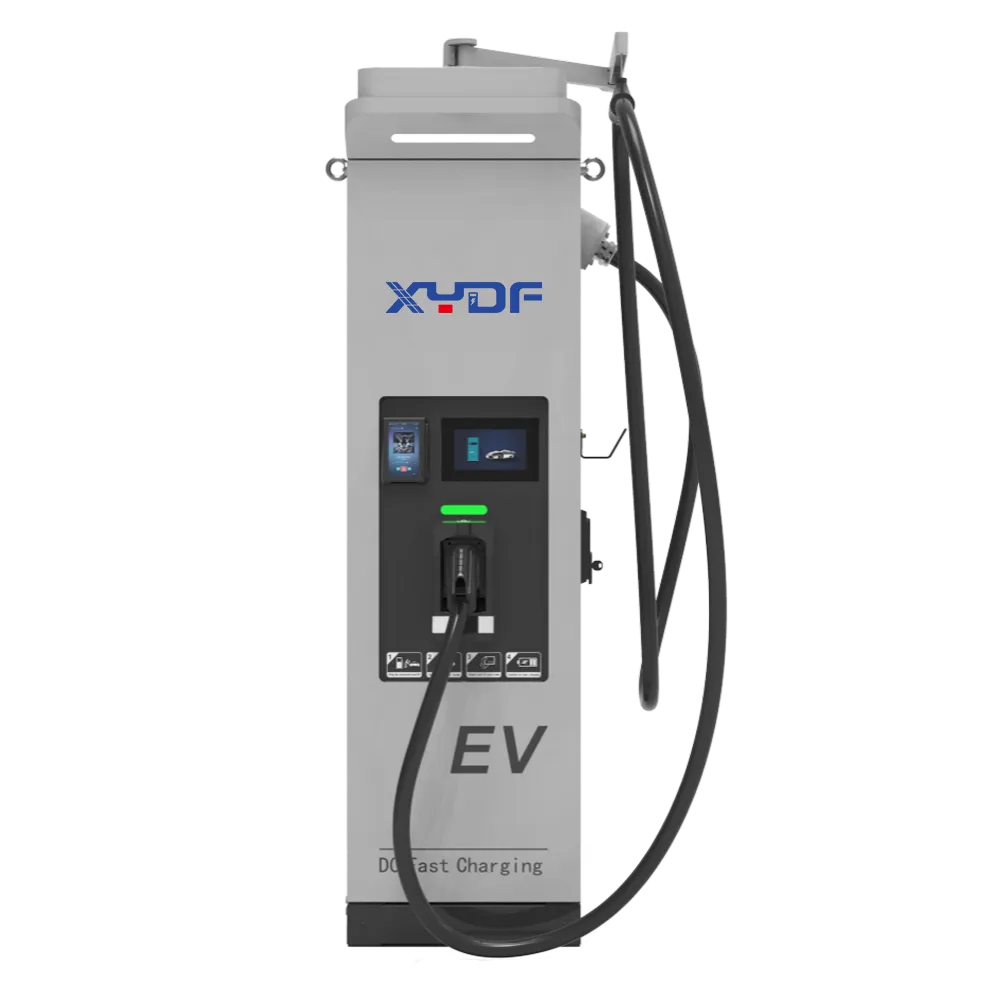
CharIN’s DC CCS power-class guidance makes output voltage a separate specification. Its high-power classes include a required range reaching 920 V; buyers should read that as a specification to verify, not as a claim about every unit advertised as high power.
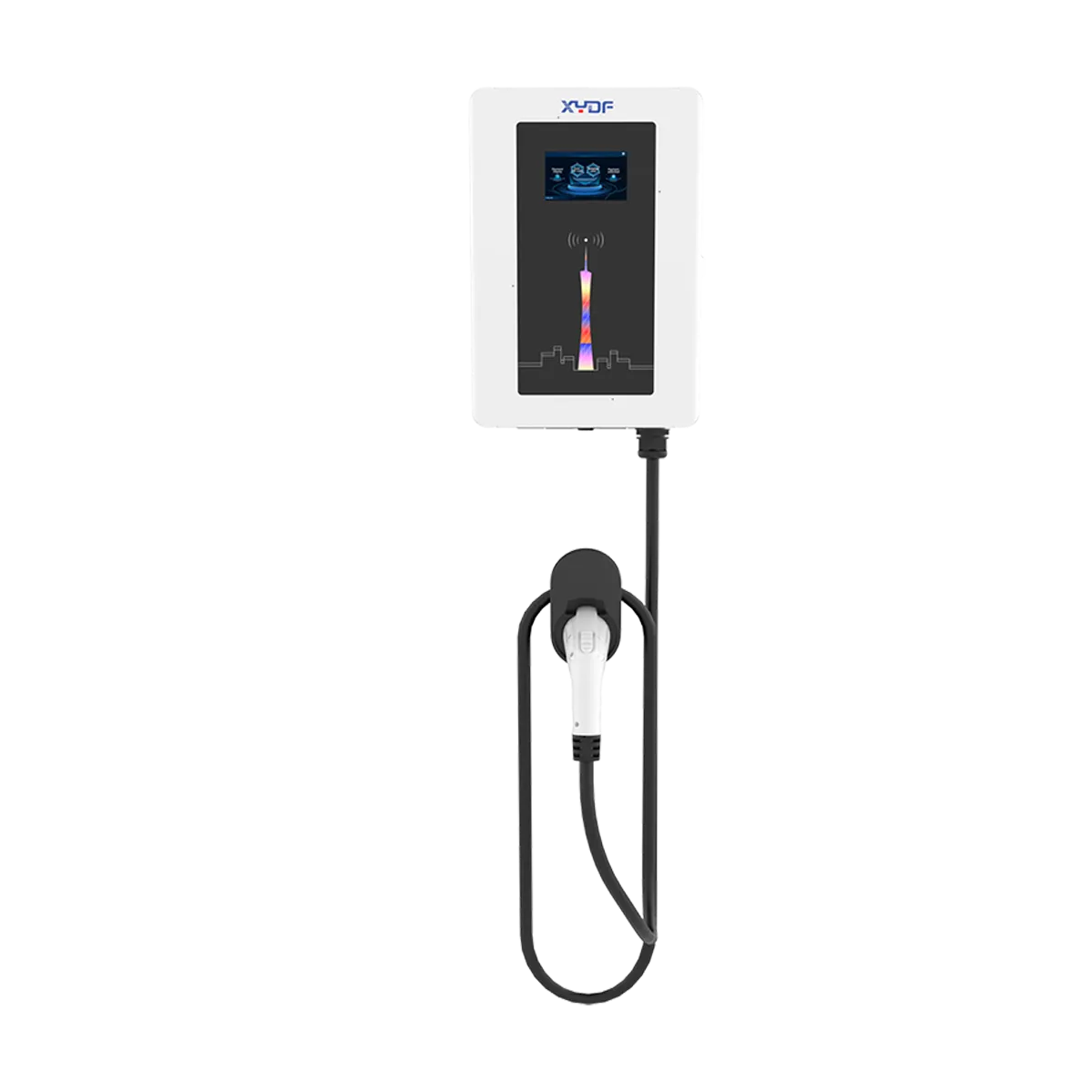
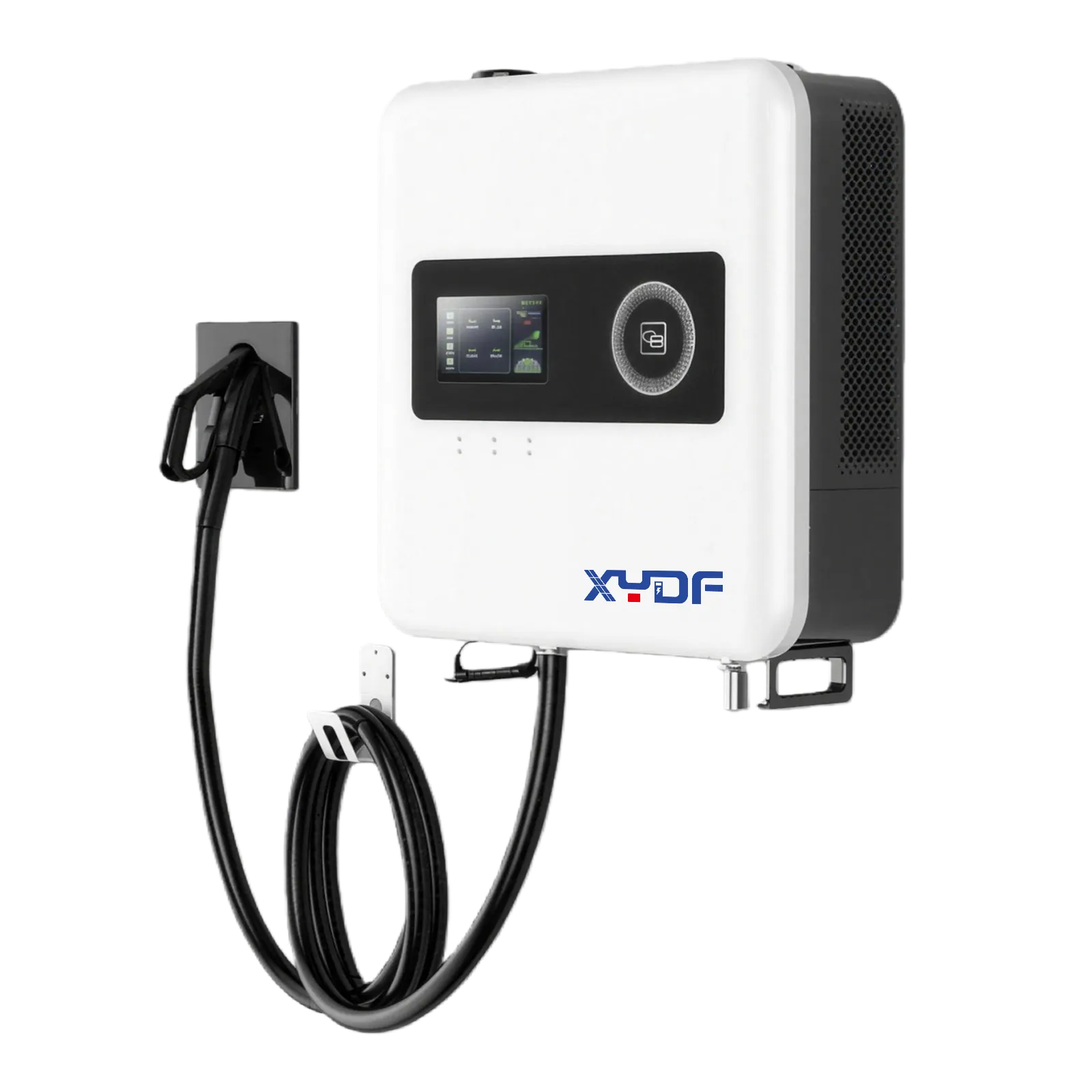
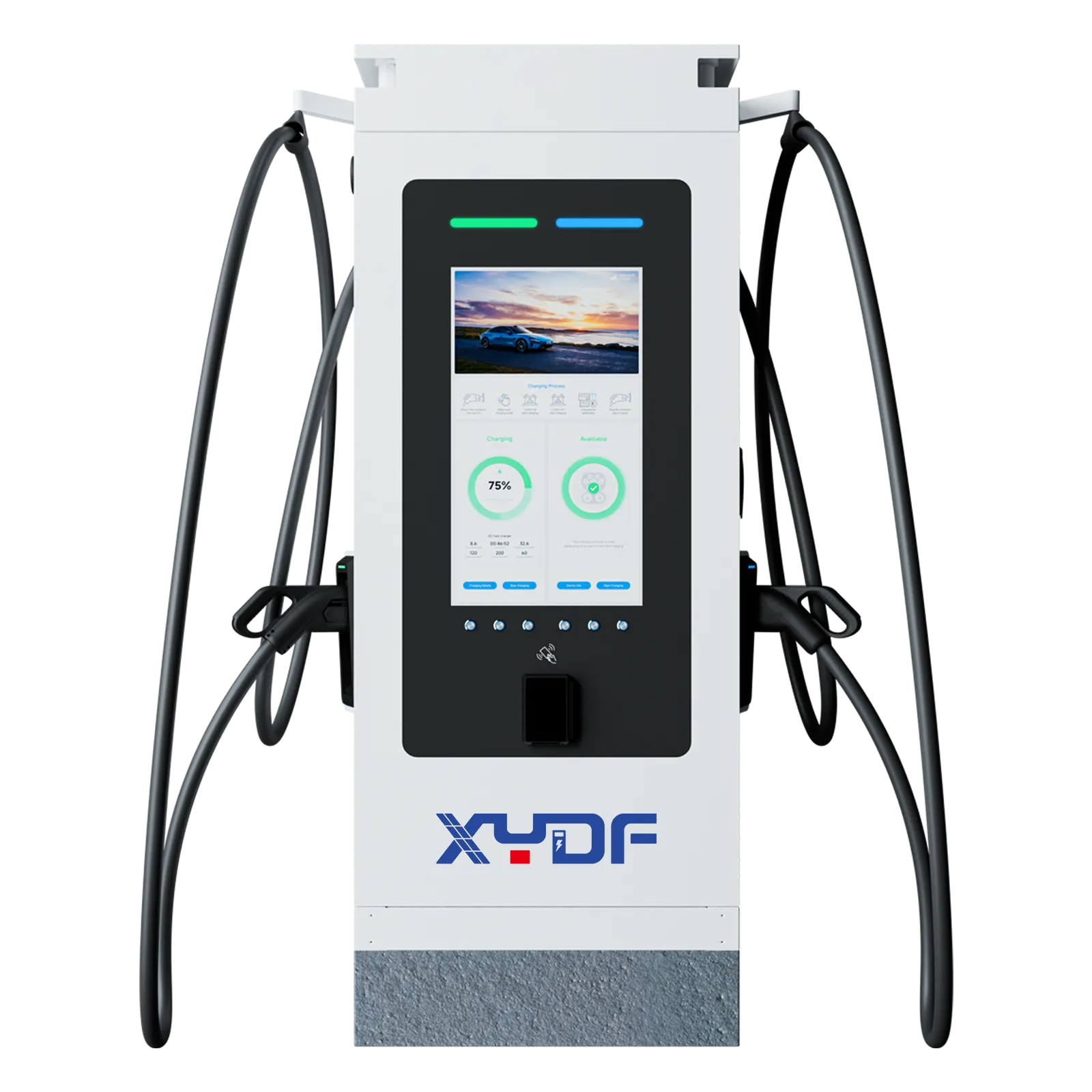
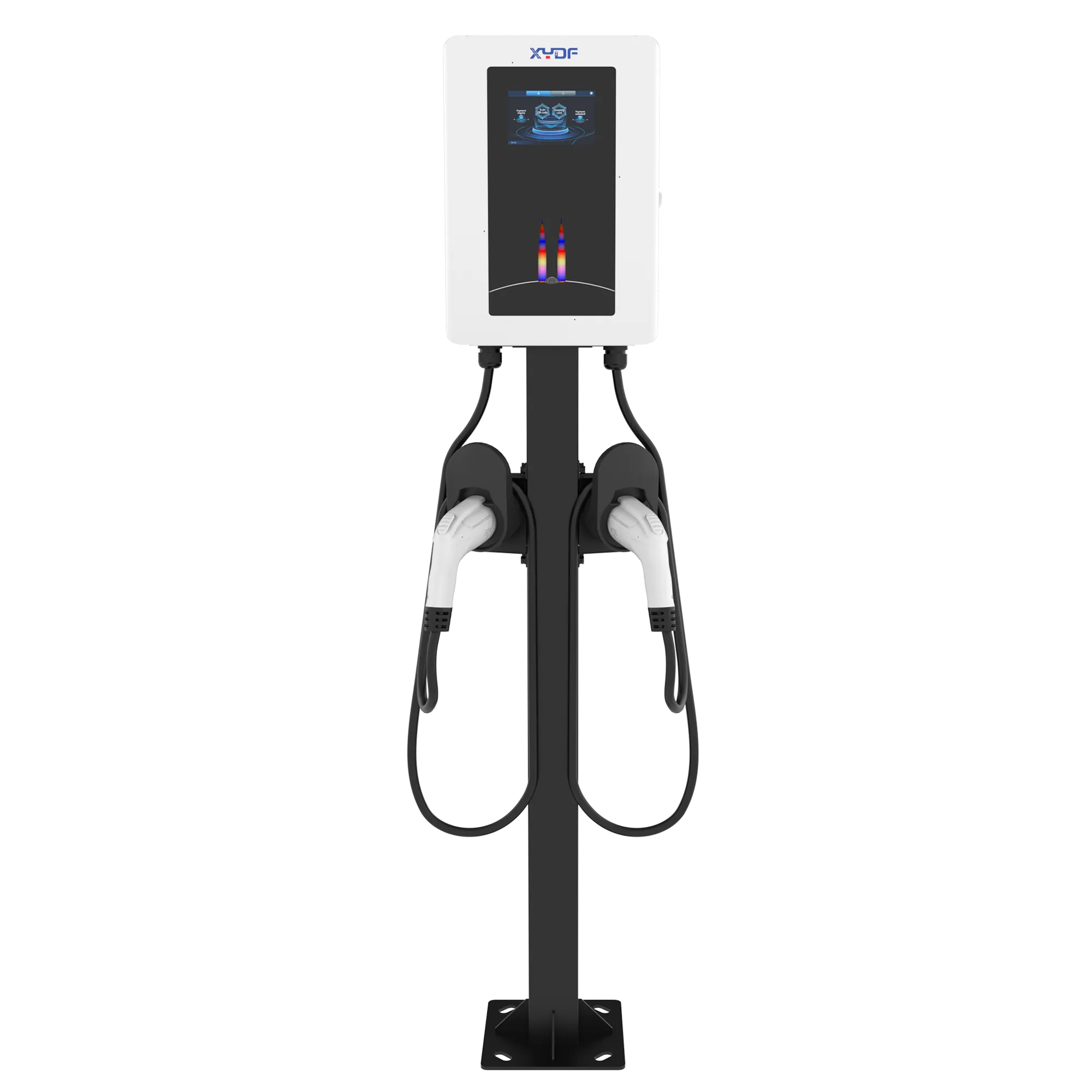
Equipment context only; model-specific voltage and current capability must be confirmed in project documentation.
How do vehicle and charger voltage limits work together?
In DC charging, the vehicle and station exchange information before and during the session. The vehicle’s battery-management system requests limits, while the station supplies DC inside its own permitted range and protection limits. The RFQ should state the DC charger voltage range at connector level. A useful plain-language explanation appears in this engineering Q&A about different battery voltages: the vehicle does not simply receive a fixed “400V” or “800V” setting from the dispenser.
Compatibility therefore has several layers:
the vehicle’s actual acceptable DC voltage and current window;
the station’s minimum and maximum output voltage;
the current that the connector and cable can provide at that voltage;
the connector and communication protocol required in the target market; and
the station’s behavior when another connector is already using shared power.
An 800V-labelled vehicle can have a route to charge at a lower-voltage station in some vehicle designs, but the outcome is vehicle-specific and can change the power it accepts. Likewise, an 800V-capable station is not automatically the best choice for every low-turnover site. Start with a DC fast charger compatibility review that names the planned vehicles and connector requirements.
Important: Do not put “800V compatible” into a tender merely because the charger has a high kW label. CharIN’s DC CCS power-class guidance distinguishes output voltage from power class; request the model-specific output-voltage range, current limit, and any derating or allocation conditions in writing.
Why is the charger’s kW rating not enough?
At the same power, a higher DC voltage corresponds to lower current. That electrical relationship explains why voltage range and current rating both belong on a specification sheet. It does not mean every high-voltage vehicle will receive the same power, because the vehicle’s charging curve, state of charge, battery temperature, and station limits still control the session.
As a planning illustration, 350 kW divided by 800 V is about 438 A, while the same ideal power at 400 V is 875 A, before conversion losses, voltage variation, thermal limits, or shared-power allocation. The calculation is not a promised session result; it shows why a mixed-voltage RFQ must ask for connector current limits, cable capability, and derating conditions rather than comparing the kW headline alone.
La Alternative Fuels Data Center lists battery state, battery capacity, vehicle charging capability, equipment output, and electrical service among the variables affecting charge time. Use those conditions in conversations with site owners rather than promising a universal “10–80%” outcome.
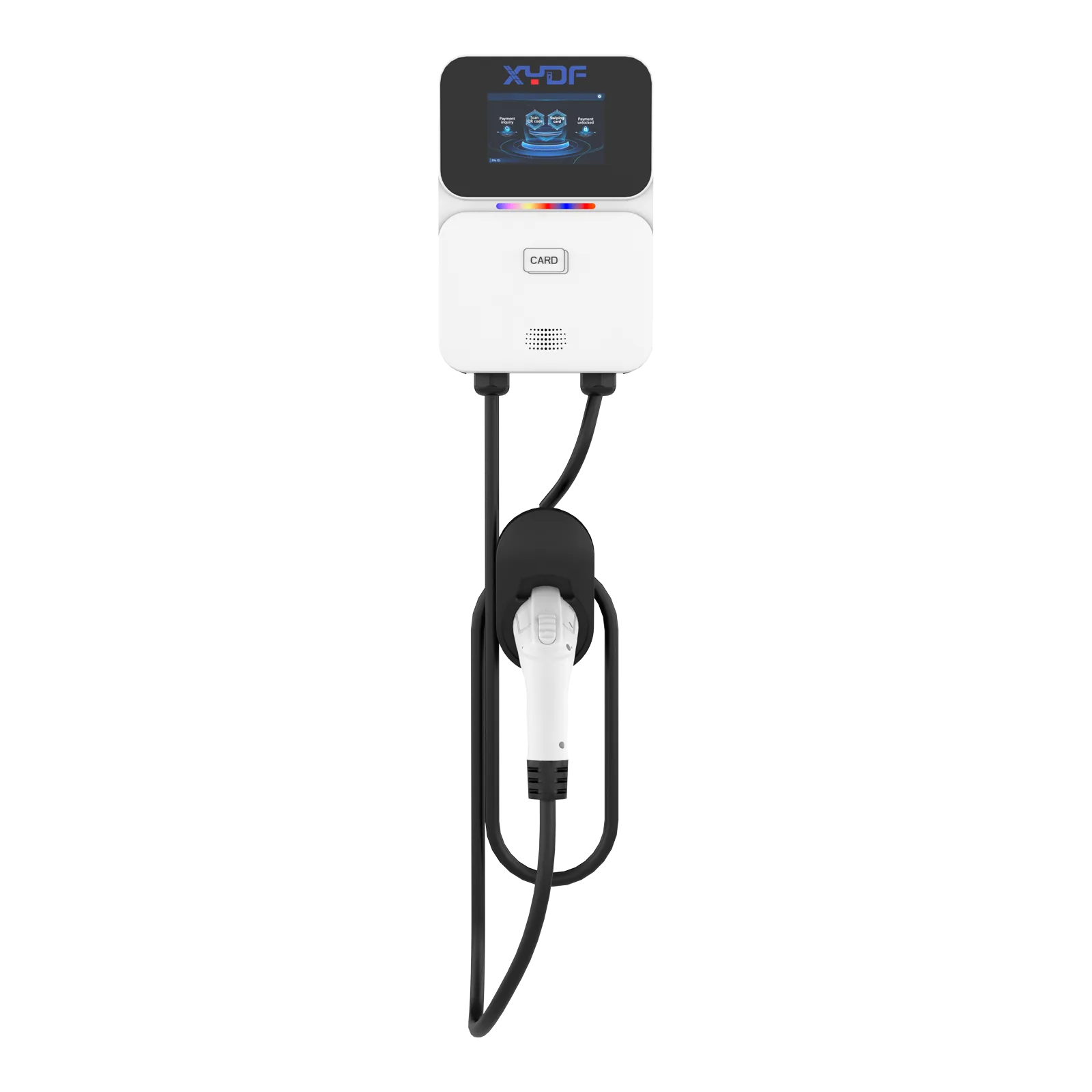
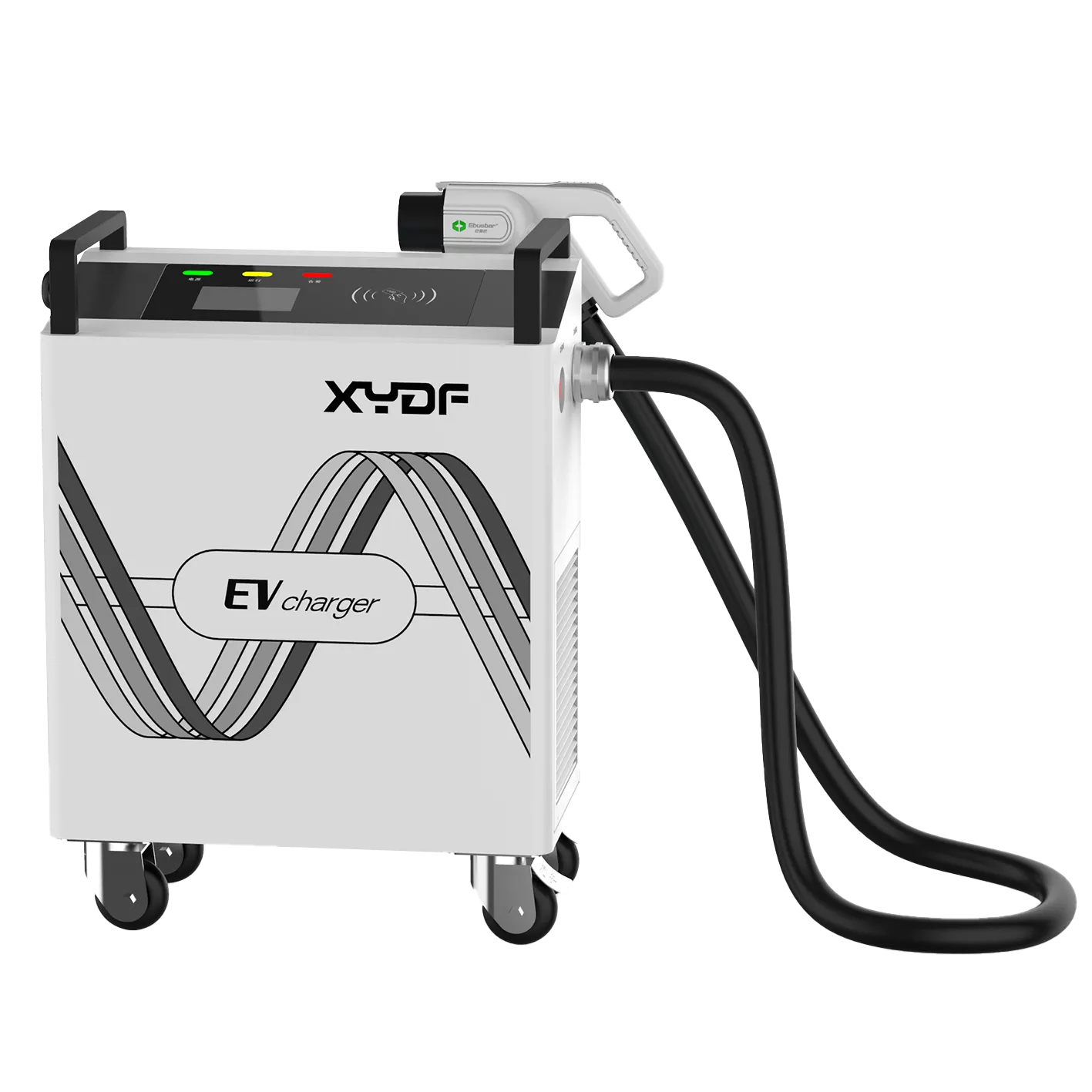
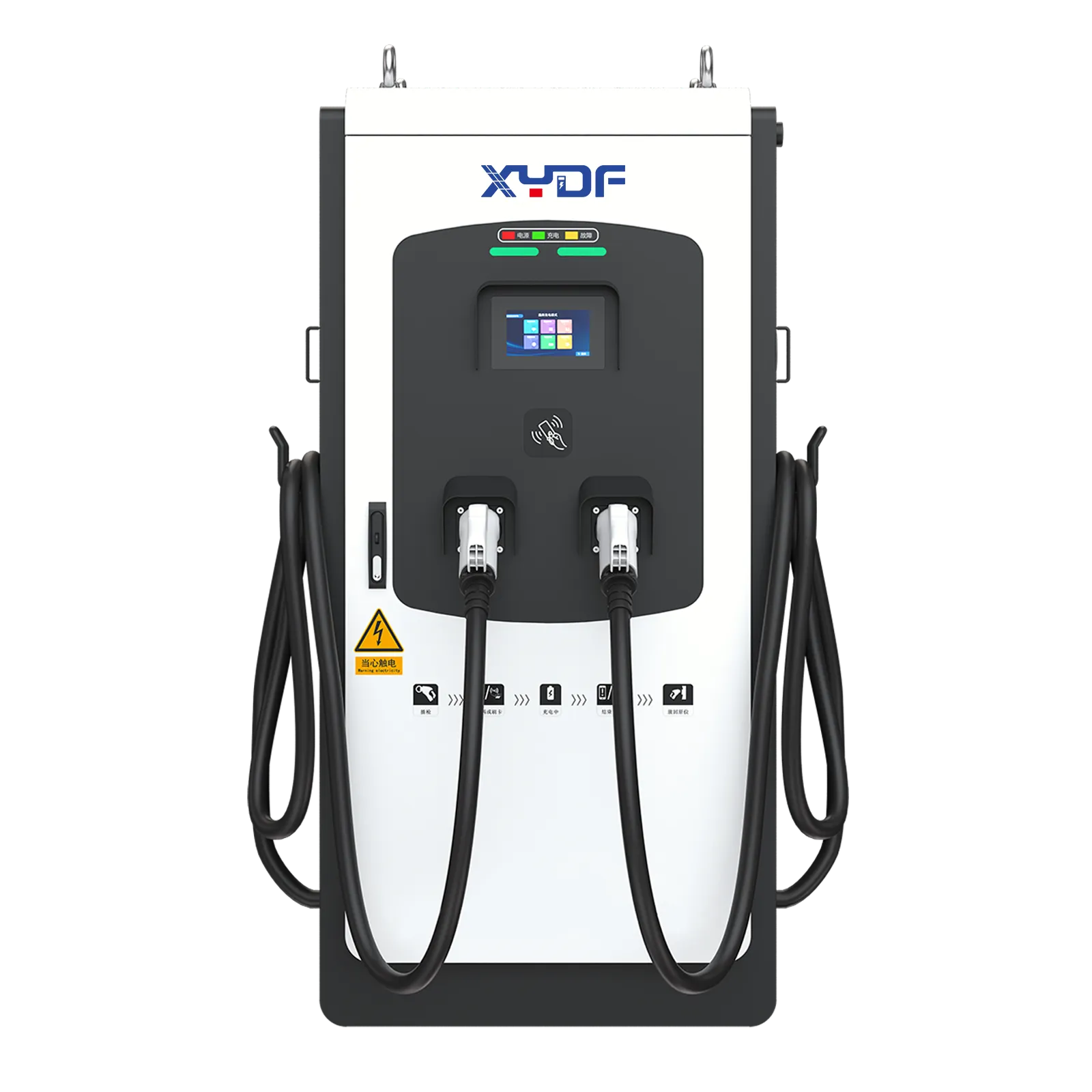
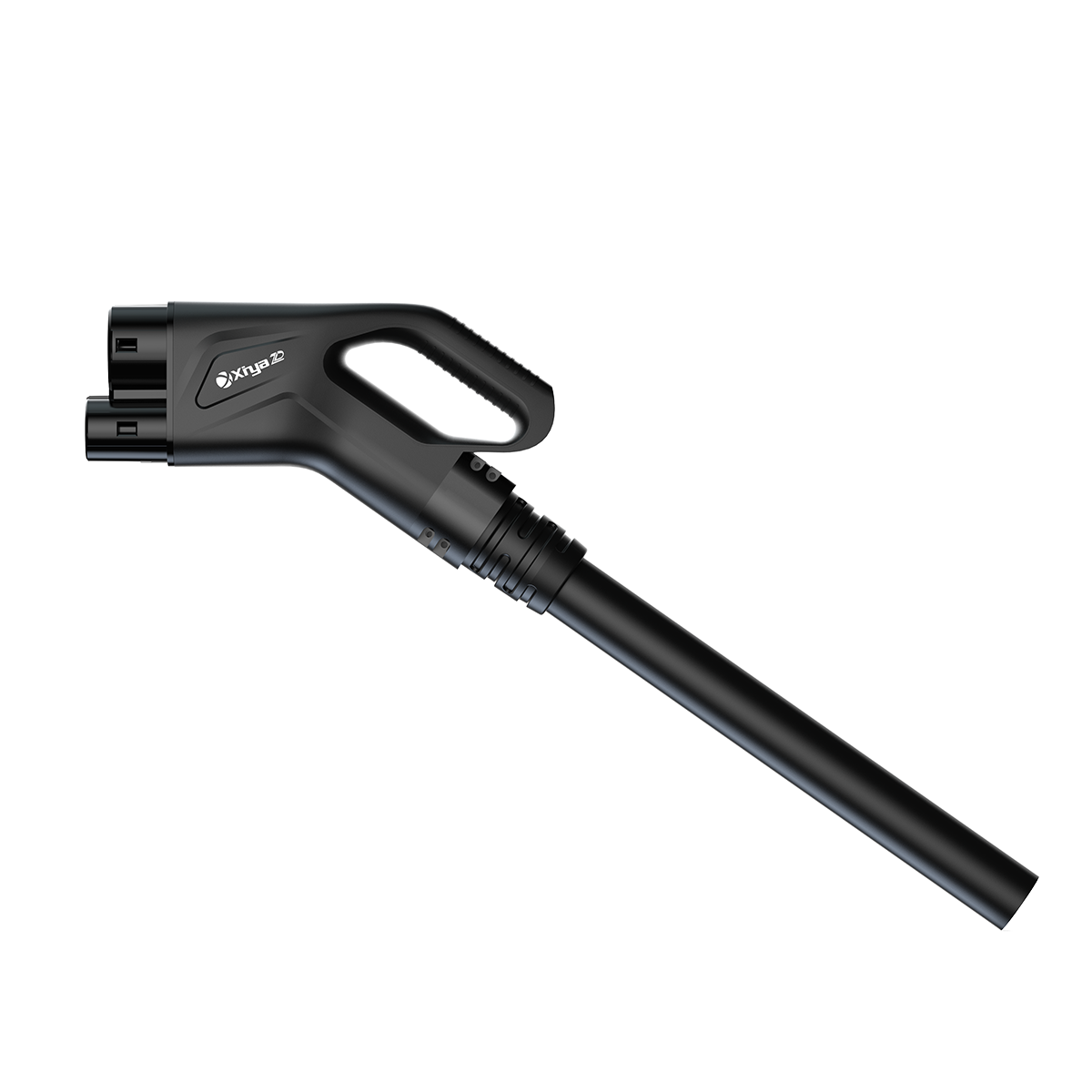
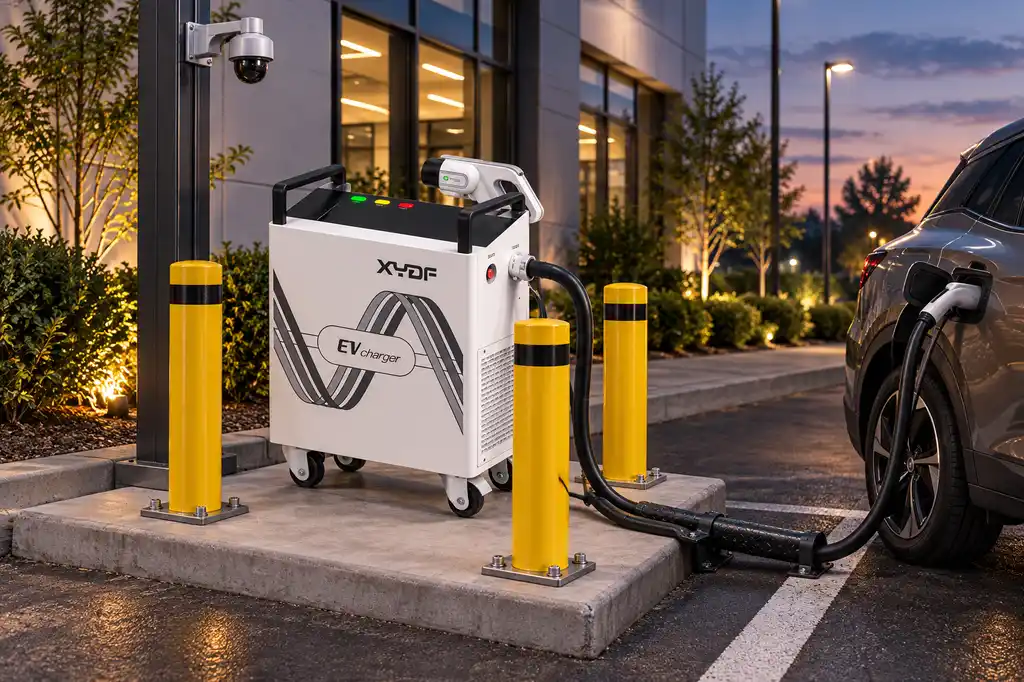
Product context only; cabinet power does not establish connector-level voltage or simultaneous-session output.
Check
Pourquoi c'est important
Éléments de preuve à demander
Output-voltage minimum and maximum
Shows whether the station’s DC window covers the planned vehicles.
Datasheet and connector-level operating range.
Maximum current and cable rating
Determines how much power can be delivered at a given voltage.
Rated and sustained-current details, including temperature conditions.
Per-connector kW
A cabinet total can differ from what one car receives.
Single-connector and simultaneous-use power statement.
Derating behavior
Heat or operating conditions can change available output.
Manufacturer’s stated conditions and curve, if available.
Réception du véhicule
The vehicle, not the station nameplate, caps its request.
Vehicle OEM charging information.
How should mixed-voltage traffic change the specification?
Mixed traffic calls for a mixed-fleet charging compatibility matrix rather than an average vehicle assumption. List each planned vehicle or fleet class, then compare its connector and charging window against every proposed charging point. This is especially important for modular cabinets and dispensers, where several vehicles may share conversion modules.
Build a matrix with each vehicle’s battery-voltage range, requested current, connector, expected dwell time, and charging curve. Add the charger’s minimum and maximum regulated voltage, current limit, cabinet or dispenser sharing rule, and the site’s transformer and feeder limit. The matrix should be tested with representative vehicles at low and high state of charge; a nameplate 350 kW value is not evidence that every vehicle will receive 350 kW.
What to verify for simultaneous sessions
The real design question is not simply “can it charge both?” It is “what does each connector receive when both arrive?” Document connector-level power allocation before comparing shared cabinets. An engineering question about 350V, 450V, and 900V requests on shared equipment captures the buyer concern: common-bus and allocation behavior must be designed, not assumed.
Ask the supplier to state:
whether connector-level power allocation and voltage conversion are independent per connector;
how power is allocated when two or more vehicles charge;
the maximum available output at the voltage ranges relevant to the fleet;
whether a session can be reassigned or limited when a second vehicle connects; and
the conditions that trigger thermal or other derating.
This is also a reason to avoid copying an equipment specification from a single-vehicle demonstration into a public or fleet hub. The arrival pattern and simultaneous demand can matter as much as the most demanding vehicle.
Which site conditions justify high-voltage capability?
Route-driven sites, fleets with defined turnaround windows, and destinations expecting high-power-capable vehicles may have a clear reason to seek a wider output window. A site with long vehicle dwell time may instead find that its service capacity, charging schedule, or number of ports is the more decisive constraint.
Wider voltage capability may be relevant if the expected vehicles and business case require it.
Which vehicle charge curves and turnaround targets are evidenced?
Dépôt de flotte
Schedule, return energy, simultaneous departure, and managed charging can outweigh nominal voltage.
How many vehicles need energy before the next dispatch?
Mixed public destination
Vehicle mix and power sharing need conservative modeling.
What happens at peak overlap, not only at one occupied connector?
Phased site
A modular expansion plan can matter more than maximum initial power.
What electrical and civil provision is reserved for later phases?
What should buyers include in a 400 V/800 V RFQ?
The most useful late-stage product conversation starts with requirements, not an assumed model. Review the published Catégorie des chargeurs rapides DC after the compatibility matrix is complete. This article does not declare the voltage range or vehicle compatibility of any XYDF model.
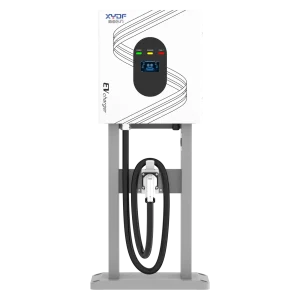
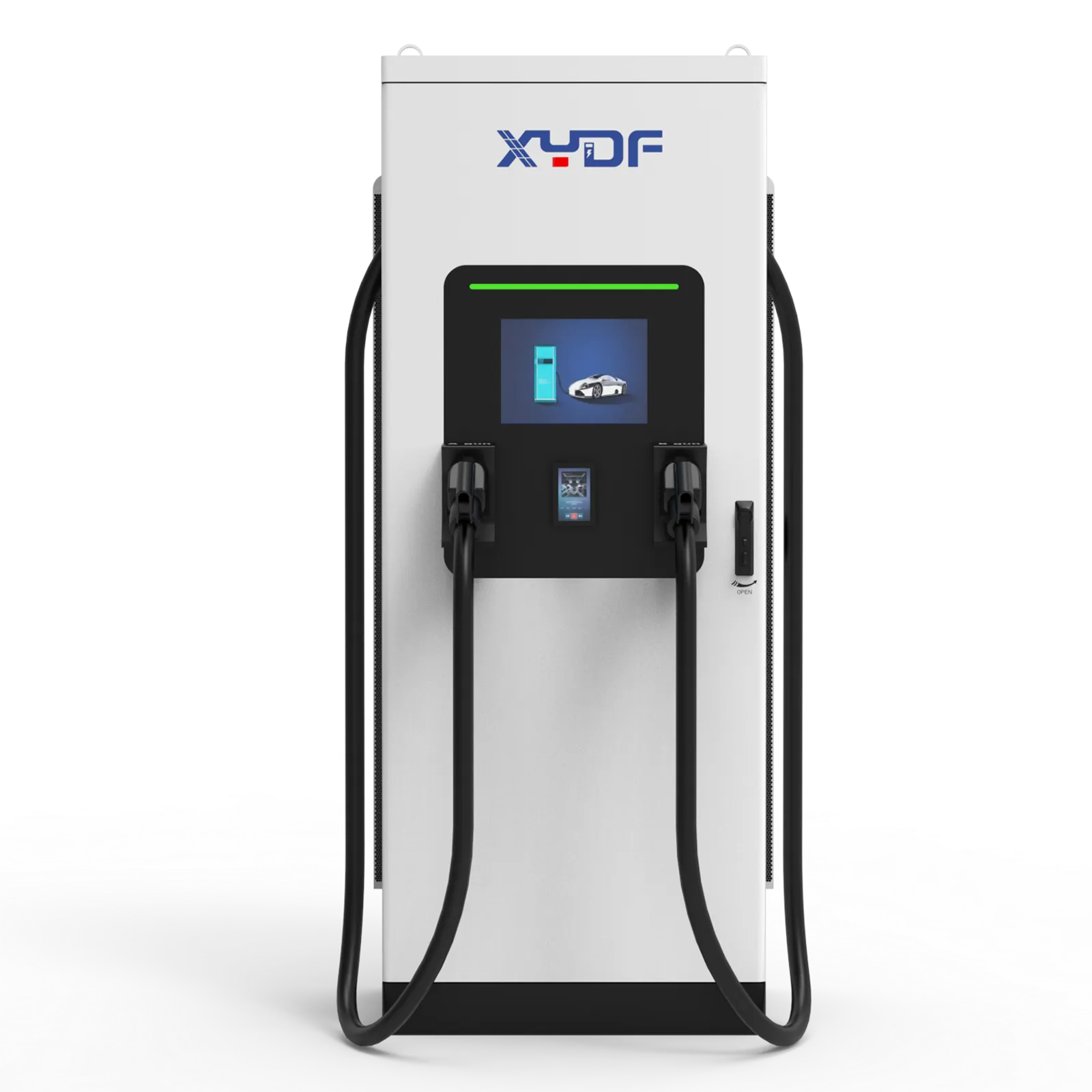
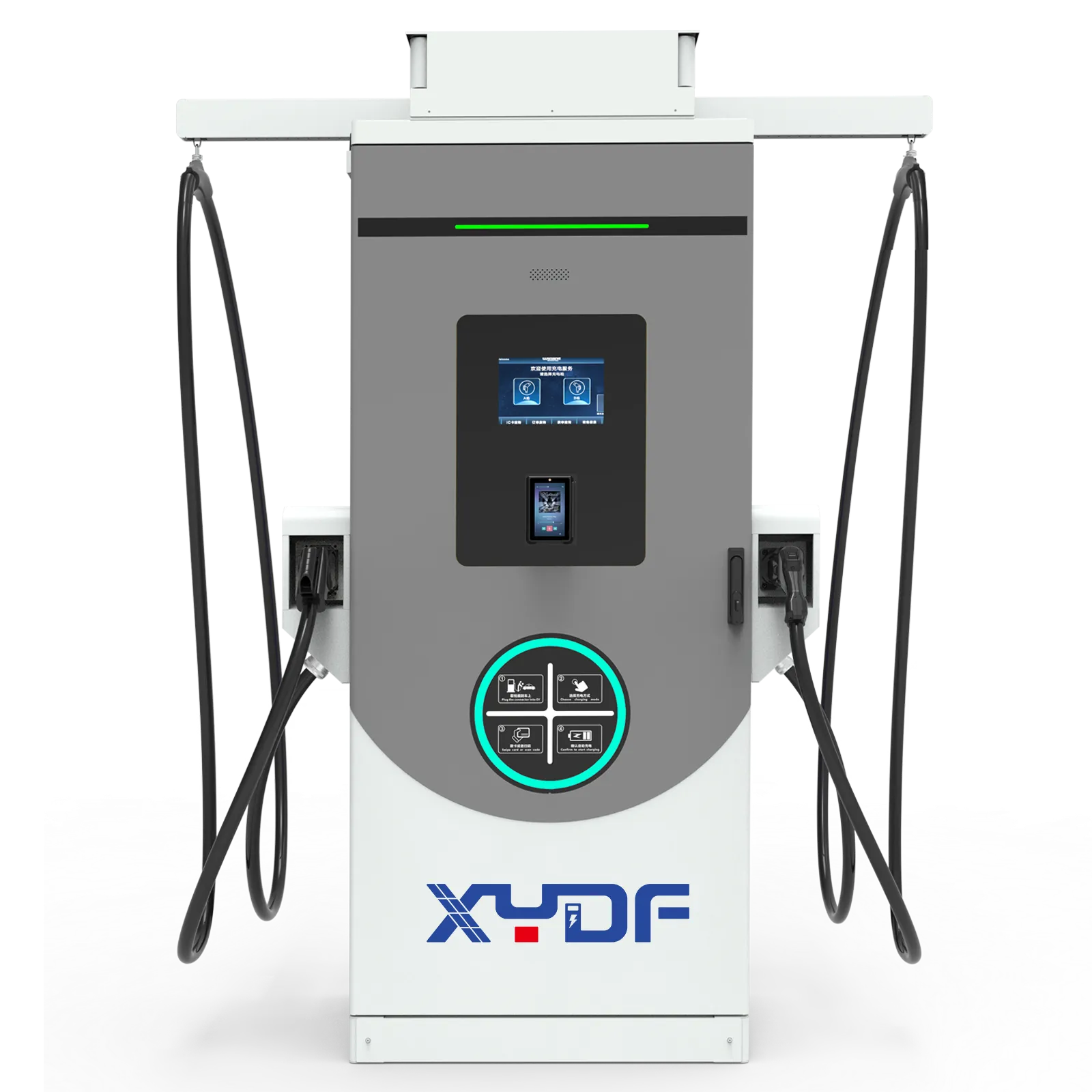
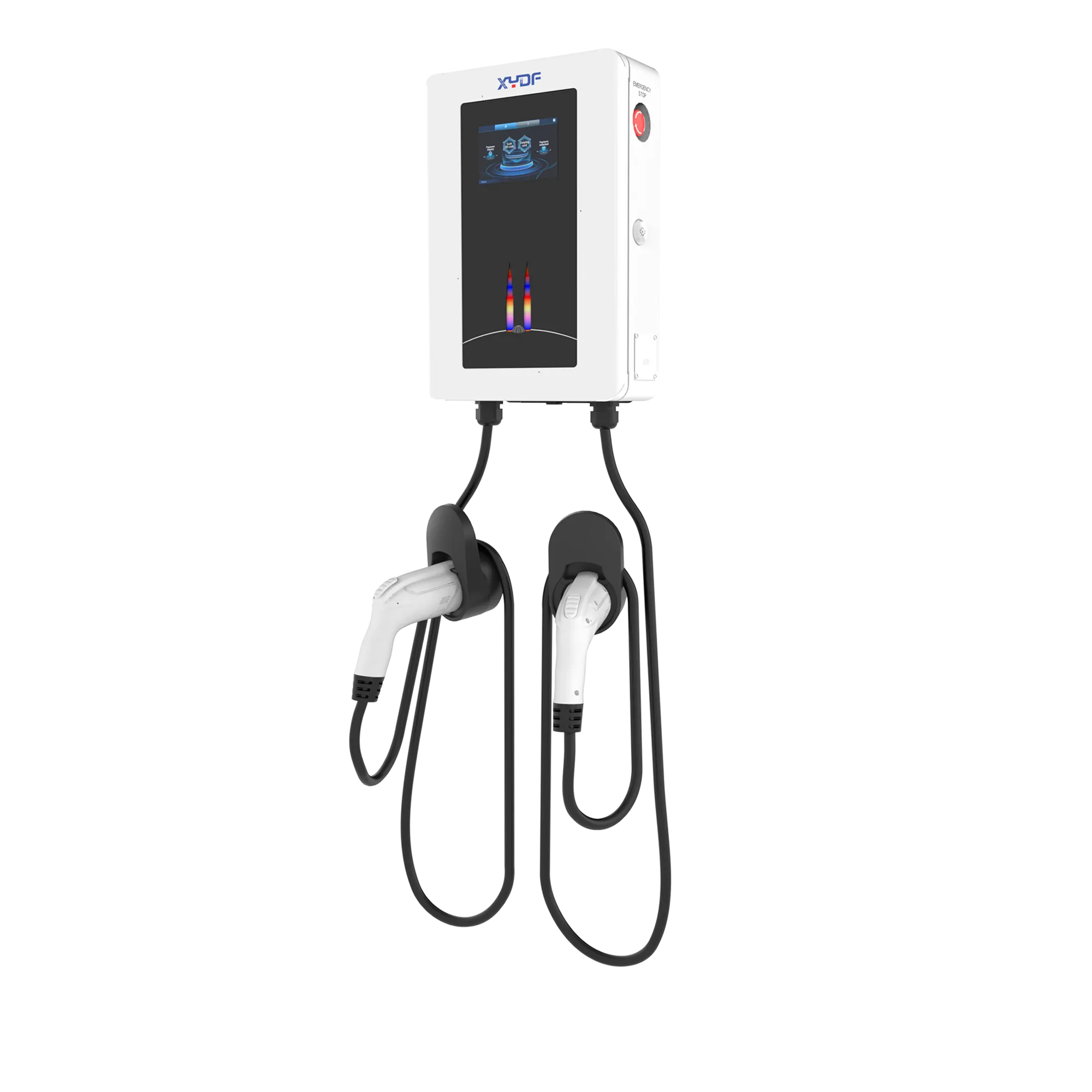
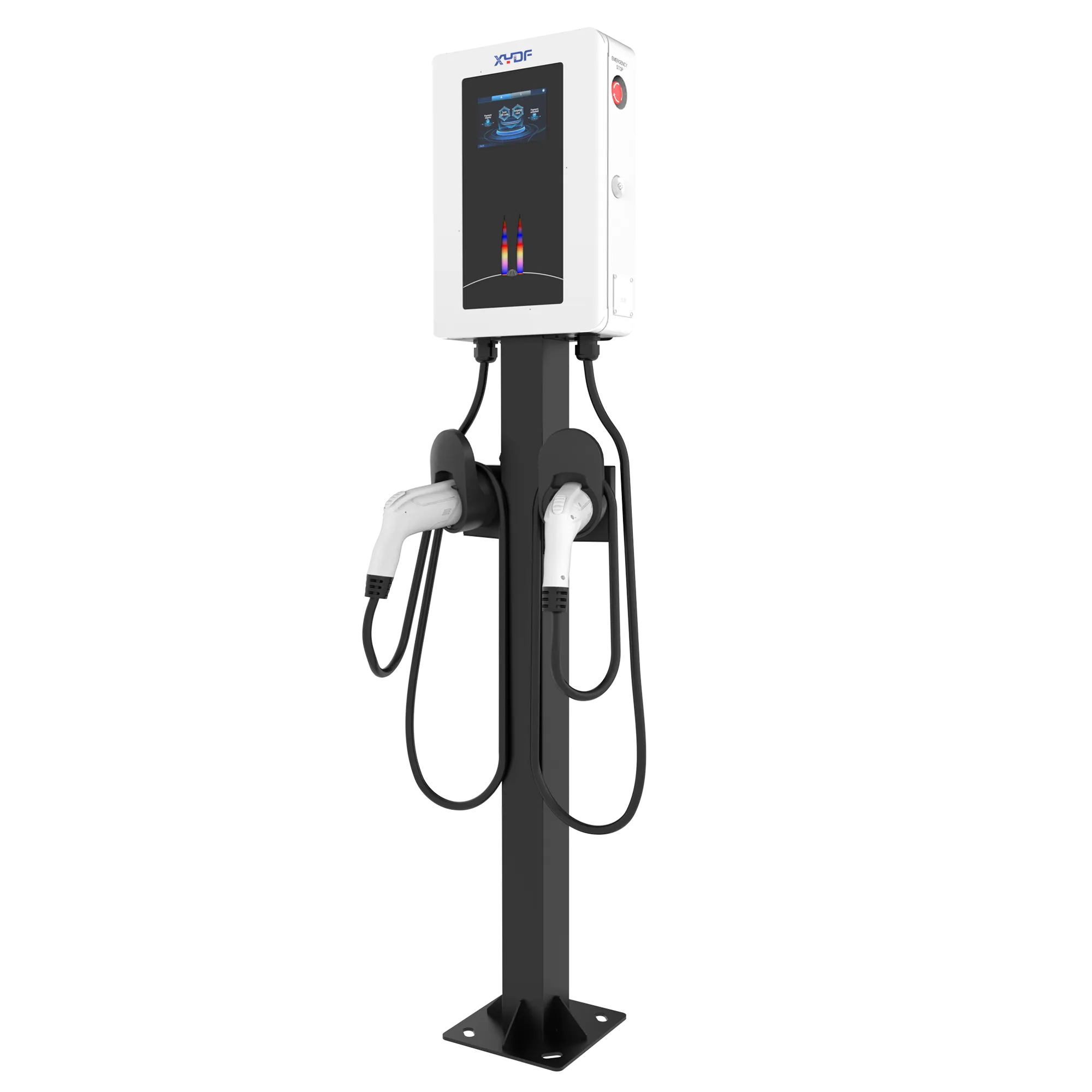
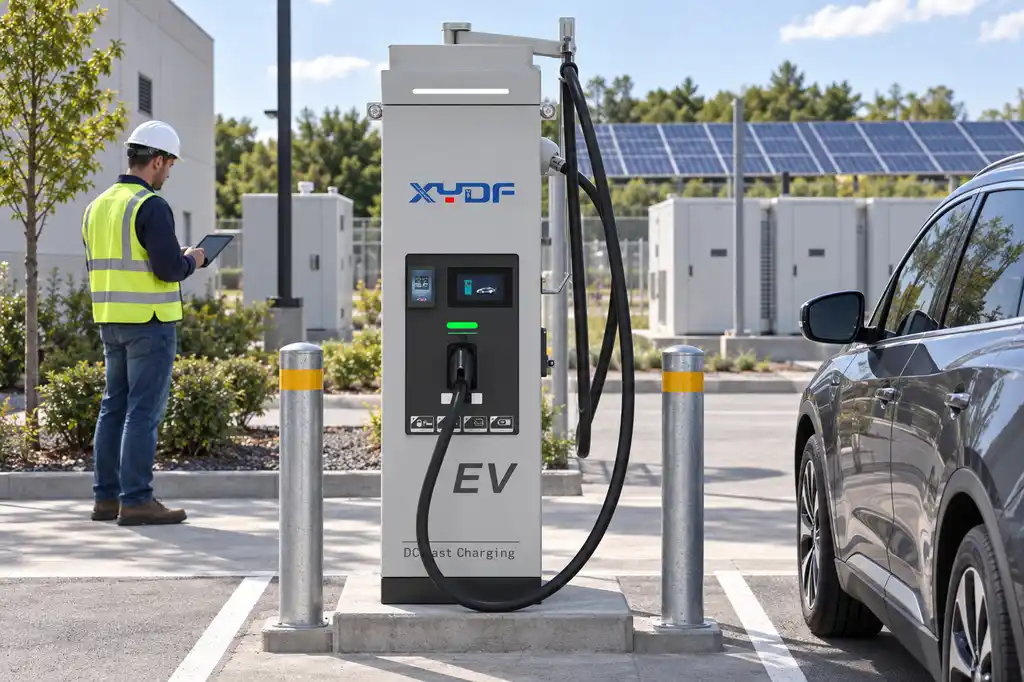
Product-route illustration only; obtain model-specific documentation before selection.
RFQ inputs that avoid a misleading quote
L'acheteur doit fournir
Pourquoi c'est important
Erreur courante
Vehicle list and expected battery-voltage windows
Tests the actual compatibility population.
Specifying only “800V vehicles.”
Target connector and country
Connector choice and rules are market-specific.
Treating a connector label as voltage evidence.
Required turnaround and daily arrival pattern
Establishes useful power and port count.
Choosing peak kW without a dwell-time model.
Per-connector and site kW cap
Separates cabinet power from usable session power.
Assuming cabinet total is available to every port.
Simultaneous-use scenario
Tests allocation and shared-module behavior.
Reviewing a single-car demonstration only.
Existing service and expansion plan
Connects equipment selection to site engineering.
Ordering hardware before capacity review.
When should a project pause before choosing DC hardware?
Pause when the intended vehicle list is unknown, the project cannot state a turnaround objective, a supplier will not provide connector-level voltage/current information, or shared-power behavior remains unclear. Those gaps should be resolved with the vehicle OEM, electrical engineer, utility process, and equipment supplier before a purchase order.
This guide is suitable for equipment shortlisting, not for certifying that a particular vehicle will achieve a particular session result. For a model-specific discussion, send XYDF the vehicle mix, connector market, required session window, available site capacity, simultaneous-use plan, and phased rollout requirement.
Questions buyers ask about 400 V and 800 V charging
What is the practical difference between 400V and 800V EVs?
They describe different nominal high-voltage vehicle architectures. For charging-site selection, the actionable difference is the vehicle’s requested voltage/current window and whether the station can serve it under the expected operating conditions.
Does a 350 kW charger automatically support 800V vehicles?
No. Check the stated output-voltage range and usable current for the actual connector. CharIN power classes show why kW and voltage range are separate specifications.
Can an 800V vehicle use a 400V DC charger?
Some vehicle designs can charge from lower-voltage DC equipment, but the result is vehicle- and station-specific. Confirm it with the vehicle OEM and the station’s documented operating range.
Will an 800V EV always charge faster?
No. Charge time also depends on battery condition, temperature, state of charge, vehicle acceptance, station limits, and site allocation.
What output-voltage range should a mixed-fleet site request?
Request a documented connector-level range that covers the known fleet, then verify current and power availability across that range. Do not select a range from a nominal vehicle label alone.
Do connector type and output voltage mean the same thing?
No. A connector is one compatibility layer. The station’s output-voltage and current capabilities must be checked separately.
What should be confirmed for shared-power dispensers?
Ask how modules are allocated, what each connector receives during simultaneous sessions, and whether voltage requests or temperature can change the allocation.
When is this guide not enough for a final decision?
It is not enough when utility interconnection, protection design, local rules, vehicle-specific data, or a supplier’s model-specific operating documentation is still unresolved.
Usine du siège social du Zhejiang :
N° 2, route de Changjiang, parc industriel du pont de Wenzhou, ville de beibaixiang, ville de Yueqing, ville de Wenzhou, province du Zhejiang
Bureau de Shenzhen :
1er étage, Bâtiment A, Parc Industriel Shenkai, Communauté Tangtou, Sous-district de Shiyan, District de Bao'an, Shenzhen
Nous utilisons des cookies pour assurer le bon fonctionnement de ce site Web et, avec votre autorisation, pour mesurer la manière dont les visiteurs utilisent notre site de recharge pour VE. Voir notre Politique de confidentialité pour plus de détails.
 Xinya Dongfang Electricity Technology Co., Ltd.