What Should Buyers Ask When Choosing Between OEM and ODM EV Charger Programs?
Jul 18,2026
Blog
Before selecting an oem ev charger or ODM route, buyers should ask who holds design ownership, certification, firmware, branding, factory evidence, and service scope — then map those answers to RFQ fields and audit steps before volume orders.
Part 1. What is the difference between OEM and ODM EV charger programs?
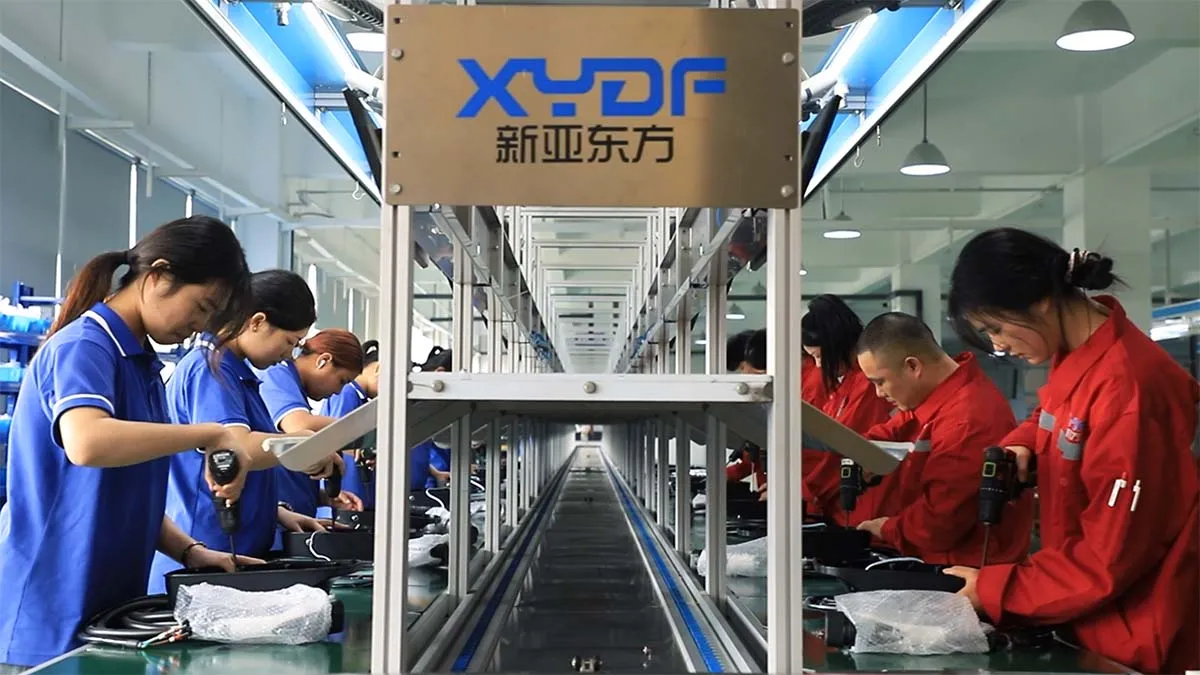
A supplier review is more useful when every factory statement is linked to a document or witnessed control. Trace the product configuration from incoming inspection and firmware or hardware revision through process checks, final test, nonconformance handling, calibration, change control, and shipment release. This creates a citation-ready procurement trail without assuming that a factory visit alone proves field performance. For the public planning context, see IEC 61851-1 conductive charging system requirements; the site-specific acceptance record still controls the final decision.
An OEM EV charger program usually starts from a supplier’s existing platform and applies buyer branding, packaging, manuals, and selected firmware or UI options. An ODM EV charger program goes further: the buyer or supplier may co-own enclosure, electrical, firmware, or certification scope depending on contract structure.
Both routes can support commercial rollout, but they assign different responsibilities for design changes, test evidence, and field support.
Program type
Buyer typically controls
Supplier typically retains
OEM
Branding, manuals, selected UI/payment options
Base platform design and core certification path
ODM (light)
Branding plus defined mechanical or UI changes
Core power architecture and certification lead
ODM (deep)
Product definition with shared engineering
Manufacturing, test, and revision governance by contract
Treat marketing “OEM/ODM available” statements as incomplete until ownership of certification, firmware, and revision control is documented in the RFQ response. (IEC 61851 overview)
A useful OEM vs ODM EV charger decision is not a label exercise; it is a transfer-of-risk exercise. The buyer should assign each deliverable to an owner, define the evidence required at the design-freeze gate, and price the cost of a change after that gate. This framework is a practical synthesis for CPOs, fleet operators, distributors, and EPC teams that already have a shortlist.
Part 2. Which design-ownership questions should buyers ask first?
Procurement teams often discover too late that “custom branding” did not include enclosure tooling, cable harness variants, or firmware change rights.
Question
Why it matters
Weak answer
Who owns enclosure and structural revisions?
Affects tooling cost and recertification
“We can paint any color” with no drawing control
Who approves BOM substitutions?
Field failures trace back to silent component swaps
Verbal flexibility without change-control records
Who maintains test fixtures for custom builds?
Custom programs need repeatable test evidence
One-off demo bench only
Who supports field retrofits and spare parts?
Service cost depends on revision governance
Price list without revision matrix
Distributors frequently ask whether a unit is “really their design” — request drawing issue levels and revision history, not only exterior branding mockups.
Decision matrix: which route matches the risk you can carry?
Decision factor
OEM is usually the better fit when…
ODM is justified when…
Evidence to request
Design ownership
A proven enclosure and electrical platform meets the use case.
A mechanical, electrical, or user-experience requirement is not available off the shelf.
select OEM when speed and a stable platform have more value than differentiation; select ODM only when the buyer can govern requirements, verification, and lifecycle changes. The honest answer is conditional—the same supplier may be suitable for OEM on one SKU and unsuitable for ODM on another.
Due-diligence questions before design freeze
Which legal entity is the manufacturer of record, and which entity will appear on the declaration, label, warranty, and shipment documents?
Can the supplier provide a controlled bill of materials with approved alternates, lot traceability, and a written rule for substitutions?
What exact configuration was tested—power rating, connector, cable length, enclosure revision, firmware release, and optional meter or payment hardware?
What event triggers a safety, EMC, or grid-code review, and who pays when a change crosses that trigger?
How are vulnerabilities disclosed, patched, and rolled back; and can the operator export charging-session data if the backend relationship ends?
What acceptance test is run on every production unit, what records are retained, and for how long can the buyer audit them?
What is the service boundary: remote triage, swap stock, on-site response, firmware support, and end-of-life notice?
A supplier that answers with a document reference, revision, and accountable owner is reducing OEM vs ODM EV charger risk; a supplier that answers only with “customizable” is describing marketing scope, not engineering scope. The factory audit checklist can be used to sample these claims against production records.
Attach the design baseline, firmware repository or escrow rule, certification owner, approved-change workflow, serial traceability and acceptance evidence to the contract instead of relying on an informal customization promise.
Part 3. How should buyers compare certification and compliance responsibility?
Certification responsibility is one of the highest-risk gaps between OEM and ODM routes. The certificate must match the exact model, power range, connector configuration, and firmware build you plan to deploy.
Document
Buyer question
Common gap
CB / CE / TÜV reports
Does the report name the exact SKU and port layout?
Certificate for a sister model
Label artwork
Who approves market-specific warnings and language?
Supplier template reused across regions
EMC and safety delta
Who owns retest if firmware or harness changes?
Undefined recertification trigger
Production consistency
Is approved BOM locked to certificate sample?
Silent substitution after approval
XYDF publishes qualification evidence on Qualification and manufacturing context on About XYDF. Compare those published routes with your target market before locking OEM or ODM approval.
OEM / ODM RFQ checklist
RFQ field
Why suppliers need it
Program type (OEM vs ODM depth)
Sets design ownership boundaries
Target models and power range
Maps platform and test scope
Connector standard and cable length
Affects certification and harness BOM
UI language and payment options
Drives firmware and labeling
OCPP version and backend target
Defines interoperability testing
Branding scope and packaging
Determines tooling and manual work
Annual volume and lead-time window
Validates capacity allocation
Spare-parts and warranty terms
Sets service cost expectations
Standards map: test method, protocol, and market law are different things
Market-law obligations for electromagnetic compatibility in the European Union.
CE marking is a conformity declaration; it is not a universal performance certification and does not replace local installation rules.
Destination market, intended installation, and claims determine the applicable rule set. A buyer should ask the supplier to list the standards edition, national deviations, and evidence owner in the compliance matrix; the XYDF company profile and published product range are starting points, not substitutes for a project-specific review.
Part 4. What firmware, OCPP, and backend questions reduce integration risk?
Firmware and backend scope separates a branded hardware program from an operable charging network. Ask these questions before finalizing OEM vs ODM contracts.
Topic
Buyer question
Risk if unclear
OCPP version
Which version is validated on the RFQ build?
Backend integration delays
Payment path
Who certifies RFID, POS, or app flows?
Revenue activation blocked
Load management
Can the unit respect site kW caps from CSMS?
Transformer or feeder overload
Remote diagnostics
Who owns fault codes and OTA governance?
Slow field response
Data residency
Where are session logs stored and exported?
Operator compliance issues
Request an OCPP session demonstration on the exact firmware build and payment configuration in your RFQ, not on a generic demo unit. (OCPP EV charger guide)
Part 5. Which branding, packaging, and manual questions define OEM scope?
OEM scope is more than a logo on the enclosure. Buyers should confirm which assets are included in serial production.
Asset
Clarify in RFQ
Typical OEM inclusion
Enclosure silkscreen
Logo, model name, rating label
Usually included
Screen UI
Language, logo, payment flow
Included with firmware scope
Manuals and quick guides
Market language and warranty terms
Often included
Carton and pallet branding
Export packaging requirements
Sometimes extra tooling
Backend white-label
Operator portal naming
Usually separate contract
Document excluded items explicitly. Missing packaging or manual scope is a common source of launch delays for distributor-led rollouts.
Part 6. Which XYDF platforms fit typical OEM and ODM routes?
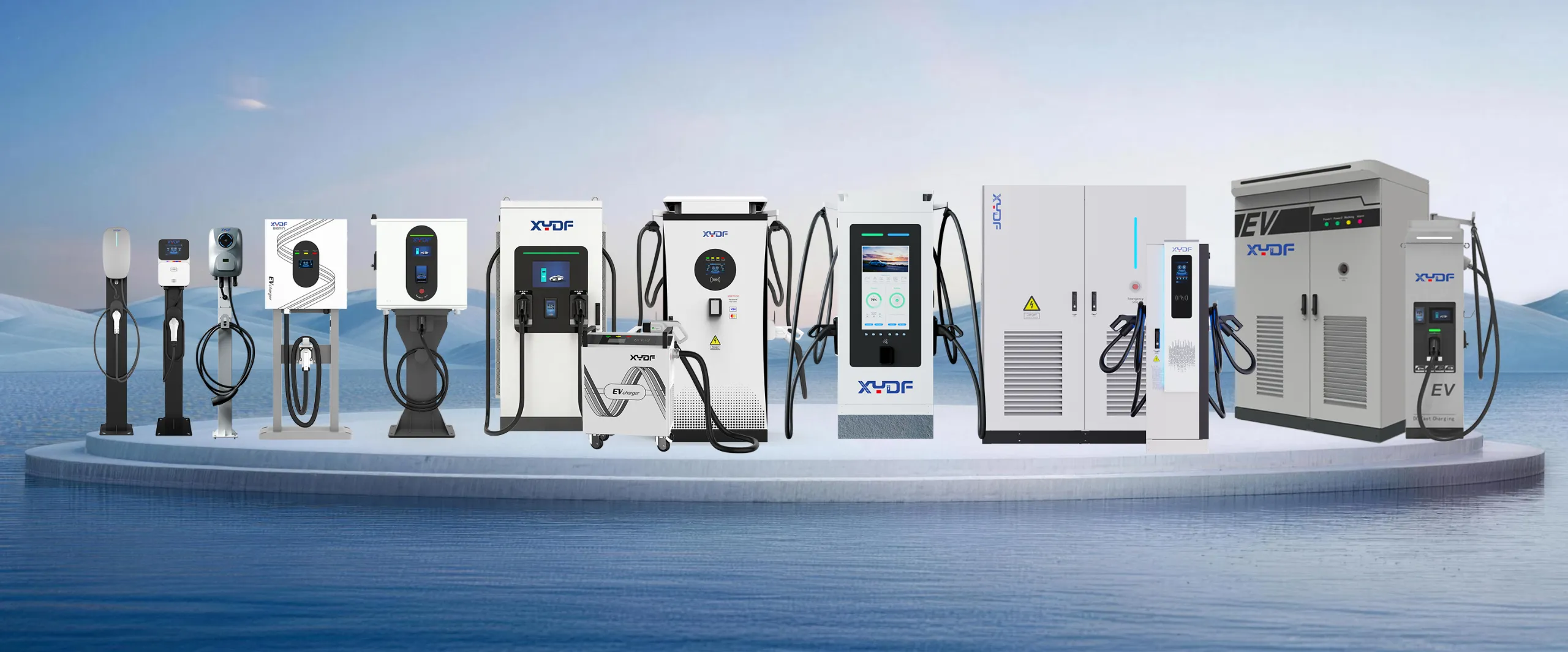
XYDF publishes commercial AC and DC platforms under Products with OEM/ODM support described on About XYDF. Use the question sets above before shortlisting any platform.
Buyer route
XYDF starting point
Program emphasis
Branded workplace AC
EC7 / EC22 / E22 series on /products/
UI language, load management, OCPP
Destination mixed traffic
AC plus compact DC units
Branding plus selective DC throughput
High-throughput public DC
EC Series 80-240kW platform
Simultaneous power, service access, backend testing
Part 7. When Is Neither an OEM nor an ODM Program the Right Route?
This guide supports OEM and ODM program selection for commercial and industrial EV charging. It does not replace:
On-site electrical design or grid capacity studies
Local wiring-rule compliance certification for every country
Payment network approvals or utility interconnection permits
Construction, civil works, or commissioning-only contracts
Price-only sourcing decisions without service scope
If a supplier cannot define certification ownership, firmware revision control, or factory evidence for the RFQ configuration, treat OEM/ODM approval as conditional — not complete.
Neither OEM nor ODM is the right answer when the buyer has no accountable product owner, cannot fund validation, or needs a site-specific electrical and regulatory design that a hardware program cannot provide. It is also a poor fit when the expected volume cannot recover tooling and support costs, when the backend requires unsupported cybersecurity controls, or when the destination authority requires a local approval holder that the proposed contract does not name.
Use a standard catalogue purchase plus an EPC engineering package when the requirement is mainly installation and commissioning.
Use a multi-supplier pilot when interoperability, utilization, or maintenance assumptions are still unproven; set a written exit test before scaling.
Pause sourcing when ownership, certificate scope, or change-control answers remain conditional after the technical clarification round.
For a project-ready quotation, send the completed matrix, target market, connector and power requirements, backend choice, and service boundary through XYDF contact. A documented OEM vs ODM EV charger decision protects the buyer long after the first branded shipment.
FAQ
What is the difference between OEM and ODM EV charger programs?
OEM programs usually apply buyer branding and selected options to an existing platform. ODM programs may share or transfer more design, firmware, and certification responsibility depending on contract depth.
Who owns certification in an ODM program?
Ownership should be explicit in the contract and RFQ response. Ask who submits test samples, who holds the certificate, and who pays for recertification when BOM or firmware changes.
Which design elements can buyers customize in OEM routes?
Branding, manuals, selected UI flows, packaging, and some accessory configurations are common. Enclosure tooling, harness variants, and firmware features need explicit inclusion in scope.
How should firmware and OCPP responsibilities be split?
Define who validates OCPP versions, payment paths, remote diagnostics, and OTA updates. Request a session demonstration on the RFQ build before volume commitment.
What RFQ fields reduce OEM/ODM sourcing risk?
Program type, model range, connector and cable spec, UI and payment scope, OCPP/backend target, branding assets, volume, lead time, warranty, and spare-parts terms should all be documented.
When should buyers require a factory audit?
Before first volume orders and before scaling branded programs, run a structured factory audit covering production scope, traceability, test evidence, and service readiness.
Can one supplier support both OEM and ODM programs?
Many manufacturers offer both, but scope and responsibility differ by route. Compare ownership, certification, and support terms separately rather than assuming one contract covers both.
What is the most important OEM/ODM contract clause?
The most important clause is the change-control and evidence clause: it should define who approves a BOM, enclosure, or firmware change; what retesting is required; and who pays. Without that clause, ownership language can become unenforceable when a component is discontinued.
Does an OCPP claim prove backend interoperability?
No. OCPP is a protocol specification; interoperability depends on the implemented profile, firmware release, security settings, and the chosen CSMS. Require a recorded test on the exact build and document unsupported messages before acceptance.
Can a CE mark replace a local installation approval?
No. CE marking addresses applicable EU conformity obligations, while wiring rules, permits, grid connection, and site inspection remain jurisdiction- and project-specific. Confirm the destination authority’s requirements before treating a declaration as deployment clearance.
the best charger program is the one whose evidence still makes sense when the first field failure, firmware update, or market audit arrives.
How can a buyer connect factory evidence to field acceptance?
Link each factory control to a field requirement: identify the tested model and revision, define the test method and pass criteria, retain calibration and defect records, and repeat the critical checks during site acceptance with the delivered configuration. A tour or certificate is useful context, but the auditable chain is the configuration, evidence, and witnessed result.
We use cookies to keep this website working and, with your permission, to measure how visitors use our EV charging site. See our Privacy Policy for details.
 Xinya Dongfang Electricity Technology Co., Ltd.