Comment les équipes de projet doivent-elles planifier la capacité des transformateurs pour les sites de recharge rapide en courant continu ?
18 juil. 2026
Blog
Avant d'ajouter une capacité de chargeur rapide CC, les équipes de projet doivent dimensionner la marge du transformateur à partir des kW simultanés, de la diversité, de la marge harmonique, des limites du fournisseur d'électricité et du déploiement par phases – et non de la simple somme des plaques signalétiques des chargeurs.
Partie 1. Pourquoi la capacité du transformateur est-elle importante pour les sites de recharge rapide CC ?
Pour une décision commerciale de charge justifiable, il faut séparer la question de la puissance de l’équipement de la question de la capacité de service utilisable. Il faut enregistrer les cycles de charge des véhicules, les fenêtres d’arrivée et de départ, les sessions simultanées, les limites de demande du site, les contraintes liées aux services publics et les coûts opérationnels d’une session manquée avant de comparer les modèles de chargeurs. Les directives de planification publique peuvent encadrer les variables, mais la demande de capacité finale doit être testée en fonction des données d’intervalle propres au site. Pour le contexte de la planification publique, voir NREL a élaboré des directives sur la charge des véhicules électriques; Le dossier d’acceptation site-spécifique reste le facteur déterminant de la décision finale.
Un site de chargeur rapide DC peut échouer commercialement et électriquement lorsque la capacité du transformateur est dimensionnée uniquement en fonction de la puissance nominale installée. Les transformateurs doivent couvrir la demande simultanée, les effets de surcharge et les effets harmoniques, les règles de gestion de la charge par l’opérateur ainsi que les seuils d’évaluation par l’opérateur.
Sous-dimensionner crée des déclenchements intempestifs et de longs délais de mise en service. Sur-dimensionner augmente les dépenses d'investissement sans correspondre à l'utilisation.
Erreur de planification
Symptôme sur le terrain
Meilleur point de départ
Pile de plaques signalétiques
Rejet de services publics ou déplacements répétés
Profil de puissance instantanée
Ignorer la diversité
Coût du transformateur et de l'alimentation surdimensionnés
Facteur de diversité basé sur les cas d'utilisation
Ignorer les harmoniques
Pertes élevées et plaintes PQ
Examen du EPC avec données de charge
Aucun plan de mise en scène
Capacité immobilisée ou expansion bloquée
Ports échelonnés et surveillance
La dimension des transformateurs favorise le déploiement des chargeurs ; elle ne remplace pas la formalité. Abonnente d'interconnexion d'utilité.
Traiter Capacité du transformateur de charge rapide DC En tant qu’élément de conception documenté, et non comme un raccourci pour l’achat d’un chargeur. Une séquence cohérente est la suivante : établir la consommation maximale de 15 minutes, ajouter une charge auxiliaire, convertir kW en kVA en fonction du facteur de puissance étudié, tester les limites thermiques et harmoniques, puis prévoir une étape d’expansion définie. L’exemple de travail ci-dessous est illustratif ; le concepteur d’électricité et le responsable de l’installation doivent approuver la valeur définitive.
Partie 2. Quels sont les éléments nécessaires avant le dimensionnement d'un transformateur ?
Une planification précise des transformateurs commence par le cas d'utilisation du site, pas par les kW du catalogue.
Bloc d'entrée
Exemples
Pourquoi cela modifie-t-il les résultats du transformeur
Groupe d'utilisateurs
Place publique, dépôt de flotte, commerce, aile de bureaux
Courbe d'arrivée et simultanéité
Compteur de charge et puissance
2×120 kW, 4×80 kW, ports mixtes
Scénarios de kW de pointe
Gestion de la charge maximale
Plafond de kW du site dans le CSMS
Réduit la demande simultanée
Service existant
Transformateur de courant kVA, espace disjoncteur de réserve
Détermine la voie d'amélioration
Besoins en services publics
Limites de demande, règles de facteur de puissance
Peut-être concevoir avant les chargeurs
Horizon de croissance
Ports de phase 2 dans 18 à 24 mois
Évite les dimensionnements uniques sans issue
Les équipes EPC entendent souvent dire “le fournisseur d'électricité n'autorisera pas quatre unités de 120 kW simultanément” — documentez les facteurs simultanés et les règles de gestion avant la réunion d'interconnexion.
1) Vérifiez les entrées électriques et de fonctionnement avant de choisir une valeur de classement
Notez la tension de service et la phase, la valeur du courant de défaut disponible, la plaque d’information du transformateur existante et la valeur maximale mesurée, la sortie DC du chargeur (et non seulement la puissance nominale de l’appareil), les charges auxiliaires, les conditions ambiantes/d’installation et l’intervalle de demande de l’entreprise d’électricité. L’IEC 60076-1 fournit le cadre de classification des transformateurs et les conditions de service ; l’IEC 61851-1/-23 décrit le système de charge conductif et les interfaces des équipements d’alimentation DC pour véhicules électriques. Aucun des deux standards n’autorise la connexion d’un point de charge à un autre — les règles d’interconnexion et l’étude de l’entreprise locale d’électricité restent toujours en vigueur.
Divisez un boîtier de plaque d’identification non géré par celui géré promis par le système de gestion de la charge (CSMS).
Indiquez si le pic est une brève variation de la puissance ou un intervalle d’abonnement de l’électricité ; la charge thermique devrait utiliser l’intervalle qui persiste réellement.
Écrivez le déclencheur de la phase 2 (les ports, la date ou un seuil d’utilisation), afin que la réserve d’expansion soit vérifiable plutôt que d’être un pourcentage arbitraire.
Partie 3. Comment les équipes doivent-elles estimer la charge CC simultanée et la diversité ?
Définir les ports, les niveaux de puissance et le cas d'utilisation
Tableau kW installé
2
Appliquer la simultanéité par groupe d'utilisateurs
Pics kW simultanés
3
Appliquer le plafond CSMS/site si prévu
kW de pointe gérés
4
Ajouter une marge d'ingénierie par règle d'utilité/EPC
Dimensions du transformateur
5
Vérifier la capacité de réserve de l'alimentation et du disjoncteur
Liste des étendues de mise à niveau
Exemple de posture simultanée :
Type de site
Tendance de charge simultanée
Posture de dimensionnement
Place publique CC
Pic élevé, faible séjour
Conservateur sauf en cas de forte charge admissible
Commerce de détail / Hôtellerie
Pics bondissants
Diversité modérée avec règles de file d'attente
Dépôt de flotte
Large fenêtre de retour de superposition
Facteur de diversité conservateur
Aile DC du lieu de travail
Diminuer le pic si la climatisation assure la charge de base
CC sélectif avec réglage de la capacité
2) Calculez le kW de puissance varie, puis convertissez-le en kVA
Un tableau de capacités utiles pour les transformateurs de charge rapide en courant continu permet de séparer les charges connectées, la diversité, la valeur de PF et la réserve, de sorte que l’EPC puisse contester une hypothèse sans avoir à reconstruire le modèle.
Pour chaque scénario d’exploitation, multiplier la puissance de sortie du chargeur connecté par un facteur de simultanéité documenté, ajouter les auxiliaires du site et appliquer tout seuil CSMS applicable. Le kW résultant est converti en utilisant kVA = kW / facteur de puissance; utilisez la valeur PF mesurée ou garantie pour la population de chargeurs, et non la valeur par défaut.
Supposition illustratif
Calcul
Résultat
Quatre distributeurs de 150 kW ; une sortie simultanée de 70% produits
4 × 150 × 0.70
Chargeur polyvalent de 420 kW
Equipements de commutation, éclairage et auxiliaires de refroidissement
420 + 20
440 kW au sommet de la puissance
Étude PF de 0,95
440 ÷ 0.95
≈463 kVA avant réserve
20% allocations d’expansion documentées
463 × 1.20
≈556 kVA ; une classe de 630 kVA pourrait être le prochain point d’examen
Pourquoi cette recommandation n’est pas une recommandation d’achat : le facteur 70%, la valeur PF de 0,95 et les réserves de 20% sont des hypothèses choisies pour illustrer la méthode. Remplacer chaque valeur par les mesures sur site, les garanties du chargeur et les critères de l’autorité de réglementation ou de l’entrepreneur. Un kVA nominal plus élevé peut néanmoins ne pas tenir compte des limites du fabricant si l’environnement de l’enceinte, l’altitude, le refroidissement, la tension harmonique ou les réglages de protection dépassent les limites du fabricant.
Partie 4. Comment les harmoniques et le facteur de puissance affectent-ils la sélection des transformateurs ?
Les chargeurs rapides DC peuvent présenter une charge non linéaire. Le transformateur et les équipements upstream doivent être vérifiés. Contenu harmonique et facteur de puissance, surtout lorsque plusieurs appareils à haute puissance partagent un même service.
Examen de l'article
Pourquoi c'est important
Action typique
Spectre harmonique
Chauffage transformateur et PQ
Filtre EPC ou revue d'allocation
Facteur de puissance
Seuils de pénalité pour les services publics
Cible de PF corrigée dans l'étude
Chargement neutre
Sur certaines configurations de service
Confirmer avec un avis d'une seule ligne
Plan de surveillance
Valider les hypothèses après la mise en production
Points de comptage dans la phase 1
Envoyez le profil de charge, la liste des chargeurs et la capacité de gestion de charge prévue à l'EPC avant de demander une recommandation de transformateur.Aperçu de la norme CEI 61851)
3) Vérifiez la tension, la dégradation thermique et la protection en un seul système
Pour les achats, la capacité du transformateur de charge rapide DC devrait donc être accompagnée d’hypothèses concernant la tension, la fréquence, la puissance factorielle, les harmoniques et les courts-circuits.
Pour un service à trois phases, la valeur approximative de la valeur de courant de ligne est I = kVA × 1 000 ÷ (√3 × tension de ligne). Le cas du modèle de 630 kVA correspond à environ 909 A à 400 V ou 758 A à 480 V ; cette différence modifie le choix du conducteur, du disjoncteur et du tableau de distribution électrique. Vérifiez l’impédance du transformateur, la résistance à la surcharge, la capacité de court-circuit, l’augmentation de température et toute éventualité de dégradation en fonction de la température et de l’altitude ou de la pression atmosphérique, conformément au tableau des données de l’IEC 60076 et à l’étude sur le niveau des pannes de l’entreprise.
Les convertisseurs de puissance DC sont des charges non linéaires. Demandez un spectre harmonique ou un seuil de distorsion de la demande totale, définissez la cible de facteur de puissance et faites exécuter par l’ingénieur un contrôle de coordination de la protection pour les longueurs réelles des câbles et les courbes des disjoncteurs. Un compteur de site situé à la seconde du transformateur enregistre les valeurs kW, kVA, PF, tension et indicateurs harmoniques à l’intervalle de l’entreprise, ce qui transforme les hypothèses en données factuelles pour la mise en service.
5. Quand les améliorations des transformateurs doivent-elles être étagées avec le déploiement des chargeurs ?
Lorsque les prévisions d'adoption ou la capacité des services publics sont incertaines, le déploiement par étapes réduit les investissements bloqués dans les transformateurs tout en préservant les voies d'expansion.
Déclencheur
Approche de mise en scène
Transformer implication
Utilisation incertaine
Phase 1 moins de ports plus de surveillance
Taille pour le pic de la phase 1 avec une trajectoire documentée pour la phase 2
Casquette utilitaire rigide
Capacité de chargement logiciel plus CC sélective
Transformateur lié au kW géré, pas à la plaque signalétique
Limites civiles/de construction
Installer le conduit et le bloc pour les unités futures
Documenter la capacité d'alimentation de secours
Exposition tarifaire
Transférer le pouvoir par règles d'utilisation dans le temps
Les kW de pointe peuvent différer de la plaque signalétique de la pile
4) Utilisez l’outil d’étude pour prendre une décision commerciale
Les portails d’utilité nécessitent généralement un schéma à une ligne, des informations sur les services, un calendrier de recharge, une puissance maximale d’alimentation, des données de protection et une description de gestion de la charge avant de proposer un renforcement. Le Centre de données sur les carburants alternatifs du Département de l’Énergie des États-Unis note que les procédures d’autorisation, d’interconnexion et d’utilité varient selon la juridiction ; la directive de National Grid relative aux infrastructures pour véhicules électriques indique également aux demandeurs de commencer par une évaluation de la capacité du site et une discussion préliminaire avec le réseau. Ces documents sont des références de processus, et non des règles de conception universelles — documentez les limites écrites et l’intervalle tarifaire du fournisseur d’utilité dans le dossier du projet.
Demandez à l’EPC et aux fournisseurs d’électricité de valider les hypothèses relatives aux kW simultanés, aux harmoniques et au facteur de puissance, au plan du transformateur en plusieurs étapes, aux modifications de protection et aux étapes d’approbation avant de commander le matériel.
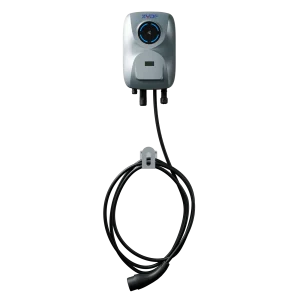
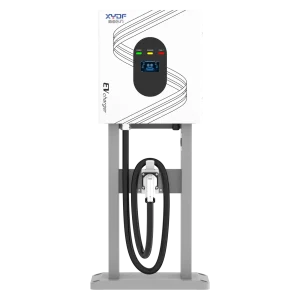
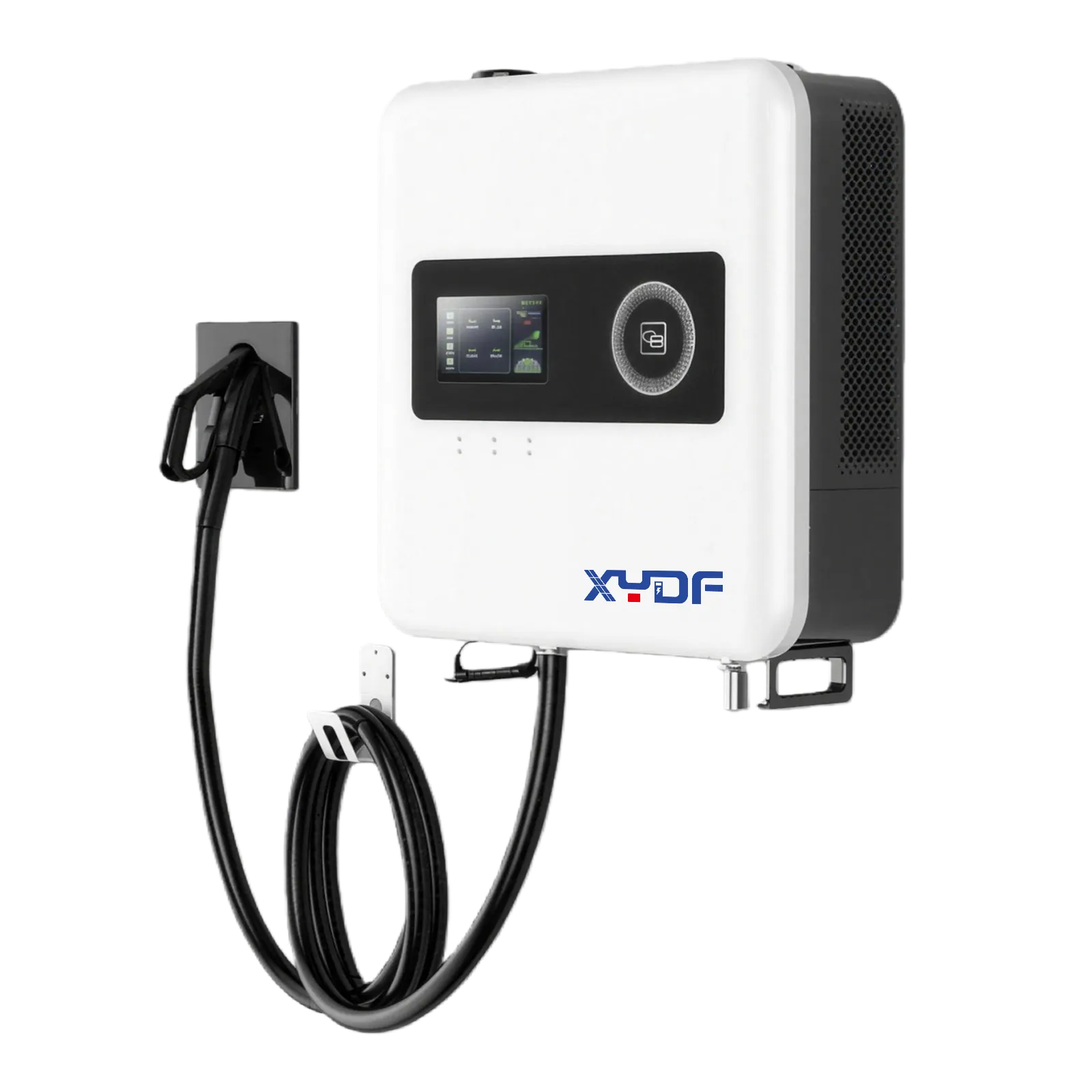
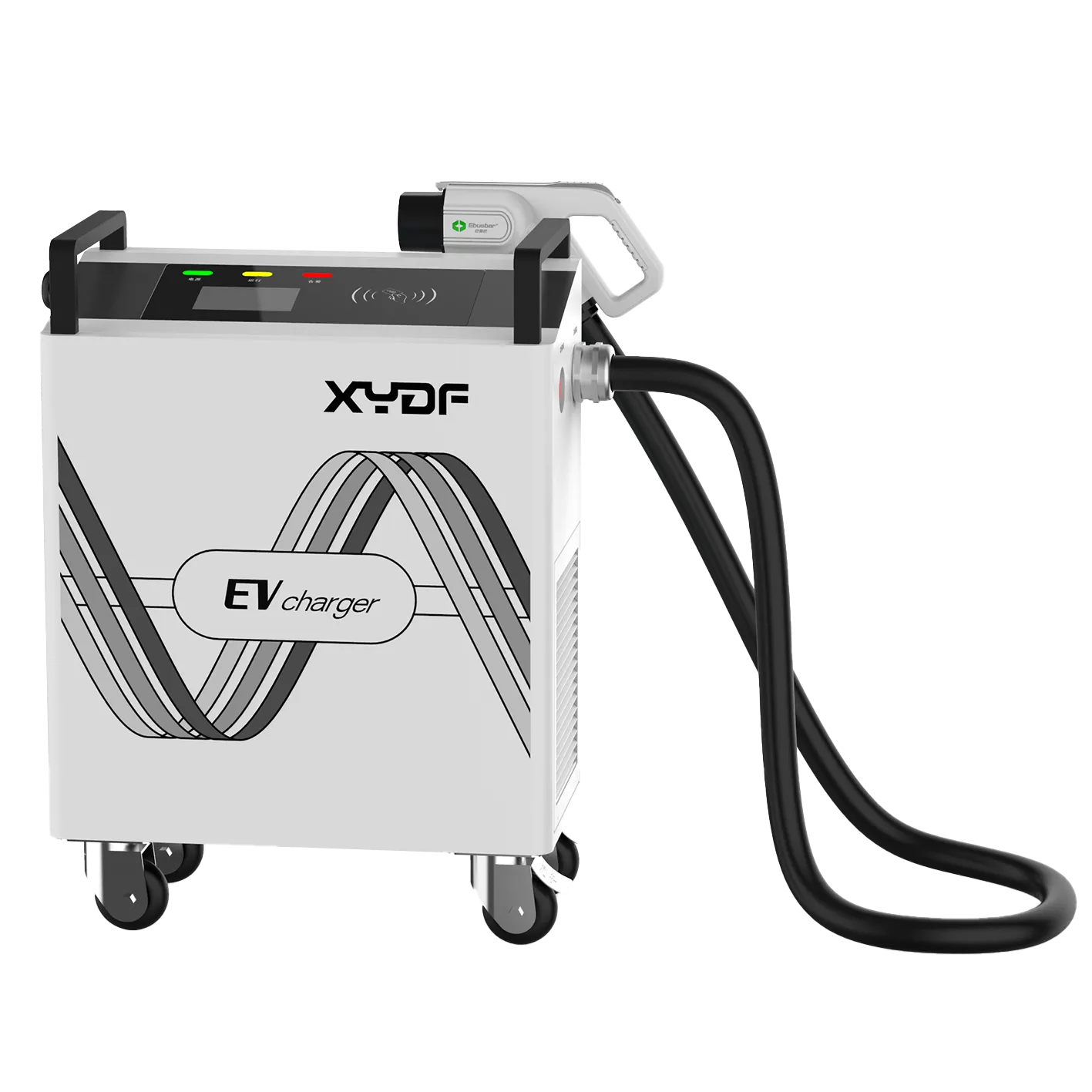
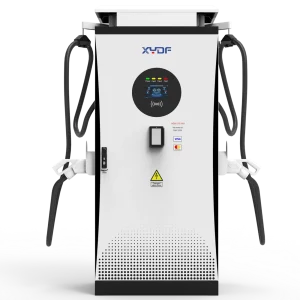
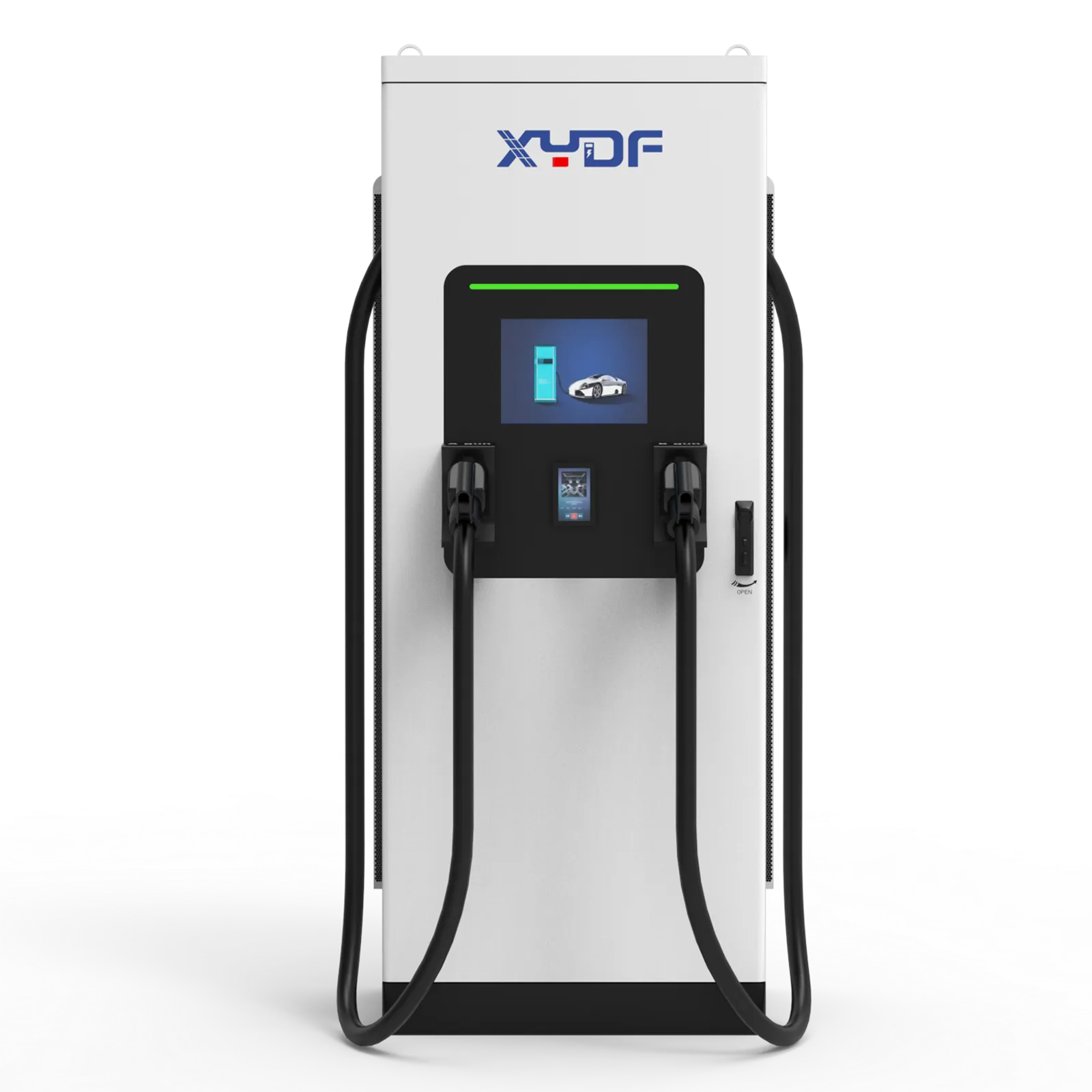
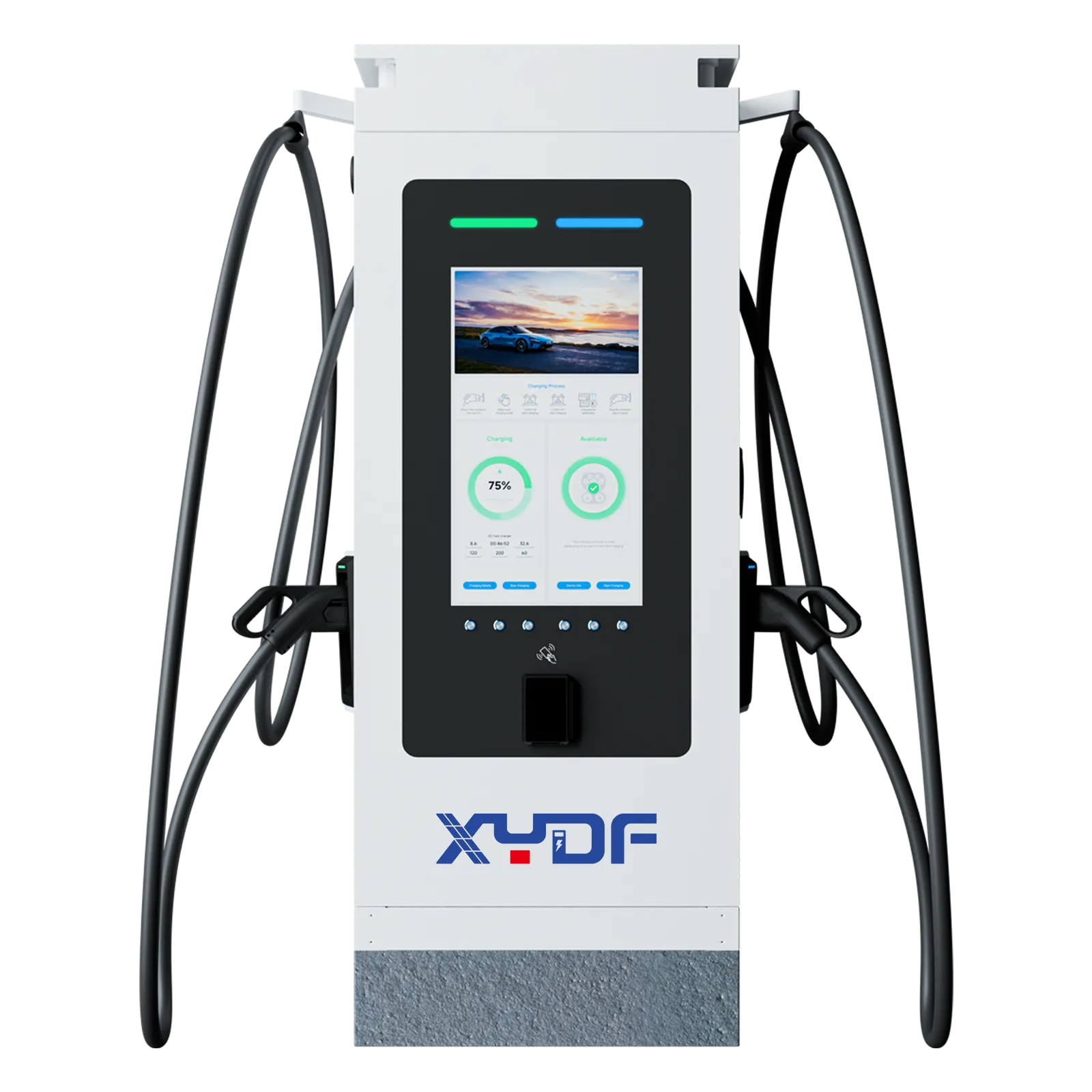
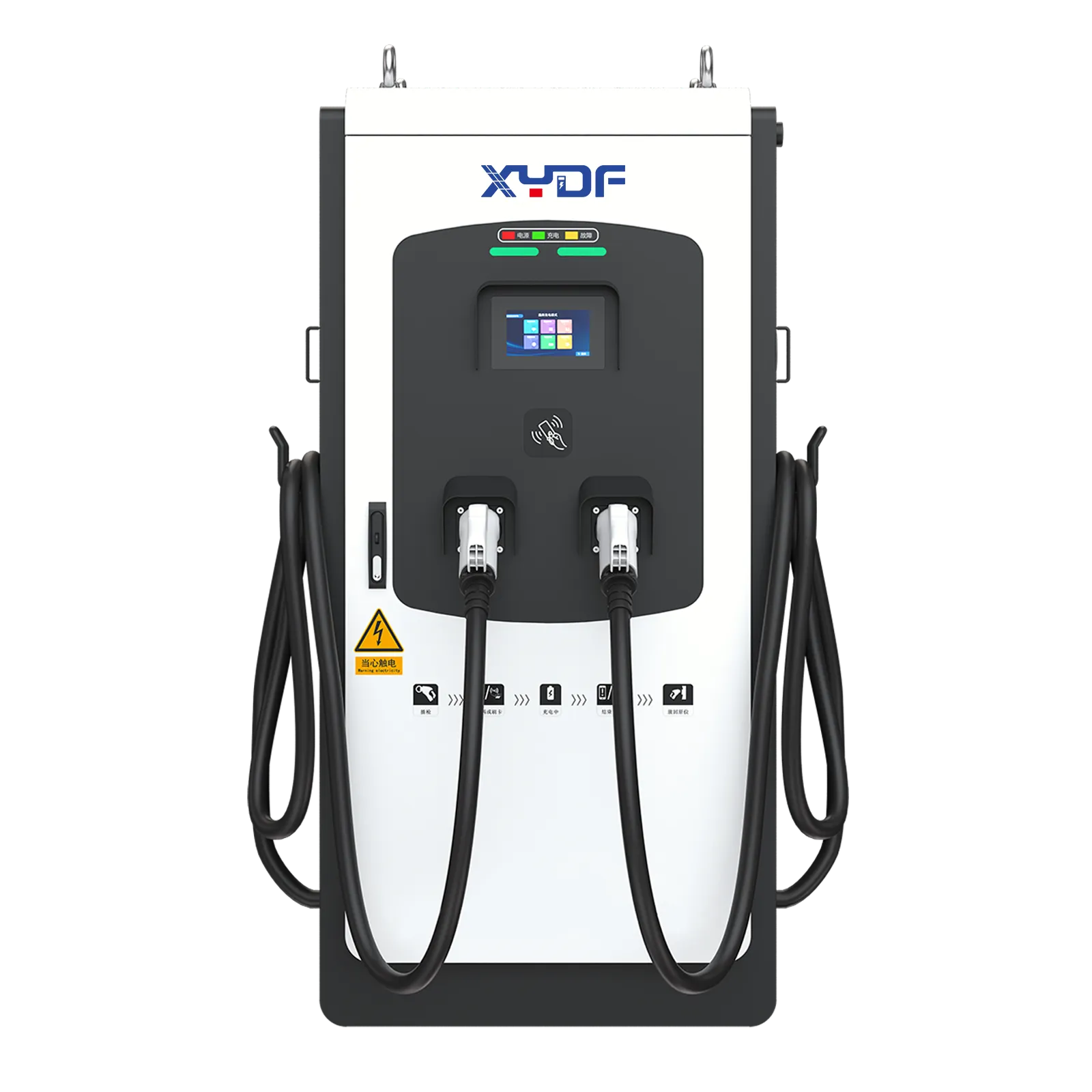
Partie 6. Quelles plateformes XYDF DC correspondent aux résultats de capacité courants ?
Soumettez le profil de puissance instantanée en kW, le plafond de gestion de la charge, les normes de connecteur et les fenêtres tarifaires cibles lors de la demande de proposition par Contacter le fournisseur de bornes de recharge pour VE.
5) Convertir l’étude de charge en exigences d’approvisionnement
Ce dossier d’informations constitue le lien pratique entre l’estimation de la capacité d’un transformateur de charge rapide à courant continu et un devis pouvant être accepté par les entreprises d’électricité.
Fournissez au fournisseur de chargeurs un calendrier de charge approuvé, une tension, une exigence de connecteur, une certification CSMS, des limites harmoniques/PF et un déclencheur d’extension. Catégorie des chargeurs rapides DC et Portefeuille de produits Ces critères peuvent alors être évalués en fonction de ces contraintes ; le dossier technique — et non la description du catalogue — doit déterminer la configuration sélectionnée. Pour une proposition, envoyez la même preuve via le formulaire de demande de devis. Réseau de contact avec les fournisseurs.
Ce cadre est une aide à la planification. Il ne remplace pas les plans conformes aux normes, l’autorisation d’interconnexion entre installations, la coordination de la protection, l’analyse des fusions de câbles, la conformité avec les codes locaux ou les essais d’achèvement des travaux.
Partie 7. Quand est-il nécessaire d’effectuer une étude de fonctionnalité ou d’EPPC avant de choisir un transformateur ?
Ce guide fournit des informations sur la planification des transformateurs et des services pour les sites de recharge rapide à courant continu. Il ne remplace pas :
Études d'interconnexion des services publics ou examens formels de l'impact sur le réseau
Coordination des dispositifs de protection, dimensionnement des câbles ou plans d'exécution
Certification de réseau de paiement ou négociations tarifaires
Ingénierie du trafic ou conception de la circulation de stationnement
Modélisation de l'énergie des itinéraires de flottes pour les cycles de service des véhicules lourds
Si la simultanéité, la marge harmonique ou les limites d'utilité sont inconnues, publiez une conception par étapes avec un suivi plutôt que de verrouiller la puissance maximale du transformateur et du chargeur dès le premier jour.
FAQ
Pourquoi la puissance du transformateur est-elle importante pour les bornes de recharge rapide en courant continu ?
Les transformateurs doivent supporter la demande de pointe simultanée qui persiste sur le service, ainsi que les marges d'ingénierie et les effets sur la qualité de l'énergie — et non la somme de toutes les puissances nominales des chargeurs.
Quelles sont les données nécessaires avant de déterminer la puissance d'un transformateur ?
Avant de demander la puissance en kVA d'un transformateur, recueillez les informations suivantes : cas d'utilisation, nombre de prises et puissance, capacité de gestion de la charge, capacité de service existante, règles des services publics et perspectives de croissance.
Comment estimer la charge CC simultanée ?
Commencer à partir d'un profil de charge du site, appliquer la simultanéité par groupe d'utilisateurs, puis appliquer les règles de limitation de kW et de marge EPC du CSMS/site.
Les chargeurs rapides à courant continu augmentent-ils la charge harmonique ?
Ils peuvent contribuer à une charge non linéaire. Examinez les effets harmoniques et du facteur de puissance avec l'EPC ou l'étude du concessionnaire plutôt que de supposer une charge résistive.
Quand faut-il moderniser la capacité d'un transformateur ?
Mettre à niveau lorsque la puissance de pointe gérée, l'examen harmonique ou les limites de l'utilitaire dépassent la marge de service existante, ou lorsque les ports de la phase 2 sont approuvés avec une demande documentée.
Comment la gestion de la charge modifie-t-elle les exigences des transformateurs ?
Un site documenté avec un capteur de puissance kW peut réduire la demande simultanée utilisée pour le dimensionnement du transformateur si le système de contrôle est spécifié et mis en service.
Les chargeurs DC peuvent-ils être déployés par phases ?
Oui. Ports d'embarquement, surveillance et capacité d'alimentation de sorte que la taille des transformateurs de la phase 1 corresponde à la demande prouvée tout en préservant une voie d'expansion.
Quel transformateur de kVA est nécessaire pour un site de recharge rapide à courant continu de 600 kW ?
Il n’existe pas de réponse unique et universelle. Calculez le kW du site diversifié, ajoutez les auxiliaires, divisez par la puissance nominale de la station, puis appliquez les critères thermiques et d’expansion documentés ; un panneau d’identification de 600 kW peut nécessiter beaucoup moins — ou beaucoup plus — de 600 kVA, selon la simultanéité, le PF, les harmoniques, la tension et les règles de l’entreprise.
Qu’est-ce que l’étude d’un transformateur d’alimentation prouve ?
Elle vérifie la capacité disponible, la baisse de tension, le fonctionnement défectueux, les paramètres de protection, la qualité de l’énergie et la portée de l’amélioration du service pour le cas d’utilisation proposé. Les limites écrites de l’étude devraient devenir les critères d’acceptation pour la limite de capacité du CSMS, le plan de comptage et le dossier de mise en service.
La capacité n’est pas une intuition ; c’est une chaîne traçable allant de l’intervalle de demande aux paramètres de protection approuvés. Les équipes qui respectent cette chaîne peuvent mettre en service les chargeurs avec confiance et demander aux fournisseurs les preuves nécessaires au bon moment.
Quels données devrait inclure un modèle de capacité de recharge commerciale pour les véhicules électriques ?
Un modèle de capacité utile combine l’énergie du véhicule en fonction du cycle de charge, des fenêtres d’arrivée et de départ, de la charge simultanée, du partage de la puissance du chargeur, des limites électriques du site, des intervalles tarifaires et une réserve pour les sessions tardives ou échouées. Le modèle doit indiquer les hypothèses et le point de mesure de l’acceptabilité afin que les acheteurs puissent comparer les propositions sans considérer une valeur kW figurant sur le tableau d’affichage comme capacité de service garantie.
Usine du siège social du Zhejiang :
N° 2, route de Changjiang, parc industriel du pont de Wenzhou, ville de beibaixiang, ville de Yueqing, ville de Wenzhou, province du Zhejiang
Bureau de Shenzhen :
1er étage, Bâtiment A, Parc Industriel Shenkai, Communauté Tangtou, Sous-district de Shiyan, District de Bao'an, Shenzhen
Nous utilisons des cookies pour assurer le bon fonctionnement de ce site Web et, avec votre autorisation, pour mesurer la manière dont les visiteurs utilisent notre site de recharge pour VE. Voir notre Politique de confidentialité pour plus de détails.
 Xinya Dongfang Electricity Technology Co., Ltd.